
Finding a Finance Broker Toowoomba: SME Guide for 2026
Find the best finance broker toowoomba for your SME. Learn how to vet brokers, understand fees, and use smart finance to grow your business effectively.
Ansh Malhotra

Your sales are there. The work is there. The pressure point is cash.
A Toowoomba wholesaler needs to buy stock before the busy period. A trade business has profitable jobs lined up but needs another vehicle and more labour before invoices clear. A manufacturer can see demand rising but can't keep stretching supplier terms and hoping the timing works out. In each case, the problem isn't merely “getting a loan”. It's structuring finance so the business can grow without choking its own cash flow.
That's where the conversation around a Finance Broker Toowoomba should start. Not with a generic product list. Not with the same residential mortgage advice that dominates local search results. With the commercial question that matters most to SMEs: what type of funding supports operations, margin, and growth without creating a repayment burden the business can't comfortably carry?
Table of Contents
Why Toowoomba SMEs Are Turning to Finance Brokers
Business owners in Toowoomba are dealing with a familiar tension. Growth often shows up before cash does. You win more work, carry more inventory, order materials earlier, hire ahead of revenue, and suddenly the business looks healthy on paper while the bank account feels tight.
That's why brokers are becoming a standard part of the commercial finance process, not just an optional extra. Nationally, the number of financial brokers in Australia rose 53.9% over the past decade, from 28,000 in 2014 to 43,100 in 2024, and in regional centres like Toowoomba there are over 15 active finance broker businesses listed on local search platforms as of 2025, according to Broker Daily's report on broker growth.
For SMEs, that matters because the lending task has changed. A bank branch can still process an application. A good broker does something more useful. They position the deal, match it to lender appetite, and spot where the structure itself could damage cash flow later.
The local issue isn't access alone
Most local content about brokers still leans heavily into home loans, refinancing, and vehicle purchases. That's useful for households. It doesn't solve the finance decisions a growing SME faces when stock is absorbing profit, debtors are slow, or a new asset will only make sense if repayments line up with the way cash enters the business.
A transport business, for example, may need vehicle finance, but the key decision is whether the repayment profile leaves enough room for wages, fuel, maintenance, and BAS obligations. A retailer may need inventory funding, but the better question is whether the stock turn justifies the debt and whether the term matches the selling cycle.
A finance broker earns their place when they improve the fit between the debt and the business model.
What good brokers change
The right broker doesn't just ask, “How much do you need?” They ask where cash is getting squeezed, what the funds will enable, and how the lender will assess risk in your industry.
That shift matters in regional markets. Many Toowoomba businesses have seasonal demand, contract income, owner drawings that don't fit neat payroll patterns, or balance sheets shaped by equipment and stock. Those details affect lender choice, product choice, and approval quality.
If you're searching for a Finance Broker Toowoomba because growth feels harder to fund than it should, you're not looking for a form-filler. You're looking for someone who can help turn funding into a workable operating decision.
First Align Your Finance Needs with Your Business Goals
Before you shortlist any broker, get specific about the problem the finance needs to solve. Vague requests create weak applications. “We need money for growth” usually leads nowhere useful. “We need to buy stock ahead of peak demand without draining operating cash” gives a broker something they can structure.
The broking sector now sits at the centre of this work. In 2023–24, Australia's mortgage and finance broking industry directly contributed an estimated $3.3 billion to the national economy and employed 31,899 people, according to the MFAA 2025 value of mortgage and finance broking report. That scale reflects how often businesses now rely on brokers to connect funding to commercial outcomes.
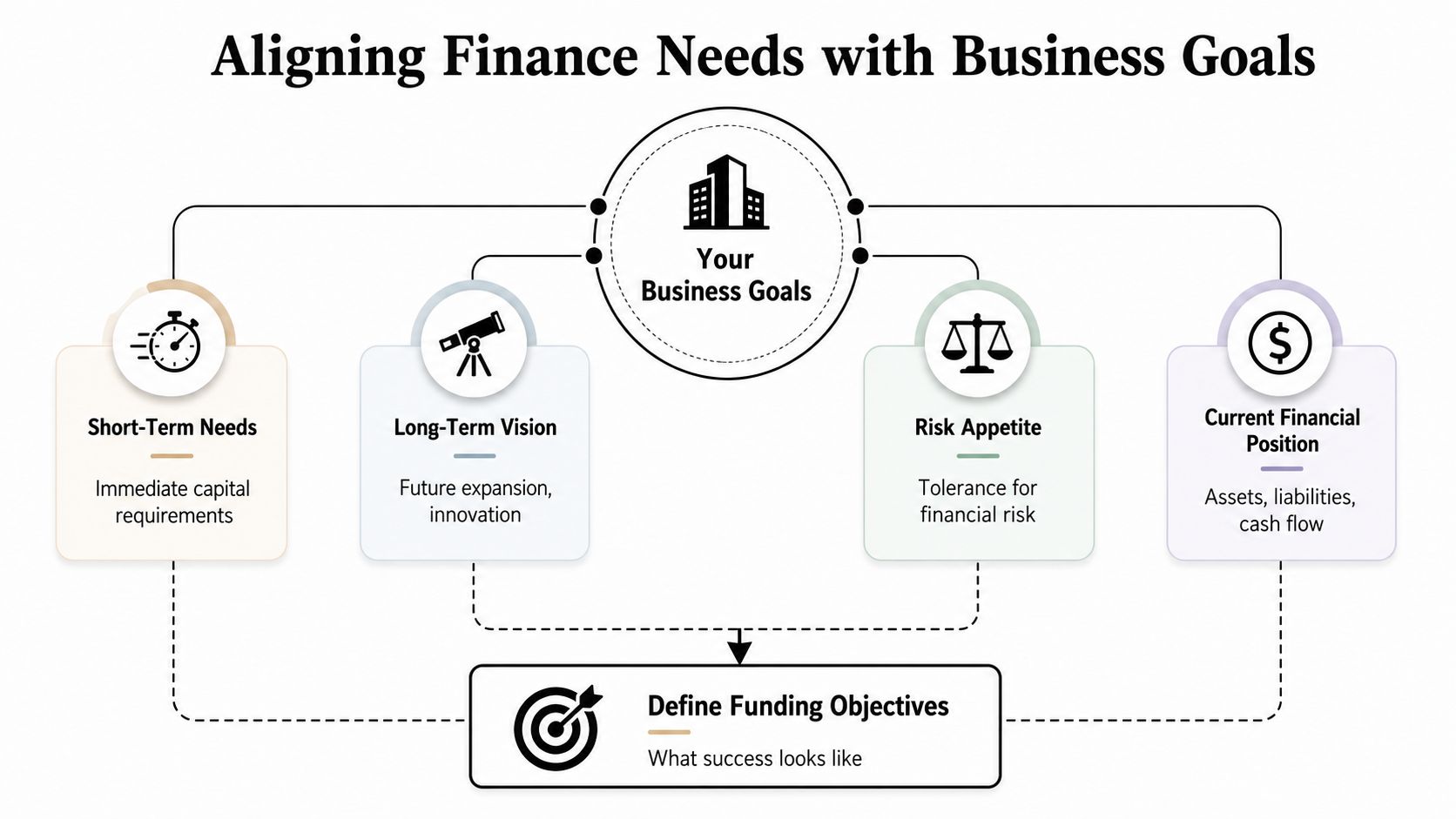
Start with the operational constraint
Most SME funding needs fall into a few practical categories, but the right answer depends on what's restricting performance.
Working capital pressure: You're profitable, but cash leaves before it returns. Common examples are wages before invoice collection, supplier deposits, or large stock buys ahead of sales.
Asset acquisition: You need a truck, machine, fit-out, or equipment that should generate value over time rather than be paid for upfront from cash reserves.
Expansion funding: You're opening a new site, entering a new market, adding capacity, or taking on a larger contract that requires upfront investment.
Debt reshaping: Existing repayments may be misaligned with current cash flow, even if the original borrowing made sense at the time.
Many owners skip a critical step. They shop for finance before deciding what success should look like. Better finance starts with a defined outcome, not a product.
Practical rule: If you can't explain how the funds will improve cash movement, margin, capacity, or timing, the structure probably isn't ready.
Translate the need into lender language
Lenders and brokers respond better when the request is tied to a commercial use and a repayment logic. That means replacing broad ambition with a clear funding brief.
A strong brief usually includes:
Question | Better way to answer it |
|---|---|
What are the funds for? | Stock purchase, vehicle acquisition, payroll buffer, fit-out, equipment, debtor timing gap |
Why now? | Seasonal build-up, new contract, supplier opportunity, expansion timing, operational bottleneck |
How will it be repaid? | From contract revenue, stock turnover, recurring customer receipts, stronger monthly cash surplus |
What must the structure avoid? | Overcommitted repayments, unsecured personal strain, short terms on long-life assets |
If vehicles are part of the plan, owners often confuse the tax decision with the cash flow decision. They're related, but they're not the same. This practical guide from Baron Accounting on vehicle finance is useful because it frames vehicle funding in commercial terms rather than treating it as a simple product choice.
It also helps to think through whether the debt should fund a short-cycle need or a longer-term asset. For a deeper look at how owners can approach that distinction, this article on funding the business is a solid starting point.
A broker can only structure well if the owner arrives with clarity. Get that part right first, and the conversation gets sharper very quickly.
Finding and Shortlisting Toowoomba Finance Brokers
The search process usually starts too broadly. An owner types “finance broker Toowoomba” into Google, scans a few service pages, and ends up with a mixed list of home loan specialists, asset finance generalists, and firms that mention business lending without showing much depth.
That approach produces noise. A better shortlist starts with your industry and your funding need.

What to look for on a broker's website
A broker's site won't tell you everything, but it will tell you whether they understand SMEs beyond generic lending language.
Look for signs like these:
Business finance appears as a real service line: Not a throwaway mention buried under residential loan content.
Industry examples are relevant: Transport, trades, agriculture-adjacent services, wholesale, retail, manufacturing, hospitality, or contractor-heavy businesses.
They explain finance use cases: Working capital, equipment, vehicles, stock, fit-outs, or commercial property, rather than listing generic “business loans”.
They talk about lender fit: Good brokers know some lenders like clean PAYG-style income, while others are more comfortable with trading businesses, contractor structures, or uneven revenue patterns.
If the site only talks about rates, approvals, and property purchases, it may still be a capable firm. It just hasn't shown you enough to justify immediate trust for a business lending brief.
Build a shortlist that deserves your time
In the Toowoomba mortgage market, broker-led submissions reportedly achieve a higher application success range than direct-to-bank applications because brokers pre-screen clients against lender criteria and fix documentation issues before submission, as noted in this Toowoomba finance broker market summary. The practical lesson isn't just “use a broker”. It's “use one who does real pre-work”.
Shortlisting should combine online review with direct professional signals. I'd narrow the field using a process like this:
Separate residential-first firms from SME-capable firms. If business lending looks secondary, keep them lower on the list.
Check association membership and licensing details. You want evidence they operate within current professional frameworks.
Ask your accountant or adviser who they've seen handle commercial applications well. Referrals based on actual finance files are stronger than referral fees and friendship networks.
Keep the shortlist tight. Three to five brokers is enough. More than that usually creates confusion rather than insight.
A useful mental filter is this: can the broker probably help you think through capital structure, or are they mainly there to submit paperwork? Those are different skill levels.
If you're still sorting out whether debt is even the right growth lever, this explainer on what capital raising means for growing businesses helps clarify where debt fits and where it doesn't.
The best shortlist isn't the longest one. It's the one with the fewest obvious mismatches.
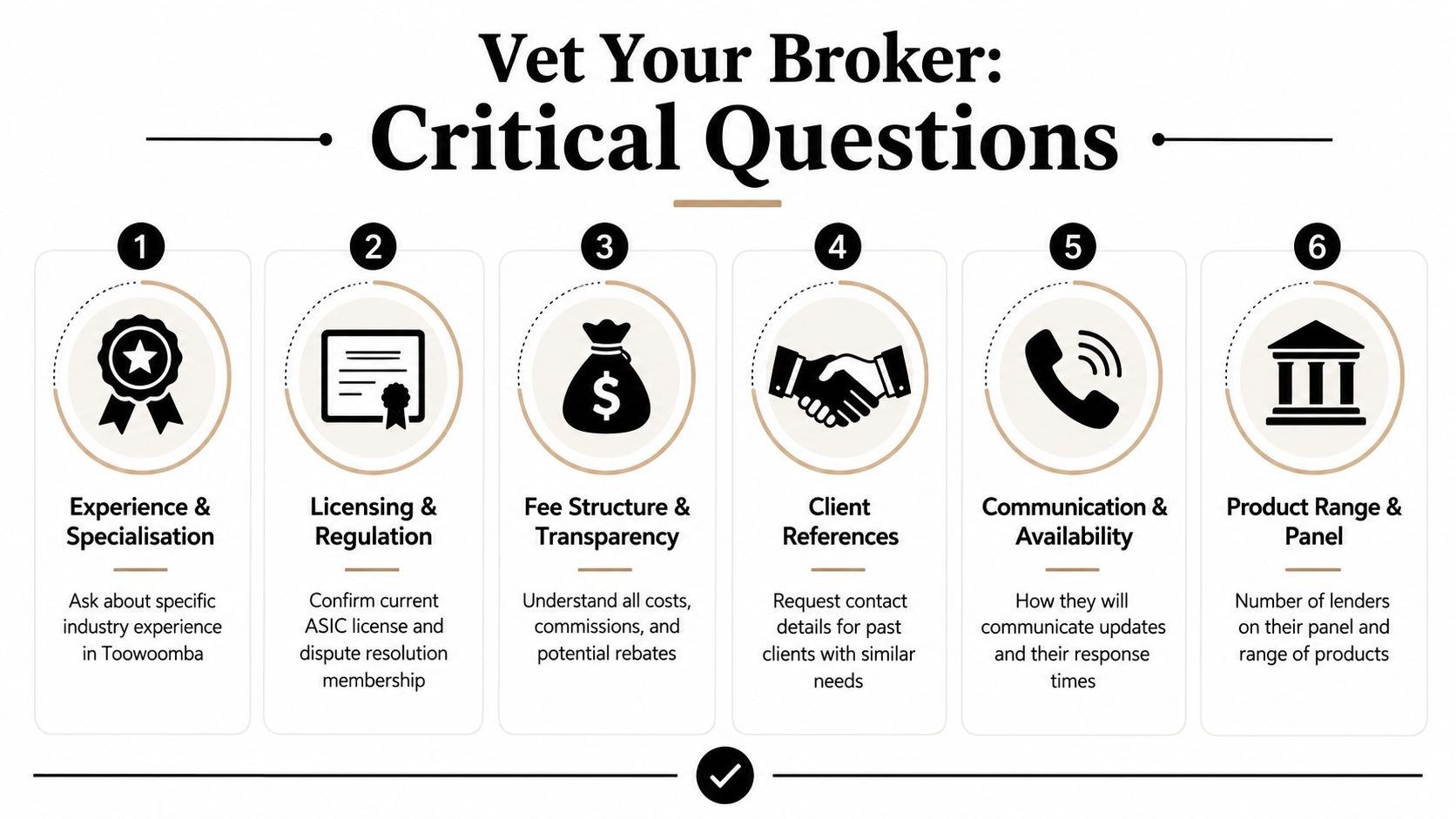
How to Vet Brokers A Checklist of Critical Questions
Once you've got a shortlist, the crucial work starts. At this stage, owners often get distracted by confidence, speed, or a polished sales approach. None of those tell you whether the broker can structure debt well for a trading business.
In the Toowoomba region, 68% of successful business finance approvals involve non-standard income structures, and top brokers often work to keep loans below 80% LVR to avoid Lender's Mortgage Insurance, which can add $12,000 to $18,000 to a $600,000 loan, according to this Toowoomba broker benchmark discussion. That single data point tells you a lot. Commercial finance here often requires manual judgement, policy interpretation, and structure discipline.
Questions that reveal technical competence
Ask direct questions. Good brokers won't be offended by them.
What proportion of your work is business finance for SMEs? You're testing whether commercial lending is core work or occasional work.
Which lenders on your panel are comfortable with non-standard income? Many SME owners have contractor income, seasonal revenue, retained profits, or director drawings that don't fit automated systems neatly.
How do you assess serviceability before submission? You want to hear about real pre-screening, not “we'll send it in and see”.
How do you approach asset-backed lending versus unsecured working capital? The answer should reflect trade-offs in pricing, security, flexibility, and cash impact.
What information do you need from me to present the business properly? Strong brokers ask for more than tax returns.
How are you paid, and are there any fees beyond lender commission? Transparency matters, especially if the recommendation could be influenced by payment structure.
Here's a useful companion read on assessing mortgage broker worth if you want a broader lens on what genuine broker value looks like beyond surface-level convenience.
A broker who works well with SMEs should also talk coherently about documentation quality, lender policy changes, and where deals can go wrong before they go right.
To see one perspective on the broker role in practice, this overview is worth a watch:
Red flags that should end the conversation
Some warning signs are immediate.
Red flag | Why it matters |
|---|---|
“Guaranteed approval” language | No serious broker guarantees a lender outcome |
Heavy focus on rate only | Cheap debt can still be bad debt if the structure is wrong |
No clear answer on lender panel breadth | Limited lender access can limit fit |
Weak understanding of your industry cash cycle | They may package the deal badly |
Pressure to apply fast without discussing purpose | Speed without structure often creates later pain |
If a broker can't explain why a loan should be shaped a certain way, they're not advising. They're distributing products.
The best vetting conversations feel practical. They sound less like sales and more like underwriting strategy. That's what you want.
Engaging Your Broker for a Successful Application
Choosing the broker doesn't finish the hard part. It starts the collaboration. A strong application is rarely built from forms alone. It's built from context, numbers, and a believable explanation of how the finance fits the business.
That matters even more for owner-operated and regional businesses where the accounts may not tell the whole story on their own. Lenders still need the file to make sense commercially.
Give the broker a finance story not a document dump
The application improves when you package information around business logic.
Useful inputs include:
A brief business summary: What you do, who you sell to, and what's changing.
Purpose of funds: Be precise. Buying stock for a seasonal uplift is clearer than “working capital”.
Repayment logic: Show how the facility will be serviced in the normal course of trading.
Recent financial records: Clean, complete, and consistent with what the broker is saying to lenders.
Operational context: Supplier terms, customer concentration, contract pipeline, and timing pressures if relevant.
A broker can then turn that into a lender-ready narrative. Without it, they're guessing at your story from historical reports.
What slows regional SME applications
In the Toowoomba mortgage market, a major issue is the misclassification of self-employed income. In Queensland rural areas, 34% of rejected applications fail because of insufficient documentation such as missing 2 years of Tax Returns or BAS statements, according to this regional Toowoomba lending overview.
That tells owners something important. A surprising number of delays are preventable.
Use this pre-submission check:
Tax returns are current: If they're not lodged or not finalised, the broker is immediately working with weaker evidence.
BAS records are available and consistent: Gaps raise questions quickly.
Director and business income are clearly separated: Messy flows between personal and business accounts often complicate lender interpretation.
Explanations are written down: One-off anomalies, seasonal swings, or unusual expenses need context.
Asset and liability details are accurate: Old balances and missing facilities create credibility issues.
Lenders don't just assess whether the business can repay. They assess whether the file is organised enough to trust.
Owners sometimes assume the broker will “sort it out”. A capable broker will improve presentation, but they can't manufacture clean records from incomplete books. The smoother files tend to come from businesses that treat finance preparation as an operating discipline, not an afterthought.
Beyond the Loan When to Call a Virtual CFO
Securing the loan isn't the finish line. It's only useful if the funds improve cash generation, reduce operational strain, or support profitable growth.
That's the point many businesses miss. They focus hard on approval, then go straight back to running the company with the same weak visibility over stock, margins, repayments, and cash timing that created the pressure in the first place.
Recent developments in Australian SME finance point toward data-driven lending, where lenders increasingly require live cash flow forecasts and KPI dashboards, and local broker content in Toowoomba generally doesn't explain how founders can work with a virtual CFO to prepare that data well, as noted in this regional broker content review.
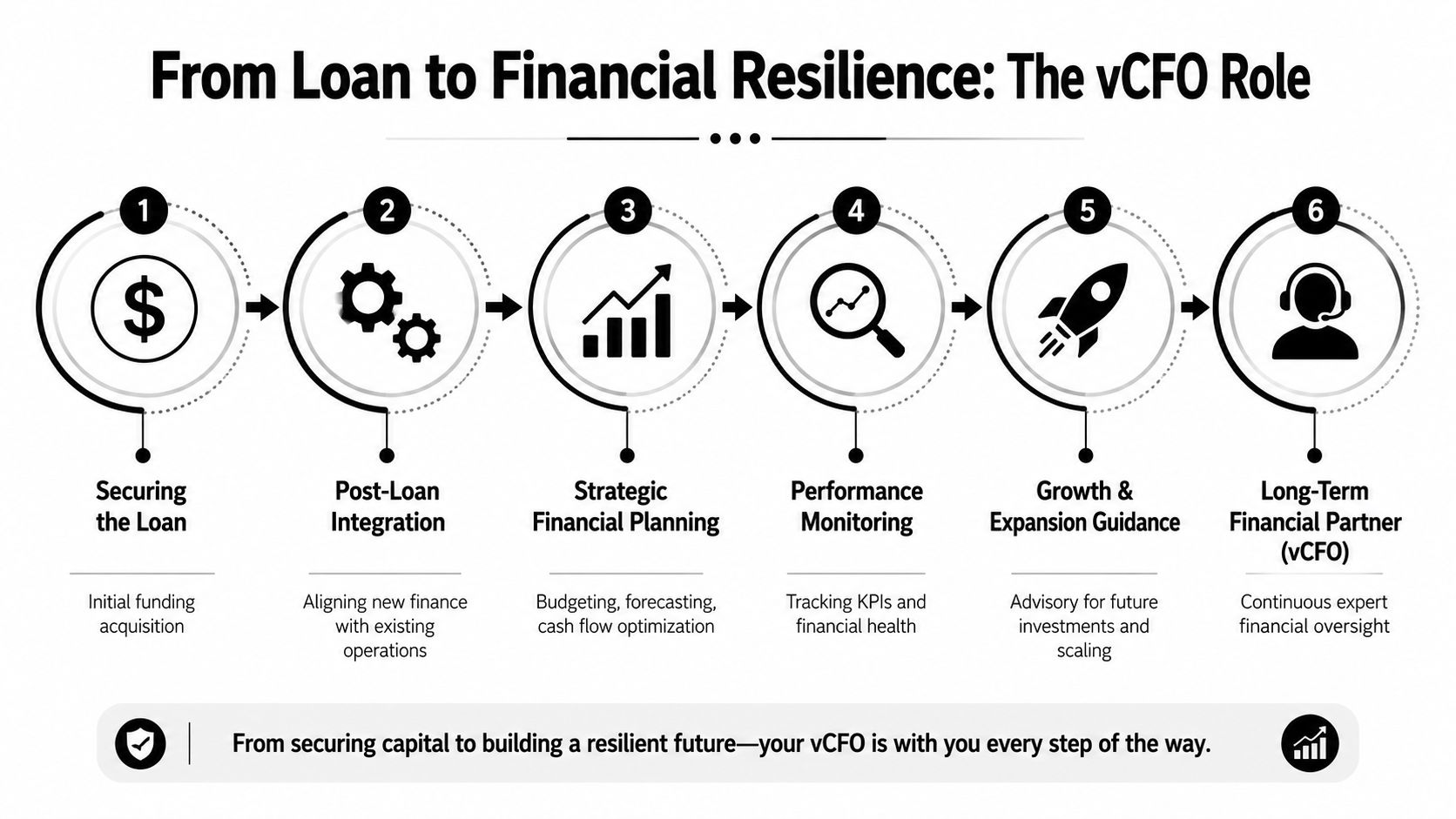
The broker gets capital The CFO makes it useful
A broker and a virtual CFO do different jobs.
A broker helps secure and structure the finance. A virtual CFO helps the business use that finance well by connecting debt decisions to forecasting, margin control, inventory planning, and cash management.
That distinction matters most in businesses where profit gets trapped operationally. Common examples include:
Inventory-heavy businesses: Cash sits in stock too long, even while reported profit looks acceptable.
Trade and service firms: Revenue is booked, but labour, materials, and subcontractor costs hit before collections catch up.
Growth-stage SMEs: The business can win work faster than it can fund the operational load that comes with that growth.
When those businesses borrow without better forecasting, debt often becomes another pressure point rather than a release valve.
What stronger finance readiness looks like
A more strategic setup usually includes a few disciplines working together.
Capability | Why it matters after funding |
|---|---|
Cash flow forecasting | Tests whether repayments fit real trading patterns |
KPI visibility | Shows whether the borrowed funds are lifting performance |
Margin tracking | Prevents growth from masking low-profit work |
Inventory or debtor control | Releases cash already trapped in operations |
Scenario planning | Helps owners respond before pressure becomes urgent |
This is also where the relationship between advisers improves. A broker with current numbers, credible forecasts, and a clear commercial narrative can often present the application more strongly. A finance function with no live visibility leaves the broker relying on backward-looking documents and broad explanations.
For owners thinking beyond one transaction, it's worth understanding what a virtual chief financial officer does in practice. The role is less about reporting for reporting's sake and more about making sure finance decisions support how the business operates day to day.
Borrowing works best when the business already knows where the cash goes, how quickly it returns, and what performance must improve for the debt to pay for itself.
If you're looking for a Finance Broker Toowoomba, that's the bigger lens to keep. Approval matters. Structure matters more. What you do with the facility after settlement matters most of all.
If your business is growing but cash still feels tight, Nexist can help you get clarity before you take on more debt. We work with Australian SMEs to improve cash flow visibility, forecasting, margins, and finance readiness so funding decisions support the business instead of straining it. A practical next step is Nexist's 30-minute Business Scorecard, which helps you identify where cash is getting stuck and what needs fixing before the next finance move.
finance broker toowoomba, business finance qld, sme loans australia, virtual cfo services, cash flow management

" width="24px"/><g d="M 0 24.129 L 0 0.129 L 24 0.129 L 24 24.129 Z M 0 24.129 L 0 0.129 L 24 0.129 L 24 24.129 Z M 24 3 C 24 1.344 22.656 0 21 0 L 3 0 C 1.344 0 0 1.344 0 3 L 0 21 C 0 22.656 1.344 24 3 24 L 21 24 C 22.656 24 24 22.656 24 21 Z M 6.883 8.375 L 2.863 8.375 L 2.863 20.467 L 6.883 20.467 Z M 4.899 2.545 C 3.524 2.545 2.625 3.449 2.625 4.634 C 2.625 5.795 3.496 6.724 4.846 6.724 L 4.872 6.724 C 6.273 6.724 7.146 5.795 7.146 4.634 C 7.12 3.449 6.274 2.545 4.899 2.545 Z M 16.747 8.09 C 14.614 8.09 13.659 9.263 13.124 10.086 L 13.124 8.374 L 9.105 8.374 C 9.159 9.508 9.105 20.466 9.105 20.466 L 13.124 20.466 L 13.124 13.713 C 13.124 13.352 13.15 12.99 13.257 12.732 C 13.547 12.01 14.209 11.262 15.319 11.262 C 16.773 11.262 17.355 12.372 17.355 13.996 L 17.355 20.466 L 21.374 20.466 L 21.374 13.532 C 21.374 9.818 19.391 8.09 16.747 8.09 Z" fill="transparent" height="24.12890599668026px" id="dSFdkJotL" width="24px"><path d="M 0 24 L 0 0 L 24 0 L 24 24 Z" fill="transparent" height="24px" id="wscNJE44G" transform="translate(0 0.129)" width="24px"/><g d="M 0 24.129 L 0 0.129 L 24 0.129 L 24 24.129 Z M 24 3 C 24 1.344 22.656 0 21 0 L 3 0 C 1.344 0 0 1.344 0 3 L 0 21 C 0 22.656 1.344 24 3 24 L 21 24 C 22.656 24 24 22.656 24 21 Z M 6.883 8.375 L 2.863 8.375 L 2.863 20.467 L 6.883 20.467 Z M 4.899 2.545 C 3.524 2.545 2.625 3.449 2.625 4.634 C 2.625 5.795 3.496 6.724 4.846 6.724 L 4.872 6.724 C 6.273 6.724 7.146 5.795 7.146 4.634 C 7.12 3.449 6.274 2.545 4.899 2.545 Z M 16.747 8.09 C 14.614 8.09 13.659 9.263 13.124 10.086 L 13.124 8.374 L 9.105 8.374 C 9.159 9.508 9.105 20.466 9.105 20.466 L 13.124 20.466 L 13.124 13.713 C 13.124 13.352 13.15 12.99 13.257 12.732 C 13.547 12.01 14.209 11.262 15.319 11.262 C 16.773 11.262 17.355 12.372 17.355 13.996 L 17.355 20.466 L 21.374 20.466 L 21.374 13.532 C 21.374 9.818 19.391 8.09 16.747 8.09 Z" fill="transparent" height="24.12890599668026px" id="sTpjGo1tb" width="24px"><path d="M 0 24 L 0 0 L 24 0 L 24 24 Z" fill="transparent" height="24px" id="s7ffpmKOD" transform="translate(0 0.129)" width="24px"/><g d="M 24 3 C 24 1.344 22.656 0 21 0 L 3 0 C 1.344 0 0 1.344 0 3 L 0 21 C 0 22.656 1.344 24 3 24 L 21 24 C 22.656 24 24 22.656 24 21 Z M 6.883 8.375 L 2.863 8.375 L 2.863 20.467 L 6.883 20.467 Z M 4.899 2.545 C 3.524 2.545 2.625 3.449 2.625 4.634 C 2.625 5.795 3.496 6.724 4.846 6.724 L 4.872 6.724 C 6.273 6.724 7.146 5.795 7.146 4.634 C 7.12 3.449 6.274 2.545 4.899 2.545 Z M 16.747 8.09 C 14.614 8.09 13.659 9.263 13.124 10.086 L 13.124 8.374 L 9.105 8.374 C 9.159 9.508 9.105 20.466 9.105 20.466 L 13.124 20.466 L 13.124 13.713 C 13.124 13.352 13.15 12.99 13.257 12.732 C 13.547 12.01 14.209 11.262 15.319 11.262 C 16.773 11.262 17.355 12.372 17.355 13.996 L 17.355 20.466 L 21.374 20.466 L 21.374 13.532 C 21.374 9.818 19.391 8.09 16.747 8.09 Z" fill="transparent" height="24.000006px" id="D0ecaHEcW" transform="translate(0 0)" width="24px"><path d="M 24 3 C 24 1.344 22.656 0 21 0 L 3 0 C 1.344 0 0 1.344 0 3 L 0 21 C 0 22.656 1.344 24 3 24 L 21 24 C 22.656 24 24 22.656 24 21 Z" fill="rgb(55, 184, 218)" height="24.000006px" id="IPLFE6zXx" width="24px"/><path d="M 4.02 0 L 0 0 L 0 12.092 L 4.02 12.092 Z" fill="rgb(255, 255, 255)" height="12.09201px" id="FWhtzAyuY" transform="translate(2.863 8.375)" width="4.02px"/><path d="M 2.274 0 C 0.899 0 0 0.904 0 2.089 C 0 3.25 0.871 4.179 2.221 4.179 L 2.247 4.179 C 3.648 4.179 4.521 3.25 4.521 2.089 C 4.495 0.904 3.649 0 2.274 0 Z" fill="rgb(255, 255, 255)" height="4.17876px" id="VmOsKv4kO" transform="translate(2.625 2.545)" width="4.52095px"/><path d="M 7.641 0 C 5.509 0 4.554 1.173 4.019 1.996 L 4.019 0.284 L 0 0.284 C 0.053 1.419 0 12.376 0 12.376 L 4.019 12.376 L 4.019 5.623 C 4.019 5.262 4.045 4.9 4.151 4.642 C 4.442 3.92 5.103 3.172 6.214 3.172 C 7.667 3.172 8.25 4.282 8.25 5.907 L 8.25 12.376 L 12.269 12.376 L 12.269 5.442 C 12.269 1.728 10.286 0 7.641 0 Z" fill="rgb(255, 255, 255)" height="12.37626px" id="n1XUbhaq0" transform="translate(9.105 8.09)" width="12.268830000000001px"/></g></g></g></g></svg>)