
Small Business Finance Software: A Founder's Guide 2026
Choose the right small business finance software. Our 2026 guide covers features, selection, ROI, and how a virtual CFO can amplify your results.
Ansh Malhotra

You're probably in one of two places right now. Either your finance admin happens late at night after the main work is done, or you've already bought software and still don't feel in control. In both cases, the problem isn't just bookkeeping. It's that your numbers aren't helping you decide what to do next.
That's where most founders get stuck with small business finance software. They think the purchase is the fix. It isn't. Software gives you a cleaner record of what happened. Control comes when that system is configured properly, used consistently, and tied to actual decisions about cash flow, margins, stock, payroll, and growth.
Table of Contents
Your Business Is Leaking Cash Right Now
A founder sends invoices from one system, tracks bills in another, chases overdue payments by email, and keeps a “master spreadsheet” open because it's the only place everything seems to come together. Then BAS is due, payroll needs checking, and the bank balance doesn't match the profit in the spreadsheet. That's not a time problem. It's a finance system problem.
The cost is bigger than most owners realise. Australian small businesses collectively leave approximately $35 billion on the table annually due to inefficient financial management, according to Forbes Australia's coverage of the QuickBooks findings. That money doesn't disappear through one dramatic mistake. It leaks through slow invoicing, missed follow-ups, poor visibility on spending, weak stock control, and decisions made off outdated numbers.
You can usually see the warning signs before the damage becomes obvious:
Receivables drag out: Money you've already earned sits unpaid because reminders are inconsistent and nobody owns collection.
Bills get approved too late: Suppliers are paid reactively, not as part of a planned cash rhythm.
The spreadsheet lies by omission: It doesn't show timing gaps, hidden costs, or what's committed but not yet paid.
Owners substitute effort for systems: More hours go in, but clarity doesn't improve.
If cash timing is the issue, Receipt Router's cash flow advice is worth reading because it focuses on practical planning habits rather than generic “save more” tips.
A lot of founders also ignore debtors until the pressure is already showing up in the bank account. If that sounds familiar, an accounts receivable ageing report guide will show you where collection problems are really sitting.
Practical rule: If you can't tell by today which customers owe you, which suppliers are due, and what cash is committed this month, your business is operating half-blind.
Small business finance software is the first fix. It plugs the obvious leaks through automation and real-time visibility. But only the first fix. If the system doesn't lead to better decisions, you've just replaced messy spreadsheets with tidy confusion.
What Finance Software Actually Does for Your Business
Most founders think finance software is for tax, the accountant, or year-end cleanup. That's too narrow. Used properly, it becomes your financial command centre.
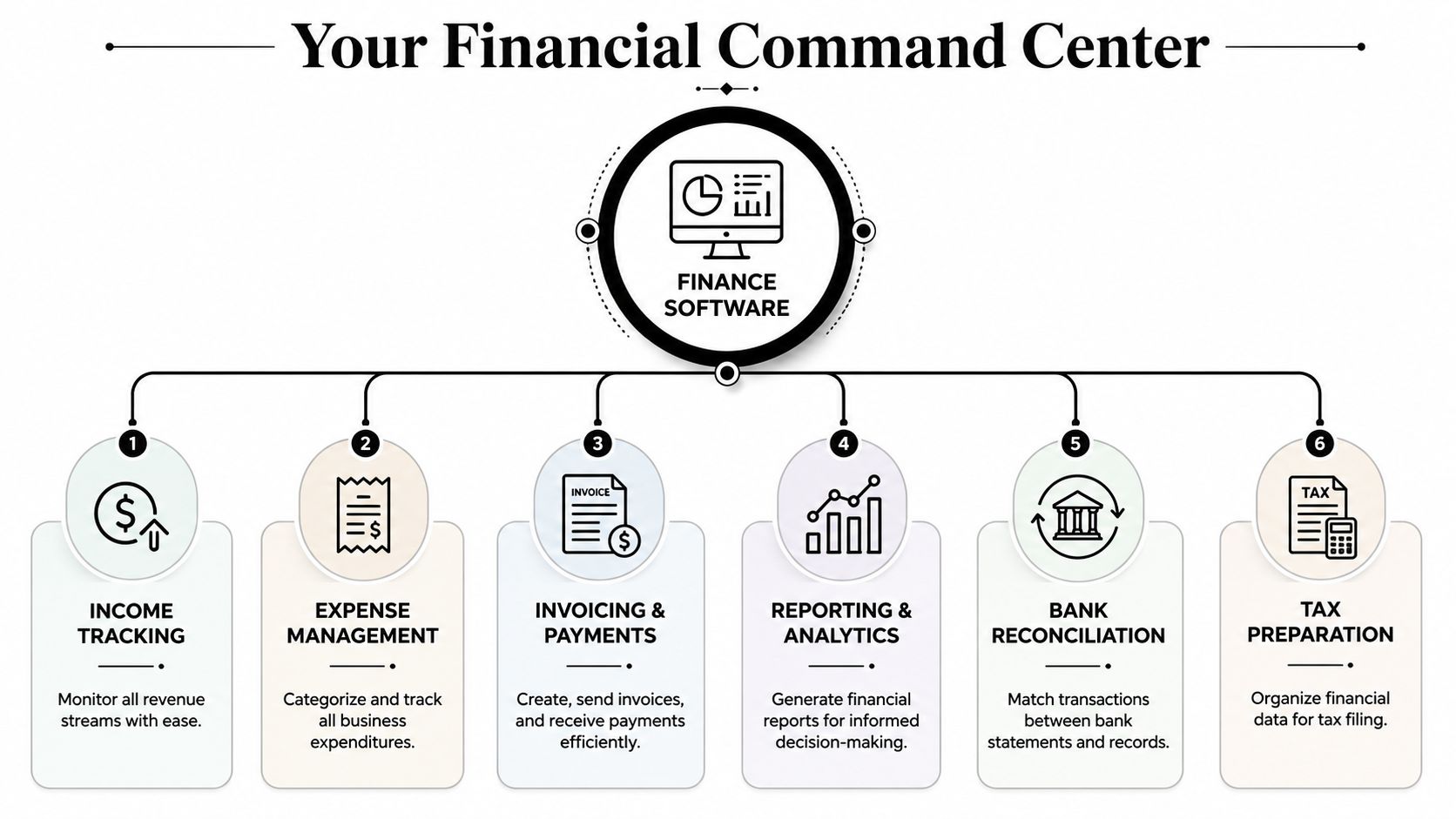
Your financial central nervous system
Good small business finance software acts like a central nervous system. Sales activity, invoices, expenses, payroll, and bank transactions all feed into one place. Instead of hunting across inboxes, spreadsheets, and banking tabs, you get one operating view.
That's why adoption is so strong. In Australia, over 60% of businesses with more than 20 employees use at least one cloud-based accounting or finance tool as of 2026, and the majority of SMEs fall within the pricing range of $15 to $80 AUD per month for core accounting software, based on Ordron's Australia finance automation comparison. For most businesses, that's not a huge software spend. The important question is whether the setup removes friction every week.
Modern systems also reduce the side admin around finance. When approvals, engagement letters, and supporting paperwork still bounce around as PDFs and email attachments, the accounting workflow slows down. If you're tightening processes, this guide to efficient document signing for accounting is useful because finance operations often break at the handoff points, not inside the ledger itself.
The four pillars that matter
The best way to judge small business finance software is by the outcomes it creates in four areas.
Bookkeeping and transaction capture
Bank feeds pull in transactions. Rules categorise routine spending. Reconciliation gets faster and cleaner. This is the memory of the business. If this layer is weak, every report above it becomes suspect.Invoicing and accounts receivable
This controls cash inflow. You need fast invoice creation, clear payment status, and automatic reminders. Founders love talking about revenue, but cash collection is what keeps wages and suppliers moving.Payroll and expense management
This is your cash outflow discipline. Software should help you process payroll correctly, capture receipts, code expenses consistently, and keep reimbursements from becoming messy.Reporting and decision support
This is the health check. Profit and loss, balance sheet, cash flow, aged receivables, aged payables, and category trends should be available without manual rebuilding.
Good software doesn't just record transactions. It shortens the distance between activity in the business and the decision you need to make.
If your current platform only helps at BAS time, you're underusing it. The point isn't digital bookkeeping. The point is faster decisions with fewer surprises.
Core Features and Australian Compliance Must-Haves
A finance system in Australia needs to do more than look polished. It has to keep you compliant while reducing manual cleanup. If a platform can't handle Australian reporting requirements properly, cross it off the list.
What's non-negotiable in Australia
There are a few features that aren't optional for an Australian SME:
Automated GST calculation: Manual GST coding creates errors that roll straight into reporting.
BAS reporting support: You need clean reporting output, not a quarter-end scramble.
PAYG withholding tracking: Payroll obligations need to be visible and accurate.
STP compliance: Payroll reporting to the ATO should happen inside the normal workflow.
Real-time bank feeds: These matter because reconciliations done late are usually reconciliations done badly.
These aren't “nice features”. They are controls. When founders treat compliance as an afterthought, they force their bookkeeper, accountant, or internal admin team to patch holes manually.
A lot of operational improvements sit around the finance system too. If you're reviewing broader process tools, streamline your operations with these tools gives a useful wider view of where finance software fits in the rest of the stack.
Why Xero is often the default call
In Australia, Xero is technically identified as the “gold standard” for small business accounting due to its native integration with the Australian Taxation Office for Single Touch Payroll compliance and real-time bank feeds, with its Standard plan costing around $70 per month, according to Finmark Solutions' breakdown of low-cost finance stacks.
That doesn't mean Xero is perfect for every business. It does mean it's often the safest default if you want accountant compatibility, solid compliance handling, and less friction around day-to-day processing.
Here's the blunt version:
Need | Why it matters | What to look for |
|---|---|---|
GST and BAS accuracy | Errors flow into lodgements | Strong tax coding and clear reports |
Payroll compliance | STP mistakes create risk fast | Native payroll compliance workflows |
Fast reconciliation | Delayed matching hides issues | Reliable bank feeds and bank rules |
Adviser collaboration | Cleanup gets expensive otherwise | Software your accountant already knows |
If payables are still handled through inboxes, screenshots, and ad hoc approvals, fix that next. A strong accounts payable automation approach for Australia usually removes more friction than founders expect.
The right compliance setup should feel boring. If your books feel dramatic every month, the system isn't doing its job.
Tailoring Software to Your Business Model
The phrase “best accounting software” is mostly useless. A retail importer, a plumbing business, and a growth-stage services firm do not need the same setup. The ledger might be similar. The operating questions are not.

Inventory-heavy businesses need cash visibility not just stock counts
Generic software advice often falls short. Data shows that 68% of Australian SMEs classify inventory management as their most complex operational challenge, and top-rated software reviews rarely quantify how default configurations fail to link stock levels to real-time cash runway, according to Scale Suite's review of accounting software in Australia.
That matters because stock can make your business look healthier than it is. On paper, you're profitable. In the bank, you're squeezed. Cash is sitting in shelves, containers, and reorder points.
For inventory-heavy businesses, your system should help answer questions like:
Which products absorb the most cash
Which SKUs turn slowly
Whether purchasing decisions are shortening or extending cash runway
How landed costs affect true margin
A standard accounting platform can record inventory values. That's not the same as giving management visibility into cash trapped in stock. If you're in eCommerce, wholesale, retail, or manufacturing, don't stop at “inventory module included”. Ask how the setup helps you make buying decisions.
Service and trade businesses need job-level profitability
Service firms and trades have a different problem. Their stock isn't trapped on shelves. Their margin leaks through underquoted jobs, poor time capture, and weak cost allocation.
You need software that connects labour, subcontractors, materials, and invoicing to the specific customer job or project. Otherwise, profitable months can hide unprofitable work.
The most useful capabilities here are usually:
Time tracking tied to clients or jobs
Job costing that includes both direct and indirect costs
Progress invoicing or staged billing
Clear reporting on estimated versus actual margin
A trade business with healthy revenue can still underperform badly if it doesn't know which jobs make money and which ones keep the team busy.
Growth-stage companies need forecasting not just reports
As a business grows, historical reporting stops being enough. Founders need a forward view. Hiring decisions, pricing changes, inventory buys, debt repayments, and expansion plans all depend on what's likely to happen next, not just what happened last month.
That's when software selection shifts from bookkeeping features to management capability.
Choose software based on the decisions you need to make in the next year, not just the admin you need to survive this month.
For growth-stage companies, look for:
Business stage question | Software requirement |
|---|---|
Can we afford to hire? | Forecasting and scenario planning inputs |
Are margins improving? | Clean category and segment reporting |
Can we scale without chaos? | Strong integrations and approval workflows |
Are leaders using the numbers? | Dashboards that non-finance people can read |
This is the core point of tailoring. The software should match the pressure points in your business model, not the generic feature list on a comparison page.
Your Selection and Integration Checklist
Most software decisions go wrong before the subscription starts. Founders compare feature pages, book a demo, and pick the tool with the cleanest interface. That's shallow due diligence.
Use a stricter filter.
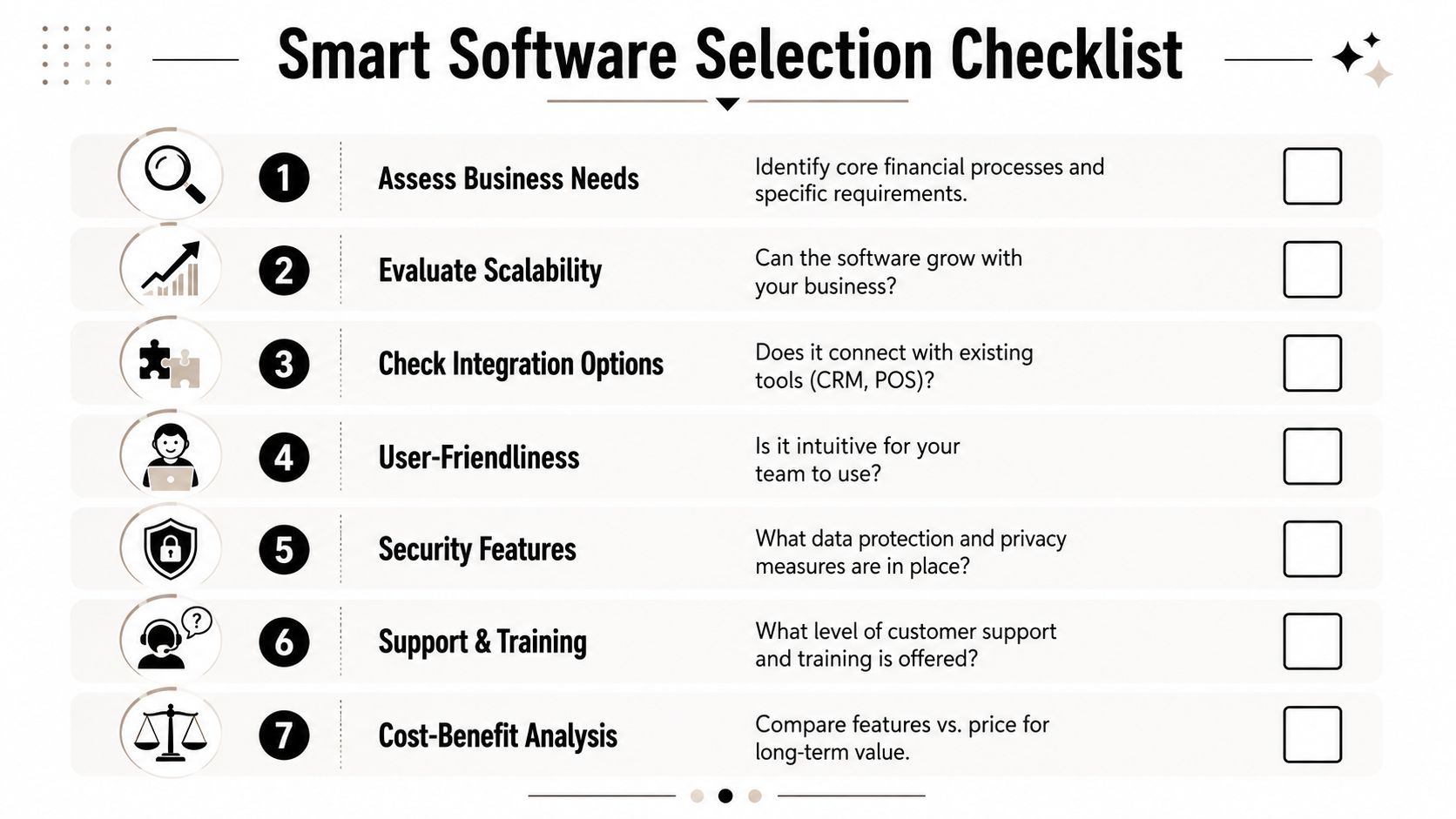
Seven checks before you commit
Start with business pain
Don't ask which software is “best”. Ask which process is broken. Slow invoicing, messy payroll, stock blind spots, and weak reporting require different stacks.Check scalability early
A cheap tool that forces a painful migration later isn't cheap. Look at transaction handling, user permissions, reporting flexibility, and whether add-ons are available when complexity rises.Review integrations properly
Your finance platform should connect with the tools that already run the business. Think POS, eCommerce, payroll, CRM, expense apps, approval systems, and inventory tools.Test accountant compatibility
If your external accountant or finance adviser dislikes the platform, you'll pay for that in workarounds and cleanup.
Before you finish vendor reviews, it helps to hear a broader practitioner view on selection logic. This video is a useful reset if you're still comparing software by surface features alone.
What founders usually miss
The gaps usually show up in the second layer of evaluation, not the first.
User adoption: If the team won't use it consistently, the reports will be wrong.
Approval design: Expenses, bills, and purchasing need clear owners.
Reporting depth: Nice dashboards mean nothing if they can't answer operational questions.
Support and implementation help: Software companies sell software. They don't always solve process issues.
True cost: Subscription price is only one part. Setup time, migration effort, training, and add-ons can matter more.
Here's the quick founder test:
Question | Good answer |
|---|---|
Will this fit our workflow? | Yes, with minimal manual patching |
Will it grow with us? | Yes, without immediate replatforming |
Will our team actually use it? | Yes, because the process is simpler |
Will it improve decisions? | Yes, because the outputs are usable |
A software stack should reduce interpretation effort. If every month still requires manual exports and detective work, keep looking.
Implementation and Gaining Team Buy-In
Buying the platform is the easy part. Implementation is where most finance software projects either become useful or become shelfware with a monthly fee.
Set the system up around real workflows
Founders often treat implementation like a data migration exercise. That's too narrow. The core task is redesigning how money information moves through the business.
Start with the workflows that create the most friction:
Sales to invoice: Who triggers invoicing, when, and from what source data?
Supplier bill capture: Where do bills arrive, who approves them, and how are they coded?
Expense claims: How do staff submit receipts and how fast are they reviewed?
Payroll inputs: Who owns timesheets, leave, allowances, and final checks?
Bank reconciliation: What gets automated and what still needs review?
If those decisions stay vague, the software will mirror the same confusion you had before.
Software should remove choices from routine finance admin. If staff still improvise every step, the process hasn't been implemented.
Build bank rules early. Set invoice reminders from day one. Define chart of accounts logic before transactions pile up. Lock down naming conventions and approval paths while the system is still clean.
Train for behaviour not just button clicks
Team buy-in doesn't come from a training session full of menus and screens. It comes when people understand how the new workflow makes their job easier and what good usage looks like.
That means training by role:
Owners need visibility: cash, margins, debtors, and decision reports.
Admin staff need process clarity: where documents go, what gets checked, what gets escalated.
Managers need accountability: approvals, coding accuracy, and timing.
External advisers need access: so month-end doesn't become a file-sharing circus.
A few practical habits make adoption stick:
Use one source of truth
Don't let side spreadsheets keep running the same process.Review exceptions weekly
Unreconciled items, overdue invoices, and uncoded bills need quick attention.Tie the system to meetings
If leaders use the reports in regular reviews, the team takes data quality seriously.Fix friction fast
When staff hit a workflow issue, solve it immediately. Small frustrations become system avoidance.
Implementation is a people project with finance consequences. Treat it that way and the software earns its keep.
Beyond Software How a Virtual CFO Unlocks Growth
Software gives you cleaner numbers. It does not tell you what those numbers mean for pricing, stock, hiring, debt, or expansion. That gap matters more as the business gets more complex.
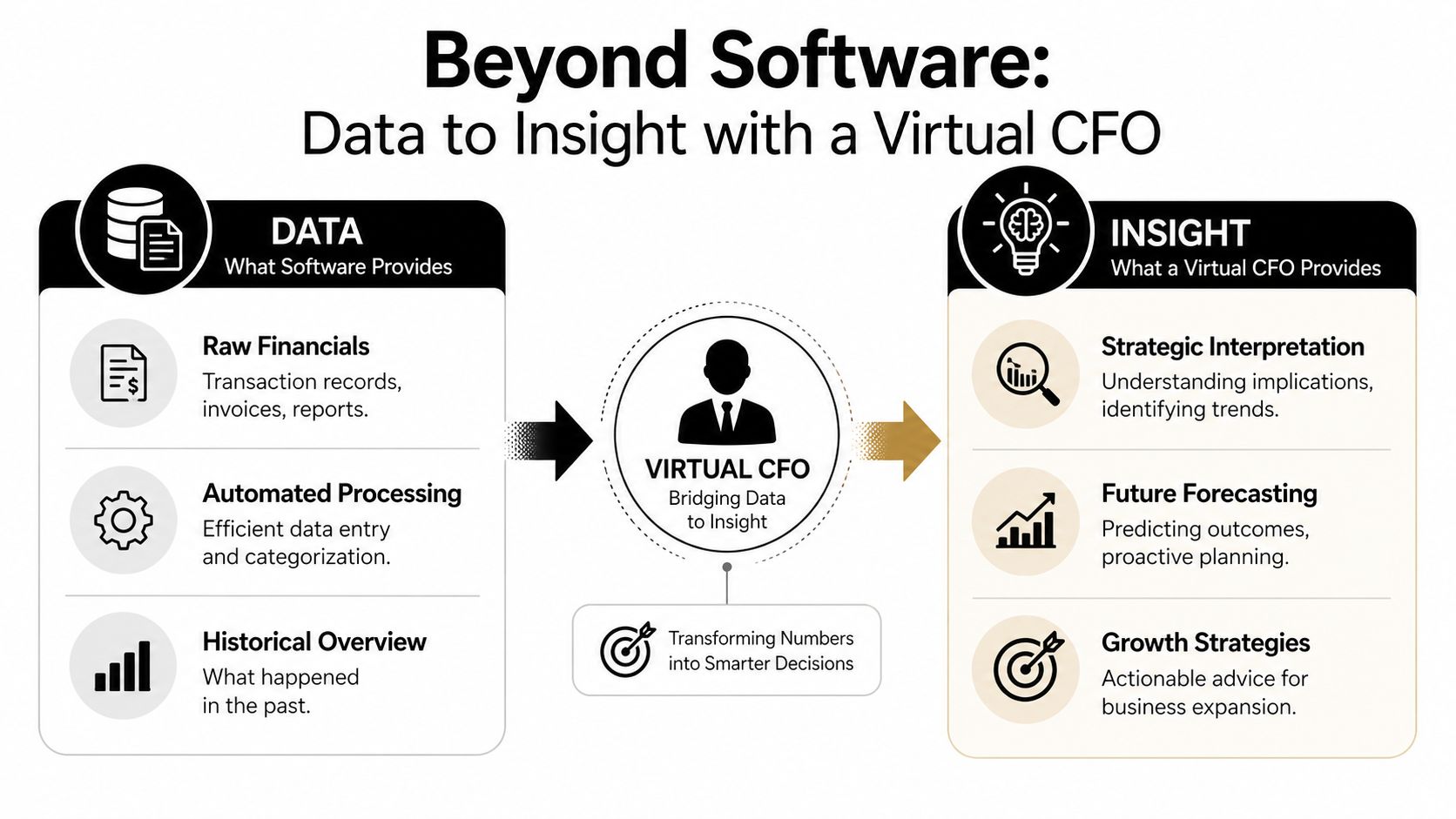
Software tells you what happened
A platform like Xero, MYOB, or QuickBooks Online can process transactions, produce reports, and show balances. That's valuable. But reports on their own don't answer the questions founders lose sleep over.
Questions like:
Why is profit up but cash tight?
Which product line is dragging margin?
Are rising wages being recovered in pricing?
Is stock buying helping growth or starving the bank account?
Can we afford the next hire without creating pressure three months later?
The software won't decide that. It won't challenge your assumptions. It won't build a realistic operating plan around the data unless someone interprets it properly.
A Virtual CFO tells you what to do next
Strategic finance starts. A Virtual CFO turns raw reports into priorities, trade-offs, and actions. That includes forecasting, scenario planning, margin analysis, working capital strategy, and performance accountability.
A good finance system plus strategic oversight changes the conversation from “Are the books up to date?” to “What's the smartest move next?”
That's the difference between data and control.
Data records activity
Insight explains cause
Strategy sets priorities
Execution drives change
If you want a clearer sense of that role, this overview of a Virtual Chief Financial Officer breaks down how strategic finance support works in practice.
The software is the dashboard. A Virtual CFO is the person who reads the road, spots the risks, and tells you when to change direction.
Founders don't need more reports for the sake of reporting. They need a finance engine that helps them protect cash, improve margin, and make confident decisions without guessing. That's why choosing small business finance software is important, but it's never the finish line. It's the base layer. The ultimate value comes from what you do with it next.
If your finance software exists but you still don't feel in control, Nexist can help turn your numbers into decisions. The team works with Australian founders to tighten cash flow, improve margins, fix reporting blind spots, and build a finance system that effectively supports growth.
small business finance software, accounting software australia, virtual cfo services, business financial management, xero myob

" width="24px"/><g d="M 0 24.129 L 0 0.129 L 24 0.129 L 24 24.129 Z M 0 24.129 L 0 0.129 L 24 0.129 L 24 24.129 Z M 24 3 C 24 1.344 22.656 0 21 0 L 3 0 C 1.344 0 0 1.344 0 3 L 0 21 C 0 22.656 1.344 24 3 24 L 21 24 C 22.656 24 24 22.656 24 21 Z M 6.883 8.375 L 2.863 8.375 L 2.863 20.467 L 6.883 20.467 Z M 4.899 2.545 C 3.524 2.545 2.625 3.449 2.625 4.634 C 2.625 5.795 3.496 6.724 4.846 6.724 L 4.872 6.724 C 6.273 6.724 7.146 5.795 7.146 4.634 C 7.12 3.449 6.274 2.545 4.899 2.545 Z M 16.747 8.09 C 14.614 8.09 13.659 9.263 13.124 10.086 L 13.124 8.374 L 9.105 8.374 C 9.159 9.508 9.105 20.466 9.105 20.466 L 13.124 20.466 L 13.124 13.713 C 13.124 13.352 13.15 12.99 13.257 12.732 C 13.547 12.01 14.209 11.262 15.319 11.262 C 16.773 11.262 17.355 12.372 17.355 13.996 L 17.355 20.466 L 21.374 20.466 L 21.374 13.532 C 21.374 9.818 19.391 8.09 16.747 8.09 Z" fill="transparent" height="24.12890599668026px" id="dSFdkJotL" width="24px"><path d="M 0 24 L 0 0 L 24 0 L 24 24 Z" fill="transparent" height="24px" id="wscNJE44G" transform="translate(0 0.129)" width="24px"/><g d="M 0 24.129 L 0 0.129 L 24 0.129 L 24 24.129 Z M 24 3 C 24 1.344 22.656 0 21 0 L 3 0 C 1.344 0 0 1.344 0 3 L 0 21 C 0 22.656 1.344 24 3 24 L 21 24 C 22.656 24 24 22.656 24 21 Z M 6.883 8.375 L 2.863 8.375 L 2.863 20.467 L 6.883 20.467 Z M 4.899 2.545 C 3.524 2.545 2.625 3.449 2.625 4.634 C 2.625 5.795 3.496 6.724 4.846 6.724 L 4.872 6.724 C 6.273 6.724 7.146 5.795 7.146 4.634 C 7.12 3.449 6.274 2.545 4.899 2.545 Z M 16.747 8.09 C 14.614 8.09 13.659 9.263 13.124 10.086 L 13.124 8.374 L 9.105 8.374 C 9.159 9.508 9.105 20.466 9.105 20.466 L 13.124 20.466 L 13.124 13.713 C 13.124 13.352 13.15 12.99 13.257 12.732 C 13.547 12.01 14.209 11.262 15.319 11.262 C 16.773 11.262 17.355 12.372 17.355 13.996 L 17.355 20.466 L 21.374 20.466 L 21.374 13.532 C 21.374 9.818 19.391 8.09 16.747 8.09 Z" fill="transparent" height="24.12890599668026px" id="sTpjGo1tb" width="24px"><path d="M 0 24 L 0 0 L 24 0 L 24 24 Z" fill="transparent" height="24px" id="s7ffpmKOD" transform="translate(0 0.129)" width="24px"/><g d="M 24 3 C 24 1.344 22.656 0 21 0 L 3 0 C 1.344 0 0 1.344 0 3 L 0 21 C 0 22.656 1.344 24 3 24 L 21 24 C 22.656 24 24 22.656 24 21 Z M 6.883 8.375 L 2.863 8.375 L 2.863 20.467 L 6.883 20.467 Z M 4.899 2.545 C 3.524 2.545 2.625 3.449 2.625 4.634 C 2.625 5.795 3.496 6.724 4.846 6.724 L 4.872 6.724 C 6.273 6.724 7.146 5.795 7.146 4.634 C 7.12 3.449 6.274 2.545 4.899 2.545 Z M 16.747 8.09 C 14.614 8.09 13.659 9.263 13.124 10.086 L 13.124 8.374 L 9.105 8.374 C 9.159 9.508 9.105 20.466 9.105 20.466 L 13.124 20.466 L 13.124 13.713 C 13.124 13.352 13.15 12.99 13.257 12.732 C 13.547 12.01 14.209 11.262 15.319 11.262 C 16.773 11.262 17.355 12.372 17.355 13.996 L 17.355 20.466 L 21.374 20.466 L 21.374 13.532 C 21.374 9.818 19.391 8.09 16.747 8.09 Z" fill="transparent" height="24.000006px" id="D0ecaHEcW" transform="translate(0 0)" width="24px"><path d="M 24 3 C 24 1.344 22.656 0 21 0 L 3 0 C 1.344 0 0 1.344 0 3 L 0 21 C 0 22.656 1.344 24 3 24 L 21 24 C 22.656 24 24 22.656 24 21 Z" fill="rgb(55, 184, 218)" height="24.000006px" id="IPLFE6zXx" width="24px"/><path d="M 4.02 0 L 0 0 L 0 12.092 L 4.02 12.092 Z" fill="rgb(255, 255, 255)" height="12.09201px" id="FWhtzAyuY" transform="translate(2.863 8.375)" width="4.02px"/><path d="M 2.274 0 C 0.899 0 0 0.904 0 2.089 C 0 3.25 0.871 4.179 2.221 4.179 L 2.247 4.179 C 3.648 4.179 4.521 3.25 4.521 2.089 C 4.495 0.904 3.649 0 2.274 0 Z" fill="rgb(255, 255, 255)" height="4.17876px" id="VmOsKv4kO" transform="translate(2.625 2.545)" width="4.52095px"/><path d="M 7.641 0 C 5.509 0 4.554 1.173 4.019 1.996 L 4.019 0.284 L 0 0.284 C 0.053 1.419 0 12.376 0 12.376 L 4.019 12.376 L 4.019 5.623 C 4.019 5.262 4.045 4.9 4.151 4.642 C 4.442 3.92 5.103 3.172 6.214 3.172 C 7.667 3.172 8.25 4.282 8.25 5.907 L 8.25 12.376 L 12.269 12.376 L 12.269 5.442 C 12.269 1.728 10.286 0 7.641 0 Z" fill="rgb(255, 255, 255)" height="12.37626px" id="n1XUbhaq0" transform="translate(9.105 8.09)" width="12.268830000000001px"/></g></g></g></g></svg>)