What Is Accounts Receivable and Why It Matters
Learn what is accounts receivable, how it affects cash flow, and what Australian SMEs can do to collect faster and protect working capital.
Ansh Malhotra

Accounts receivable is unpaid invoices for goods or services already delivered, recorded as a current asset that only turns into cash when the customer pays. For an Australian founder, that matters because profit on paper doesn't pay wages, BAS, suppliers, or stock.
You can have a healthy P&L and still be short on cash this week. That gap is usually accounts receivable sitting there, looking like an asset while your bank balance tells the truth.
Table of Contents
The Plain-English Definition Australian Founders Need
If your profit looks fine but payroll feels tight, accounts receivable is probably the reason. You've done the work, sent the invoice, and then waited while cash sits with the customer instead of in your account.
Accounts receivable is money owed to you for work already delivered. On the books, it sits as a current asset. In real life, it's only useful when collections turn that invoice into cash, and that gap is where Australian SMEs lose liquidity. That distinction matters because receivables don't pay suppliers, and they don't fund rent, wages, or tax.
Stop treating AR like a line item and start treating it like timing risk
A lot of founders talk about receivables as if they're just an accounting balance. That's too soft. AR is a cash-conversion problem, and cash conversion is what keeps the business breathing.
The practical question isn't “Do we have receivables?” Every business that invoices does. The core question is, “How long is my money stuck before it comes back?” The longer that stretch, the more pressure you put on overdrafts, reserves, and owner stress.
Practical rule: if an invoice has been issued and the cash hasn't landed, you don't have money yet. You have a promise.
The Australian-focused AR overview from Paidnice makes the scale obvious, late payments cost Australian small business AU$1.1 billion a year, and slow collections can force small businesses to borrow an extra 1.1% for every day payment is delayed. Those are not abstract finance numbers. They're a direct hit to working capital.
If you want the textbook version, AR is the unpaid balance. If you want the founder version, AR is money that should already be helping you run the business.
How Accounts Receivable Is Recorded and Reported
A single invoice goes through a simple sequence. You deliver the goods or service, issue the invoice, record the sale, then wait for cash to arrive. That waiting period is where the accounting gets honest and the bank account gets impatient.
Take a AU$12,000 wholesale order on 30-day terms. When you invoice the customer, you recognise revenue and create an AR balance for the same amount. The sale now sits in the P&L, while the unpaid invoice appears on the balance sheet as a current asset. Cash doesn't move until the customer pays.
What the books actually show
The accounting view is straightforward, even if the cash timing isn't.
Stage | What happens | Where it appears |
|---|---|---|
Invoice issued | Revenue is recognised, customer owes money | P&L and AR ledger |
Invoice unpaid | Balance remains outstanding | Balance sheet as current asset |
Cash received | AR balance reduces, bank balance rises | Cash account and AR subledger |
That split is why founders get confused. Profit can be booked before cash arrives, so a month can look strong in the accounts while the bank account is thin. If GST is in play, the timing matters even more because invoicing and cash collection don't always line up neatly with BAS cycles.
The cleanest way to keep control is reconciliation. A proper accounts receivable ageing report shows what's current and what's slipping. If you want to see how this plays out in a service-heavy setting, the cleaning business accounting 2026 guide is useful because it shows how invoicing, timing, and bookkeeping interact in a practical business.
Why your accountant cares about the subledger
Your general ledger gives the high-level balance. Your AR subledger gives the customer-level detail. If those two don't line up, you've got a bookkeeping problem, a cash application problem, or both.
Rule of thumb: if you can't explain each overdue invoice by customer, date, and reason, you don't control receivables yet.
That's the mental model to keep. AR is not just a number. It's a trail from sale to cash, and the trail needs to be visible.
Why Accounts Receivable Controls Cash Flow and Profit
Receivables sit right between sales and cash. That makes them a working capital issue, not just a bookkeeping one. If collections slow down, the business has less cash available to pay bills even when the P&L still looks respectable.
The metric owners should watch is Days Sales Outstanding, or DSO. It tells you, in plain terms, how long it takes to turn sales into cash. You can estimate it quickly from your sales report and ending receivables balance. High DSO means money is stuck longer, and that usually means more pressure on overdraft, supplier terms, or your own savings.
Use DSO to catch cash drag early
Don't wait for the bank to tell you there's a problem. Watch DSO every month and compare it with your invoice terms. If terms stay the same but DSO rises, collections are slipping.
That's the point where profit and liquidity separate. Gross margin can still look healthy while cash gets trapped in aged invoices, and that gap gets nasty fast in a business that needs to stock inventory or make payroll on a fixed date.
Here's a simple comparison. Two businesses each generate AU$1.2 million in annual revenue. One collects promptly, the other drags invoices out. The slower business carries a much larger AR balance, so more working capital is trapped at any point in time. The result is predictable, it leans harder on overdraft, and it loses flexibility with suppliers.
The guide to cash flow forecasting is worth reading once you've got your receivables under control, because forecasting only works properly when your collections assumptions are realistic.
AR is the bridge between profit and bank reality
Profit is an accounting result. Cash is operational survival. Receivables decide how much of your sales are still imaginary from a cash point of view.
The cash conversion cycle explanation helps here because AR is one leg of the working capital stool. If collections slow, the whole structure gets wobblier. That's why a founder shouldn't ask, “Are we profitable?” and stop there. The better question is, “How quickly is our profit turning into cash?”
Hard truth: a growing AR balance can mean growth, but it can also mean you're financing customers for free.
If your DSO is creeping up and your bank balance is always one supplier run behind, AR isn't supporting the business. It's draining it.
When Receivables Become a Cash Leak
A big AR balance can look impressive until you open the ageing report. Then you see which invoices are current, which ones are drifting, and which ones are turning into bad debt risk.
The ageing buckets matter because they separate normal trade credit from collection trouble. Current invoices are fine. Once balances move into 1 to 30 days, you're in the warning zone. 31 to 60 days means follow-up should already be active. 61 to 90 days is no longer routine admin. 90+ days is where most founders need a decision, not another polite reminder.
Read the buckets, not just the total
The total AR figure can lie to you. A business with a healthy-looking balance but most of it sitting past due is carrying a cash leak, not an asset.
Use this mental filter:
Current invoices: normal trade credit, assuming terms haven't been violated.
1 to 30 days overdue: follow up now, don't wait for month end.
31 to 60 days overdue: escalate the tone and remove ambiguity.
61 to 90 days overdue: treat it as a collection issue, not a scheduling issue.
90+ days overdue: review for dispute, write-off risk, or formal action.
The key line is simple. AR stops being a healthy asset once invoices drift past agreed terms, because every extra day ties up cash and raises the odds of a loss. In Australia's tighter credit environment, that matters more than ever.
A major reason this gets missed is that founders confuse sales momentum with cash quality. A growing receivables balance can mean customers are buying more, but it can also mean you're funding their businesses while yours carries the risk.
Triage rule: if an overdue invoice needs repeated chasers, it's already more expensive than it should be.
The safest response is not to argue with the ageing report. It's to act on it. The older the debt gets, the less influence you have.
How Receivables Behave in Different Australian Businesses
AR doesn't behave the same way in every business model. That's why generic advice usually falls apart. A wholesale distributor, an ecommerce brand, a restaurant group, and a tradie's business can all have receivables, but the risk profile is completely different.
Wholesale and B2B distribution
Wholesale often runs with heavier receivables because customer terms are part of the trade. The danger is concentration risk. If one or two buyers hold up payment, the damage lands quickly because stock has already been funded and moved.
In these businesses, AR quality matters as much as AR size. A large balance from a reliable customer is very different from the same balance spread across weak accounts and disputed invoices.
Ecommerce
Ecommerce usually has less classic AR because cards get charged at checkout or close to it. That doesn't mean cash risk disappears. It shifts into refunds, chargebacks, and settlement timing. So if you run ecommerce, don't obsess over traditional AR in the same way a wholesaler would. Watch payment flow and cash timing instead.
Hospitality and trades
Hospitality and trade businesses often deal with deposits, variations, progress claims, and final balances. The receivables are usually smaller, but messier. One disputed claim can sit around far longer than it should because the paperwork wasn't tight enough at the start.
For any founder trying to benchmark themselves, the answer is not to copy another industry's ratio blindly. The same AR dollar means very different things depending on stock, labour, margin, and billing structure.
Match the metric to the model
Wholesale: focus on customer concentration, disputed balances, and due-date discipline.
Ecommerce: focus on settlement speed, refunds, and cash leakage after the sale.
Hospitality: focus on deposits, event terms, and end-of-job collections.
Trades: focus on progress claims, variations, and signed approval before invoicing.
If you want a practical lens on working capital in a finance-led advisory context, Nexist's virtual chief financial officer material is relevant because it ties receivables back to cash control and owner decision-making. The point is not to chase a perfect benchmark. It's to know what “normal” looks like in your own model.
The Practical Playbook for Faster Collections
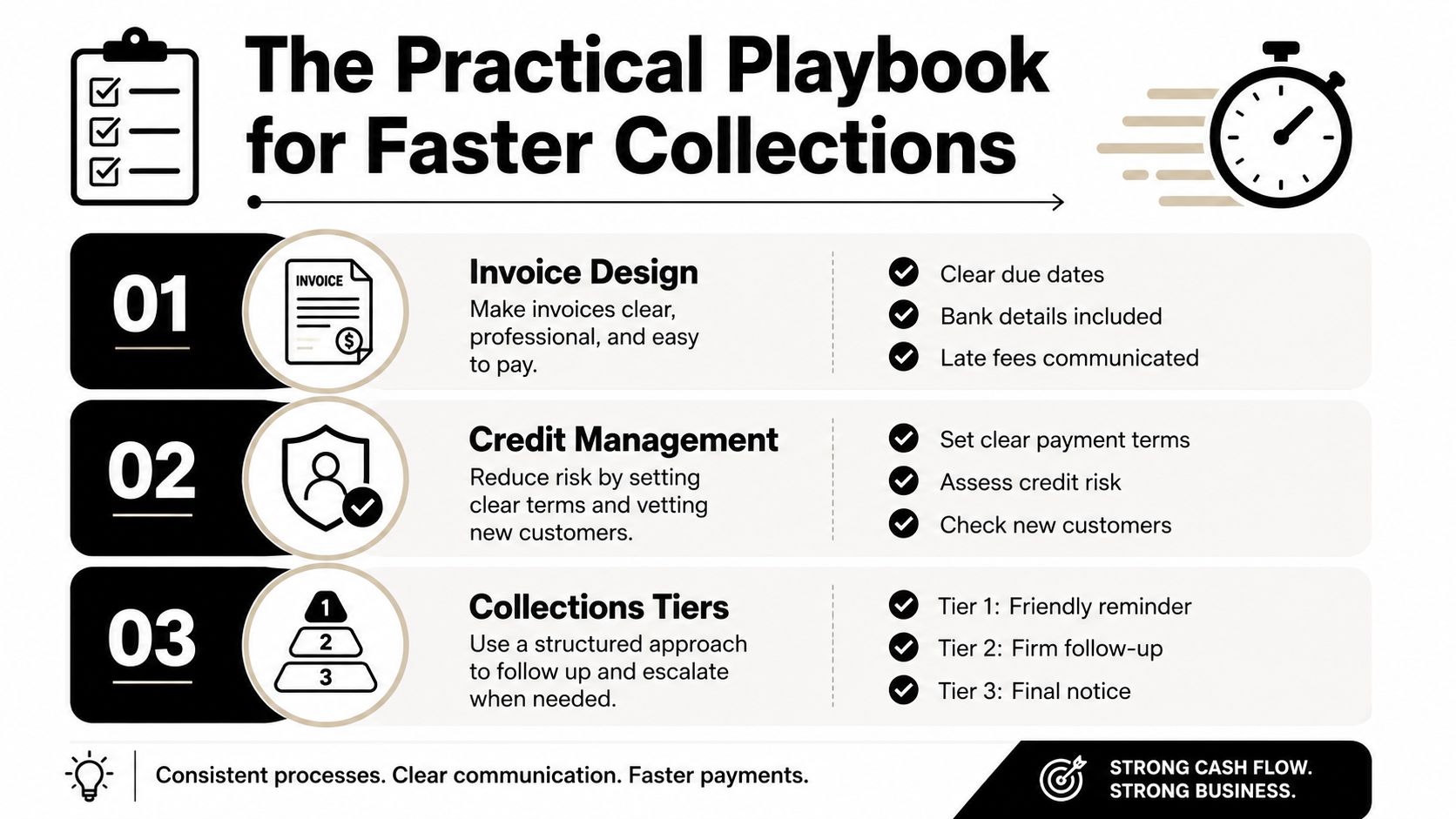
Fixing receivables starts with the invoice itself. If the document is vague, the due date is buried, or the payment details are hard to find, you've already made collections harder than they need to be.
Tighten the invoice first
Put the due date where a customer can't miss it. Add clear bank details, exact payment instructions, and late-fee language if your contracts allow it. If your sales terms live in someone's head instead of in the contract, that's a red flag.
Then clean up your credit process. Don't extend terms to new customers by default. Run basic credit checks where the order value justifies it, especially if you're supplying stock before cash lands. A customer with weak payment history can turn your month upside down fast.
Build a collections cadence, then automate it
Manual chasing burns owner time. Use a tiered process instead.
Friendly reminder: send it before or on the due date.
Firm follow-up: if payment hasn't landed, make the tone more direct.
Final notice: set a deadline and spell out next steps.
If you need help with the wording, the reminder email ideas from Micro CRM are a useful starting point for building cleaner follow-up messages. Nexist also publishes accounts receivable management material covering invoice reminders, recurring invoice templates, statement generation, and automated invoice sending, which is the sort of setup that stops you from chasing the same invoice by hand every week.
Best practice: every unpaid invoice should have one owner, one next action, and one date.
Use software to remove repetition. Accounting systems like Xero, plus basic workflow automation, can send reminders, surface overdue accounts, and reduce the chance that invoices disappear into inbox noise. The goal is simple, less manual chasing and fewer excuses from customers.
A quick self-audit
Invoice clarity: can a customer pay without asking questions?
Term discipline: do your contracts match your invoices?
Follow-up rhythm: does someone chase every overdue account on time?
Automation: are reminders triggered by the system, not memory?
Visibility: can you see overdue balances before month end?
If any of those are weak, don't buy more software first. Fix the process, then automate it.
When to Bring in a Virtual CFO or AR Partner

If receivables are eating your time and you're still not getting paid, the problem isn't just admin. It's a systems problem. That's the point where outside help starts to make sense.
The first signal is rising DSO. The second is ageing that bunches into the 60+ day buckets. The third is owner time. If you're spending more than a few hours a week chasing invoices, the business is paying you to be a debt collector instead of a leader.
A good virtual CFO or AR partner doesn't just “do the books”. They tighten credit policy, redesign collections rules, clean up reporting, and put the right automation in place so cash moves faster. They also help you decide which customers deserve terms and which ones don't.
If you want a simple starter point for the follow-up process, the reminder email ideas from Micro CRM show how better sequencing can improve response without turning every chase into a confrontation. That's useful, but it's still tactical. Systemic issues need structural fixes.
Nexist's virtual chief financial officer service fits this kind of problem because it's built around cash flow, margins, and operational control, not just reporting after the fact. In practice, that means someone looks at receivables alongside pricing, inventory, forecasting, and owner workload, then helps turn the numbers into decisions.
Use this decision rule
If the issue is one or two slow payers, tighten follow-up.
If the issue is recurring across many customers, fix the credit policy.
If the issue is recurring and the owner keeps chasing manually, bring in help.
That's the clean line. Don't wait until the bank overdraft becomes the collections manager.
If your profit is stuck in unpaid invoices, Nexist helps Australian founders turn receivables into actual cash with forecasting, credit policy review, collections process design, and hands-on finance support. Visit Nexist if you want a virtual CFO team that will find the cash leaks, tighten the system, and give you a clearer path to getting paid faster.
accounts receivable, AR management, cash flow, DSO, Australian SMEs

" width="24px"/><g d="M 0 24.129 L 0 0.129 L 24 0.129 L 24 24.129 Z M 0 24.129 L 0 0.129 L 24 0.129 L 24 24.129 Z M 24 3 C 24 1.344 22.656 0 21 0 L 3 0 C 1.344 0 0 1.344 0 3 L 0 21 C 0 22.656 1.344 24 3 24 L 21 24 C 22.656 24 24 22.656 24 21 Z M 6.883 8.375 L 2.863 8.375 L 2.863 20.467 L 6.883 20.467 Z M 4.899 2.545 C 3.524 2.545 2.625 3.449 2.625 4.634 C 2.625 5.795 3.496 6.724 4.846 6.724 L 4.872 6.724 C 6.273 6.724 7.146 5.795 7.146 4.634 C 7.12 3.449 6.274 2.545 4.899 2.545 Z M 16.747 8.09 C 14.614 8.09 13.659 9.263 13.124 10.086 L 13.124 8.374 L 9.105 8.374 C 9.159 9.508 9.105 20.466 9.105 20.466 L 13.124 20.466 L 13.124 13.713 C 13.124 13.352 13.15 12.99 13.257 12.732 C 13.547 12.01 14.209 11.262 15.319 11.262 C 16.773 11.262 17.355 12.372 17.355 13.996 L 17.355 20.466 L 21.374 20.466 L 21.374 13.532 C 21.374 9.818 19.391 8.09 16.747 8.09 Z" fill="transparent" height="24.12890599668026px" id="dSFdkJotL" width="24px"><path d="M 0 24 L 0 0 L 24 0 L 24 24 Z" fill="transparent" height="24px" id="wscNJE44G" transform="translate(0 0.129)" width="24px"/><g d="M 0 24.129 L 0 0.129 L 24 0.129 L 24 24.129 Z M 24 3 C 24 1.344 22.656 0 21 0 L 3 0 C 1.344 0 0 1.344 0 3 L 0 21 C 0 22.656 1.344 24 3 24 L 21 24 C 22.656 24 24 22.656 24 21 Z M 6.883 8.375 L 2.863 8.375 L 2.863 20.467 L 6.883 20.467 Z M 4.899 2.545 C 3.524 2.545 2.625 3.449 2.625 4.634 C 2.625 5.795 3.496 6.724 4.846 6.724 L 4.872 6.724 C 6.273 6.724 7.146 5.795 7.146 4.634 C 7.12 3.449 6.274 2.545 4.899 2.545 Z M 16.747 8.09 C 14.614 8.09 13.659 9.263 13.124 10.086 L 13.124 8.374 L 9.105 8.374 C 9.159 9.508 9.105 20.466 9.105 20.466 L 13.124 20.466 L 13.124 13.713 C 13.124 13.352 13.15 12.99 13.257 12.732 C 13.547 12.01 14.209 11.262 15.319 11.262 C 16.773 11.262 17.355 12.372 17.355 13.996 L 17.355 20.466 L 21.374 20.466 L 21.374 13.532 C 21.374 9.818 19.391 8.09 16.747 8.09 Z" fill="transparent" height="24.12890599668026px" id="sTpjGo1tb" width="24px"><path d="M 0 24 L 0 0 L 24 0 L 24 24 Z" fill="transparent" height="24px" id="s7ffpmKOD" transform="translate(0 0.129)" width="24px"/><g d="M 24 3 C 24 1.344 22.656 0 21 0 L 3 0 C 1.344 0 0 1.344 0 3 L 0 21 C 0 22.656 1.344 24 3 24 L 21 24 C 22.656 24 24 22.656 24 21 Z M 6.883 8.375 L 2.863 8.375 L 2.863 20.467 L 6.883 20.467 Z M 4.899 2.545 C 3.524 2.545 2.625 3.449 2.625 4.634 C 2.625 5.795 3.496 6.724 4.846 6.724 L 4.872 6.724 C 6.273 6.724 7.146 5.795 7.146 4.634 C 7.12 3.449 6.274 2.545 4.899 2.545 Z M 16.747 8.09 C 14.614 8.09 13.659 9.263 13.124 10.086 L 13.124 8.374 L 9.105 8.374 C 9.159 9.508 9.105 20.466 9.105 20.466 L 13.124 20.466 L 13.124 13.713 C 13.124 13.352 13.15 12.99 13.257 12.732 C 13.547 12.01 14.209 11.262 15.319 11.262 C 16.773 11.262 17.355 12.372 17.355 13.996 L 17.355 20.466 L 21.374 20.466 L 21.374 13.532 C 21.374 9.818 19.391 8.09 16.747 8.09 Z" fill="transparent" height="24.000006px" id="D0ecaHEcW" transform="translate(0 0)" width="24px"><path d="M 24 3 C 24 1.344 22.656 0 21 0 L 3 0 C 1.344 0 0 1.344 0 3 L 0 21 C 0 22.656 1.344 24 3 24 L 21 24 C 22.656 24 24 22.656 24 21 Z" fill="rgb(55, 184, 218)" height="24.000006px" id="IPLFE6zXx" width="24px"/><path d="M 4.02 0 L 0 0 L 0 12.092 L 4.02 12.092 Z" fill="rgb(255, 255, 255)" height="12.09201px" id="FWhtzAyuY" transform="translate(2.863 8.375)" width="4.02px"/><path d="M 2.274 0 C 0.899 0 0 0.904 0 2.089 C 0 3.25 0.871 4.179 2.221 4.179 L 2.247 4.179 C 3.648 4.179 4.521 3.25 4.521 2.089 C 4.495 0.904 3.649 0 2.274 0 Z" fill="rgb(255, 255, 255)" height="4.17876px" id="VmOsKv4kO" transform="translate(2.625 2.545)" width="4.52095px"/><path d="M 7.641 0 C 5.509 0 4.554 1.173 4.019 1.996 L 4.019 0.284 L 0 0.284 C 0.053 1.419 0 12.376 0 12.376 L 4.019 12.376 L 4.019 5.623 C 4.019 5.262 4.045 4.9 4.151 4.642 C 4.442 3.92 5.103 3.172 6.214 3.172 C 7.667 3.172 8.25 4.282 8.25 5.907 L 8.25 12.376 L 12.269 12.376 L 12.269 5.442 C 12.269 1.728 10.286 0 7.641 0 Z" fill="rgb(255, 255, 255)" height="12.37626px" id="n1XUbhaq0" transform="translate(9.105 8.09)" width="12.268830000000001px"/></g></g></g></g></svg>)