Small Business Tax Reduction: 10 Strategies
Practical small business tax reduction strategies for Australian owners—deductions, concessions, timing tips and cash-flow wins to keep more money in your
Ansh Malhotra

You're probably looking at a BAS deadline, a stack of receipts, a payroll run and a bank balance that feels too thin for comfort. That's the Australian small business tax problem. It's not just how much tax you pay, it's how much cash you lose by leaving decisions too late.
The founders who win on small business tax reduction don't wait for June to “do tax”. They build a monthly habit around deductions, stock, timing and recordkeeping, so tax becomes part of cash management, not a panic attack at lodgement time.
Table of Contents
Why Tax Reduction Is Really a Cash-Flow Game
A founder can show a healthy profit on paper and still be scrambling to pay suppliers, wages, or BAS. The usual cause is simple. Deductions are claimed late, assets are bought at the wrong time, and stock stays unreconciled until year-end. That is why I treat small business tax reduction as a cash discipline, not a compliance chore. The tax return is just the clean-up exercise at the end.
Timing beats panic
A lot of owners fixate on the tax rate. That misses the problem. Tax is paid on a schedule, cash moves in messy waves, and those waves do not care about your lodgement calendar. If your records are not current, the business will always feel behind. The ATO-aligned recordkeeping guidance is blunt about this, small businesses need monthly reconciliation of BAS, bank feeds, invoices and receipts, and digital records make substantiation easier while reducing errors in GST, PAYG and income tax reporting (CNB business banking tax planning strategies).
Historical tax changes also show why structure matters. Australia's small business company tax rate moved from 30% to 28.5% in 2015–16, then to 27.5% from 1 July 2016 under the then Coalition tax plan, and the policy point was simple, more after-tax cash stays in the business (CFIB research on the small business tax rate). On AUD 100,000 of taxable income, that means AUD 2,500 more retained before other taxes and offsets. That is real inventory, payroll buffer or software spend, not abstract policy theory.
Practical rule: if you only look at tax once a year, you have already left money behind.
Stock-heavy businesses feel timing mistakes first. Inventory valuation, stock write-downs and the timing of purchases decide what gets trapped in the balance sheet and what can be recognised now. If your business sells products, the reseller inventory costing tips are worth reading because valuation discipline is where cash leaks usually start.
A founder should ask one question every month. How do I keep more cash working in the business between now and 30 June? That question forces better decisions on spend, stock, and deductions. It also tells you when a virtual CFO starts paying for themselves, because the value shows up in timing, not just in tax saved on paper. For the cash side of that discipline, this guide on small business cash flow problems gives the practical pressures that usually show up first.
That mindset shift is what separates reactive tax panic from proactive cash management.
Setting Up a Monthly Tax Rhythm That Protects Deductions
A founder gets burned on tax when the books are left to drift. Receipts stay buried in inboxes, private and business spending mix in the same account, and BAS work gets rushed when the deadline is already close. At that point you are not running a tax process, you are trying to reconstruct evidence after the fact. Each claim still needs support, and digital recordkeeping makes that support easier to keep in place.
Build the same rhythm every month
Keep it boring. Boring wins.
Reconcile bank feeds weekly, not just monthly. Small mismatches turn into missed deductions when you leave them too long.
Match invoices and receipts to the right account code. Sloppy coding leads to sloppy claims.
Separate private and business spending completely. Mixed transactions are the quickest way to create a review problem.
Check GST, PAYG and income tax treatment together. A good bookkeeper looks at how the treatments interact, not just the line item.
Review stock, debtors and unpaid bills at month end. If those balances do not tie out, the tax position is already drifting.
A 15-minute end-of-month review is enough if you do it. Prevention through consistent review beats perfection every time. I have seen owners assume they had a tax problem, only to find a bookkeeping problem that had been stacking up for months. Once bank feeds, receipts and invoices were aligned, deductions stopped leaking out through the gaps.
Watch this closely: if private meals, subscriptions or vehicle spend are landing in the business account, your records are already compromised.
Use quarter-end as a decision point
Quarter-end should answer three questions. What has been paid but not claimed? What has been invoiced but not yet received? What stock or contractor spend needs paperwork before the BAS is locked in? A bookkeeper, VA or virtual CFO earns their fee through sequencing and follow-through, because that is what keeps the claim, the cash and the books in sync.
If your current workflow cannot produce clean records without a scramble each quarter, it is leaking deductions. Fix the process before you chase another tax tip. The right routine protects cash, keeps claims alive and stops tax work from turning into a year-end fire drill. Use the organize deductible expenses guide if you need a cleaner way to sort receipts and group claims before year-end.
The Deductions Australian SMEs Most Often Miss
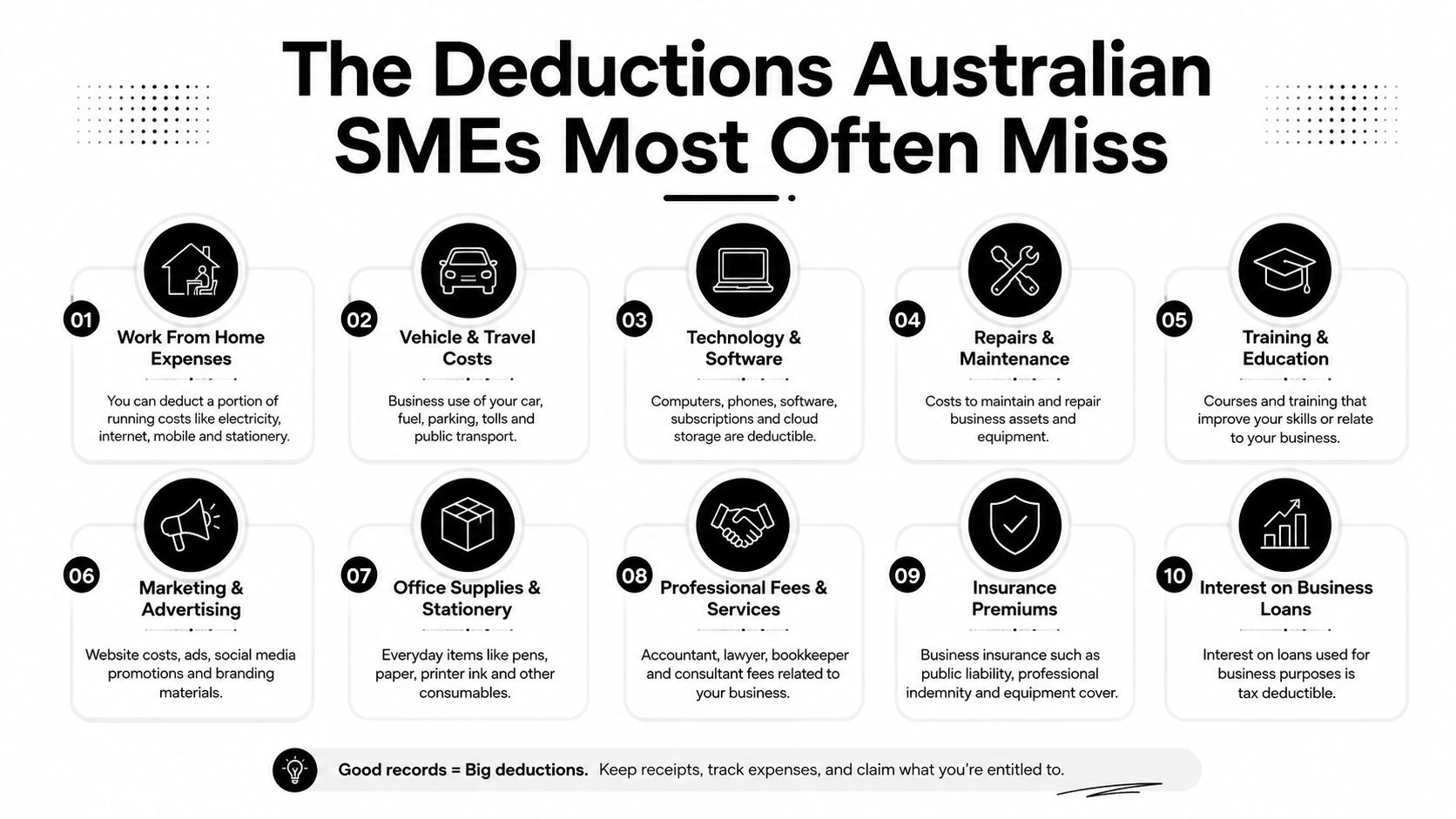
Most small businesses don't need more deductions, they need to claim the ones they already have properly. The pattern is consistent, home-office costs get underclaimed, software is treated as “just overhead”, vehicle logs are missing, and bad debts or obsolete stock sit in the books long after they should have been dealt with. That is dead money sitting there.
Claim the spend that supports the business
Some deductions are obvious, but only if you keep the evidence tidy.
Home Office: claim the business portion of internet and utilities, not just the desk space.
Motor Vehicle: keep a logbook if you want the claim to stand up.
Professional Development: courses, certifications and training tied to the business matter.
Software and Subscriptions: SaaS tools, accounting systems and niche platforms are often missed or miscoded.
Contractor Payments: payments to subcontractors need correct records and the right reporting treatment.
The best place to start is a clean deductions register, not your memory. If you need a practical way to sort receipts and group claims before year-end, use an external workflow like the organize deductible expenses guide and adapt it to your chart of accounts. The value isn't the template, it's the discipline of assigning each cost to a category before the evidence goes stale.
Don't ignore stock, debtors and bad debts
Inventory-heavy businesses leave serious cash on the table when obsolete stock sits untouched. A proper write-down needs stocktake evidence and accounting records, not a rough guess on the back of a receipt. Bad debts need the same treatment. If an invoice is never going to be paid, it shouldn't keep sitting there as if it is a real asset.
Hard line: undocumented cash purchases and personal lifestyle costs hidden in the business almost never survive a review.
Know the difference between “spend it” and “paperwork it”
Some items need action before 30 June, such as software subscriptions, training or deductible prepayments where the tax treatment allows it. Others are pure paperwork items, like contractor records, stocktake support and the evidence for write-downs. Treat them differently. Owners who lump everything into “end of year tax prep” usually miss the timing window and then wonder why the deduction didn't land.
Small Business Tax Concessions and the 27.5 Percent Rate
Small business tax concessions only work when the structure is right and the elections are made on time. Miss the entity settings, ignore the eligibility rules, or let turnover flow through the wrong entities, and you hand cash back to the ATO for no good reason. As noted earlier, the rate moved from 30% to 27.5% over several years, but the primary issue is whether your business is set up to keep the benefit once it qualifies.
What the concession stack is really doing
The rate is only one part of the picture. The value sits in the concession stack, which can include capital gains concessions, simplified trading stock rules, PAYG instalment options, prepaid expense timing, and the small business income tax offset for eligible sole traders and partnerships. Some concessions apply automatically, others depend on a deliberate choice, and owners who assume the tax agent has already covered every box usually find out too late that they missed one.
Structure decides access. Timing decides when the benefit lands. Registration and elections decide whether the concession survives review at all.
That is why aggregated turnover matters so much. The test is not just about sales in one entity, it is about how related entities and connected businesses are counted together, so a tidy looking business can still fail the threshold if the broader group is not checked properly. If you want a clear explanation of how that test works, use this aggregated turnover explainer and then compare it with your own entity map before year-end.
Practical rule: concessions only help when the business is structured to receive them and the paperwork is done on time.
The cash effect is the real story
A lower tax rate does more than make the tax bill smaller. It leaves more cash in the business, which affects retained earnings, working capital, and the funds available for reinvestment. That matters most in thin-margin businesses, where supplier terms, wages, and stock orders already put pressure on cash.
Founders often treat concessions as a year-end tax tidy-up. That is the wrong frame. Concessions are a cash-flow tool, and they only do their job when the business uses them deliberately, checks eligibility early, and makes any required elections before the deadline.
Asset Timing, Depreciation and the Instant Write-Off
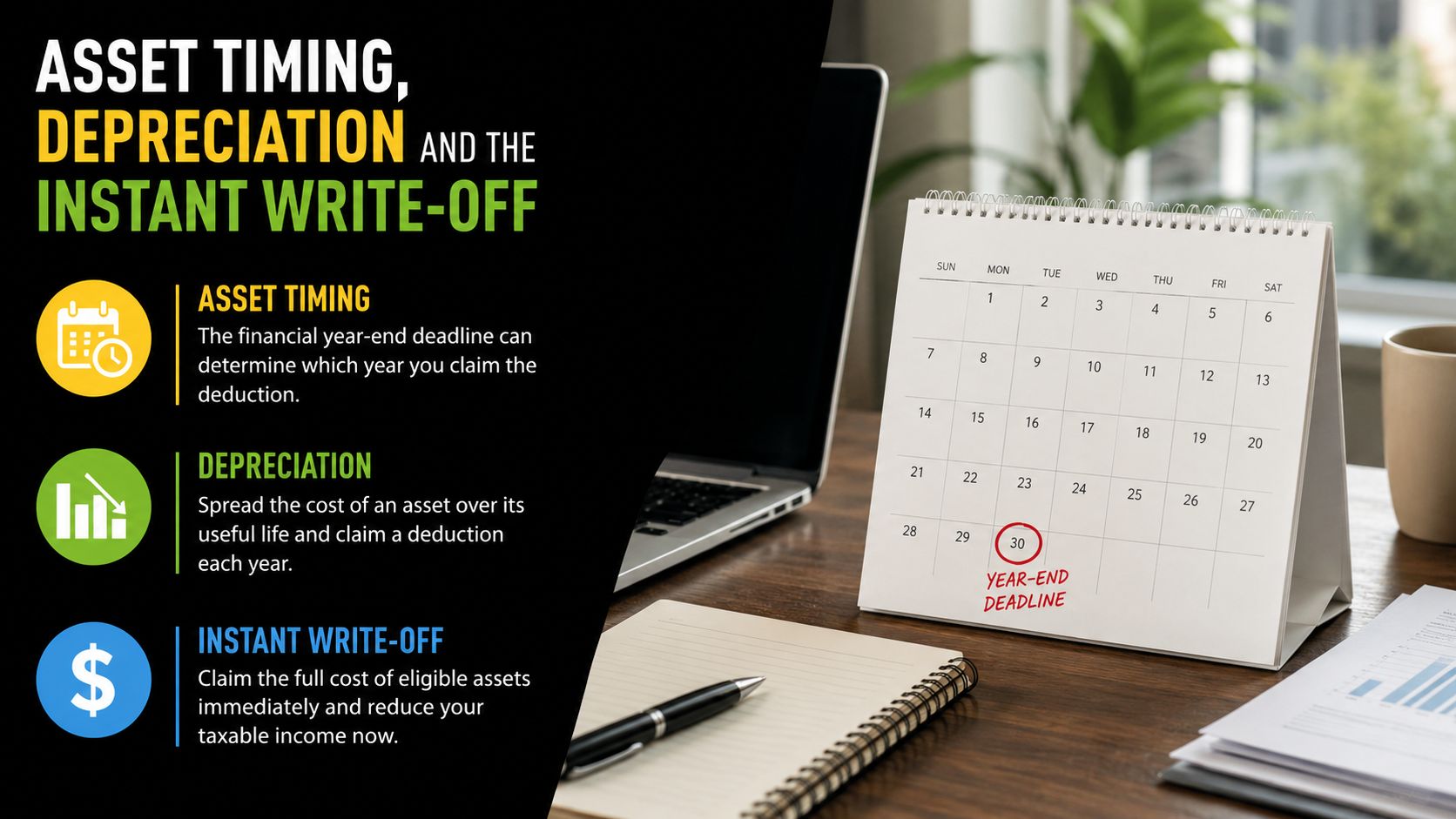
The biggest tax wins for equipment-heavy businesses usually sit in the fixed-asset register, not the profit and loss. That's because asset timing changes when the deduction lands, and cash value depends on when the deduction hits, not just whether it exists. If you buy equipment, fit-out items or a vehicle at the right time, you can accelerate the tax benefit instead of letting it dribble out over future periods.
Buy for the tax year you want, not the year you feel busy
The principle is simple. If an asset is going to be needed anyway, the timing decision should be deliberate. The same applies to fit-out spend, production gear, warehouse equipment and work vehicles. A late-year purchase can materially change the current year's tax position because the deduction starts sooner, which is why the fixed-asset register deserves more attention than it usually gets.
Key move: don't let purchasing decisions drift past 30 June just because the operational need showed up late.
For small businesses that qualify, the instant asset write-off and the simplified depreciation pool are the main tools. The instant write-off gives a faster deduction for eligible assets, while the pool spreads deductions differently across asset categories under the small-business rules. The technical detail changes over time, so the decision is not “Can I buy it?” but “Does buying it now improve cash better than buying it later?” That's a cash question, not an accounting question.
Watch the threshold edge cases
Assets sitting just above the limit often need a more careful review than owners expect. Sometimes the answer is to defer the purchase. Sometimes it's to split the project into components that are treated differently. Sometimes it's to document the commercial reason for the spend so the accounting treatment is clean. The point is to decide before the invoice is paid, not after.
A virtual CFO or a strong tax adviser earns their fee. They don't just classify the spend, they sequence it. For businesses that need a broader operational view, Nexist's virtual CFO work is one example of that function, because it combines forecasting, cash planning and tax timing rather than treating each item in isolation.
If your business is in trades, hospitality, freight or manufacturing, this is one of the few areas where a single purchase can move the tax outcome immediately. Don't buy assets by habit. Buy them with the tax calendar in mind.
Real Case Examples of Tax Reduction in Action
The founders who handle this well usually do not talk about “tax strategy”. They talk about lower stress, fewer surprises, and a bank balance that is not constantly under pressure. These examples are anonymised, but they reflect the kinds of decisions that change outcomes in real businesses.
Ecommerce operator
A product business had stock sitting too long, SaaS spend scattered across multiple cards, and a new pick-and-pack system waiting to be installed. The fix was straightforward. Write down obsolete stock, reclassify the software correctly, and time the equipment purchase so the deduction landed when it mattered.
Business Type | Key Strategies Used | Approx. Cash Impact | Timeframe |
|---|---|---|---|
Ecommerce | Stock write-down, instant write-off on pick-and-pack system, reclassification of SaaS subscriptions | AUD 22,000 | One quarter |
The biggest lesson went beyond the number. It was the sequence. Once the books matched the business reality, the cash position stopped looking worse than it really was.
Tradie
A trade business moved from sole trader to a small company structure so the owner could access the 27.5% company tax rate and line up the business structure with longer-term retirement planning. The owner also cleaned up the treatment of a future CGT event, which created a more useful exit position. The gain was not just tax, it was control over timing and retained cash.
Business Type | Key Strategies Used | Approx. Cash Impact | Timeframe |
|---|---|---|---|
Tradie | Entity restructure, company rate access, CGT retirement planning | Meaningful cash retention through lower ongoing tax | Three years |
Many owners get stuck in "sole trader by default". That default can be expensive once the business outgrows it.
Hospitality venue
A venue with regular supplier pressure used prepaid expense timing, an energy-related upgrade incentive, and a PAYG instalment variation to avoid a nasty mid-year shock. The numbers only worked because the owner acted early, before the cash squeeze became a crisis.
Business Type | Key Strategies Used | Approx. Cash Impact | Timeframe |
|---|---|---|---|
Hospitality | Prepayments, energy upgrade incentive, PAYG instalment variation | Avoided a AUD 14,000 mid-year tax shock | One financial year |
The lesson is direct. The tax system is easier to manage when you change the obligations before they hit the bank account. Waiting for the bill and then reacting is how owners end up financing the ATO with their operating cash.
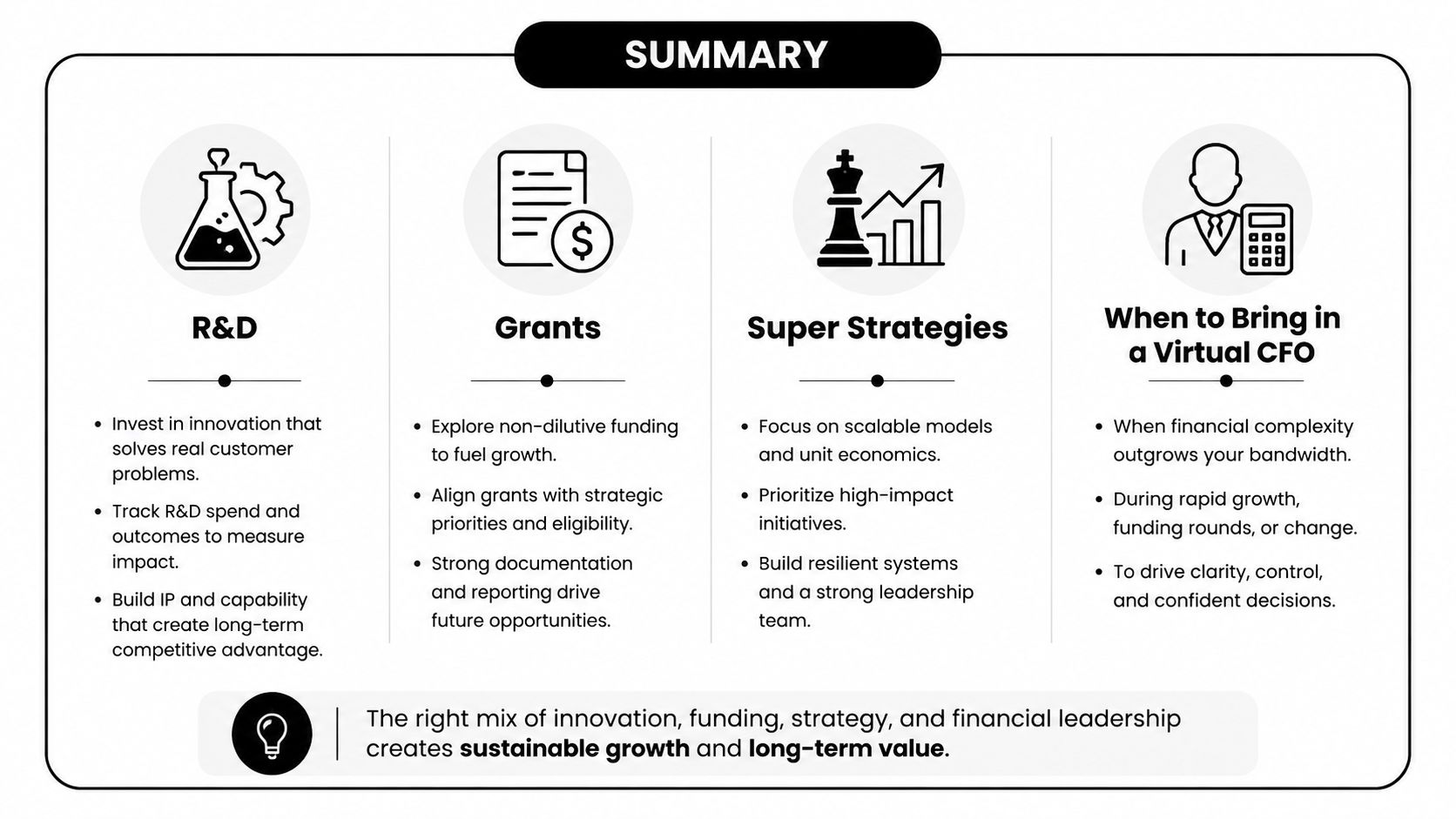
R&D, Grants, Super Strategies and When to Bring in a Virtual CFO
Some levers need more than basic bookkeeping. If your business is building software, improving a process, launching a product or investing in capability, the R&D Tax Incentive can be relevant when the activity is eligible. Grants can also lower the after-tax cost of investment, and super strategies can shift taxable income into a more controlled environment when they're used properly.
Use the hard stuff when the business is ready
Don't chase complex tax incentives just because they sound clever. R&D claims need discipline, grants need matching evidence, and super strategies need coordination with payroll and year-end planning. If the business doesn't have clean records, chasing these levers will just create more admin.
The same is true for owners who are too busy to see the patterns. BAS stress, missed concession elections, stock that doesn't reconcile and recurring tax surprises are signals that the function needs proper oversight. If you're at that point, read Nexist's virtual CFO overview and compare it against what your business is doing today.
Straight answer: a virtual CFO pays for themselves when cleaner systems, better timing and fewer mistakes save more cash than the fee costs.
Use a simple decision rule
If your business is still tiny, keep the system lean. If the business is growing, stock-heavy, or juggling payroll, BAS and stock timing at once, stop improvising. That's the point where a virtual CFO stops being a nice-to-have and becomes an operating control.
Prioritise these actions this quarter:
Reconcile deductions monthly: don't wait for June to discover what was missed.
Review stock and bad debts: write down what's gone.
Check concession eligibility: make sure structure and elections still fit.
Plan major purchases early: time assets, don't just buy them.
Get cash-flow oversight: if tax surprises keep happening, the system is broken.
If you want more cash left in the business, Nexist can help with monthly tax provisioning, deductible spend review, stock write-downs and the cash-flow systems that keep founders out of last-minute tax panic. Visit Nexist and get serious about turning tax into a cash discipline instead of an annual scramble.
small business tax reduction, Australian tax tips, SME deductions, cash flow planning, virtual CFO

" width="24px"/><g d="M 0 24.129 L 0 0.129 L 24 0.129 L 24 24.129 Z M 0 24.129 L 0 0.129 L 24 0.129 L 24 24.129 Z M 24 3 C 24 1.344 22.656 0 21 0 L 3 0 C 1.344 0 0 1.344 0 3 L 0 21 C 0 22.656 1.344 24 3 24 L 21 24 C 22.656 24 24 22.656 24 21 Z M 6.883 8.375 L 2.863 8.375 L 2.863 20.467 L 6.883 20.467 Z M 4.899 2.545 C 3.524 2.545 2.625 3.449 2.625 4.634 C 2.625 5.795 3.496 6.724 4.846 6.724 L 4.872 6.724 C 6.273 6.724 7.146 5.795 7.146 4.634 C 7.12 3.449 6.274 2.545 4.899 2.545 Z M 16.747 8.09 C 14.614 8.09 13.659 9.263 13.124 10.086 L 13.124 8.374 L 9.105 8.374 C 9.159 9.508 9.105 20.466 9.105 20.466 L 13.124 20.466 L 13.124 13.713 C 13.124 13.352 13.15 12.99 13.257 12.732 C 13.547 12.01 14.209 11.262 15.319 11.262 C 16.773 11.262 17.355 12.372 17.355 13.996 L 17.355 20.466 L 21.374 20.466 L 21.374 13.532 C 21.374 9.818 19.391 8.09 16.747 8.09 Z" fill="transparent" height="24.12890599668026px" id="dSFdkJotL" width="24px"><path d="M 0 24 L 0 0 L 24 0 L 24 24 Z" fill="transparent" height="24px" id="wscNJE44G" transform="translate(0 0.129)" width="24px"/><g d="M 0 24.129 L 0 0.129 L 24 0.129 L 24 24.129 Z M 24 3 C 24 1.344 22.656 0 21 0 L 3 0 C 1.344 0 0 1.344 0 3 L 0 21 C 0 22.656 1.344 24 3 24 L 21 24 C 22.656 24 24 22.656 24 21 Z M 6.883 8.375 L 2.863 8.375 L 2.863 20.467 L 6.883 20.467 Z M 4.899 2.545 C 3.524 2.545 2.625 3.449 2.625 4.634 C 2.625 5.795 3.496 6.724 4.846 6.724 L 4.872 6.724 C 6.273 6.724 7.146 5.795 7.146 4.634 C 7.12 3.449 6.274 2.545 4.899 2.545 Z M 16.747 8.09 C 14.614 8.09 13.659 9.263 13.124 10.086 L 13.124 8.374 L 9.105 8.374 C 9.159 9.508 9.105 20.466 9.105 20.466 L 13.124 20.466 L 13.124 13.713 C 13.124 13.352 13.15 12.99 13.257 12.732 C 13.547 12.01 14.209 11.262 15.319 11.262 C 16.773 11.262 17.355 12.372 17.355 13.996 L 17.355 20.466 L 21.374 20.466 L 21.374 13.532 C 21.374 9.818 19.391 8.09 16.747 8.09 Z" fill="transparent" height="24.12890599668026px" id="sTpjGo1tb" width="24px"><path d="M 0 24 L 0 0 L 24 0 L 24 24 Z" fill="transparent" height="24px" id="s7ffpmKOD" transform="translate(0 0.129)" width="24px"/><g d="M 24 3 C 24 1.344 22.656 0 21 0 L 3 0 C 1.344 0 0 1.344 0 3 L 0 21 C 0 22.656 1.344 24 3 24 L 21 24 C 22.656 24 24 22.656 24 21 Z M 6.883 8.375 L 2.863 8.375 L 2.863 20.467 L 6.883 20.467 Z M 4.899 2.545 C 3.524 2.545 2.625 3.449 2.625 4.634 C 2.625 5.795 3.496 6.724 4.846 6.724 L 4.872 6.724 C 6.273 6.724 7.146 5.795 7.146 4.634 C 7.12 3.449 6.274 2.545 4.899 2.545 Z M 16.747 8.09 C 14.614 8.09 13.659 9.263 13.124 10.086 L 13.124 8.374 L 9.105 8.374 C 9.159 9.508 9.105 20.466 9.105 20.466 L 13.124 20.466 L 13.124 13.713 C 13.124 13.352 13.15 12.99 13.257 12.732 C 13.547 12.01 14.209 11.262 15.319 11.262 C 16.773 11.262 17.355 12.372 17.355 13.996 L 17.355 20.466 L 21.374 20.466 L 21.374 13.532 C 21.374 9.818 19.391 8.09 16.747 8.09 Z" fill="transparent" height="24.000006px" id="D0ecaHEcW" transform="translate(0 0)" width="24px"><path d="M 24 3 C 24 1.344 22.656 0 21 0 L 3 0 C 1.344 0 0 1.344 0 3 L 0 21 C 0 22.656 1.344 24 3 24 L 21 24 C 22.656 24 24 22.656 24 21 Z" fill="rgb(55, 184, 218)" height="24.000006px" id="IPLFE6zXx" width="24px"/><path d="M 4.02 0 L 0 0 L 0 12.092 L 4.02 12.092 Z" fill="rgb(255, 255, 255)" height="12.09201px" id="FWhtzAyuY" transform="translate(2.863 8.375)" width="4.02px"/><path d="M 2.274 0 C 0.899 0 0 0.904 0 2.089 C 0 3.25 0.871 4.179 2.221 4.179 L 2.247 4.179 C 3.648 4.179 4.521 3.25 4.521 2.089 C 4.495 0.904 3.649 0 2.274 0 Z" fill="rgb(255, 255, 255)" height="4.17876px" id="VmOsKv4kO" transform="translate(2.625 2.545)" width="4.52095px"/><path d="M 7.641 0 C 5.509 0 4.554 1.173 4.019 1.996 L 4.019 0.284 L 0 0.284 C 0.053 1.419 0 12.376 0 12.376 L 4.019 12.376 L 4.019 5.623 C 4.019 5.262 4.045 4.9 4.151 4.642 C 4.442 3.92 5.103 3.172 6.214 3.172 C 7.667 3.172 8.25 4.282 8.25 5.907 L 8.25 12.376 L 12.269 12.376 L 12.269 5.442 C 12.269 1.728 10.286 0 7.641 0 Z" fill="rgb(255, 255, 255)" height="12.37626px" id="n1XUbhaq0" transform="translate(9.105 8.09)" width="12.268830000000001px"/></g></g></g></g></svg>)