What Is a CFO? Roles, Costs, & How to Hire in 2026
Wondering what is a CFO? Get the 2026 guide on roles, responsibilities, costs, & hiring a virtual or fractional CFO in Australia.
Ansh Malhotra
You're probably reading this because finance has started to spill into everything.
You built the business to sell, serve, make, deliver, or lead. Now your week disappears into payroll questions, supplier pressure, BAS deadlines, overdue invoices, margin confusion, and that low-level stress of not being fully sure what the next few months of cash look like. The books might be up to date. The tax might be handled. But you still don't have a clear answer to the question that matters most. What should we do next, and can we afford it?
That's where the true answer to what is a CFO starts. Not with a job title. With a gap. The gap between having numbers and using them to run the business properly.
A good CFO acts like a co-pilot. The founder still flies the plane. The CFO handles the instruments, watches fuel, maps alternate routes, and tells you early when the weather is turning. That matters even more in an Australian SME, where one poor hiring decision, one slow-paying customer, or one inventory blowout can put pressure on cash very quickly.
Strategic leadership also matters here. If you want a useful non-finance read on that side of the job, Pebb's strategic leadership insights frame leadership as decision quality and alignment, which is exactly how strong CFO work should support a founder. And if you're trying to connect finance with planning instead of treating it as a back-office chore, this guide to strategic and financial planning is a practical place to start.
Table of Contents
From Overwhelmed Owner to Strategic Leader
Most founders don't wake up thinking, “I need a CFO.”
They wake up thinking, “Why is cash tight when sales look fine?” Or, “Why am I approving every payment myself?” Or, “Why does every growth decision feel like a gamble?” That's usually the point where the business has outgrown basic finance admin but hasn't yet built a finance function that helps the owner think clearly.
A lot of SMEs sit in the same awkward middle ground. The bookkeeping is done. The accountant lodges what needs lodging. But no one owns the forward-looking financial decisions. No one is testing pricing before you roll it out, modelling the cash impact of a new warehouse, or showing what happens if debtor days drift out while inventory rises.
A business can survive messy systems for a while. It usually can't scale with them.
That's why a CFO matters. Not because every business needs another executive title, but because every growing business needs someone translating numbers into decisions. A useful CFO takes finance out of the “mystery and cleanup” category and puts it into the “control and direction” category.
In practical terms, that means helping the owner move from reactive to deliberate:
Cash stops being guesswork and becomes a monitored, forecasted operating discipline.
Reporting becomes usable so you can spot margin pressure, working capital drag, and weak customer or product segments earlier.
Decisions get sequenced properly so you don't hire, borrow, discount, or expand at the wrong time.
Founders often say they want more growth. What they usually need first is better control. That's the handover from overwhelmed owner to strategic leader.
The Modern CFO Role Beyond Bookkeeping
If you still think a CFO is just a senior accountant, you'll hire the wrong person.
A modern CFO is there to improve decisions. In Australia, the technical core of the role includes financial control across budgeting, cash-flow management, and scenario modelling, while also helping the CEO and board think through financing, risk, and major strategic moves. Oracle describes the CFO as the finance leader who turns data into decisions that affect liquidity, funding capacity, and risk in the business, which is the most useful practical definition for an SME founder to work with (Oracle on what a CFO does).
The rear-view mirror, dashboard and GPS
The easiest analogy is this:
A bookkeeper records what happened.
An accountant reports where things stand and handles compliance.
A CFO helps decide where the business goes next.
The bookkeeper is the rear-view mirror. Useful, necessary, but historical.
The accountant is the dashboard. It tells you speed, temperature, fuel, and whether anything obvious is wrong.
The CFO is the GPS with judgment. It plans the route, flags roadblocks, compares options, and recalculates when conditions change.
That last part matters. A CFO doesn't just present reports. They interpret trade-offs. Should you buy more stock ahead of demand, or protect cash? Should you push sales harder, or fix gross margin leakage first? Should you take on debt, or slow expansion until receivables improve?
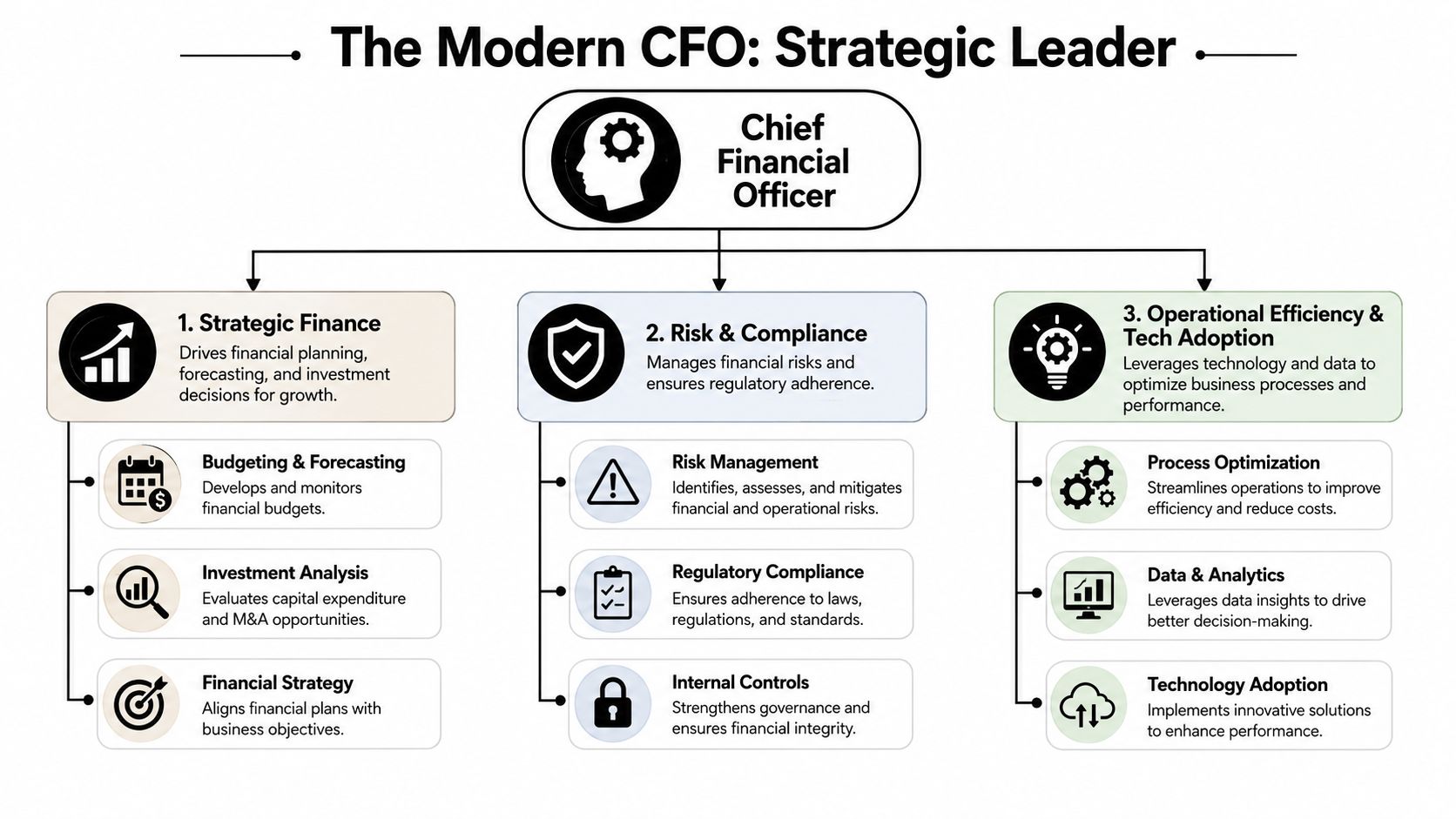
Three pillars that define the role
Most good CFO work in an SME falls into three buckets.
Strategic finance
This is the forward-looking piece. Forecasts, budgets, scenario planning, capital allocation, funding decisions, and pricing logic all sit here.
For example, if a wholesaler is offered a larger contract with tighter payment terms, a CFO won't just celebrate revenue. They'll model whether the business can carry the stock, labour, and cash lag without stress.
Risk and compliance
This doesn't mean the CFO replaces your accountant or external adviser. It means they make sure financial control is strong enough that surprises are less likely and board-level reporting is reliable.
Practical rule: If your numbers arrive late, don't reconcile cleanly, or change after the fact, strategy will be weak because the inputs are weak.
Operational efficiency and tech adoption
Modern CFOs increasingly shape the finance tech stack. They care about whether Xero, MYOB, NetSuite, inventory systems, payroll tools, and reporting layers talk to each other. They also care about whether automation is removing repetitive work or just creating messy work faster.
For a founder, the takeaway is simple. What is a CFO? It's the person who makes finance useful, not just accurate.
CFO vs Accountant vs Bookkeeper A Clear Comparison
Founders often hire for the symptom in front of them.
If invoices are messy, they hire a bookkeeper. If tax or year-end accounts are looming, they call the accountant. If they're making decisions with incomplete information, they need CFO capability. Different problem, different role.
The simplest way to separate the roles
Attribute | Bookkeeper | Accountant | CFO (Chief Financial Officer) |
|---|---|---|---|
Primary time focus | Past transactions | Present position and compliance | Future direction and decisions |
Core function | Records financial activity | Interprets accounts and manages reporting or tax obligations | Uses financial data to steer the business |
Typical questions answered | What did we spend? What came in? | How did we perform? What needs to be lodged or adjusted? | What should we do next? Can we fund it? What happens if conditions change? |
Typical outputs | Reconciliations, payroll inputs, AP/AR records, transaction coding | Financial statements, tax work, management accounts, compliance advice | Forecasts, budgets, scenario models, KPI dashboards, board packs, funding plans |
Main value to founder | Clean data and admin order | Accuracy, structure, and compliance | Clarity, priorities, and better decisions |
Best use case | Early-stage or admin-heavy workload | Businesses that need strong reporting and tax support | Businesses facing growth, margin pressure, funding decisions, or cash complexity |
Where founders usually get stuck
The confusion usually happens because these roles overlap at the edges.
A strong accountant may help with some planning. A sharp bookkeeper may produce helpful reports. A hands-on CFO may jump into system clean-up. But the centre of gravity is different.
Here's the practical test. Ask yourself which of these sounds familiar:
“Our books are behind.” That's usually a bookkeeping problem.
“I don't trust the monthly numbers.” That's often an accounting and controls problem.
“I have numbers, but I still don't know what decision to make.” That's a CFO problem.
A lot of SMEs wait too long because they assume CFO means “corporate” or “too expensive” or “not for a business our size”. In reality, the need often appears well before the title does. The business doesn't need prestige. It needs someone who can connect stock, margins, wages, debt, pricing, and cash into one operating picture.
If your finance team can tell you what happened but not what to do next, there's a strategic gap.
That's the line between finance support and finance leadership.
Core CFO Responsibilities and Performance Metrics
A CFO should improve how the business runs, not just how the board pack looks.
In day-to-day terms, the role usually sits across forecasting, working capital, decision support, financing, internal controls, and performance reporting. In an SME, these aren't separate silos. They affect each other constantly. Change payment terms, and cash moves. Add headcount, and service capacity changes. Increase stock, and liquidity tightens.
The work that actually changes outcomes
Here are the responsibilities that matter most in practice.
Cash flow forecasting
This is the heartbeat. Not a once-a-year budget file that gets ignored, but a live view of expected inflows, outflows, tax events, payroll, debt commitments, and pressure points. In a trade business, that may mean forecasting the effect of delayed progress payments. In ecommerce, it may mean balancing supplier deposits against ad spend and fulfilment timing.Budgeting and variance analysis
A budget isn't useful if it's disconnected from operations. A CFO ties targets to hiring, pricing, stock turns, wage control, and capacity. Then they review the gap between plan and actuals and explain why it happened.Working capital management Cash often gets trapped in this area. Receivables, payables, inventory, and debt all sit here. If your margin looks fine on paper but the bank balance keeps disappointing, working capital is often the culprit.
Scenario modelling
Founders rarely need a perfect prediction. They need a reliable decision frame. A CFO models best case, base case, and downside case around the decisions that matter now.
Why compliance still sits inside the role
In Australia, the role also has a legal and reporting backbone. Under the Corporations Act 2001, directors must ensure proper financial records are kept and financial reports are prepared and lodged with ASIC, with annual reports for listed entities due within 3 months of year-end according to this overview of CFO responsibilities and reporting accountability. That's why the CFO function sits at the intersection of management accounting, tax, and regulatory disclosure.
For SMEs, the practical lesson isn't that you need listed-company machinery. It's that finance leadership has to produce numbers that are timely, defensible, and decision-ready. Lenders, investors, and boards all care about that.
If you're comparing governance frameworks across markets, AuditReady's SOX guide is a useful external reference for understanding how finance controls support accountability, even though Australian SMEs operate in a different regulatory context. For internal performance rhythm, a disciplined quarterly business review is one of the best ways to turn CFO work into management action.
A useful KPI set usually includes some combination of gross margin, overhead run rate, debtor timing, creditor timing, inventory movement, forecast accuracy, and operating cash pressure. The exact dashboard changes by industry. The principle doesn't. A CFO should make the business easier to read.
Choosing Your CFO In-House Fractional or Virtual
This is the question most founders mean when they ask what is a CFO.
They're not asking for a textbook definition. They're asking, “What level of finance leadership is right for a business like mine, and how do I avoid overpaying for the wrong setup?” That's where the choice between in-house, fractional, and virtual matters.
The true trade-off isn't status. It's fit.
When in-house makes sense
A full-time in-house CFO usually makes sense when the business is complex enough to need constant internal coordination. Think multiple entities, ongoing financing work, heavy board demands, significant team management, or operational scale where finance decisions are daily and integrally embedded.
The upside is proximity. They're in the business, in the conversations, and often better placed to influence teams directly.
The downside is obvious. It's a fixed executive commitment. That can be the right move for a larger SME or growth-stage company with serious internal complexity. It's often the wrong move for a founder who mainly needs stronger forecasting, better reporting, tighter working capital, and sharper commercial decision support.
When fractional or virtual is the better fit
A lot of Australian SMEs don't need a big-company CFO title. They need flexible finance leadership that helps prioritise cash, pricing, and operating discipline. That distinction is often missed in generic CFO explainers, but it's the practical buyer question for smaller businesses, as noted in this overview of fractional CFO scope and SME fit.
A fractional CFO usually works part-time and may be more embedded in meetings, planning sessions, and leadership routines. A virtual CFO delivers the same level of strategic finance capability remotely, often with flexible cadence and a stronger systems-and-reporting orientation.
Here's the practical split:
Choose in-house if finance leadership needs to be present across the week and fully integrated into a larger internal team.
Choose fractional if you want senior thinking with regular involvement but don't need a permanent executive.
Choose virtual if your biggest needs are forecasting, reporting, cash management, decision support, and finance system improvement without the cost or structure of a full-time role.
The best model is the one that solves the bottleneck you actually have, not the one that sounds most impressive.
For many founders, outsourced models work because they buy capability before they buy executive overhead. If you want another perspective from the buyer side, this comprehensive guide for CEOs on outsourced CFOs is worth reading.
One local option in this category is Nexist's virtual chief financial officer service, which combines CFO support with finance operations and systems work. That kind of model suits businesses that need hands-on improvement, not just high-level advice.
5 Signs Your Australian SME Is Ready for a CFO
The strongest sign isn't revenue size. It's decision strain.
When the business keeps presenting choices with financial consequences and no one is properly modelling them, that's usually the point where CFO capability starts paying for itself.
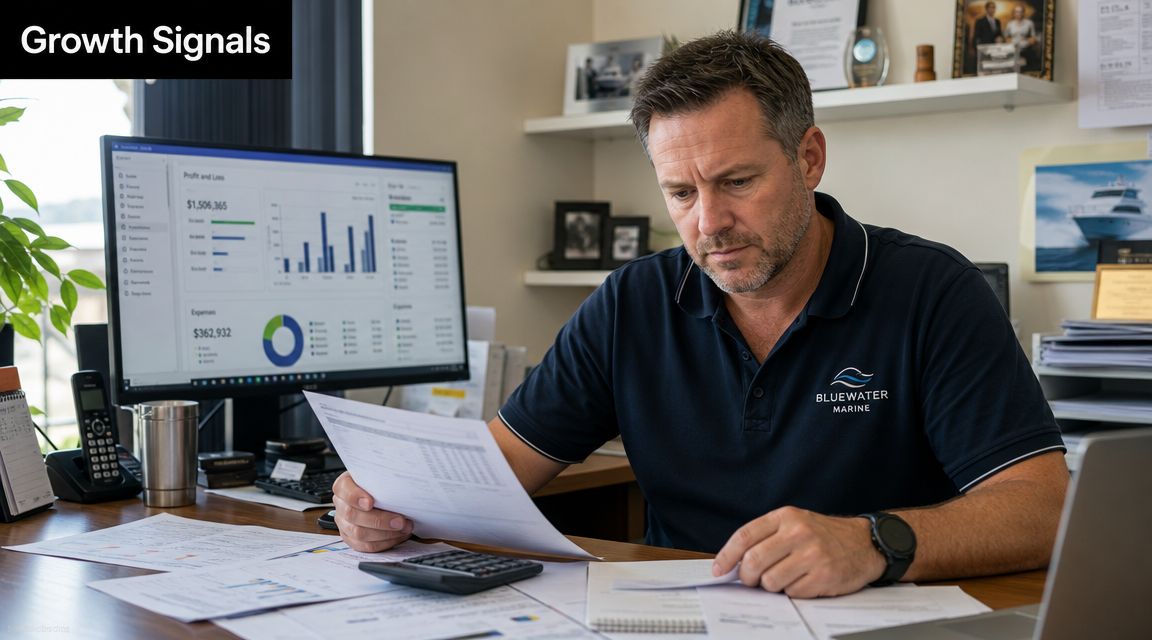
In practical SME terms, a good CFO builds a finance system that keeps cash flow stable while improving forecasting accuracy. NetSuite's overview of the role also points to managing receivables, payables, inventory, and debt to protect liquidity, which is exactly where many Australian growth constraints show up first (NetSuite on CFO benchmarks for SMEs).
The signs show up in day-to-day operations
1. Cash feels unpredictable even when sales are decent
This is common in wholesale, trade, and project businesses. Revenue lands unevenly, costs hit earlier than expected, and tax or supplier payments create nasty timing squeezes.
If you're checking the bank balance more often than the forecast, you don't have a cash management process. You have a stress ritual.
2. You're making major calls on instinct
A new hire. A rent increase. A warehouse move. A product line expansion. None of these should rely on “I think we'll be right”.
A CFO doesn't remove judgment. They make judgment more reliable by putting numbers around the options.
3. Inventory or debtors are swallowing your profit
Retailers and ecommerce brands feel this fast. You can look busy, grow top line, and still starve the business of cash because stock sits too long or customers pay too slowly.
That's not just an operations issue. It's a finance leadership issue.
4. You're growing into complexity
Growth is usually sold as a clean win. In reality, it often creates mess first. More staff, more systems, more SKUs, more reporting needs, more financing pressure.
A short explainer on this shift can help frame the leadership side of the role before you hire:
5. Finance is taking too much of your time
If the founder is still the person chasing debtors, approving every payment, explaining the P&L, and trying to build a forecast at night, the business has a structure problem.
A CFO should give the owner back attention. That's often as valuable as the reporting itself.
What changes once the right finance lead steps in
The immediate shift is usually visibility. Then discipline. Then speed.
You start seeing issues earlier. Pricing decisions improve. Stock buys get more rational. Reporting arrives in a form the leadership team can use. Cash stops being an emotional topic and becomes an operating metric.
That's when founders realise they didn't need “more finance”. They needed the right level of finance leadership.
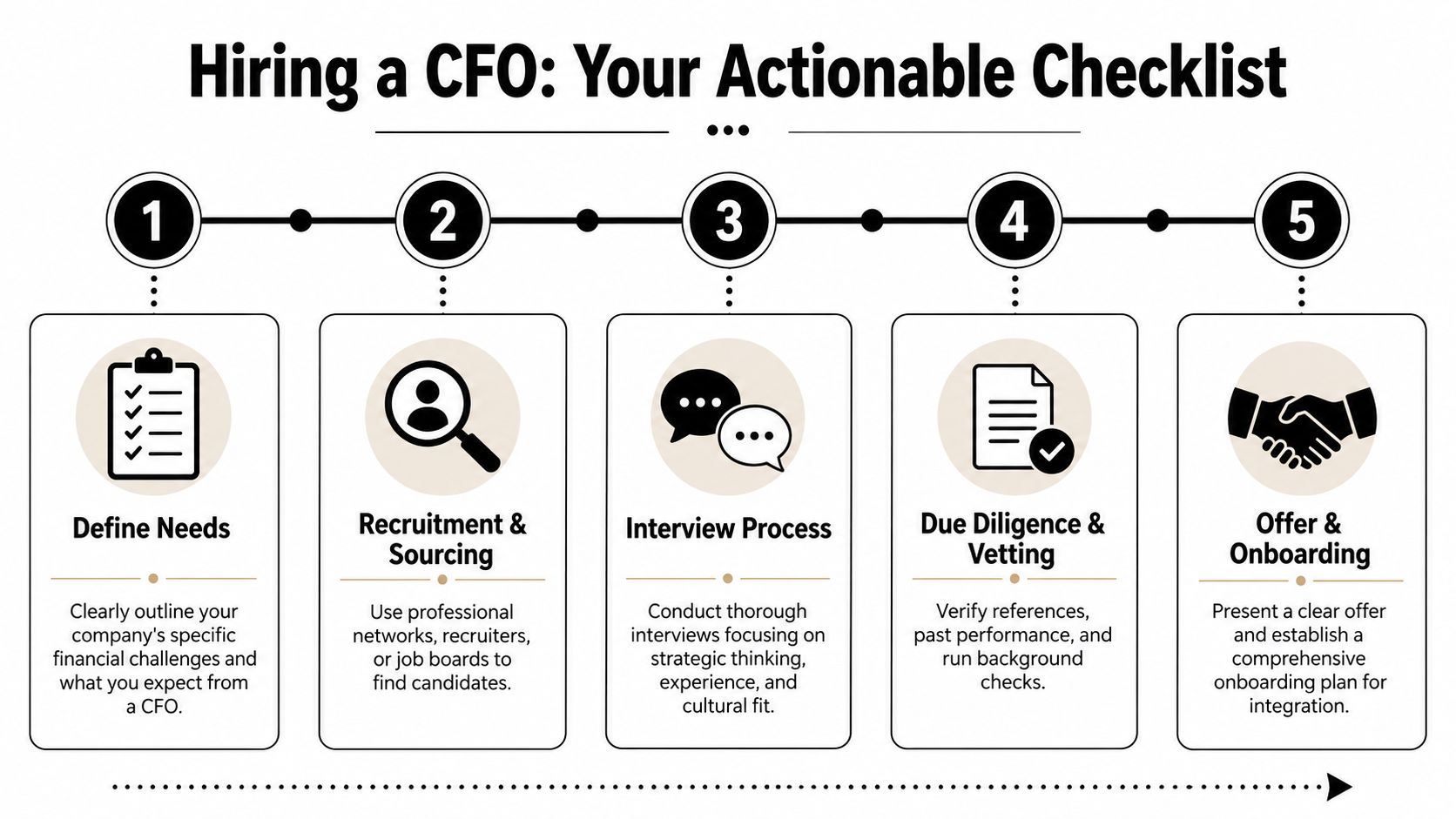
Your Actionable Checklist for Hiring a CFO
Hiring a CFO goes wrong when founders screen for polish instead of fit.
A candidate can sound impressive, talk in boardroom language, and still be useless in a mid-sized operating business. You need someone who can move between strategy and execution. The modern version of the role is broader than traditional finance. 95% of finance executives report that the job has expanded well beyond old boundaries, which is why technology, data unification, and automation should be part of the hiring conversation, not an optional extra according to CBH's analysis of changing CFO demands.
Questions worth asking in the interview
Don't ask only technical questions. Ask operating questions.
How do you assess cash risk in the first month?
Good answers usually focus on receivables, payables, payroll rhythm, tax timing, debt commitments, stock levels, and forecast reliability.Tell me about a time you improved reporting quality. What did you change?
You want to hear about systems, controls, reporting cadence, chart-of-accounts structure, and management visibility. Not vague talk.How do you approach pricing, margin, and working capital together?
Strong CFOs understand that sales growth without cash discipline can hurt the business.What would you automate first in our finance process?
This matters more now than many founders realise. Look for practical thinking around reporting workflows, data flow between systems, and repetitive admin.How do you work with founders who move quickly?
The answer should show calm, prioritisation, and commercial judgment. Not bureaucracy.
What a good first 90 days should look like
The exact cadence varies, but the shape should be clear.
First 30 days
Financial diagnostics. Cash position review. Reporting quality check. Immediate risks identified. Key systems mapped.By 60 days
Rolling cash flow forecast in place. Core KPIs agreed. Short list of margin, process, or working capital issues surfaced with actions attached.By 90 days
Regular management reporting established. Decision framework in place for pricing, hiring, stock, or funding priorities. Leadership team using the numbers, not just receiving them.
A bad hire often starts with abstract strategy and no operational grip. A good hire starts with control, then builds momentum.
Use this shortlist when vetting candidates:
Commercial judgment over technical theatre
System thinking across Xero, inventory, payroll, and reporting tools
Communication skills strong enough to brief founders, managers, lenders, and advisers
Hands-on bias because SMEs need action, not commentary
Comfort with AI and automation because manual reporting is a drag on decision speed
The right CFO doesn't just know finance. They make the business easier to run.
Frequently Asked Questions About CFO Services
What does a CFO actually do in a small business?
In a small or mid-sized business, a CFO usually focuses on cash flow, forecasting, budgets, reporting, pricing decisions, working capital, and financial decision support. The role is less about corporate theatre and more about helping the owner make better calls with clearer numbers.
Does every SME need a full-time CFO?
No. Many don't. A lot of Australian SMEs are better served by fractional or virtual CFO support because they need capability, not a permanent executive structure.
Can a CFO also do bookkeeping and BAS?
Sometimes, but that shouldn't be the main reason you hire one. Bookkeeping and BAS are important, but CFO value usually sits in oversight, planning, control, and decision support. In smaller firms, one provider may offer both strategic and transactional support through a broader finance team.
What is the typical cost range for a virtual CFO in Australia?
The cost varies by scope, frequency, business complexity, and whether the engagement includes hands-on finance operations. It's better to compare based on outcomes, availability, and responsibilities than on a generic market figure.
Is it secure to share financial data with a virtual CFO?
It can be, if the provider uses proper systems, access controls, permissions, and documented processes. Ask how they handle file sharing, approvals, reporting access, and data governance before you engage them.
What should I look for first?
Look for someone who talks clearly about cash, working capital, reporting reliability, and decision-making. If they only talk about compliance, they're probably not solving the problem you have.
If your business needs clearer cash flow, stronger forecasting, and finance support that helps you make better decisions, Nexist is one option to consider. The firm works with Australian founders on virtual CFO support, finance operations, and systems that connect reporting to action, particularly in businesses where margins, inventory, receivables, and owner time are all under pressure.
what is a cfo, virtual cfo australia, fractional cfo, cfo services, cash flow management

" width="24px"/><g d="M 0 24.129 L 0 0.129 L 24 0.129 L 24 24.129 Z M 0 24.129 L 0 0.129 L 24 0.129 L 24 24.129 Z M 24 3 C 24 1.344 22.656 0 21 0 L 3 0 C 1.344 0 0 1.344 0 3 L 0 21 C 0 22.656 1.344 24 3 24 L 21 24 C 22.656 24 24 22.656 24 21 Z M 6.883 8.375 L 2.863 8.375 L 2.863 20.467 L 6.883 20.467 Z M 4.899 2.545 C 3.524 2.545 2.625 3.449 2.625 4.634 C 2.625 5.795 3.496 6.724 4.846 6.724 L 4.872 6.724 C 6.273 6.724 7.146 5.795 7.146 4.634 C 7.12 3.449 6.274 2.545 4.899 2.545 Z M 16.747 8.09 C 14.614 8.09 13.659 9.263 13.124 10.086 L 13.124 8.374 L 9.105 8.374 C 9.159 9.508 9.105 20.466 9.105 20.466 L 13.124 20.466 L 13.124 13.713 C 13.124 13.352 13.15 12.99 13.257 12.732 C 13.547 12.01 14.209 11.262 15.319 11.262 C 16.773 11.262 17.355 12.372 17.355 13.996 L 17.355 20.466 L 21.374 20.466 L 21.374 13.532 C 21.374 9.818 19.391 8.09 16.747 8.09 Z" fill="transparent" height="24.12890599668026px" id="dSFdkJotL" width="24px"><path d="M 0 24 L 0 0 L 24 0 L 24 24 Z" fill="transparent" height="24px" id="wscNJE44G" transform="translate(0 0.129)" width="24px"/><g d="M 0 24.129 L 0 0.129 L 24 0.129 L 24 24.129 Z M 24 3 C 24 1.344 22.656 0 21 0 L 3 0 C 1.344 0 0 1.344 0 3 L 0 21 C 0 22.656 1.344 24 3 24 L 21 24 C 22.656 24 24 22.656 24 21 Z M 6.883 8.375 L 2.863 8.375 L 2.863 20.467 L 6.883 20.467 Z M 4.899 2.545 C 3.524 2.545 2.625 3.449 2.625 4.634 C 2.625 5.795 3.496 6.724 4.846 6.724 L 4.872 6.724 C 6.273 6.724 7.146 5.795 7.146 4.634 C 7.12 3.449 6.274 2.545 4.899 2.545 Z M 16.747 8.09 C 14.614 8.09 13.659 9.263 13.124 10.086 L 13.124 8.374 L 9.105 8.374 C 9.159 9.508 9.105 20.466 9.105 20.466 L 13.124 20.466 L 13.124 13.713 C 13.124 13.352 13.15 12.99 13.257 12.732 C 13.547 12.01 14.209 11.262 15.319 11.262 C 16.773 11.262 17.355 12.372 17.355 13.996 L 17.355 20.466 L 21.374 20.466 L 21.374 13.532 C 21.374 9.818 19.391 8.09 16.747 8.09 Z" fill="transparent" height="24.12890599668026px" id="sTpjGo1tb" width="24px"><path d="M 0 24 L 0 0 L 24 0 L 24 24 Z" fill="transparent" height="24px" id="s7ffpmKOD" transform="translate(0 0.129)" width="24px"/><g d="M 24 3 C 24 1.344 22.656 0 21 0 L 3 0 C 1.344 0 0 1.344 0 3 L 0 21 C 0 22.656 1.344 24 3 24 L 21 24 C 22.656 24 24 22.656 24 21 Z M 6.883 8.375 L 2.863 8.375 L 2.863 20.467 L 6.883 20.467 Z M 4.899 2.545 C 3.524 2.545 2.625 3.449 2.625 4.634 C 2.625 5.795 3.496 6.724 4.846 6.724 L 4.872 6.724 C 6.273 6.724 7.146 5.795 7.146 4.634 C 7.12 3.449 6.274 2.545 4.899 2.545 Z M 16.747 8.09 C 14.614 8.09 13.659 9.263 13.124 10.086 L 13.124 8.374 L 9.105 8.374 C 9.159 9.508 9.105 20.466 9.105 20.466 L 13.124 20.466 L 13.124 13.713 C 13.124 13.352 13.15 12.99 13.257 12.732 C 13.547 12.01 14.209 11.262 15.319 11.262 C 16.773 11.262 17.355 12.372 17.355 13.996 L 17.355 20.466 L 21.374 20.466 L 21.374 13.532 C 21.374 9.818 19.391 8.09 16.747 8.09 Z" fill="transparent" height="24.000006px" id="D0ecaHEcW" transform="translate(0 0)" width="24px"><path d="M 24 3 C 24 1.344 22.656 0 21 0 L 3 0 C 1.344 0 0 1.344 0 3 L 0 21 C 0 22.656 1.344 24 3 24 L 21 24 C 22.656 24 24 22.656 24 21 Z" fill="rgb(55, 184, 218)" height="24.000006px" id="IPLFE6zXx" width="24px"/><path d="M 4.02 0 L 0 0 L 0 12.092 L 4.02 12.092 Z" fill="rgb(255, 255, 255)" height="12.09201px" id="FWhtzAyuY" transform="translate(2.863 8.375)" width="4.02px"/><path d="M 2.274 0 C 0.899 0 0 0.904 0 2.089 C 0 3.25 0.871 4.179 2.221 4.179 L 2.247 4.179 C 3.648 4.179 4.521 3.25 4.521 2.089 C 4.495 0.904 3.649 0 2.274 0 Z" fill="rgb(255, 255, 255)" height="4.17876px" id="VmOsKv4kO" transform="translate(2.625 2.545)" width="4.52095px"/><path d="M 7.641 0 C 5.509 0 4.554 1.173 4.019 1.996 L 4.019 0.284 L 0 0.284 C 0.053 1.419 0 12.376 0 12.376 L 4.019 12.376 L 4.019 5.623 C 4.019 5.262 4.045 4.9 4.151 4.642 C 4.442 3.92 5.103 3.172 6.214 3.172 C 7.667 3.172 8.25 4.282 8.25 5.907 L 8.25 12.376 L 12.269 12.376 L 12.269 5.442 C 12.269 1.728 10.286 0 7.641 0 Z" fill="rgb(255, 255, 255)" height="12.37626px" id="n1XUbhaq0" transform="translate(9.105 8.09)" width="12.268830000000001px"/></g></g></g></g></svg>)