
Buying Property with SMSF: A Founder's Guide for 2026
Considering buying property with SMSF in Australia? Our founder's guide covers setup, LRBA loans, tax rules, and compliance to help you invest strategically.
Ansh Malhotra

If you're a founder looking at rising rent, patchy landlord relationships, or a business that has outgrown its current premises, buying property with SMSF can look like a neat two-for-one move. You secure an asset for retirement and, in some cases, give the business a more stable home. On paper, that sounds efficient.
In practice, it only works when the property decision fits both sides of your financial life. Your super fund needs enough resilience to carry loan repayments, vacancies, repairs, audit costs and administration. Your business needs to afford commercial rent at proper market terms without starving working capital. That tension is where good decisions get made.
Most articles stop at the tax angle. Founders need a broader lens. You're not just asking whether property inside super is allowed. You're asking whether it improves long-term wealth without creating a cash flow trap in the operating business.
Table of Contents
Why Founders Use an SMSF for Property Investment
A founder signs another three-year lease, spends heavily on fit-out, then gets hit with a rent review just as cash flow tightens. That sequence is one reason business owners start looking at property inside super. The decision is rarely about chasing a trendy asset class. It is usually about whether retirement capital can also support the operating stability of the business, without breaking SMSF rules or starving the company of working cash.
For founders, property inside super usually appeals for two practical reasons. The first is control over a real asset they understand. The second is alignment between long-term wealth and day-to-day business needs. Commercial property gets the most attention because, if the arrangement is structured properly, the SMSF can own the premises and the trading business can lease them on arm's-length terms.

Why the founder lens is different
A salaried employee often looks at an SMSF property as a stand-alone investment. A founder has to judge the same asset through two sets of numbers. Will the fund earn acceptable rent and build retirement wealth? Can the business pay that rent consistently, even in a slow quarter, without squeezing payroll, stock purchases, tax payments, or growth plans?
That changes the quality of the decision.
A warehouse, clinic, workshop or office can make strategic sense if it secures occupancy for the business and gives the fund a genuine investment asset. But the property has to stand up on commercial terms. If the rent only works because the business owner is optimistic about next year's sales, the SMSF is carrying business risk in a way many founders underestimate.
The real appeal is cash flow predictability
The strongest founder case for SMSF property is usually not "property goes up." It is the chance to bring more certainty to a major operating cost.
Owning your business premises through super can help with:
Tenure security. The business is less exposed to forced moves, difficult landlords, or lease renewal pressure.
Better planning. Rent, outgoings and fit-out decisions can be made with a longer time horizon.
Wealth separation. Business profits are not the only engine for future wealth if the SMSF is building equity in a productive asset.
There is a trade-off. Rent still has to be paid on time, at market rates, and documented properly. From a CFO perspective, that means the business loses some flexibility. In a rough patch, you cannot casually trim or defer rent because the landlord is your super fund. The lease has to be treated like any other arm's-length obligation.
What usually works, and what usually causes trouble
The better SMSF property outcomes I see tend to come from founders with stable earnings, clean records, and a clear operational reason for owning that specific property. They know why the site matters to the business. They also know the fund can carry vacancies, repairs, and loan costs without relying on perfect trading conditions.
The weaker cases usually follow a familiar pattern. The business wants a nicer premises than it can comfortably support. The fund is too small for the purchase, so cash gets tight early. The owner focuses on tax and control, but not on liquidity, tenant risk, or compliance workload.
Anyone weighing SMSF property against other structures should also understand how it differs from a broader property acquisition using a trust. The tax treatment, access rules, and trustee obligations are not interchangeable.
Many founders also need a wider view than "can I buy this property?" The better question is whether this purchase improves the family balance sheet, protects business cash flow, and still leaves enough diversification outside one asset. That is where a private wealth adviser perspective can help test the decision against retirement timing, succession plans, and concentration risk.
Laying the Foundation for Your SMSF Property Purchase
A founder often reaches the property stage with a clear picture in mind. Buy the warehouse through super, lease it to the business, build equity, and keep control of the site. The part that gets missed is the setup work before the property search starts. If the fund is not configured properly, the deal can stall at finance, fail during legal review, or create a compliance problem that costs far more than the initial saving looked worth.
Start with the trustee mindset
An SMSF property purchase starts with governance, not real estate.
Founders usually handle decisions quickly. That helps in business. Inside super, speed without process causes trouble. As trustee, you are expected to show that the fund was set up correctly, the decision was made for retirement purposes, records are complete, and money has been kept separate from business and personal accounts.
The basics need to be right before you spend money on due diligence. Check that the trust deed allows the investment approach you are considering. Confirm the trustee structure is current. Make sure the fund bank account, registrations, and record-keeping are clean. If borrowing may be part of the plan later, those early documents matter even more because lenders and lawyers will test them closely.
The sole purpose test acts as the primary filter
Before a founder asks whether a property is attractive, the better question is whether the fund is allowed to buy it for the right reason.
The sole purpose test is the primary filter. The property has to support retirement benefits for members. If the motivation is mixed, the risk rises quickly. I usually tell clients to pressure-test the file as if an auditor will read it with no context and no sympathy for commercial urgency.
Common warning signs are easy to recognise. The property is being chosen because a family member may want to use it later. The owner likes the idea of eventually retiring into it. The purchase is really about solving a personal housing issue or shifting value around the family group. Those intentions do not sit well inside super.
Related-party rules also need careful handling. Residential property cannot generally be bought from a related party, and members or related parties cannot live in it or rent it. Commercial property has more scope, but only if the structure and lease terms are handled properly and documented on arm's-length terms.
Build the investment strategy before you choose the property
A property should fit the fund's strategy, cash flow, and member profile. It should not become a story the paperwork tries to justify after the fact.
For founders, this is the point where business reality needs to meet superannuation rules. If the SMSF buys your trading premises, the question is not only whether the rent is affordable today. The fund also has to cope if the business has a softer year, if the property is vacant between tenants, or if unexpected repairs hit at the same time as loan costs and annual compliance bills.
A workable investment strategy should deal with at least four issues:
Liquidity: cash available for loan repayments, expenses, tax, insurance, and periods without rent
Diversification: how much of the fund will sit in one property and one tenant
Member timing: whether any member may need to start a pension or withdraw benefits sooner than expected
Risk management: how the fund holds up if business performance weakens or the property underperforms
I often observe many founder-led SMSFs either holding together or coming under strain. A business owner may be comfortable with concentration risk inside the company because they know the operation well. Super is different. Retirement capital tied to one property, one business, and one source of rent can put too much pressure on the same economic engine.
If you're comparing ownership options more broadly, this guide to property acquisition using a trust helps frame the differences. An SMSF is still a trust, but it operates under a much narrower rule set than an ordinary discretionary or unit trust.
Check contribution capacity before you commit
Stronger liquidity solves a lot of SMSF property problems before they start.
A fund with thin cash reserves can look fine on a spreadsheet and still struggle in practice. Legal fees, valuations, lender costs, repairs, insurance, and periods of uneven rent all draw on cash. That matters even more for founders who are also trying to preserve working capital in the trading business.
Contribution planning can improve the margin for safety. In some cases, reviewing carry-forward concessional contributions helps increase fund cash without forcing the business into a tighter position than it can comfortably support. The key is to plan contributions alongside the acquisition, not as a rescue measure after the contract is signed.
The LRBA Structure Explained for Business Owners
Borrowing inside super doesn't use the same mechanics as a normal business or home loan. If you're buying property with SMSF and finance is involved, you're usually dealing with a Limited Recourse Borrowing Arrangement, or LRBA.
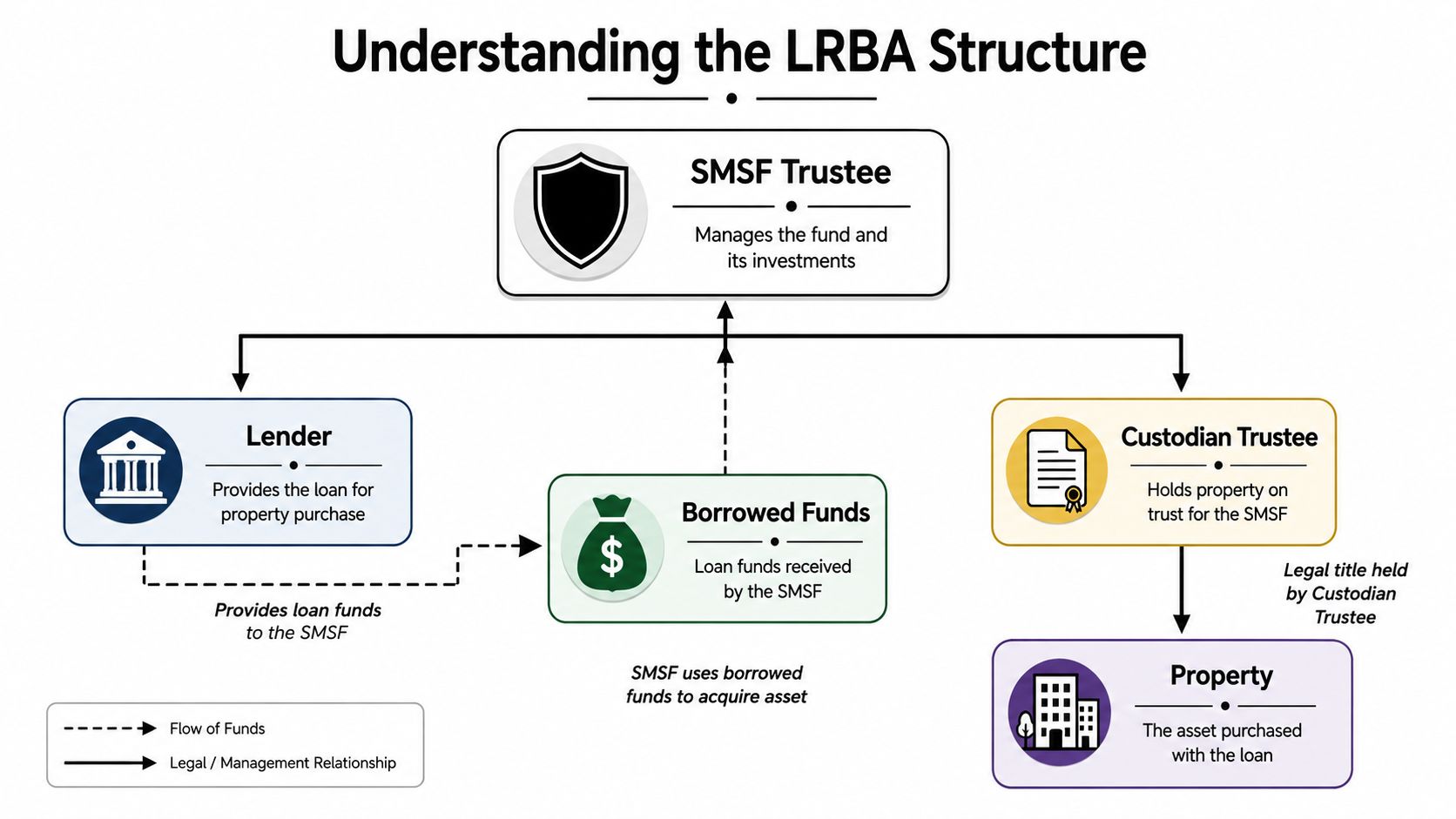
The structure in plain English
The easiest way to think about an LRBA is this. The SMSF is the true economic owner, but a separate holding structure sits in the middle while the loan is in place. Legal title is held by a bare trust or custodian trustee, and the lender's rights are limited to that specific property.
That limitation is the key feature. If the loan goes bad, the lender's claim is generally confined to the property tied to the borrowing arrangement, not the SMSF's other assets. For founders, that's often the first point of relief because it separates one financed asset from the rest of the retirement pool.
A simple hierarchy helps:
Entity | Job in the structure | What founders should care about |
|---|---|---|
SMSF trustee | Controls the fund and makes the investment decision | Carries compliance responsibility |
Lender | Provides finance on SMSF lending terms | Applies stricter credit and documentation standards |
Bare trust or custodian trustee | Holds legal title while the loan exists | Must be established correctly before settlement |
Property | The single asset acquired under the arrangement | Becomes the lender's primary recourse |
Why this feels slower than ordinary lending
Founders are often surprised by how many parties need to line up. With a regular commercial purchase, you might have the borrower, the bank and the solicitor. With an LRBA, you also have a super fund trustee layer and a holding trust layer.
That means document sequencing matters more than usual. Names on the contract matter. Trustee details matter. The wording on the legal paperwork matters. A mistake here isn't cosmetic. It can create financing issues, duty issues or settlement delays.
To make the structure easier to visualise, this short explainer helps:
How risk works under an LRBA
The phrase "limited recourse" sounds safer than it feels in real life. Yes, the arrangement can ringfence the lender's claim to the property. No, that doesn't make the investment low risk.
The actual risk sits in cash flow. If the property is vacant, the tenant struggles, repairs hit at the wrong time, or the business has a weak quarter, the SMSF still has to service the loan and fund ownership costs. Limited recourse protects other assets from direct lender access. It doesn't protect you from poor strategy.
A bare trust is not a shortcut. It's a legal wrapper that makes the borrowing possible and isolates the asset. It won't rescue a purchase that was too tight on cash from day one.
What business owners often misunderstand
Founders usually make one of three mistakes with LRBAs.
They assume business borrowing logic applies: It doesn't. Lenders assess SMSF loans through a narrower and more conservative lens.
They focus on the deposit and ignore fund operations: The SMSF needs ongoing liquidity, not just enough money to get to settlement.
They treat the bare trust as admin trivia: In reality, it's central to getting the structure right.
When this setup is handled properly, it can be effective and orderly. When it's improvised, it becomes one of the messiest parts of the whole transaction.
Navigating the Purchase and Loan Approval Process
Execution is where good intentions turn into legal commitments. The sequence matters. Get it wrong and you can create a problem before the fund is even ready to buy.
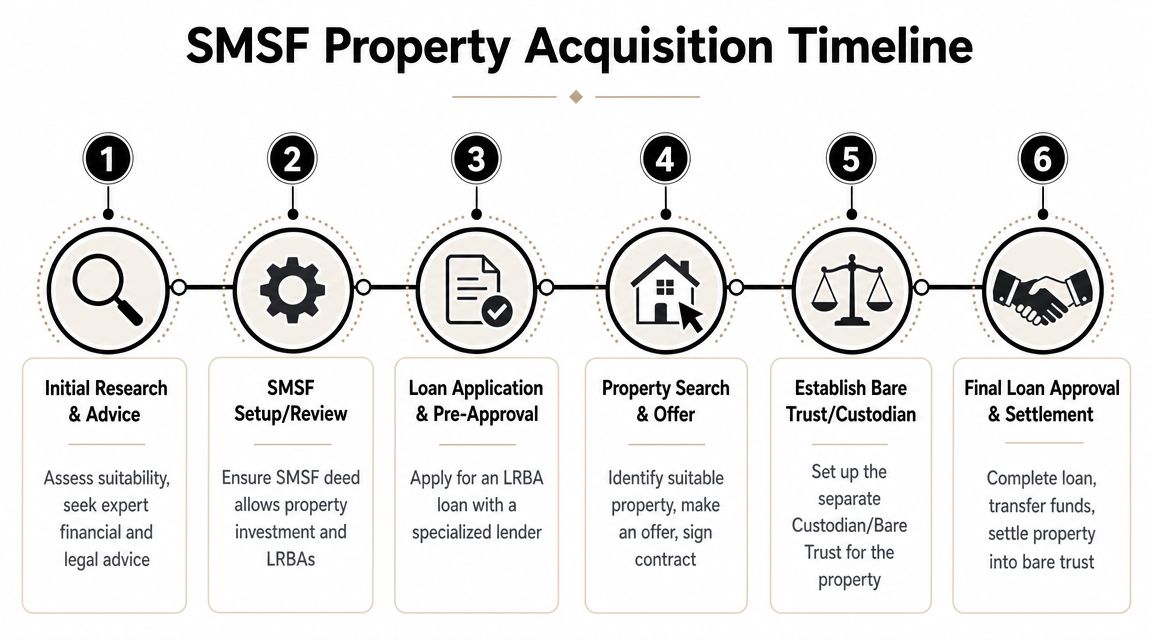
According to guidance on the SMSF property purchase process with borrowings, the practical workflow is to first verify borrowing capacity, then set up the SMSF and bare trust, obtain lender approval, and only then complete settlement. The same guidance states that fund setup typically takes at least four weeks. For founders, that timing issue matters because business operators are often juggling lease deadlines, moving plans and cash commitments at the same time.
The right order of operations
The purchase process works best when you treat it like a capital project, not a property hunt.
Check borrowing capacity first
Speak with an SMSF lending specialist before making offers. Founders often begin with the property because it's tangible. Start with finance instead. You need to know whether the structure is viable before legal costs start accruing.Set up or review the SMSF
If the fund doesn't exist, establish it properly. If it already exists, review the deed, trustee arrangement, investment strategy and cash position. Existing SMSFs still fail deals when their paperwork doesn't support the intended structure.Establish the bare trust
This shouldn't be left until the last minute. The title-holding structure needs to be ready to match the transaction documents.Work through lender approval
Specialist lenders will want a full picture of the fund, the members, the asset and servicing capacity. Expect requests for financial records, identification, trust documents and transaction-specific legal paperwork.Only then move to settlement
This sounds obvious, but it isn't how many founder-led purchases unfold. A rushed contract signed in the wrong name can be painfully expensive to unwind.
Due diligence has to match SMSF rules
Normal property due diligence still applies. You still assess location, tenant quality, lease terms, building condition and downside risk. But SMSF due diligence adds a tighter compliance overlay.
For example, think carefully about the asset itself. If your plan depends on major redevelopment, extensive alterations or turning one property into something functionally different, you need specialist advice on whether that fits the borrowing structure. Founders who are good at value-add projects in their personal or business portfolios can overestimate how flexible an SMSF borrowing arrangement will be.
Key takeaway: Buy the property the SMSF can hold cleanly. Don't buy a problem and assume the structure will adapt later.
Plan around timing, not hope
The setup period is one of the biggest practical frustrations for business owners. Commercial opportunities move fast. SMSF structures don't.
Use a timeline checklist before signing anything:
Entity readiness: Are the SMSF and trustee details finalised?
Cash readiness: Does the fund have available cash for establishment costs, acquisition costs and a post-settlement buffer?
Lender readiness: Has a specialist lender reviewed the scenario, not just the headline idea?
Legal readiness: Does your solicitor understand SMSF contract naming and bare trust documentation?
Property readiness: Does the asset suit a retirement-fund investment case, not just a business convenience case?
This is also where founders should look beyond the obvious costs. Registration and settlement charges can be overlooked in early modelling. If you want a clean explanation of one small but common item, this article on explaining the mortgage registration fee is a useful reference when building your acquisition budget.
What founders should tell their teams early
If the property is intended to become business premises, bring the operational team into planning earlier than most advisers suggest. The finance side might work, but the move can still fail operationally if no one has mapped fit-out timing, lease commencement, relocation disruption, insurance handover and supplier address updates.
A practical founder checklist looks like this:
Area | Question to answer before commitment |
|---|---|
Business cash flow | Can the operating business pay market rent consistently without squeezing payroll, stock or tax obligations? |
SMSF liquidity | Can the fund handle a period of vacancy or surprise costs? |
Property suitability | Does the site support the business for the long term, not just the next stage? |
Legal structure | Are contract and title details aligned with the SMSF borrowing structure? |
Settlement timing | Does the timeline reflect setup lead times, lender process and legal drafting? |
Founders who get this right usually move slower than they wanted to, but faster than those who rush and have to rebuild documents under pressure.
Managing Ongoing Tax and Compliance Obligations
Settlement isn't the end of the work. It's the start of a different kind of work. Once the property sits inside the SMSF, every rent payment, invoice, lease term and maintenance decision needs to pass a compliance test as well as a commercial test.
Related-party leasing has to be real, not informal
For founders, the biggest practical issue is often leasing commercial premises to their own business. That can be permissible when done properly, but "properly" matters. The lease needs to reflect market conditions and commercial behaviour. Rent should be paid on time. Documentation should be complete. The SMSF bank account should receive the rent as agreed.
Informal business habits can turn dangerous. In a private company, owners sometimes let rent slide for a month, offset expenses casually, or clean up entries later. Inside an SMSF, that loose approach can undermine the integrity of the arrangement.
If your business wouldn't accept the same lease terms from an unrelated landlord, don't expect your SMSF to accept them either.
Tax records need to be boring and complete
The safest SMSF property files are unremarkable. They contain executed lease documents, rent records, invoices, insurance evidence, loan statements, rates notices, repair bills and trustee minutes. Nothing is mixed with personal spending. Nothing is "understood" but undocumented.
Founders who own other property outside super often trip up here because they assume similar habits are good enough. They're not. The SMSF environment is more formal, and the annual audit process rewards discipline.
To keep record-keeping clean, it's worth reviewing broader landlord expense habits against practical resources like VerticalRent's tax tips for landlords. It's not SMSF-specific advice, but it does help founders think systematically about expense categories, documentation and what should be retained.
Ongoing obligations founders should expect
The ongoing administration load usually includes:
Annual audit: An approved SMSF auditor reviews compliance and financial records.
Valuation discipline: The property's value needs to be supportable in the fund's records.
Clear expense handling: Ownership costs must be paid through the fund and recorded accurately.
Lease management: If a related business occupies the property, lease terms need to remain commercial in practice, not just on paper.
Strategic review: Trustees should keep checking whether the asset still suits member circumstances and fund liquidity.
The business cash flow angle most owners miss
A founder can be asset-rich on paper and still create pressure in the business. If the operating entity is paying rent to the SMSF, that rent becomes a recurring cash outflow from the business that must be affordable in ordinary trading conditions. If the business hits a slow patch, the SMSF can't suspend reality because the tenant is related.
This is also why retirement-phase planning matters. As member balances and pension considerations evolve, the interaction between property, tax and super settings can become more complex. Tools like a Division 296 calculator won't replace personalised advice, but they can help founders think earlier about how large super balances may affect longer-term strategy.
Weighing the Strategic Risks and Rewards
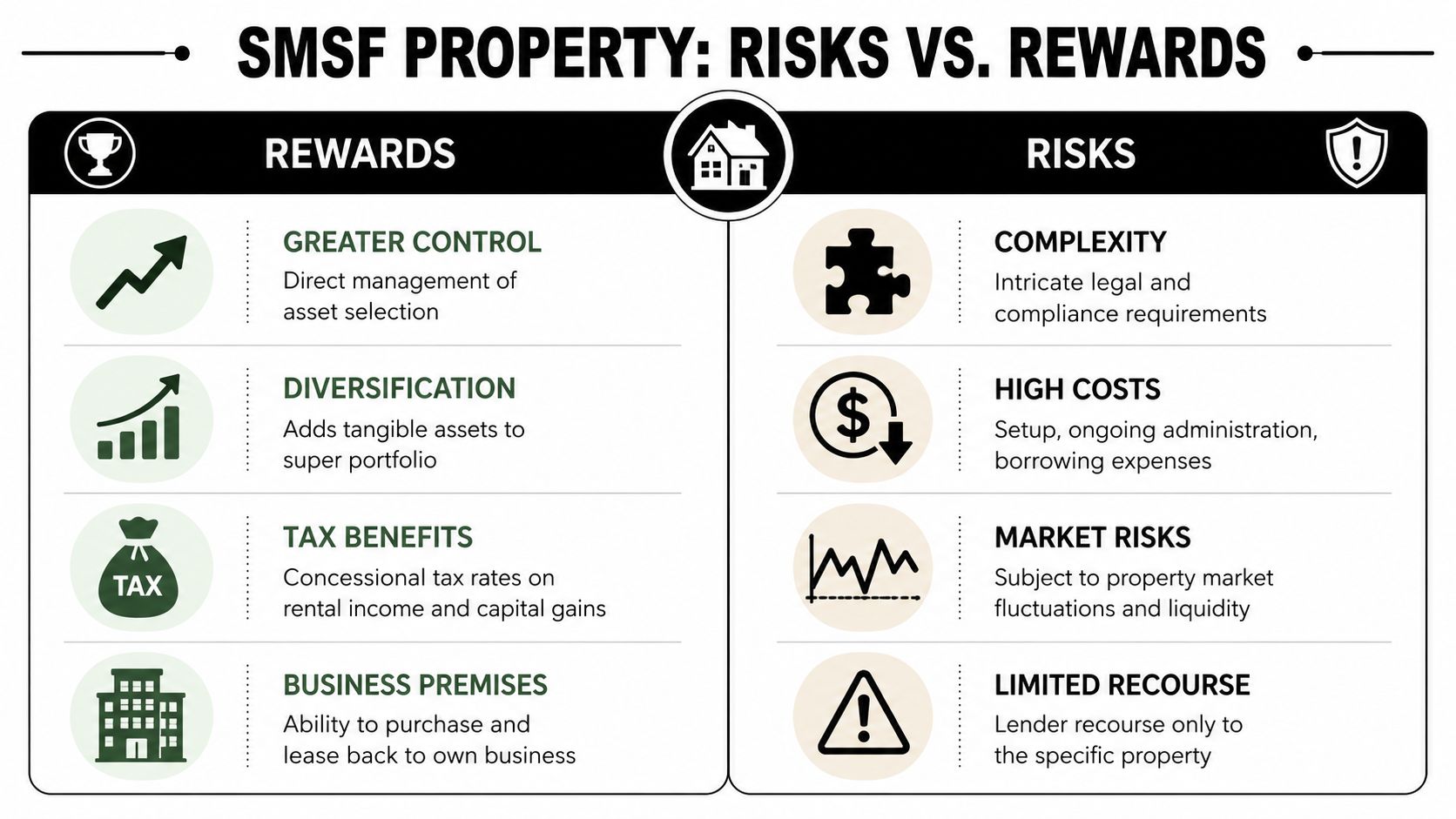
Buying property with SMSF can be smart. It can also be restrictive, illiquid and distracting. The right answer usually depends less on the property itself and more on the quality of the surrounding system.
Where the upside is real
The strongest strategic case usually appears when a founder wants long-term control over suitable commercial premises and can support the arrangement without straining either the business or the fund.
The main rewards tend to be:
Control over a key asset: You choose the property and shape the long-term plan.
Alignment with operations: For the right commercial premises, occupancy and retirement planning can reinforce each other.
A tangible retirement asset: Some founders prefer an asset they can physically assess rather than leaving all super exposure in market-linked investments.
Potential tax efficiency within super: This is one reason the structure attracts attention, though tax should support the strategy, not drive it alone.
Where founders get hurt
The downside usually comes from concentration and inflexibility.
Reward | Matching risk |
|---|---|
Greater control | More responsibility, more admin and less room for casual mistakes |
Business premises security | The business must still afford proper market rent |
Tangible asset exposure | A single property can dominate the fund |
Borrowing to acquire property | Loan servicing pressure doesn't disappear when trading weakens |
The biggest issue I see in founder-style decision-making is overconfidence in future cash flow. Business owners are used to backing themselves. That's often why the business exists. But super structures don't care about founder optimism. If the property is vacant, if the tenant struggles, or if the fund needs liquidity, confidence is not a payment method.
A good SMSF property should still look sensible after you remove your most optimistic assumptions.
Exit thinking matters early
A lot of buyers focus entirely on acquisition and ignore the endgame. That's a mistake. At some point the loan may be repaid, the title arrangement may change, the property may be sold, or members may move into a different retirement phase. Each path has practical implications for liquidity, timing and administration.
If you don't have a believable exit path, the entry case is incomplete. Founders should be able to answer a simple question: what happens if this property becomes inconvenient, not just profitable?
SMSF Property FAQs for Founders
Can my business lease the commercial property from my SMSF
Yes, that can be possible for commercial property if the arrangement is handled on proper commercial terms. The lease should be documented, the rent should reflect market conditions, and payments should be made on time to the SMSF. Treat it like a real landlord-tenant relationship, because that's what it needs to be.
What happens if the property is vacant and the SMSF has a loan
The fund still has obligations. Loan repayments, outgoings and other costs don't stop because rent stops. That's why liquidity planning matters before purchase. If the SMSF only works when the property is always occupied, the structure is too fragile.
Can the SMSF renovate or improve the property
Repairs and maintenance are one thing. More substantial changes are another. Founders should be very careful here, especially if the original purchase involved borrowing. If your strategy depends on major works, get specialist legal and SMSF advice before you assume the fund can do what a personal investor or trading entity might do.
Can I live in a residential property bought through my SMSF later
No. If the property is residential, members and related parties can't live in it or rent it from the fund. That rule needs to be treated as fixed, not flexible.
What if a member retires and starts drawing a pension
The property doesn't become exempt from practical planning just because a member retires. The trustee still needs to manage liquidity, valuations, records and member benefit requirements. If one member needs pension payments and most of the fund is tied up in a property, the lack of liquidity can become a real issue.
Is buying property with SMSF right for every founder
No. It's usually better suited to founders who already run a disciplined finance function, understand long-term trade-offs and don't need the fund to be highly flexible. If your business cash flow is volatile or your records are messy, fix that first.
If you're weighing buying property with an SMSF and want a founder-level view of the cash flow, compliance and operational trade-offs, Nexist can help you pressure-test the decision before it becomes an expensive commitment. The value isn't hype or generic SMSF commentary. It's getting clear on whether the structure fits your business, your super, and your long-term wealth plan.
buying property with smsf, smsf property investment, smsf limited recourse borrowing, commercial property smsf, smsf rules australia

" width="24px"/><g d="M 0 24.129 L 0 0.129 L 24 0.129 L 24 24.129 Z M 0 24.129 L 0 0.129 L 24 0.129 L 24 24.129 Z M 24 3 C 24 1.344 22.656 0 21 0 L 3 0 C 1.344 0 0 1.344 0 3 L 0 21 C 0 22.656 1.344 24 3 24 L 21 24 C 22.656 24 24 22.656 24 21 Z M 6.883 8.375 L 2.863 8.375 L 2.863 20.467 L 6.883 20.467 Z M 4.899 2.545 C 3.524 2.545 2.625 3.449 2.625 4.634 C 2.625 5.795 3.496 6.724 4.846 6.724 L 4.872 6.724 C 6.273 6.724 7.146 5.795 7.146 4.634 C 7.12 3.449 6.274 2.545 4.899 2.545 Z M 16.747 8.09 C 14.614 8.09 13.659 9.263 13.124 10.086 L 13.124 8.374 L 9.105 8.374 C 9.159 9.508 9.105 20.466 9.105 20.466 L 13.124 20.466 L 13.124 13.713 C 13.124 13.352 13.15 12.99 13.257 12.732 C 13.547 12.01 14.209 11.262 15.319 11.262 C 16.773 11.262 17.355 12.372 17.355 13.996 L 17.355 20.466 L 21.374 20.466 L 21.374 13.532 C 21.374 9.818 19.391 8.09 16.747 8.09 Z" fill="transparent" height="24.12890599668026px" id="dSFdkJotL" width="24px"><path d="M 0 24 L 0 0 L 24 0 L 24 24 Z" fill="transparent" height="24px" id="wscNJE44G" transform="translate(0 0.129)" width="24px"/><g d="M 0 24.129 L 0 0.129 L 24 0.129 L 24 24.129 Z M 24 3 C 24 1.344 22.656 0 21 0 L 3 0 C 1.344 0 0 1.344 0 3 L 0 21 C 0 22.656 1.344 24 3 24 L 21 24 C 22.656 24 24 22.656 24 21 Z M 6.883 8.375 L 2.863 8.375 L 2.863 20.467 L 6.883 20.467 Z M 4.899 2.545 C 3.524 2.545 2.625 3.449 2.625 4.634 C 2.625 5.795 3.496 6.724 4.846 6.724 L 4.872 6.724 C 6.273 6.724 7.146 5.795 7.146 4.634 C 7.12 3.449 6.274 2.545 4.899 2.545 Z M 16.747 8.09 C 14.614 8.09 13.659 9.263 13.124 10.086 L 13.124 8.374 L 9.105 8.374 C 9.159 9.508 9.105 20.466 9.105 20.466 L 13.124 20.466 L 13.124 13.713 C 13.124 13.352 13.15 12.99 13.257 12.732 C 13.547 12.01 14.209 11.262 15.319 11.262 C 16.773 11.262 17.355 12.372 17.355 13.996 L 17.355 20.466 L 21.374 20.466 L 21.374 13.532 C 21.374 9.818 19.391 8.09 16.747 8.09 Z" fill="transparent" height="24.12890599668026px" id="sTpjGo1tb" width="24px"><path d="M 0 24 L 0 0 L 24 0 L 24 24 Z" fill="transparent" height="24px" id="s7ffpmKOD" transform="translate(0 0.129)" width="24px"/><g d="M 24 3 C 24 1.344 22.656 0 21 0 L 3 0 C 1.344 0 0 1.344 0 3 L 0 21 C 0 22.656 1.344 24 3 24 L 21 24 C 22.656 24 24 22.656 24 21 Z M 6.883 8.375 L 2.863 8.375 L 2.863 20.467 L 6.883 20.467 Z M 4.899 2.545 C 3.524 2.545 2.625 3.449 2.625 4.634 C 2.625 5.795 3.496 6.724 4.846 6.724 L 4.872 6.724 C 6.273 6.724 7.146 5.795 7.146 4.634 C 7.12 3.449 6.274 2.545 4.899 2.545 Z M 16.747 8.09 C 14.614 8.09 13.659 9.263 13.124 10.086 L 13.124 8.374 L 9.105 8.374 C 9.159 9.508 9.105 20.466 9.105 20.466 L 13.124 20.466 L 13.124 13.713 C 13.124 13.352 13.15 12.99 13.257 12.732 C 13.547 12.01 14.209 11.262 15.319 11.262 C 16.773 11.262 17.355 12.372 17.355 13.996 L 17.355 20.466 L 21.374 20.466 L 21.374 13.532 C 21.374 9.818 19.391 8.09 16.747 8.09 Z" fill="transparent" height="24.000006px" id="D0ecaHEcW" transform="translate(0 0)" width="24px"><path d="M 24 3 C 24 1.344 22.656 0 21 0 L 3 0 C 1.344 0 0 1.344 0 3 L 0 21 C 0 22.656 1.344 24 3 24 L 21 24 C 22.656 24 24 22.656 24 21 Z" fill="rgb(55, 184, 218)" height="24.000006px" id="IPLFE6zXx" width="24px"/><path d="M 4.02 0 L 0 0 L 0 12.092 L 4.02 12.092 Z" fill="rgb(255, 255, 255)" height="12.09201px" id="FWhtzAyuY" transform="translate(2.863 8.375)" width="4.02px"/><path d="M 2.274 0 C 0.899 0 0 0.904 0 2.089 C 0 3.25 0.871 4.179 2.221 4.179 L 2.247 4.179 C 3.648 4.179 4.521 3.25 4.521 2.089 C 4.495 0.904 3.649 0 2.274 0 Z" fill="rgb(255, 255, 255)" height="4.17876px" id="VmOsKv4kO" transform="translate(2.625 2.545)" width="4.52095px"/><path d="M 7.641 0 C 5.509 0 4.554 1.173 4.019 1.996 L 4.019 0.284 L 0 0.284 C 0.053 1.419 0 12.376 0 12.376 L 4.019 12.376 L 4.019 5.623 C 4.019 5.262 4.045 4.9 4.151 4.642 C 4.442 3.92 5.103 3.172 6.214 3.172 C 7.667 3.172 8.25 4.282 8.25 5.907 L 8.25 12.376 L 12.269 12.376 L 12.269 5.442 C 12.269 1.728 10.286 0 7.641 0 Z" fill="rgb(255, 255, 255)" height="12.37626px" id="n1XUbhaq0" transform="translate(9.105 8.09)" width="12.268830000000001px"/></g></g></g></g></svg>)