Trust Accounting Australia: A Practical Guide 2026
Learn trust accounting Australia essentials: client accounts, state rules, BAS, audits, and common pitfalls in this clear guide for business owners.
Ansh Malhotra

You've got client money in one account, operating cash in another, a BAS due, and a bookkeeper asking why the trust ledger doesn't match the bank. Meanwhile, your accountant wants clean distribution paperwork, your regulator wants evidence, and your team just wants to know which balance they're permitted to touch. That's the situation with trust accounting Australia, and it's why owners get caught. It's not just a compliance problem. It's a cash visibility problem, a reconciliation problem, and in a lot of businesses, a systems problem.
Table of Contents
Why Trust Accounting Trips Up Australian Founders
Many founders only realise they've got a trust problem after a payment has already been received, booked, and partially spent in their heads. A service business takes a client deposit, an ecommerce operator runs a family trust on the side, or a tradie's discretionary trust outgrows the old spreadsheet. Then the question lands, which dollars are theirs, and which dollars are being held for someone else?
That's where people trip. Client trust accounting and trust structure accounting are related, but they're not the same job. One is about holding money safely and separately until it's lawfully due. The other is about recording the profits, expenses, and distributions of a trust entity so the tax and cash position stay accurate.
The mistake most owners make
They treat trust work like a bookkeeping variant. It isn't. It's a control system, and the control only works if the ledger, the bank, and the entitlement rules all line up before money moves.
If your team can't answer who owns each dollar right now, the system is already broken.
The scale of the issue is bigger than most owners assume. The ATO expected over 1 million trusts in Australia by 2022, and its taxation statistics show 947,264 trusts in 2020–21. The same ATO material says trust income reached more than $340 billion in 2013–14, which is why trust accounting is a core business discipline, not a niche admin task. ATO trust statistics
The practical trigger is usually simple. More client money moving through the business means more room for delay, more reconciliation pressure, and more mistakes when a junior bookkeeper is expected to manage a system that really needs tight process design. Once trust balances, GST timing, and distributions start affecting working capital, the old “we'll sort it out at month-end” habit stops working.
Two Different Meanings of Trust in Australia
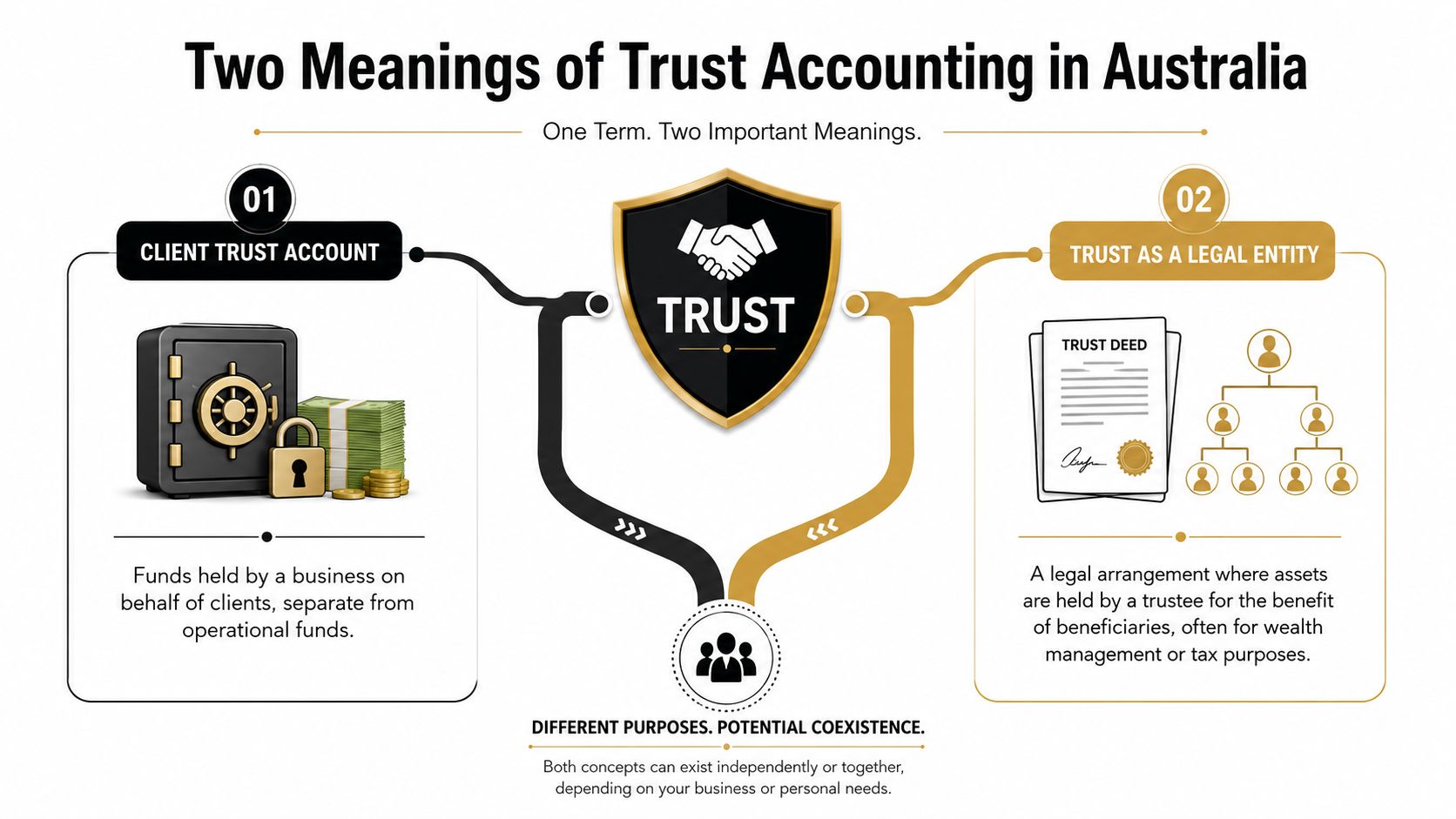
The word trust causes constant confusion because it describes two separate things in business. One is an account type. The other is a legal structure. If you blur them together, you'll eventually make the wrong decision about reporting, software, or who is allowed to approve a payment.
Client trust accounts are custody systems
A client trust account is money held on behalf of someone else. In practice, it sits in a separate account and stays there until the money is lawfully due to the client or another entitled person. This account functions as a safe in a third-party vault. You can hold the key, but you don't own the contents.
That is very different from a business trading through a trust structure, such as a discretionary or unit trust. In that case, the trust is the legal vehicle, and the accounting records need to track what the trust earned, spent, retained, and distributed to beneficiaries. If you want a deeper look at that entity setup, Nexist has a useful overview of corporate trustee family trusts.
Why the distinction matters
The compliance rules are different, the recordkeeping is different, and the software expectations are different. A lawyer or conveyancer holding client money needs one kind of discipline. A retailer or service business operating through a family trust needs another.
Don't ask, “Do we have a trust account?” Ask, “Are we handling client money, or running income through a trust entity, or both?”
That distinction matters because many SMEs have both in play at once. A business might run its trading profit through a family trust for distribution purposes, while also handling client receipts that must be held in a proper trust account until settlement, completion, or instruction. Once both are live, the chart of accounts, bank coding, and approval workflow need to be designed around both realities, not one.
Core Mechanics of a Compliant Client Trust Account
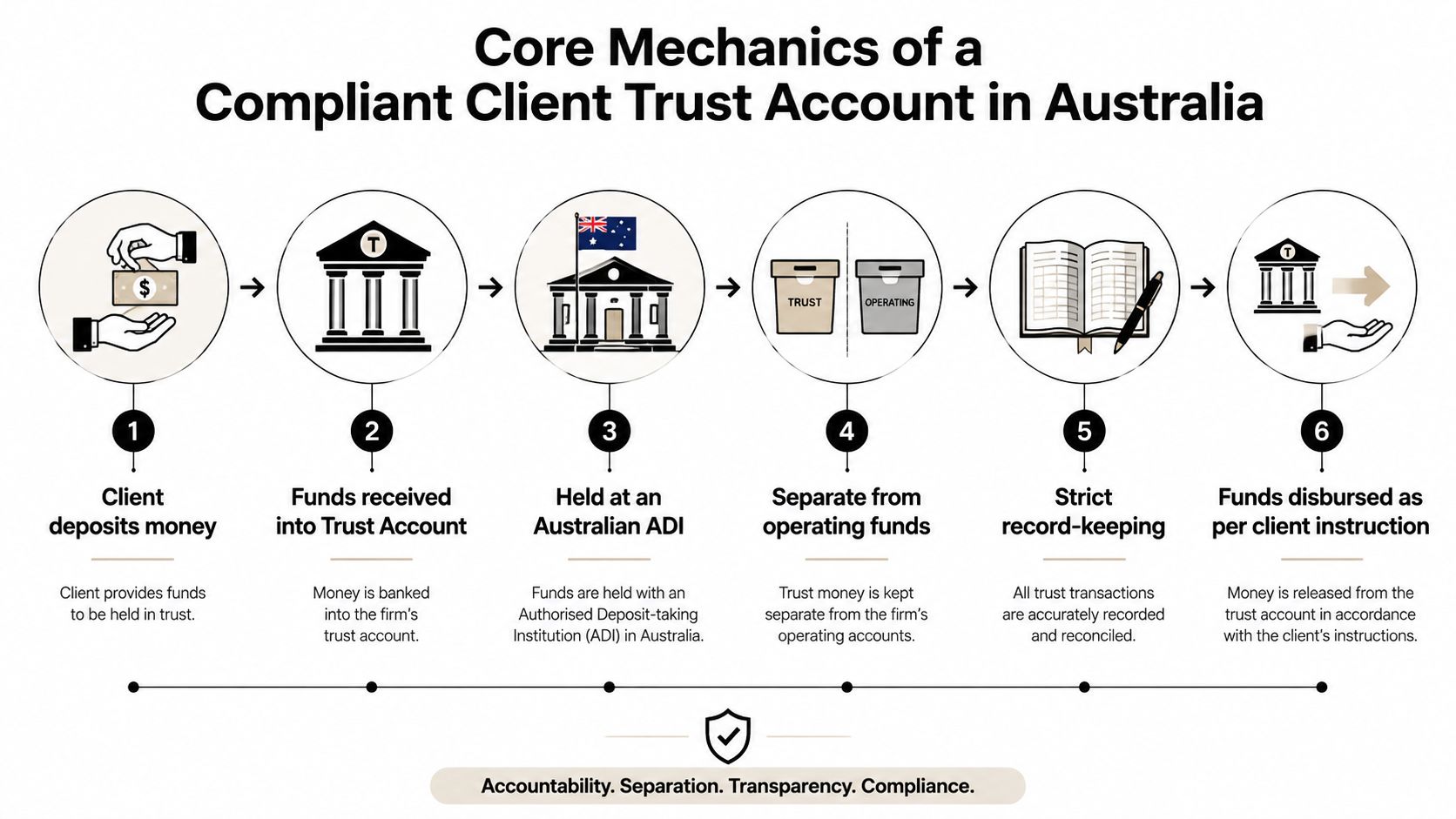
A compliant client trust account starts with one essential rule: money held for someone else stays separate from operating cash. Under ASIC's credit-licensee rules, received trust money must be deposited into an Australian authorised deposit-taking institution, the account must be titled as a trust account, and the licensee must lodge an annual trust account statement and independent audit report within three months of year-end. The auditor must be appointed within three months of the trust obligation arising. ASIC trust account obligations
What the control actually does
This structure is not there to make bookkeeping harder. It's there to stop business cash being mixed with client money and to create a traceable path for every receipt and payment. If your team can't identify entitlement before a withdrawal is made, the account is no longer being run as a trust account in any practical sense.
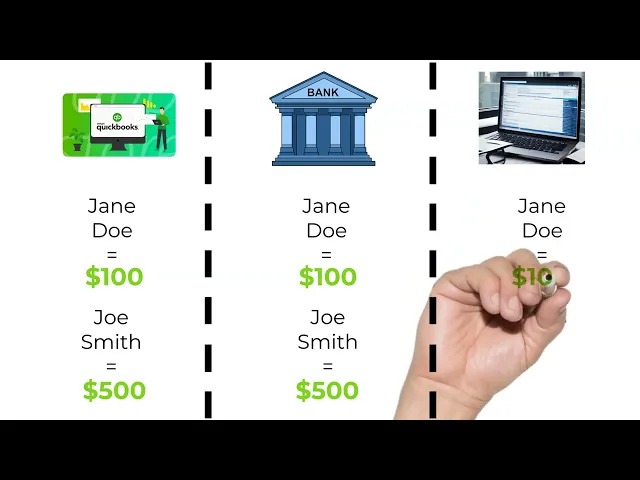
The monthly three-way reconciliation is the backbone. It ties together the bank statement, the cash book, and the client ledger. If one of those three doesn't agree, you don't have a paperwork issue, you have a control failure that needs to be fixed before the next disbursement.
What good looks like in practice
A clean month-end pack should let an auditor or reviewer see, quickly and without commentary:
All receipts received into the trust account.
All disbursements made and who authorised them.
Client-by-client balances showing what is still held.
Reconciliation timing that proves nothing has drifted since the last close.
Exception notes that explain any difference and how it was resolved.
The point of this discipline is visibility. If your bookkeeper can't produce the balance for each client in a minute or less, the system is too loose. If the reversal process is messy, the audit trail gets damaged. And if the ledger only makes sense to one person, the business has built itself into a key-person risk.
For a broader fiduciary-style comparison of control design, the fiduciary accounting guide is a helpful reference point. It's especially relevant if your team is trying to understand why trust reporting is more rigid than ordinary bookkeeping.
State and Industry Rules That Catch Owners Out
Generic trust advice breaks down fast because the rules are not identical across jurisdictions or industries. A business running trust money in one state can face a different reporting trigger, record-retention period, or system expectation in another. That's why owners get lulled into a false sense of security by broad articles that say “keep funds separate” and stop there.
The practical comparison
Jurisdiction / Code | Key Notification Window | Record Retention | Audit Timing | System Requirement |
|---|---|---|---|---|
Victoria, estate agent trust accounting | Deficiencies must be notified within three business days | Not specified in the verified data provided | Not specified in the verified data provided | Trust accounting records must support the required controls and evidence of deficiency reporting |
Queensland, legal practice trust records | Not specified in the verified data provided | At least 7 years after the last entry or finalisation of the matter | Not specified in the verified data provided | A computerised system must produce receipts, cash book, payment book, journals, ledgers, and reconciliations |
NT legal-practice guidance | Not specified in the verified data provided | Not specified in the verified data provided | Not specified in the verified data provided | Modified Excel workbooks do not qualify as a proper trust accounting system |
ACCC water intermediaries code | Not specified in the verified data provided | 6 years for trust records | Annual statements and auditor reports due within three months of year-end | Separate trust-account regime effective from 1 July 2025 |
The awkward truth is that many failures are not dramatic fraud cases. They're operational lapses. Consumer Protection WA's audit guidance highlights recurring trouble spots like buffer funds, suspense accounts, overdrafts, and delayed banking of trust money. Those are exactly the areas where generic guidance goes soft and real businesses get exposed.
What auditors actually want to see
They want evidence that the business understands the local rule set, not just the accounting concept. If you're in legal services, real estate, credit, or water intermediaries, your file needs to show timing, authorisation, and record integrity in the format that regulator expects. If you're relying on a spreadsheet that can be edited without trace, you're making the audit harder than it should be.
For businesses trying to keep that kind of discipline alive across branches or states, a guide to continuous compliance is worth reading because it makes the monitoring problem more operational. The point isn't more paperwork. It's fewer surprises.
Tax, BAS, and Distribution Implications
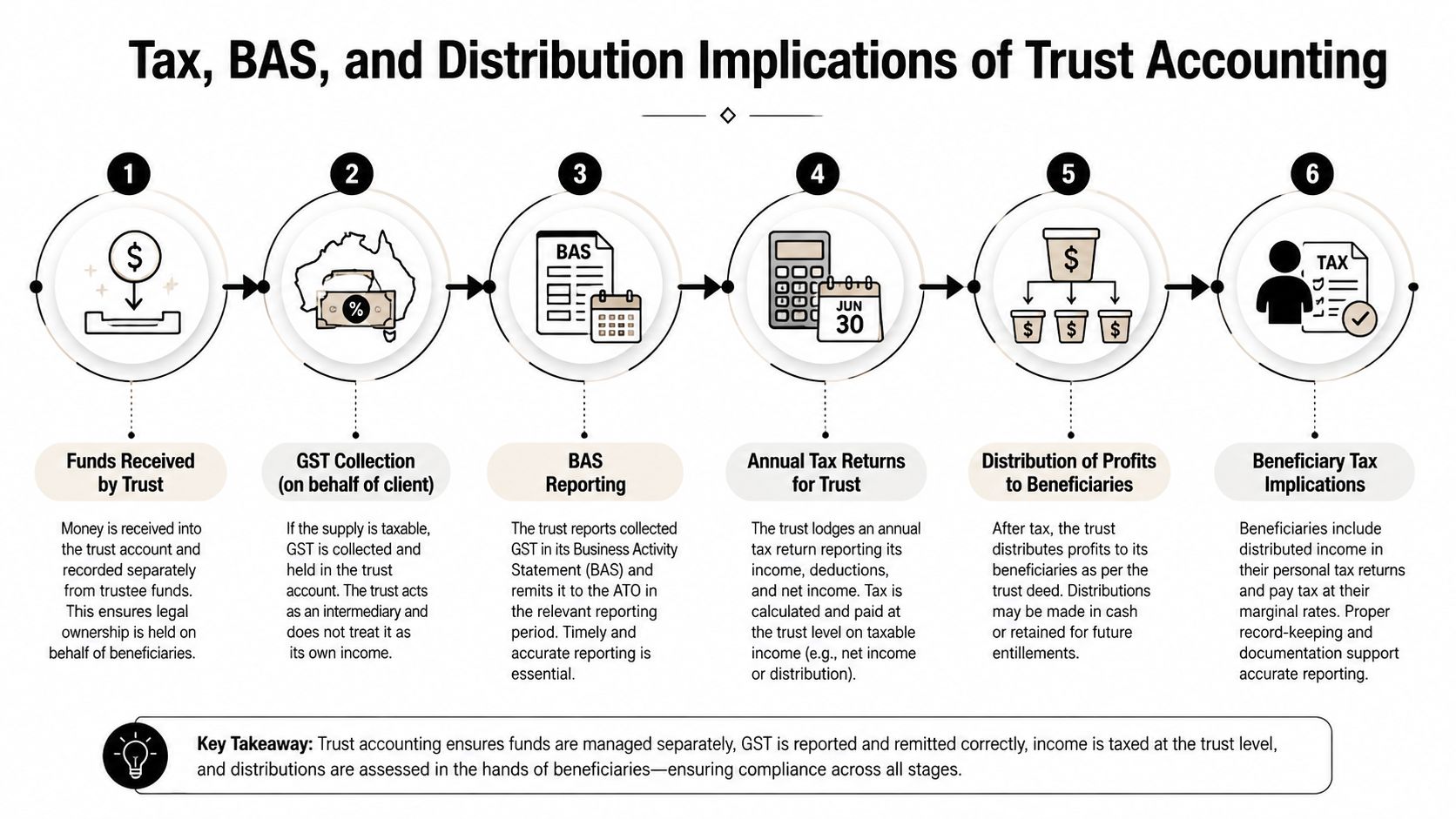
Trust accounting changes tax timing, and owners who ignore that usually get bitten on cash flow. In a trading trust, the trustee is responsible for the trust's assessable income, and the distribution decision can change who ends up carrying the tax bill. If the trust leaves income undistributed, that income can be taxed at the top marginal rate by default, which is exactly the sort of problem that looks invisible until year-end.
Where BAS and GST create friction
BAS reporting depends on what money is being held and why. Client trust receipts are not the same as trading receipts, and GST treatment follows that distinction. If you treat client money as business revenue too early, you can distort both your BAS and your real cash position.
The timing trap is usually around distributions and year-end resolutions. If the trustee doesn't make the right decision before 30 June, the tax outcome can shift even when the business's trading performance hasn't changed at all. That's why I always tell owners to discuss trust resolutions before the end-of-year rush, not after it.
The cash-flow consequence
Owners often focus on profit and miss timing. A trust can look healthy on paper while still creating a cash squeeze if tax is due before distributions are paid or if GST has been collected on behalf of someone else and can't be treated like working capital. That's why trust accounting has to sit inside the finance calendar, not beside it.
A simple rule helps here. If the money is not yours yet, don't let it pollute the profit view. If the trust's income is yours for tax purposes, don't assume the bank balance will protect you from the liability.
Common Pitfalls and Real Failure Stories
The mistakes I see in trust files are usually dull, repeatable, and avoidable. They're not caused by one big disaster. They're caused by small process choices that no one challenged early enough.
A legal practice that trusted the spreadsheet too much
One practice I'd describe as typical relied on a spreadsheet-ledger setup because it looked flexible and cheap. It worked fine until an external audit exposed a reconciliation break that had been hiding in plain sight. The problem wasn't just the spreadsheet itself, it was the lack of a controlled reversal workflow and the fact that the person posting entries was also reviewing them.
The auditor asked for a clean trail from bank to ledger to client balance. The firm could not produce it without rework. After that, they moved to a system that preserved transaction history and forced clearer segregation of duties.
A property manager that banked trust money too late
Another business delayed banking trust money by two days because the daily admin queue got out of hand. That delay triggered a state-regulator issue because the funds were sitting too long outside the proper flow. The staff assumed “it's only two days”, but in trust accounting, timing is not a casual detail.
What changed afterwards was straightforward. They moved to a same-day banking rule, separated receipt handling from release approvals, and gave one person ownership of the daily trust close.
The recurring traps
Practical rule: if a suspense account keeps reappearing, it's not suspense. It's a workflow defect.
The same failure patterns keep showing up:
Buffer funds treated as operating cash, which makes the trust file look healthier than it is.
Suspense accounts that never clear, which hide posting errors.
Undisclosed overdrafts, which destroy the integrity of the account.
Missing or unsigned trust-account statements, which weaken the audit file.
The fix is boring, and that's the point. Daily review, defined authority, and clean handoffs prevent most of these issues before they become reportable events.
Designing a Trust Accounting System That Actually Works
A trust accounting system only works if the process is stronger than the people using it. That means purpose-built software, clear segregation of duties, and a close rhythm that doesn't depend on memory. If your current setup only survives when one senior staffer is in the office, it's not a system, it's a person.

Build the workflow around control, not convenience
Start with software that preserves immutable transaction histories and supports a proper audit trail. Modified spreadsheets are a dead end once volume rises. They make reversal errors harder to track, make reconciliations fragile, and create unnecessary manual work.
Then split the roles. The person receiving trust money shouldn't be the same person approving disbursements, and the person posting entries shouldn't be the only reviewer. That separation is basic control design, and Nexist's segregation of duties overview is a useful reminder of why it matters in finance operations.
Make the monthly pack readable
A good trust pack should be self-explanatory. It should show the bank balance, cash-book balance, client-ledger totals, exception items, and any corrective entries. If the pack needs a meeting to decode it, the process is too loose.
For owners comparing tools and operating models, a virtual CFO can help by designing the finance workflow, not just checking the numbers after the fact. Nexist's virtual chief financial officer material is relevant if you want to see how that support sits inside broader cash and reporting work.
A practical standard I use is simple. The team should be able to answer, right now, how much is held for each client, what is safe to release, and what still needs a second review. If they can't, the system needs redesign, not more reminders.
Practical Next Steps and When to Bring in a Virtual CFO
Start with the regime, not the software. Confirm whether you're dealing with a client trust account, a trading trust, or both, then test your current process against the state or industry rules that apply. After that, decide whether your bookkeeping stack can produce the ledger, reconciliation, and audit evidence without manual rescue work.
A lot of SMEs hit the point where internal staff can still do the tasks, but the owner is still carrying the risk. That's where a virtual CFO or growth accounting firm earns its keep, because the work is no longer just bookkeeping. It's systems design, cash visibility, and compliance discipline. If you want a practical benchmark for that kind of support, the fractional CFO insights for founders article gives a good external view of the role.
If you're juggling both a client trust account and a trading trust structure, get a 30-minute diagnostic with someone who can spot process leaks fast. Nexist does that work as part of its advisory and finance systems support, and the useful part is not the meeting itself, it's the clarity you get on what's broken and what needs to change first.
If trust money, BAS timing, and trust structure reporting are all sitting on your desk at once, Nexist can help you turn that into a cleaner finance system instead of a monthly fire drill. Visit Nexist to see how we approach cash flow, controls, and trust accounting setup for Australian SMEs, and book a conversation if you want a process that your team can run.
trust accounting, trust accounting australia, client trust accounts, BAS lodgement, virtual CFO

" width="24px"/><g d="M 0 24.129 L 0 0.129 L 24 0.129 L 24 24.129 Z M 0 24.129 L 0 0.129 L 24 0.129 L 24 24.129 Z M 24 3 C 24 1.344 22.656 0 21 0 L 3 0 C 1.344 0 0 1.344 0 3 L 0 21 C 0 22.656 1.344 24 3 24 L 21 24 C 22.656 24 24 22.656 24 21 Z M 6.883 8.375 L 2.863 8.375 L 2.863 20.467 L 6.883 20.467 Z M 4.899 2.545 C 3.524 2.545 2.625 3.449 2.625 4.634 C 2.625 5.795 3.496 6.724 4.846 6.724 L 4.872 6.724 C 6.273 6.724 7.146 5.795 7.146 4.634 C 7.12 3.449 6.274 2.545 4.899 2.545 Z M 16.747 8.09 C 14.614 8.09 13.659 9.263 13.124 10.086 L 13.124 8.374 L 9.105 8.374 C 9.159 9.508 9.105 20.466 9.105 20.466 L 13.124 20.466 L 13.124 13.713 C 13.124 13.352 13.15 12.99 13.257 12.732 C 13.547 12.01 14.209 11.262 15.319 11.262 C 16.773 11.262 17.355 12.372 17.355 13.996 L 17.355 20.466 L 21.374 20.466 L 21.374 13.532 C 21.374 9.818 19.391 8.09 16.747 8.09 Z" fill="transparent" height="24.12890599668026px" id="dSFdkJotL" width="24px"><path d="M 0 24 L 0 0 L 24 0 L 24 24 Z" fill="transparent" height="24px" id="wscNJE44G" transform="translate(0 0.129)" width="24px"/><g d="M 0 24.129 L 0 0.129 L 24 0.129 L 24 24.129 Z M 24 3 C 24 1.344 22.656 0 21 0 L 3 0 C 1.344 0 0 1.344 0 3 L 0 21 C 0 22.656 1.344 24 3 24 L 21 24 C 22.656 24 24 22.656 24 21 Z M 6.883 8.375 L 2.863 8.375 L 2.863 20.467 L 6.883 20.467 Z M 4.899 2.545 C 3.524 2.545 2.625 3.449 2.625 4.634 C 2.625 5.795 3.496 6.724 4.846 6.724 L 4.872 6.724 C 6.273 6.724 7.146 5.795 7.146 4.634 C 7.12 3.449 6.274 2.545 4.899 2.545 Z M 16.747 8.09 C 14.614 8.09 13.659 9.263 13.124 10.086 L 13.124 8.374 L 9.105 8.374 C 9.159 9.508 9.105 20.466 9.105 20.466 L 13.124 20.466 L 13.124 13.713 C 13.124 13.352 13.15 12.99 13.257 12.732 C 13.547 12.01 14.209 11.262 15.319 11.262 C 16.773 11.262 17.355 12.372 17.355 13.996 L 17.355 20.466 L 21.374 20.466 L 21.374 13.532 C 21.374 9.818 19.391 8.09 16.747 8.09 Z" fill="transparent" height="24.12890599668026px" id="sTpjGo1tb" width="24px"><path d="M 0 24 L 0 0 L 24 0 L 24 24 Z" fill="transparent" height="24px" id="s7ffpmKOD" transform="translate(0 0.129)" width="24px"/><g d="M 24 3 C 24 1.344 22.656 0 21 0 L 3 0 C 1.344 0 0 1.344 0 3 L 0 21 C 0 22.656 1.344 24 3 24 L 21 24 C 22.656 24 24 22.656 24 21 Z M 6.883 8.375 L 2.863 8.375 L 2.863 20.467 L 6.883 20.467 Z M 4.899 2.545 C 3.524 2.545 2.625 3.449 2.625 4.634 C 2.625 5.795 3.496 6.724 4.846 6.724 L 4.872 6.724 C 6.273 6.724 7.146 5.795 7.146 4.634 C 7.12 3.449 6.274 2.545 4.899 2.545 Z M 16.747 8.09 C 14.614 8.09 13.659 9.263 13.124 10.086 L 13.124 8.374 L 9.105 8.374 C 9.159 9.508 9.105 20.466 9.105 20.466 L 13.124 20.466 L 13.124 13.713 C 13.124 13.352 13.15 12.99 13.257 12.732 C 13.547 12.01 14.209 11.262 15.319 11.262 C 16.773 11.262 17.355 12.372 17.355 13.996 L 17.355 20.466 L 21.374 20.466 L 21.374 13.532 C 21.374 9.818 19.391 8.09 16.747 8.09 Z" fill="transparent" height="24.000006px" id="D0ecaHEcW" transform="translate(0 0)" width="24px"><path d="M 24 3 C 24 1.344 22.656 0 21 0 L 3 0 C 1.344 0 0 1.344 0 3 L 0 21 C 0 22.656 1.344 24 3 24 L 21 24 C 22.656 24 24 22.656 24 21 Z" fill="rgb(55, 184, 218)" height="24.000006px" id="IPLFE6zXx" width="24px"/><path d="M 4.02 0 L 0 0 L 0 12.092 L 4.02 12.092 Z" fill="rgb(255, 255, 255)" height="12.09201px" id="FWhtzAyuY" transform="translate(2.863 8.375)" width="4.02px"/><path d="M 2.274 0 C 0.899 0 0 0.904 0 2.089 C 0 3.25 0.871 4.179 2.221 4.179 L 2.247 4.179 C 3.648 4.179 4.521 3.25 4.521 2.089 C 4.495 0.904 3.649 0 2.274 0 Z" fill="rgb(255, 255, 255)" height="4.17876px" id="VmOsKv4kO" transform="translate(2.625 2.545)" width="4.52095px"/><path d="M 7.641 0 C 5.509 0 4.554 1.173 4.019 1.996 L 4.019 0.284 L 0 0.284 C 0.053 1.419 0 12.376 0 12.376 L 4.019 12.376 L 4.019 5.623 C 4.019 5.262 4.045 4.9 4.151 4.642 C 4.442 3.92 5.103 3.172 6.214 3.172 C 7.667 3.172 8.25 4.282 8.25 5.907 L 8.25 12.376 L 12.269 12.376 L 12.269 5.442 C 12.269 1.728 10.286 0 7.641 0 Z" fill="rgb(255, 255, 255)" height="12.37626px" id="n1XUbhaq0" transform="translate(9.105 8.09)" width="12.268830000000001px"/></g></g></g></g></svg>)