
8 Top Tax Deductions for Nurses in Australia (2026)
Maximise your 2026 tax refund with our guide to tax deductions for nurses. Learn what the ATO allows for uniforms, travel, education, and more.
Ansh Malhotra

Most nurses think about tax at the end of June. That's the wrong time to start. If you're only searching for receipts when your return is due, you're not maximising deductions. You're guessing, backfilling, and exposing yourself to avoidable ATO risk.
The better question is this. Are you running your work expenses like a professional, or like an afterthought?
For Australian nurses, the baseline rule is simple. A work-related expense is only deductible if you paid for it yourself, you weren't reimbursed, and it was directly connected to earning your assessable income, based on ATO principles discussed in this overview of tax benefits for registered nurses. That rule decides almost every claim you'll make, from scrubs and registration fees to study and tools. It also explains why so many common assumptions go wrong, especially around clothing, travel, and mixed-use expenses.
This guide gives you more than a list of tax deductions for nurses. It gives you a practical system. Think like a virtual CFO would. Categorise expenses as they happen, store proof properly, review them monthly, and treat tax time as the final step, not the starting point. That's how you protect your claim, improve cash flow visibility, and avoid the late-June scramble.
Table of Contents
1. Uniform and Protective Clothing Deductions
If your clothing is specific to your nursing duties, claim it. If it's ordinary clothing you could wear privately, don't. That's the cleanest way to stay compliant.
Scrubs, employer-branded uniforms, protective items, and other work-specific clothing are often the main starting point for tax deductions for nurses. The critical test isn't whether you wore the item to work. It's whether the item is sufficiently connected to your role and isn't just conventional clothing. The ATO framework for this sits inside the general deductibility rule already noted earlier.
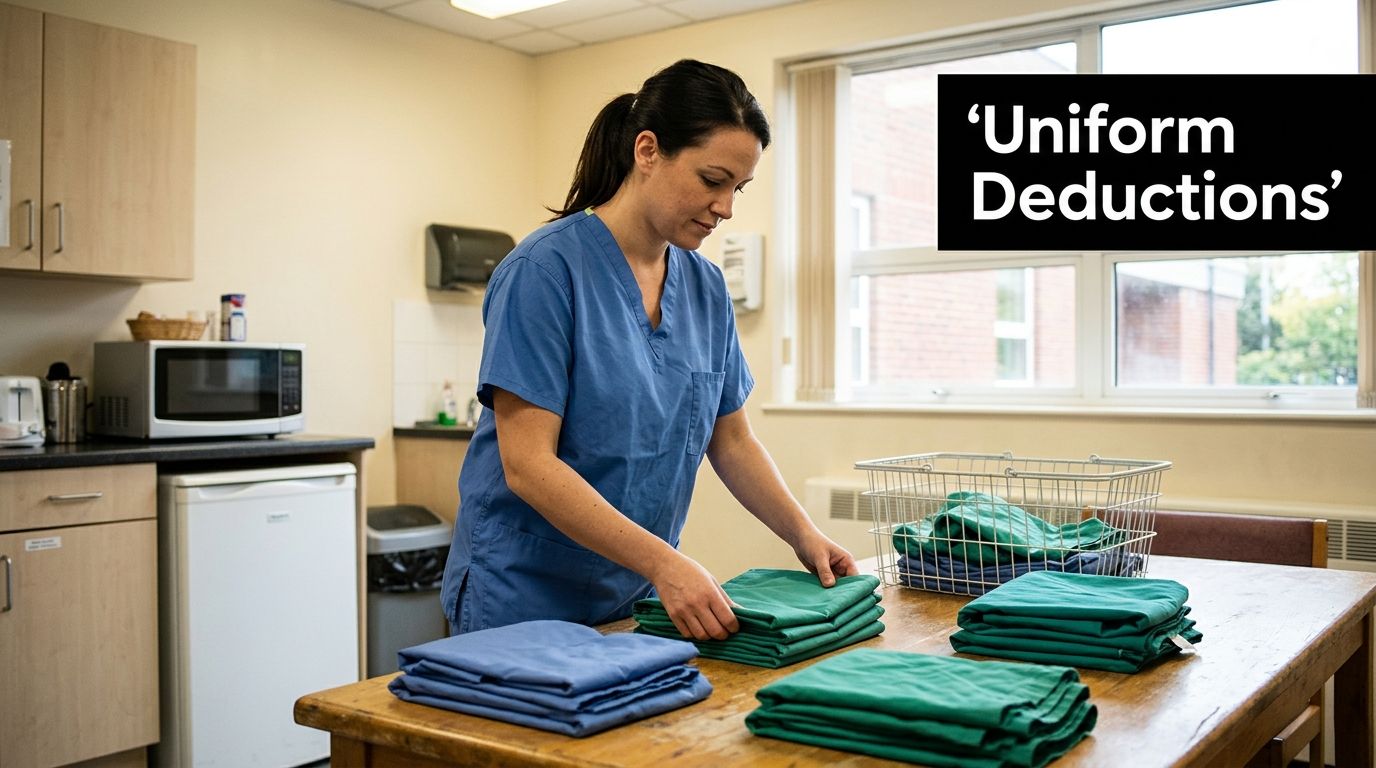
A hospital nurse who buys multiple sets of scrubs for rotating shifts may have a valid claim. An aged care nurse who purchases protective hosiery or footwear because the item is required for work use may also have a claim if the cost isn't reimbursed. By contrast, black pants, plain cardigans, or ordinary sneakers usually won't qualify just because your workplace expects a neat appearance.
Work-specific clothing only
Laundry and dry-cleaning can also be relevant where the garments themselves are deductible. The claim still depends on substantiation. Keep purchase receipts, note what each item is used for, and avoid mixing personal wardrobe purchases into the same category.
Practical rule: If you can honestly describe the item as part of your nursing uniform or protective work gear, keep the receipt. If you'd also buy it for ordinary personal wear, leave it out.
Build a simple clothing log
Don't wait until tax time to reconstruct these costs. Create one folder called "Uniforms and PPE" in your email and cloud storage. Any time you buy scrubs, compression socks used strictly for shift work, closed-toe clinical shoes, or laundering supplies related to deductible clothing, save the invoice there immediately.
A CFO-style habit works better than memory. Use a spreadsheet with four columns only: date, supplier, item, and work purpose. Review it at the end of each month. That monthly review helps you spot reimbursement gaps too. If your employer should have paid you back and didn't, you can chase that early instead of discovering the issue after year end.
2. Professional Development and Training Courses
Study is claimable when it maintains or improves the skills you already use in your current nursing work. That's the standard to apply before you enrol, not after you've paid.
A nurse completing CPD, attending a clinical workshop, renewing a practice-related certification, or buying textbooks for current duties may have deductible costs where those expenses are directly linked to present income-earning activities. Course fees, books, conference attendance, and related travel can fall into this category when the connection is clear and the employer hasn't reimbursed the expense.
Claim study that maintains or improves current skills
An ICU nurse doing advanced critical care training to stay current in the role is in a stronger position than someone studying in a field unrelated to their present duties. A nurse manager completing leadership training connected to current supervisory work may also have a basis for claiming some costs. Keep the enrolment documents, course outline, invoices, and completion records together.
Professional subscriptions belong in the same ecosystem. If you pay for industry memberships, journals, or education platforms that support your present clinical role, track them under a separate "CPD and memberships" code so they don't disappear into general bank spending. For broader career planning, it's also worth understanding CPD for career success so you can align tax, registration, and progression decisions.
Track CPD like an investment category
Most nurses treat training as an occasional expense. Treat it as an annual budget line instead. Set a professional development allowance in your personal cash flow plan and fund it monthly, even if the course happens later in the year.
That approach makes expensive training easier to absorb and easier to document. If you're also planning broader long-term wealth strategies, this guide to carry forward concessional contributions can help you think beyond deductions and into tax-aware financial planning.
Good tax management starts before payment. If a course is relevant, file the invoice, the syllabus, and the proof of completion in the same folder on the day you enrol.
3. Home Office and Working From Home Expenses
Not every nurse works from home, but many do some form of admin, telehealth, roster management, education, or on-call coordination outside the hospital or clinic. If that's part of your actual job, don't ignore it.
Working from home claims have become more important for nurses with hybrid responsibilities. The key is to claim only genuine work activity performed at home, then keep records that support the method you use. If you spend scheduled time on telehealth notes, staff administration, mandatory online systems, or care planning from home, those hours matter.
Only claim genuine work from home activity
The trap is overclaiming mixed household costs without evidence. Keep your claim tied to actual work use. Preserve timesheets, diary entries, rosters, call logs, and bills for internet or utilities where relevant. If you use office equipment such as a desk, chair, monitor, or printer for nursing administration, keep those purchase records too.
A nurse educator who prepares materials from home has a different profile from a ward nurse who occasionally checks email after hours. Claim the first scenario carefully. Be more conservative in the second.
Set up a work from home evidence file
Create a digital folder called "WFH Evidence" and divide it into hours worked, bills, equipment, and notes. Add screenshots of rosters, meeting invites, and system login records as you go. This gives you a defensible file if the ATO ever asks how you arrived at the claim.
From a cash flow angle, home office claims are also useful because they show where your role is pushing costs into your household budget. If your internet plan, equipment, or furniture purchases keep rising because of work demands, you'll see the pattern earlier and can plan for replacements instead of absorbing them randomly.
4. Vehicle and Travel Expenses
Travel is where many nurses get into trouble. The rules are not generous, and the ATO pays close attention to overclaims in this area, especially where people can't prove the work versus private split, as explained in this overview of nurse tax write-offs and ATO travel substantiation issues.

The practical distinction is this. Travel between workplaces can be deductible. Travel from home to your regular workplace is usually ordinary commuting and usually isn't. That difference matters for community nurses, aged care nurses visiting multiple sites, and staff moving between hospitals or clinics during the workday.
Know the line between deductible travel and commuting
A community nurse driving from one patient's home to another may have a stronger claim than a nurse driving from home to the hospital for a standard shift. A nurse rostered across two facilities in one day may have deductible inter-site travel. A nurse attending an approved training event away from the usual workplace may also have related travel costs to review.
The records matter as much as the trip itself. Maintain a written log or app record showing date, destination, purpose, and kilometres. If your claim depends on actual work use, your paperwork must show that split clearly. If your pattern of travel is complex, read Nexist's guidance on travel to work tax deduction rules and then apply the stricter interpretation, not the more optimistic one.
Treat your car like a business asset for record keeping
Use one process all year. Keep fuel, servicing, registration, parking, and toll records in a monthly folder. Then keep a separate travel diary with enough detail to show why each work trip happened.
This short explainer can help you think through the evidence side before you claim:
If you can't prove why you travelled, don't claim the trip.
That rule will save you more trouble than any aggressive deduction strategy ever will.
5. Medical and Health-Related Expenses
This category needs discipline. Personal medical costs are generally private. Work-required health costs are the narrower area to examine.
If your employer or role requires a specific health screening, immunisation update, occupational check, or professional indemnity cover, keep those records. The strongest claims are the ones where you can show a direct employment requirement or a direct connection to practising as a nurse, and where no reimbursement was received.
Claim required work-related health costs only
A hospital may require vaccination evidence or occupational screening before placement or continued work. A nurse in private practice may need indemnity insurance to operate professionally. Those are the kinds of costs worth isolating and reviewing carefully.
The wrong approach is to bundle general wellness costs into this category. Gym memberships, general supplements, ordinary medical appointments, and non-required treatments are usually private in nature. Keep your claim tight and defensible.
For a broader explanation of where the boundary usually sits, review Nexist's article on claiming medical expenses on taxes. If you're also managing physical strain from the job, it's fine to explore personal wellness options such as compare pain relief options for joints, but don't assume a product becomes deductible just because work is physically demanding.
Separate mandatory from personal health spending
Use two folders, not one. Label one "Required for Work" and the other "Personal Health". That separation stops accidental overclaiming and makes year-end review much faster.
Ask providers for itemised invoices when a check, immunisation, or assessment is required for employment. Then store the employer email, contract clause, or onboarding instruction with the invoice. That's the evidence chain the ATO would expect to see.
6. Union Membership and Professional Association Fees
This is one of the simplest categories to manage, and one of the easiest to forget if you don't organise it early.
Union fees, professional association memberships, and nursing registration costs are often recurring annual expenses directly tied to your ability to work or participate in the profession. Because they tend to renew automatically or arrive only once a year, nurses often miss them when they prepare returns from memory.
Annual professional fees are easy wins
If you pay annual fees to a nursing union, a recognised professional body, or a regulatory registration authority connected to your work, keep the renewal notice and payment confirmation together. Those records are usually easy to retrieve if you create a dedicated folder for "Registrations and Memberships".
A straightforward example is a nurse who pays annual registration and a union membership by direct debit. Those charges may leave the bank account automatically while the nurse forgets about them by tax time. The deduction opportunity is fine. The record-keeping is what usually fails.
Put renewals on your finance calendar
Add recurring reminders in your calendar for every renewal month. Include the amount field if you know it, the provider name, and a note to save the invoice once paid. If your employer reimburses a membership in some years but not others, note that too. Reimbursed costs shouldn't be claimed.
Review all recurring professional payments every quarter. If a fee supports your current nursing work and you've paid it yourself, it belongs in your tax file immediately.
Adopting a virtual CFO mindset proves beneficial. Annual fees are predictable. Build them into your personal budget, set aside cash in advance, and stop letting compulsory professional costs feel like surprise bills.
7. Stationery, Office Supplies, and Nursing-Specific Materials
Small expenses are where leakage happens. One notebook, one textbook, one app subscription, one reference guide. None of them feels important on its own. Across a year, they can become a meaningful deduction category if the items are genuinely work-related.
Nurses often buy pens, notepads, folders, clinical references, planners, software tools, printing supplies, and documentation materials out of pocket. Nurse educators, care coordinators, and community nurses tend to incur more of these costs than people realise, especially when employers don't supply everything consistently.
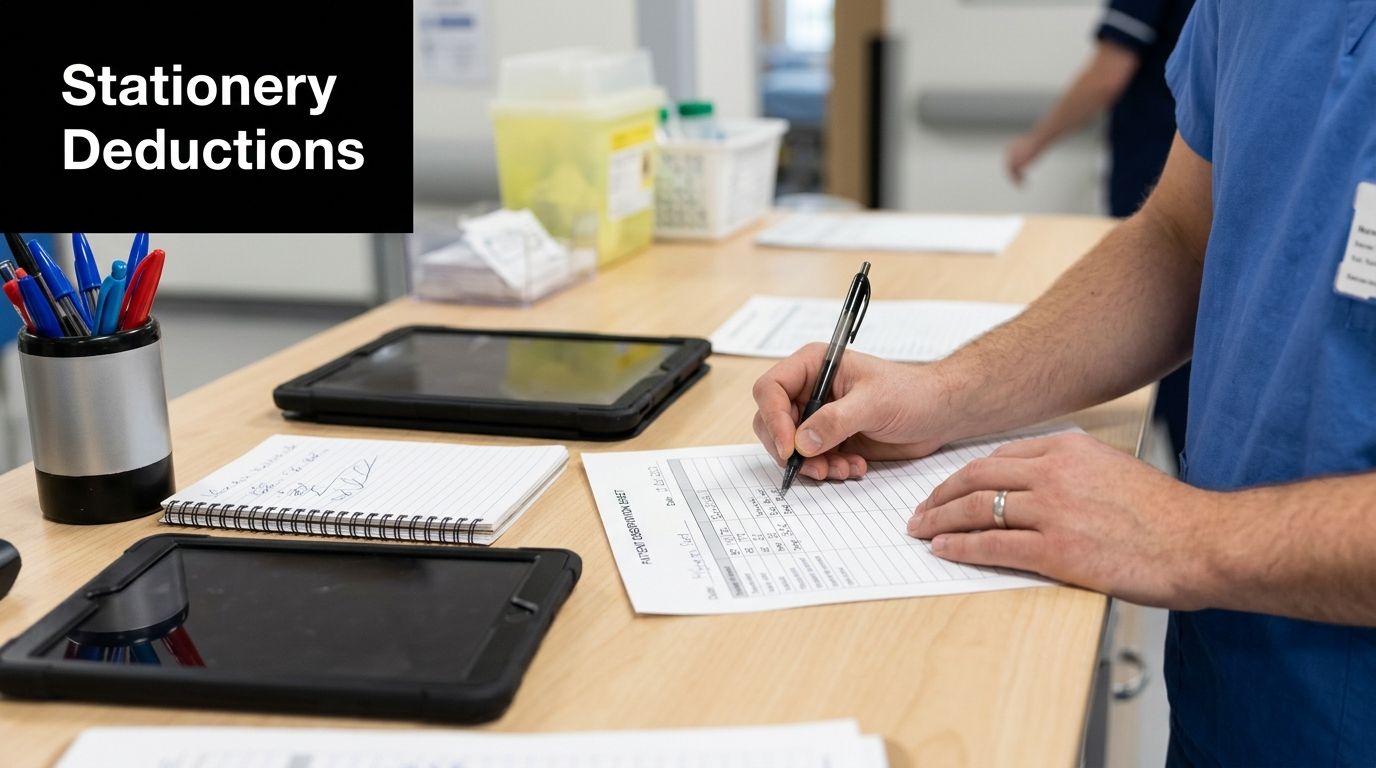
Small purchases add up when they are work-related
A nurse who buys a current drug guide, wound care reference text, printer paper for home admin, and a digital note-taking subscription for rostering or care planning may have legitimate expenses to review. The issue is rarely eligibility alone. It's proof, work use, and consistency.
If a subscription or software tool is used partly for personal purposes, allocate conservatively. Write down how it supports your role. A short note at the time of purchase is far more credible than a vague explanation months later.
Use a monthly reconciliation habit
Set one day each month to reconcile all nursing-related discretionary spending. Open your bank feed, search key merchants, and assign each cost to a category such as books, consumables, software, or admin supplies.
Use this short process:
Save the invoice immediately: Email receipts to a dedicated tax folder the same day you buy the item.
Write the work purpose: Add a note such as "care plan documentation", "CPD notes", or "clinical reference for aged care duties".
Check reimbursement status: If work paid you back, remove it from your claim tracker.
Review mixed-use items: If an app or tool has both personal and work use, record only the work-related portion.
This is basic financial hygiene. It also gives you a useful side benefit. You'll see which categories you repeatedly fund yourself, which can support a later discussion with your employer about allowances, supply support, or reimbursement policies.
8. Meals and Refreshments During Work-Related Activities
Most meals you buy during a shift are private. Accept that upfront and you'll avoid one of the most common mistakes in tax deductions for nurses.
Buying lunch at the hospital, grabbing coffee before handover, or ordering dinner on a long shift doesn't make the cost deductible. The stronger cases involve meals consumed during eligible work-related travel, conferences, training, or other duties away from your usual workplace where the meal is part of that work activity and hasn't been reimbursed.
Most shift meals are private
A nurse attending a work-related conference in another location may have meal costs to review. A nurse travelling between sites during the day should be careful here, because the travel itself doesn't automatically make lunch deductible. The context matters, and ordinary sustenance is often still private.
An on-call coordinator attending mandatory off-site training may have claimable meal expenses if the circumstances support it and the employer hasn't provided food. If the employer covers the meal, don't claim it.
Write the business purpose on the receipt
This category is easy to abuse and easy to challenge. Every receipt should include a written note stating the event, date, location, and why the meal was incurred. If you were at a nursing conference, note the conference name. If you travelled for approved training, note the training session.
Meals are strongest when they are incidental to a clearly documented work activity, not just convenient because you were busy.
Keep meal receipts inside your travel or CPD folder rather than in a separate food category. That way, the business context is obvious when you review the file later.
Nurse Tax Deductions: 8-Point Comparison
Item | Implementation Complexity 🔄 | Resource Requirements 💡 | Expected Outcomes 📊 | Ideal Use Cases ⚡ | Key Advantages ⭐ |
|---|---|---|---|---|---|
Uniform and Protective Clothing Deductions | Low, receipts and proof clothing is work-specific | Low, purchase receipts, laundry estimates | Moderate, recurring annual savings | Nurses required to wear scrubs/uniforms (ED, aged care) | Straightforward claims with low audit risk when documented |
Professional Development and Training Courses | Moderate, must demonstrate relevance to role | Medium, course fees, outlines, certificates, travel receipts | High, sizable deductions and career benefits | Specialisation courses, conferences, certifications | Substantial tax relief while supporting career progression |
Home Office and Working From Home Expenses | High, choose fixed or proportional method; calculations needed | Medium, utility bills, internet, space measurement, hours log | Variable, modest to large depending on home-work usage | Telehealth, administrative/on‑call roles with dedicated space | Captures ongoing utilities and equipment depreciation |
Vehicle and Travel Expenses | Moderate, cents-per-km simple, logbook method more detailed | High, mileage logs, fuel/maintenance receipts, 12‑week logbook if used | High, significant for multi-site or patient-visit travel | Community nurses, multi-hospital shifts, travel to PD | Potentially large deductions; flexible claiming methods |
Medical and Health-Related Expenses | Low, need evidence of work-related requirement | Low, itemised invoices, employer requirement letters | Low–Moderate, modest reductions for mandatory costs | Employer-mandated health checks, private-practice indemnity | Protects health costs and is usually straightforward to claim |
Union Membership and Professional Association Fees | Low, annual fees with clear receipts | Low, membership invoices and renewal receipts | Low–Moderate, predictable annual deduction | All practising nurses with professional or union memberships | Simple, predictable deduction; supports professional benefits |
Stationery, Office Supplies, and Nursing-Specific Materials | Low, keep receipts and apportion mixed-use items | Low, receipts, subscription records, small-item logs | Low–Moderate, accumulative annual savings | Staff purchasing reference books, software, consumables | Easy to claim; includes physical and digital work resources |
Meals and Refreshments During Work-Related Activities | Moderate, must prove travel/PD connection and retain receipts | Low–Medium, meal receipts, event/course documentation | Low, limited eligibility but useful during events | Conferences, off-site training, work-related travel between sites | Reimburses incidental out-of-workplace meal costs when justified |
From Claims to Cash Flow Your Year-Round Strategy
A strong tax return isn't built in July. It's built in small decisions across the whole year. Every time you pay for scrubs, registration, study, travel, or work admin out of pocket, you're creating either a valid claim or a future headache. The difference comes down to systems.
Start with a simple structure. Create digital folders for uniforms, CPD, travel, home office, memberships, medical requirements, supplies, and meals linked to work events. Use one spreadsheet or finance app to log the date, supplier, amount, category, work purpose, and whether you were reimbursed. That's enough for most employees. You don't need a complicated bookkeeping stack to stay organised.
Then move from record-keeping to review. Once a month, reconcile your bank transactions against those folders. Chase missing invoices. Remove anything your employer reimbursed. Add short notes to mixed-use expenses while the details are fresh. This monthly habit does more than improve tax compliance. It gives you visibility over how much your job is costing you out of pocket.
That's the virtual CFO perspective most nurses never apply to their own finances. A deduction is useful, but it doesn't replace cash flow discipline. If you're spending heavily on education, uniforms, fuel, home internet, or registrations, you need to forecast that, not just claim it later. Build a sinking fund for annual fees. Set a CPD budget. Review recurring costs every quarter. Decide in advance what you'll pay personally and what should be reimbursed by your employer.
Keep your claims conservative where the rules are unclear, especially with travel, mixed-use phone or internet costs, and anything that looks partly private. Aggressive claims create stress and often don't survive scrutiny. Clean records, clear work connection, and consistent treatment will.
If you want better outcomes, think in this order. First, only incur work costs that make sense for your role. Second, capture them properly. Third, review them monthly. Fourth, claim them accurately. That's how tax deductions for nurses become part of a broader financial system instead of a once-a-year scramble through old emails and faded receipts.
The result isn't just a better return. It's better control.
If you want more than a once-a-year tax fix, Nexist can help you build the systems behind it. From cash flow planning and expense tracking to tax-ready processes and virtual CFO support, Nexist helps Australian business owners and professionals turn messy finances into clear decisions.
tax deductions for nurses, nurse tax guide, ato deductions australia, tax tips for nurses, nursing expenses

" width="24px"/><g d="M 0 24.129 L 0 0.129 L 24 0.129 L 24 24.129 Z M 0 24.129 L 0 0.129 L 24 0.129 L 24 24.129 Z M 24 3 C 24 1.344 22.656 0 21 0 L 3 0 C 1.344 0 0 1.344 0 3 L 0 21 C 0 22.656 1.344 24 3 24 L 21 24 C 22.656 24 24 22.656 24 21 Z M 6.883 8.375 L 2.863 8.375 L 2.863 20.467 L 6.883 20.467 Z M 4.899 2.545 C 3.524 2.545 2.625 3.449 2.625 4.634 C 2.625 5.795 3.496 6.724 4.846 6.724 L 4.872 6.724 C 6.273 6.724 7.146 5.795 7.146 4.634 C 7.12 3.449 6.274 2.545 4.899 2.545 Z M 16.747 8.09 C 14.614 8.09 13.659 9.263 13.124 10.086 L 13.124 8.374 L 9.105 8.374 C 9.159 9.508 9.105 20.466 9.105 20.466 L 13.124 20.466 L 13.124 13.713 C 13.124 13.352 13.15 12.99 13.257 12.732 C 13.547 12.01 14.209 11.262 15.319 11.262 C 16.773 11.262 17.355 12.372 17.355 13.996 L 17.355 20.466 L 21.374 20.466 L 21.374 13.532 C 21.374 9.818 19.391 8.09 16.747 8.09 Z" fill="transparent" height="24.12890599668026px" id="dSFdkJotL" width="24px"><path d="M 0 24 L 0 0 L 24 0 L 24 24 Z" fill="transparent" height="24px" id="wscNJE44G" transform="translate(0 0.129)" width="24px"/><g d="M 0 24.129 L 0 0.129 L 24 0.129 L 24 24.129 Z M 24 3 C 24 1.344 22.656 0 21 0 L 3 0 C 1.344 0 0 1.344 0 3 L 0 21 C 0 22.656 1.344 24 3 24 L 21 24 C 22.656 24 24 22.656 24 21 Z M 6.883 8.375 L 2.863 8.375 L 2.863 20.467 L 6.883 20.467 Z M 4.899 2.545 C 3.524 2.545 2.625 3.449 2.625 4.634 C 2.625 5.795 3.496 6.724 4.846 6.724 L 4.872 6.724 C 6.273 6.724 7.146 5.795 7.146 4.634 C 7.12 3.449 6.274 2.545 4.899 2.545 Z M 16.747 8.09 C 14.614 8.09 13.659 9.263 13.124 10.086 L 13.124 8.374 L 9.105 8.374 C 9.159 9.508 9.105 20.466 9.105 20.466 L 13.124 20.466 L 13.124 13.713 C 13.124 13.352 13.15 12.99 13.257 12.732 C 13.547 12.01 14.209 11.262 15.319 11.262 C 16.773 11.262 17.355 12.372 17.355 13.996 L 17.355 20.466 L 21.374 20.466 L 21.374 13.532 C 21.374 9.818 19.391 8.09 16.747 8.09 Z" fill="transparent" height="24.12890599668026px" id="sTpjGo1tb" width="24px"><path d="M 0 24 L 0 0 L 24 0 L 24 24 Z" fill="transparent" height="24px" id="s7ffpmKOD" transform="translate(0 0.129)" width="24px"/><g d="M 24 3 C 24 1.344 22.656 0 21 0 L 3 0 C 1.344 0 0 1.344 0 3 L 0 21 C 0 22.656 1.344 24 3 24 L 21 24 C 22.656 24 24 22.656 24 21 Z M 6.883 8.375 L 2.863 8.375 L 2.863 20.467 L 6.883 20.467 Z M 4.899 2.545 C 3.524 2.545 2.625 3.449 2.625 4.634 C 2.625 5.795 3.496 6.724 4.846 6.724 L 4.872 6.724 C 6.273 6.724 7.146 5.795 7.146 4.634 C 7.12 3.449 6.274 2.545 4.899 2.545 Z M 16.747 8.09 C 14.614 8.09 13.659 9.263 13.124 10.086 L 13.124 8.374 L 9.105 8.374 C 9.159 9.508 9.105 20.466 9.105 20.466 L 13.124 20.466 L 13.124 13.713 C 13.124 13.352 13.15 12.99 13.257 12.732 C 13.547 12.01 14.209 11.262 15.319 11.262 C 16.773 11.262 17.355 12.372 17.355 13.996 L 17.355 20.466 L 21.374 20.466 L 21.374 13.532 C 21.374 9.818 19.391 8.09 16.747 8.09 Z" fill="transparent" height="24.000006px" id="D0ecaHEcW" transform="translate(0 0)" width="24px"><path d="M 24 3 C 24 1.344 22.656 0 21 0 L 3 0 C 1.344 0 0 1.344 0 3 L 0 21 C 0 22.656 1.344 24 3 24 L 21 24 C 22.656 24 24 22.656 24 21 Z" fill="rgb(55, 184, 218)" height="24.000006px" id="IPLFE6zXx" width="24px"/><path d="M 4.02 0 L 0 0 L 0 12.092 L 4.02 12.092 Z" fill="rgb(255, 255, 255)" height="12.09201px" id="FWhtzAyuY" transform="translate(2.863 8.375)" width="4.02px"/><path d="M 2.274 0 C 0.899 0 0 0.904 0 2.089 C 0 3.25 0.871 4.179 2.221 4.179 L 2.247 4.179 C 3.648 4.179 4.521 3.25 4.521 2.089 C 4.495 0.904 3.649 0 2.274 0 Z" fill="rgb(255, 255, 255)" height="4.17876px" id="VmOsKv4kO" transform="translate(2.625 2.545)" width="4.52095px"/><path d="M 7.641 0 C 5.509 0 4.554 1.173 4.019 1.996 L 4.019 0.284 L 0 0.284 C 0.053 1.419 0 12.376 0 12.376 L 4.019 12.376 L 4.019 5.623 C 4.019 5.262 4.045 4.9 4.151 4.642 C 4.442 3.92 5.103 3.172 6.214 3.172 C 7.667 3.172 8.25 4.282 8.25 5.907 L 8.25 12.376 L 12.269 12.376 L 12.269 5.442 C 12.269 1.728 10.286 0 7.641 0 Z" fill="rgb(255, 255, 255)" height="12.37626px" id="n1XUbhaq0" transform="translate(9.105 8.09)" width="12.268830000000001px"/></g></g></g></g></svg>)