Standard Operating Procedures: A Practical Guide for 2026
Build standard operating procedures that actually stick. A practical guide for Australian SMEs covering finance, inventory and operations.
Ansh Malhotra

You already know the pattern. The business is busy, the team is capable, and the owner is still answering the same questions twice a week because nobody trusts the handover. In the books, the margins look fine. In reality, cash is leaking through rework, late approvals, missed steps, and the one person who knows how everything works is also the person holding the business together by brute force.
That's where standard operating procedures stop being admin and start becoming control. In an Australian SME, a good SOP isn't a folder of polite instructions. It's a decision about what gets documented first, what gets ignored for now, and which risks are too expensive to leave in someone's head. If you run finance, inventory, or operations with a founder-dependent workflow, your first job is not to write more. It's to prioritise better.
Table of Contents
Why Standard Operating Procedures Matter for Australian SMEs
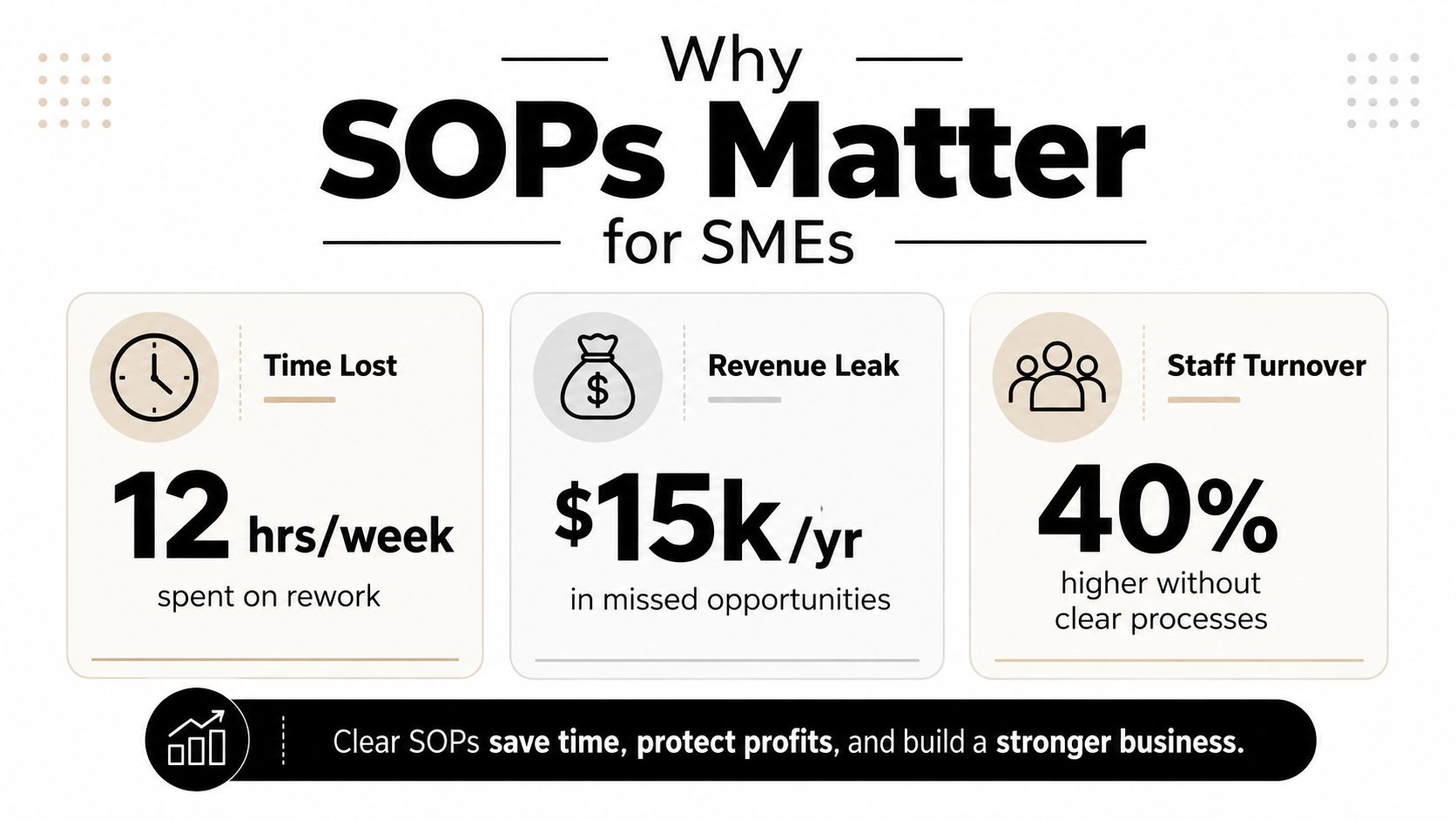
A lot of owners think they have a people problem when they really have a process problem. The signs are familiar. An invoice gets approved by text, a stock adjustment happens after the fact, payroll is checked by one person who “just knows”, and the founder keeps stepping in because the team can't agree on the next move. Each one feels small. Together, they create a business that only works when the owner is present.
That's why standard operating procedures matter in a real Australian SME. They turn repeatable work into something you can delegate, train, audit, and improve. In high-risk settings, that logic is already embedded in Australia's model WHS framework, which requires risks to be eliminated or minimised so far as is reasonably practicable, with documented procedures, training, supervision, and review doing the actual work on the ground. Safe Work Australia's reporting of 146 worker fatalities in 2023–24 makes the point bluntly, repeatable controls are not a theory exercise, they're part of keeping people safe and businesses alive. The Model Work Health and Safety Act 2011 created the national baseline for that discipline across most jurisdictions, with Victoria outside the national framework as noted in this LinkedIn summary of the policy background.
A founder doesn't need a library of polished templates. They need the procedures that protect cash first. If a task is hazardous, variable, or tied to quality, a written procedure is evidence that you've controlled the work, not just talked about it.
The other reason this matters now is digital drift. The ABS reported that 78.4% of Australian businesses used cloud computing in 2021–22, and 88.0% of businesses with 20 or more employees used at least one data or security practice, which tells you the bigger firms are building process discipline into digital tools faster than smaller ones ABS data discussed in this overview. Digital systems don't create consistency by themselves. They amplify whatever mess you already have.
Practical rule: if a workflow touches cash, compliance, or customer delivery twice a week or more, it deserves a written SOP before the next software subscription.
If you want a straight example of how to turn process thinking into a usable document, the guide to writing SOPs with MakeAutomation is a decent reference point. Use it as a drafting aid, not as a reason to over-document. And if your risk exposure is already messy, map the business first with a proper business risk management framework before you start writing.
Designing an SOP That Gets Used
Most SOPs fail because the owner writes what they wish the process was, not what happens on a Monday morning. A useful SOP starts with one workflow, one outcome, and one owner. If you're documenting supplier invoice approval, the outcome is not “process invoices better”. It is “approve valid supplier invoices without late fees, duplicate payments, or routing errors”.
Map the current workflow
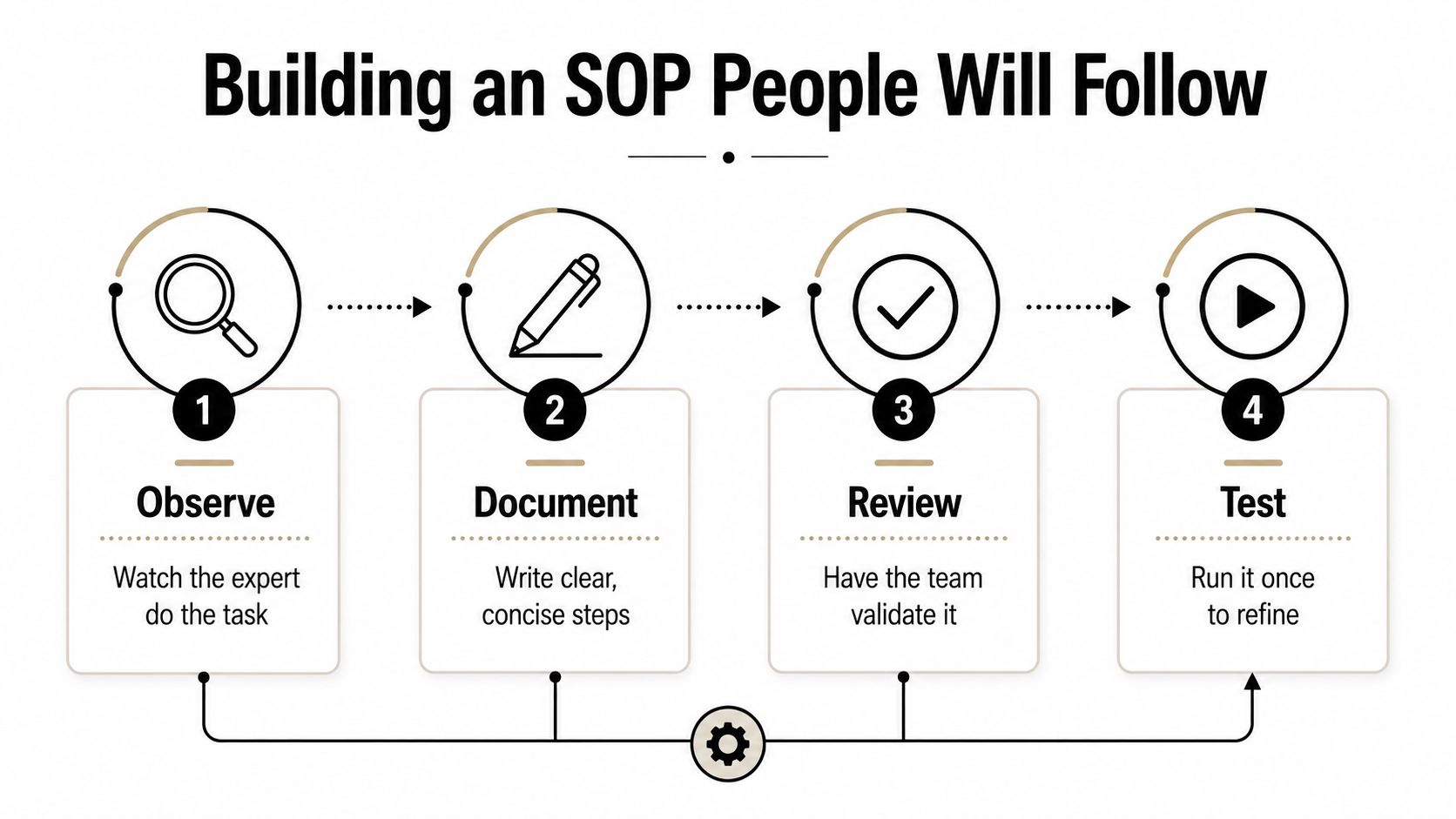
Map the current process before you write a line. Watch the person who does it well. Ask where they pause, what they check, and where they rely on memory. Then include the worker who will use the SOP, because the person doing the job will spot the gaps the manager misses.
The strongest format is boring in the right way. One action per step. One role named per step. No passive fluff, no “ensure”, no “as required” unless there is a real decision point. If there is a screenshot, a field name, or a screen order that stops mistakes, put it in. That is not decoration, that is error reduction. If a process has repeated friction, use business process improvement guidance to strip out the noise before you freeze the steps on paper.
Test it before you launch it
A desk review is not validation. The procedure needs to be tested by someone unfamiliar with the task, because that is how you catch the assumptions the expert no longer sees. If they get stuck, the SOP is too vague. If they ask the same question twice, the wording is not clear enough. If they need to phone the expert anyway, the process is not ready.
The cleanest SOPs also have a named owner and a version trail. That matters because procedures drift the moment software, staff, or customers change. If nobody owns the document, it turns into dead paper the first time a role shifts.
Write the SOP for the person who is new, busy, and under pressure. If it only works for the expert, it is not a procedure yet.
SOPs Across Finance, Inventory and Operations
One SOP template won't fit every function. Finance, inventory, and operations move at different speeds, carry different risks, and need different owners. If you force them into the same format, you get a neat library and a useless back office.
Function | Example SOPs | Cadence | Primary Owner | Review Frequency |
|---|---|---|---|---|
Finance | Bank reconciliation, BAS prep, payroll run, AR follow-up, AP approval | Monthly and weekly | Finance lead or external adviser | Higher-risk items more often, stable tasks less often |
Inventory | Receiving stock, cycle counts, reorder approvals, supplier onboarding | Daily to monthly | Operations or inventory manager | More often where stock value or shrinkage risk is high |
Operations | Client onboarding, job handoffs, quality checks, escalation steps | Daily and weekly | Operations manager or team lead | Whenever service delivery changes or errors repeat |
Finance SOPs should be tighter than most founders think. If the task affects cash, tax, debt, or wages, write it with clear checkpoints and approvals. Inventory SOPs need sharper control around handoffs, counts, and exceptions because errors compound fast when stock moves through multiple people. Operations SOPs usually need more context, because the risk is inconsistency between people, sites, or client jobs.
That's why revenue growth can outpace the back office so quickly. A business can sell more, invoice more, and hire faster while the underlying control stack stays manual. The result is familiar to anyone who has lived through it, more activity, less visibility, and more rework. The when revenue grows faster than ops piece is a good reminder that scale without control just multiplies confusion.
Use different depth for different functions. Finance procedures should read like guardrails. Inventory procedures should read like checkpoints. Operations procedures should read like an operating rhythm. If you write all three the same way, you'll miss the point of each one.
Prioritising Which Procedures to Document First
Most SMEs fail here. They try to document everything, burn a week on formatting, and still don't have the procedures that move cash or reduce risk. Don't build a generic library. Rank the work by exposure.
Use a simple priority matrix
Start with four questions. Does the task touch cash directly. Does it create compliance or safety risk. Does it affect multiple people or roles. Does it sit close to the customer. The more boxes it ticks, the higher it goes on the list.
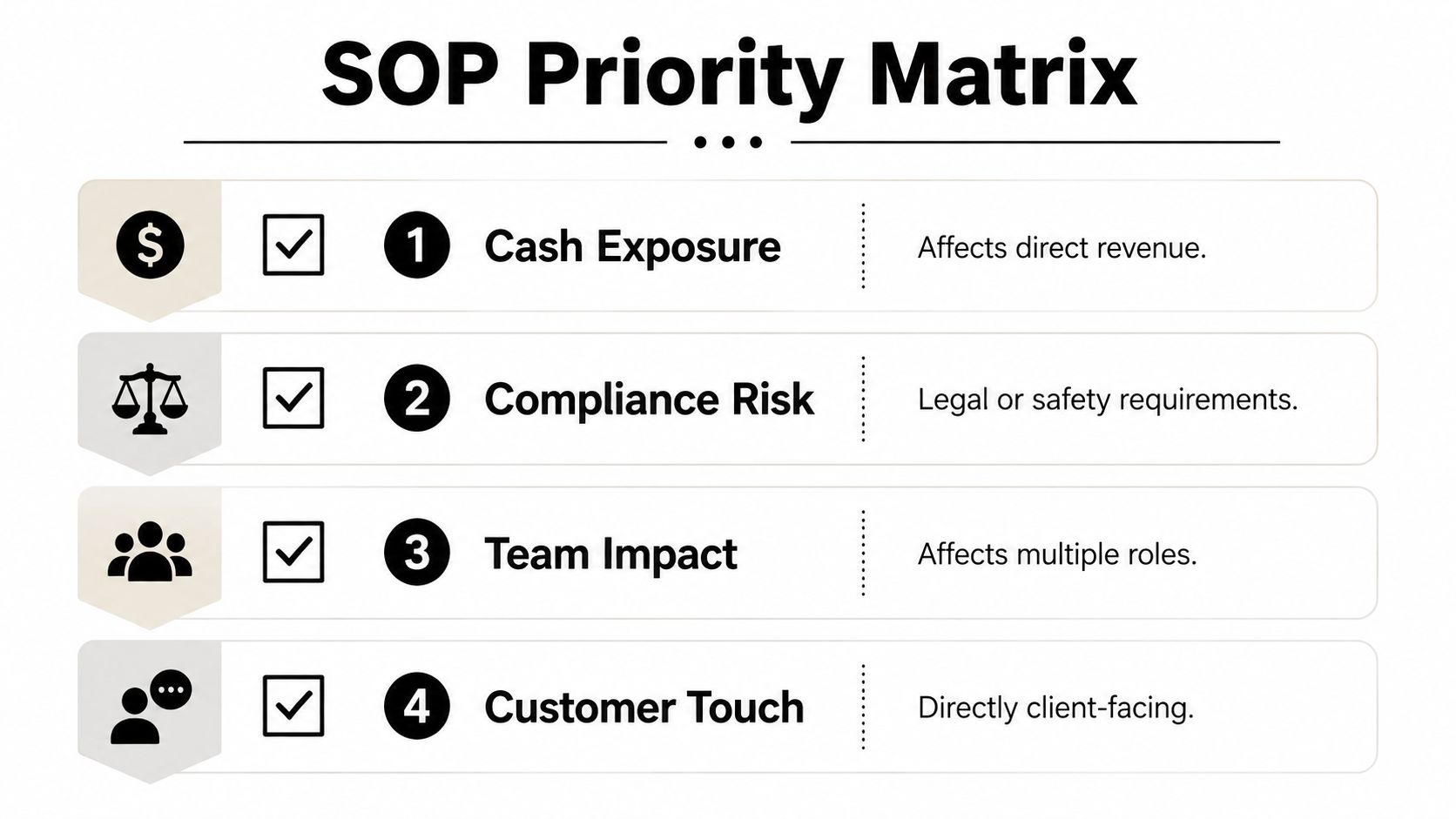
My advice is blunt. Write the procedures that protect money first, then the ones that stop errors spreading across the team, then the ones that only save time. A clean stocktake SOP beats a nice onboarding checklist every time if stock is where your cash is trapped.
A workable 30-day sprint looks like this. Pick the top five procedures in week one. Draft and test them in week two. Train the team and roll them out in week three. Review the results and lock in the next batch in week four. That's enough time to create momentum without pretending you can systemise the whole business before lunch.
Rank first, write second. If a procedure doesn't reduce cash exposure, compliance risk, team dependency, or customer friction, it can wait.
The business owners who get this right usually stop asking, “What should we document?” and start asking, “What failure would hurt us most if it happened again tomorrow?” That's the right question.
Governance, KPIs and Keeping SOPs Alive
A written SOP that nobody maintains is just a future problem with a title page. The fix is governance, but keep it light. Each SOP needs one owner, one version history, one change log, and one review rhythm. If there's no owner, no review date, and no reason for the last update, the document is already drifting.
Set the review cycle by risk
High-risk procedures deserve a tighter review cycle. Stable procedures can be checked less often. The point isn't to review everything constantly, it's to keep the document matched to actual work. If payroll software changes, if stock locations change, or if a new approval path goes live, the SOP should change too.
Tie each SOP to a live KPI that tells you whether the process is working. In finance, that might be days sales outstanding or rework in reconciliations. In inventory, it might be stocktake variance. In operations, it might be avoidable rework or failed handoffs. The KPI doesn't replace the SOP, it tells you when the SOP has stopped doing its job.
Keep the register simple
Use one master register for every SOP in the business. Track the owner, current version, last review date, and next review date. Add one line for why the last change happened. That's enough for most SMEs. You don't need a bureaucratic archive, you need traceability.
The biggest trap is treating SOPs as a launch project. They're not. They're operating controls. The implementation guidance in this journal article is useful because it stresses testing, revision, accessibility, and ongoing support. That logic matters in an SME just as much as it does anywhere else. If a procedure is out of date, staff will bypass it, and they should.
Good governance also means you stop rewarding the wrong behaviour. Don't praise a document for existing. Praise the team for following it, updating it, and catching when it no longer matches the software or the workflow. That's the standard.
Automating, Outsourcing and Working With a Virtual CFO
Once the core SOPs exist, the next question is what to automate, what to outsource, and what to keep human. Don't buy tools first. Decide the work type first. Repeatability belongs in software. Judgement belongs with people. Everything in between should be documented.
Use tools where the steps are stable
Native platform workflows are enough when the task is simple and contained. Notion or ClickUp can hold step-by-step procedures, task ownership, and lightweight approvals if your team needs visibility more than complexity. RPA and AI-driven automation make sense when the same transaction or data movement is happening over and over, and the exception rate is low.
But control matters. The more sensitive the workflow, the more you need to think about access, confidentiality, and who can override what. A payroll approval chain is not the same as a content checklist. If the process affects wages, tax, or cash movement, I'd rather see a clear SOP and a small number of accountable humans than an overbuilt tool stack nobody understands.
Outsource judgement, not memory
A virtual CFO or operations specialist earns their keep. Not by replacing the team, but by helping the founder decide which procedures matter, how they should be owned, and where the control gaps sit. Nexist, for example, works in this space by connecting finance, process, and execution when owners need more than a document and less than a full internal department. If you want the advisory layer, the virtual chief financial officer model is built for that.
The right split is simple. Automate repeatability. Outsource judgement. Document everything in between. That usually means software can chase reminders, move data, and standardise handoffs, while a human still approves exceptions, escalations, and policy calls.

If you keep trying to automate a process that's still unclear, you'll just create expensive confusion. Fix the SOP first, then automate it.
Your 30-Day SOP Playbook and Common Pitfalls
Week one is selection, not writing. Pick the five procedures that touch cash, risk, or founder dependency the hardest, and assign one owner to each. If you can't name the owner, you don't have a procedure yet, you have a gap.
Week two is drafting and testing. Write the steps in plain language, one action at a time, then hand them to someone who didn't build the workflow. If they stumble, revise the wording. If they need tribal knowledge to finish the task, the SOP isn't ready. For practical ideas on how teams turn repeatable work into usable playbooks, the field-tested playbook examples are worth scanning for structure, not for blind copying.
Week three is training and rollout. Put the SOP where the team works, not in a buried folder. Walk the team through the why, the trigger, the owner, and the escalation rule. Then use the process, don't just announce it.
Week four is review and scheduling. Check the first results, fix any friction, and lock in the next review date. Then pick the next five. That's how you build control without overwhelming the business.
The common mistakes are predictable.
Skipping stakeholder review: the document looks neat, but the operators don't trust it.
Writing vague passive instructions: nobody knows who does what, so the process still depends on memory.
Failing to assign owners: the SOP becomes orphaned the first time something changes.
Treating SOPs as a one-off project: the business changes, the document doesn't, and then everyone ignores it.
A founder-dependent business doesn't become scalable because the owner works harder. It becomes scalable when the right work is documented, owned, tested, and kept current.
If you're ready to turn messy workflows into something that protects cash and frees your time, Nexist can help you map the process, prioritise the right SOPs, and build the finance and operations rhythm around them. Visit Nexist and start with the procedures that are costing you the most today.
standard operating procedures, SOPs, business processes, virtual CFO, SME operations

" width="24px"/><g d="M 0 24.129 L 0 0.129 L 24 0.129 L 24 24.129 Z M 0 24.129 L 0 0.129 L 24 0.129 L 24 24.129 Z M 24 3 C 24 1.344 22.656 0 21 0 L 3 0 C 1.344 0 0 1.344 0 3 L 0 21 C 0 22.656 1.344 24 3 24 L 21 24 C 22.656 24 24 22.656 24 21 Z M 6.883 8.375 L 2.863 8.375 L 2.863 20.467 L 6.883 20.467 Z M 4.899 2.545 C 3.524 2.545 2.625 3.449 2.625 4.634 C 2.625 5.795 3.496 6.724 4.846 6.724 L 4.872 6.724 C 6.273 6.724 7.146 5.795 7.146 4.634 C 7.12 3.449 6.274 2.545 4.899 2.545 Z M 16.747 8.09 C 14.614 8.09 13.659 9.263 13.124 10.086 L 13.124 8.374 L 9.105 8.374 C 9.159 9.508 9.105 20.466 9.105 20.466 L 13.124 20.466 L 13.124 13.713 C 13.124 13.352 13.15 12.99 13.257 12.732 C 13.547 12.01 14.209 11.262 15.319 11.262 C 16.773 11.262 17.355 12.372 17.355 13.996 L 17.355 20.466 L 21.374 20.466 L 21.374 13.532 C 21.374 9.818 19.391 8.09 16.747 8.09 Z" fill="transparent" height="24.12890599668026px" id="dSFdkJotL" width="24px"><path d="M 0 24 L 0 0 L 24 0 L 24 24 Z" fill="transparent" height="24px" id="wscNJE44G" transform="translate(0 0.129)" width="24px"/><g d="M 0 24.129 L 0 0.129 L 24 0.129 L 24 24.129 Z M 24 3 C 24 1.344 22.656 0 21 0 L 3 0 C 1.344 0 0 1.344 0 3 L 0 21 C 0 22.656 1.344 24 3 24 L 21 24 C 22.656 24 24 22.656 24 21 Z M 6.883 8.375 L 2.863 8.375 L 2.863 20.467 L 6.883 20.467 Z M 4.899 2.545 C 3.524 2.545 2.625 3.449 2.625 4.634 C 2.625 5.795 3.496 6.724 4.846 6.724 L 4.872 6.724 C 6.273 6.724 7.146 5.795 7.146 4.634 C 7.12 3.449 6.274 2.545 4.899 2.545 Z M 16.747 8.09 C 14.614 8.09 13.659 9.263 13.124 10.086 L 13.124 8.374 L 9.105 8.374 C 9.159 9.508 9.105 20.466 9.105 20.466 L 13.124 20.466 L 13.124 13.713 C 13.124 13.352 13.15 12.99 13.257 12.732 C 13.547 12.01 14.209 11.262 15.319 11.262 C 16.773 11.262 17.355 12.372 17.355 13.996 L 17.355 20.466 L 21.374 20.466 L 21.374 13.532 C 21.374 9.818 19.391 8.09 16.747 8.09 Z" fill="transparent" height="24.12890599668026px" id="sTpjGo1tb" width="24px"><path d="M 0 24 L 0 0 L 24 0 L 24 24 Z" fill="transparent" height="24px" id="s7ffpmKOD" transform="translate(0 0.129)" width="24px"/><g d="M 24 3 C 24 1.344 22.656 0 21 0 L 3 0 C 1.344 0 0 1.344 0 3 L 0 21 C 0 22.656 1.344 24 3 24 L 21 24 C 22.656 24 24 22.656 24 21 Z M 6.883 8.375 L 2.863 8.375 L 2.863 20.467 L 6.883 20.467 Z M 4.899 2.545 C 3.524 2.545 2.625 3.449 2.625 4.634 C 2.625 5.795 3.496 6.724 4.846 6.724 L 4.872 6.724 C 6.273 6.724 7.146 5.795 7.146 4.634 C 7.12 3.449 6.274 2.545 4.899 2.545 Z M 16.747 8.09 C 14.614 8.09 13.659 9.263 13.124 10.086 L 13.124 8.374 L 9.105 8.374 C 9.159 9.508 9.105 20.466 9.105 20.466 L 13.124 20.466 L 13.124 13.713 C 13.124 13.352 13.15 12.99 13.257 12.732 C 13.547 12.01 14.209 11.262 15.319 11.262 C 16.773 11.262 17.355 12.372 17.355 13.996 L 17.355 20.466 L 21.374 20.466 L 21.374 13.532 C 21.374 9.818 19.391 8.09 16.747 8.09 Z" fill="transparent" height="24.000006px" id="D0ecaHEcW" transform="translate(0 0)" width="24px"><path d="M 24 3 C 24 1.344 22.656 0 21 0 L 3 0 C 1.344 0 0 1.344 0 3 L 0 21 C 0 22.656 1.344 24 3 24 L 21 24 C 22.656 24 24 22.656 24 21 Z" fill="rgb(55, 184, 218)" height="24.000006px" id="IPLFE6zXx" width="24px"/><path d="M 4.02 0 L 0 0 L 0 12.092 L 4.02 12.092 Z" fill="rgb(255, 255, 255)" height="12.09201px" id="FWhtzAyuY" transform="translate(2.863 8.375)" width="4.02px"/><path d="M 2.274 0 C 0.899 0 0 0.904 0 2.089 C 0 3.25 0.871 4.179 2.221 4.179 L 2.247 4.179 C 3.648 4.179 4.521 3.25 4.521 2.089 C 4.495 0.904 3.649 0 2.274 0 Z" fill="rgb(255, 255, 255)" height="4.17876px" id="VmOsKv4kO" transform="translate(2.625 2.545)" width="4.52095px"/><path d="M 7.641 0 C 5.509 0 4.554 1.173 4.019 1.996 L 4.019 0.284 L 0 0.284 C 0.053 1.419 0 12.376 0 12.376 L 4.019 12.376 L 4.019 5.623 C 4.019 5.262 4.045 4.9 4.151 4.642 C 4.442 3.92 5.103 3.172 6.214 3.172 C 7.667 3.172 8.25 4.282 8.25 5.907 L 8.25 12.376 L 12.269 12.376 L 12.269 5.442 C 12.269 1.728 10.286 0 7.641 0 Z" fill="rgb(255, 255, 255)" height="12.37626px" id="n1XUbhaq0" transform="translate(9.105 8.09)" width="12.268830000000001px"/></g></g></g></g></svg>)