Business Sustainability Guide for Australian SMEs
Business sustainability - Discover practical frameworks, KPIs, and a step-by-step plan to build resilience, cut waste, and fund your transition
Ansh Malhotra

Your bank wants numbers. Your largest customer wants proof. Your insurer wants to know whether your processes will survive the next disruption. Meanwhile, you're still trying to keep stock moving, staff paid, and cash in the account before month end. That's the shape of business sustainability for most Australian SMEs, it's not a branding exercise, it's a working-business problem.
The mistake is treating sustainability as a separate project run after the “real” work is done. In Australia, the rules are already moving towards mandatory climate disclosure, starting with the largest entities from financial years beginning on or after 1 January 2025, then expanding through later groups with lower thresholds, including Group 1 businesses with at least 500 employees, AUD 500 million in consolidated revenue, or AUD 1 billion in consolidated gross assets (Australian Government Treasury climate disclosure timeline). Even if you're not caught yet, lenders, procurement teams, and investors are already asking for the same discipline.
That means the right question isn't, “Should I care about sustainability?” The actual question is, “Which parts of my operating model are wasting cash, creating risk, and making me harder to finance?” If you want the blunt version, read the practical cash-flow reality in small business cash flow problems, because sustainability and cash flow now sit in the same conversation.
You won't find corporate fluff here. You'll get a founder-level view of what matters, which numbers belong on the dashboard, and which upgrades deserve funding. If you're tired of hearing about sustainability as if it were a marketing campaign, good, because that's not how real businesses survive.
Table of Contents
Why Business Sustainability Is Now an SME Finance Problem
A Melbourne wholesaler gets a call from its bank manager. Nothing dramatic, just a request for emissions and governance data before the next credit review. The founder has a sustainability page on the website, a few recycling bins in the warehouse, and no clean way to pull the numbers. That is the point where the issue stops being brand positioning and starts affecting finance, assurance, and customer retention.
The pressure is real. Australian disclosure rules start with the largest entities and phase down through the market over time. That shift matters to SMEs because the expectations flow through procurement checks, lender questions, and board requests long before a smaller business is formally captured. If a larger customer needs supply-chain data, they will not wait for your team to sort out the reporting later.
What buyers and financiers are really asking for
They are not asking for a glossy report. They want operating evidence. Can you measure energy use, track waste, explain supplier risk, and show that management reviews the numbers?
That is why the better comparison is between businesses that can prove control of their operations and businesses that cannot. If you cannot show it, someone else will price the risk for you, usually through tighter terms, slower onboarding, or lost tender work.
Practical rule: if a sustainability question shows up in a bank meeting, it is already a cash-flow question.
Energy costs sit in the same bucket. Retail power pricing is part of day-to-day planning for Australian operators, and the future of Australian electricity prices should be treated as a cost-control issue, not a side topic for the annual strategy offsite.
Why waiting is a bad strategy
Waiting for clearer rules is a poor bet. The direction of travel is obvious, more data, more scrutiny, and more linkage between sustainability and capital access. Even where formal disclosure does not yet apply, the commercial pressure already does.
That is the part many founders miss. They assume sustainability is for listed companies with compliance teams. It is not. For an SME, it sits in the same discipline that governs working capital, customer risk, and lender confidence. A business that cannot evidence control over its inputs and waste streams is harder to finance and harder to trust.
If you want the cash-flow side of that pressure in plain English, read this guide to small business cash flow problems. The same pattern shows up here, weak control in one part of the business usually turns into more expensive capital elsewhere.
So the right response is operational, not promotional. Treat business sustainability as part of how you run the company, not as a separate reporting exercise.
What Business Sustainability Actually Means
The cleanest definition is this, business sustainability is the ability to keep making money without burning through the resources, relationships, and controls that the business depends on. That means environmental responsibility and economic durability have to sit together. If one of them fails, the business is weaker than the profit and loss account suggests.
Think of the business like a house with two load-bearing walls. One wall is ESG duties, environmental, social, and governance responsibilities. The other is financial resilience, which is your ability to stay solvent, fund operations, and absorb shocks without panic.

Environmental, social, and governance are business controls
Environmental issues show up in energy bills, waste charges, water use, and emissions exposure. Social issues show up in staff turnover, safety, capability, and whether your team can keep delivering when it's under pressure. Governance shows up in the quality of your approvals, your audit trail, and whether decisions are repeatable or personality-driven.
That's why sustainability should never sit in a separate folder owned by marketing. It belongs in finance, operations, and risk. A business that ignores resource use or supplier behaviour isn't sustainable, even if this quarter looks strong.
A profitable business can still be badly run. Sustainability is the discipline that stops short-term profit from masking long-term damage.
If you need a simple external reference point for the consumer side of that logic, the what residents should know resource is a decent reminder that household users already expect transparent, accountable service and usage information. Commercial customers are moving in the same direction.
The definition you can use in a bank meeting
Use this version when you need to sound like a serious operator, not a brochure writer. A sustainable business is one that manages its environmental impact, treats people and suppliers responsibly, and keeps enough financial strength to adapt when conditions change.
That definition works because it links ethics to execution. It's not a slogan. It's a standard for whether the business can keep trading, keep funding itself, and keep its stakeholders confident in it.
The Three Operational Pillars Australian SMEs Can Control
The fastest way to lose control of sustainability is to try to measure everything. The fastest way to improve it is to focus on three pillars that sit directly on the operating account, energy and emissions, waste and water, and supplier plus inventory data.
Australia's reporting environment is shifting, but the practical starting point for SMEs is still the same. Scope 1 and Scope 2 emissions are the most operationally actionable data points because they map straight to fuel use, process heat, and purchased electricity, which are controllable cost drivers (IBM sustainability data guidance). That's where founders should start, not with a giant ESG software rollout.
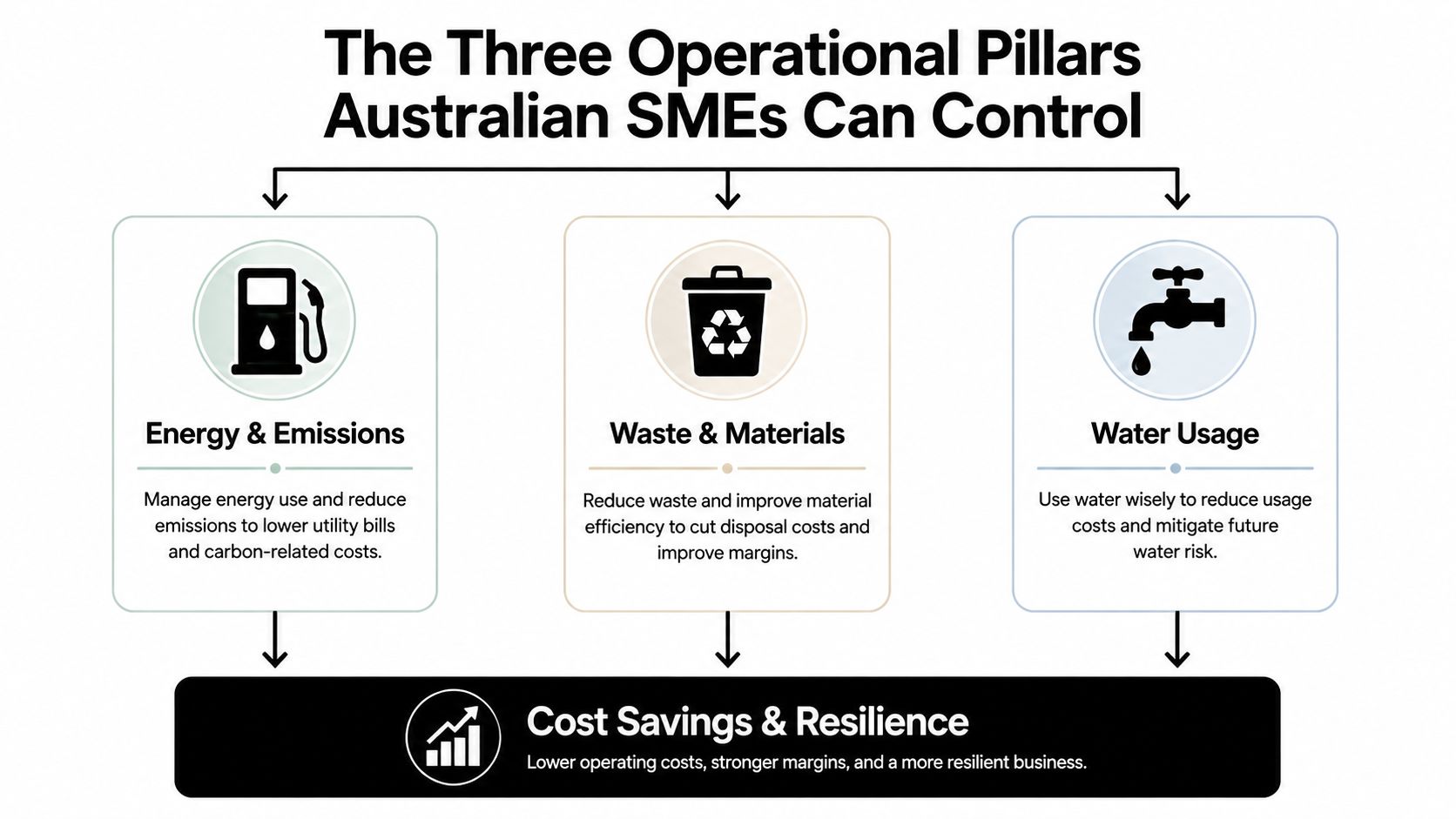
Energy and emissions come first
If your business burns fuel, runs vehicles, or uses a lot of electricity, this is the first lever to pull. The reason is simple, energy waste is usually visible in your bills before it's visible in your reporting. Fixing lighting, scheduling equipment better, tightening maintenance routines, and reducing idle time all improve the cost base and lower emissions at the same time.
You don't need a climate model to act. You need a clear read on where the electricity, fuel, and process heat are going.
Waste and water tell you how hard your operation is working
Waste is often a sign of poor process discipline, bad forecasting, or slow-moving stock. Water use can reveal equipment inefficiency, site leakage, or weak controls around cleaning and production. The point is not to turn every litre and bin into an ESG story, the point is to treat those numbers as operating signals.
A serious program also treats waste, water, and supplier data as auditable metrics, not just disclosure material. Monthly emissions, annual water use, total waste mass, and supplier self-assessments at site level give you trend data you can act on (Sedex ESG reporting guidance).
Suppliers and inventory are where cash gets trapped
Many SMEs miss the point. Inventory ageing, supplier unreliability, and transport waste are sustainability issues because they leak margin and create disposal risk. If stock sits too long, it ties up working capital. If suppliers are inconsistent, you get more rework, more rush freight, and more waste.
For inventory-heavy businesses, the control point is obvious, link sustainability KPIs to inventory ageing, purchasing cadence, and disposal volumes. That's where the waste problem and the cash problem are usually the same problem.
Sustainability KPIs That Survive a Bank Meeting
A bank meeting doesn't need a hundred metrics. It needs a tight set of numbers that show control, trend, and risk. The useful KPIs are the ones that connect sustainability to a cost line on the P&L and can be updated without hiring a specialist team. If a metric can't help you make a decision, it doesn't belong on the dashboard.
The best approach is to use intensity metrics as the backbone. They normalise for scale, which matters for growing SMEs. A larger month doesn't automatically look “worse” if you've sold more, and that's exactly why emissions per dollar revenue or waste per unit output are more useful than absolute totals for management conversations.
Core sustainability KPIs for Australian SMEs | What it measures | Data source | Cost or risk line it influences |
|---|---|---|---|
Energy intensity | Electricity or fuel used relative to output | Utility bills, fuel logs, production data | Energy spend, process efficiency |
Scope 1 emissions | Direct fuel and process emissions | Fuel records, operational data | Fuel costs, on-site emissions exposure |
Scope 2 emissions | Purchased electricity emissions | Electricity invoices, meter data | Power costs, site efficiency |
Waste diversion rate | Share of waste diverted from disposal | Waste contractor records, bin audits | Disposal costs, stock loss |
Water intensity | Water use relative to output | Meters, invoices, production volumes | Water charges, leak risk |
Supplier compliance rate | Share of suppliers meeting standards | Supplier questionnaires, reviews | Procurement risk, quality failures |
Inventory ageing | How long stock sits before use or sale | Inventory system, stock counts | Working capital, obsolescence |
Aged stock disposal volume | Stock written off or dumped | Stock write-off records | Margin leakage, disposal fees |
What belongs on the weekly and monthly views
Put cash-sensitive items on the weekly rhythm. Inventory ageing, aged stock, obvious waste spikes, and supplier failures belong there because they affect cash quickly. Put utility trends, diversion rates, and emissions intensity into the monthly pack because they tell you whether the operating model is improving or slipping.
The internal logic is simple. If the number influences purchasing, pricing, or production within days, it should be reviewed weekly. If it shapes strategic decisions over a quarter, monthly is enough.
Why the board pack should stay short
Don't build a vanity report. Build a control report. If the board or lender sees a few stable metrics that tie directly to cash and risk, you've done enough. If they see a long ESG appendix with no operational meaning, they'll assume the business is performing optics, not management.
If you already use a business scorecard, fold these measures into it rather than building a separate sustainability pack. The operating rhythm in what is a business scorecard is the right mindset, because sustainability belongs inside the scorecard, not next to it.
Good KPI test: if the number changes and nobody changes a decision, it's not a KPI, it's a vanity metric.
Funding the Transition Without Killing Cash Flow
Most sustainability advice dies when it meets the bank balance. That's because founders don't think in carbon first, they think in cash conversion, covenant risk, and payback. If the upgrade improves operations but starves working capital, it will sit on the shelf. That's not a mindset failure, it's a survival instinct.
The cleanest way to fund sustainability is to match the funding method to the kind of improvement you're buying. Small process fixes should usually come from operating expense control. Larger assets may suit finance, leasing, or structured funding. The wrong approach is to treat every sustainability project like a mission-driven capex decision. That's how good ideas get approved too late, or not at all.

Rank the funding options by cash impact
Start with the cheapest and fastest changes. Pricing tweaks, waste reduction, inventory discipline, and supplier renegotiation usually beat heavy capex because they release cash rather than consuming it. Those are the moves that make the business more resilient before you touch a finance application.
Government grants and tax incentives can help, but they shouldn't be the foundation of your plan. If the project only works when a grant lands, it's not a business case, it's a hope. Build the numbers so the project stands on its own.
Asset finance and capital leases make sense when the equipment clearly reduces operating cost and has a visible payback path. Energy-as-a-service or similar models can also help when you want the benefit of efficiency without a big upfront hit. The key question is always the same, does the monthly cash impact stay manageable while the savings come through?
Use the working-capital test
This is the rule I'd use as a virtual CFO. Greenlight the project only if it either improves cash immediately or has a clear, short path to doing so. If the answer is vague, delay it or redesign it.
That's why the broader policy conversation matters. Brookings has argued that SME sustainability transitions need local finance and shared services because most small firms can't carry dedicated sustainability capability, and Australian coverage has separately pointed to ongoing barriers for small and medium businesses accessing clean-energy and efficiency finance (Brookings on SME sustainability transitions). The plain-English version is this, sustainability is often a working-capital problem first.
If you're deciding how to fund operational change, funding the business should sit alongside the project case. The best funding structure is the one that protects liquidity while the improvement pays back.
What to do when cash is tight
If cash is tight, don't start with big promises. Start with low-cost process fixes, stock trimming, and utility discipline. Then use the savings to fund the next round of upgrades.
The smartest sustainability move is often the one that reduces waste without asking for a new line of credit.
From Reporting to Operating Discipline
Glossy sustainability reports do nothing to cut waste. Operating discipline does. The businesses that get this right stop treating sustainability as a side narrative and start treating it as a set of controls inside finance, procurement, and operations.
The shift is already showing up in how SMEs run the business. The practical conversation is moving toward automation, process redesign, procurement discipline, and inventory optimisation, not broad ESG language. That is a management shift, not a branding exercise. Businesses without sustainability staff need systems that carry the load every day.
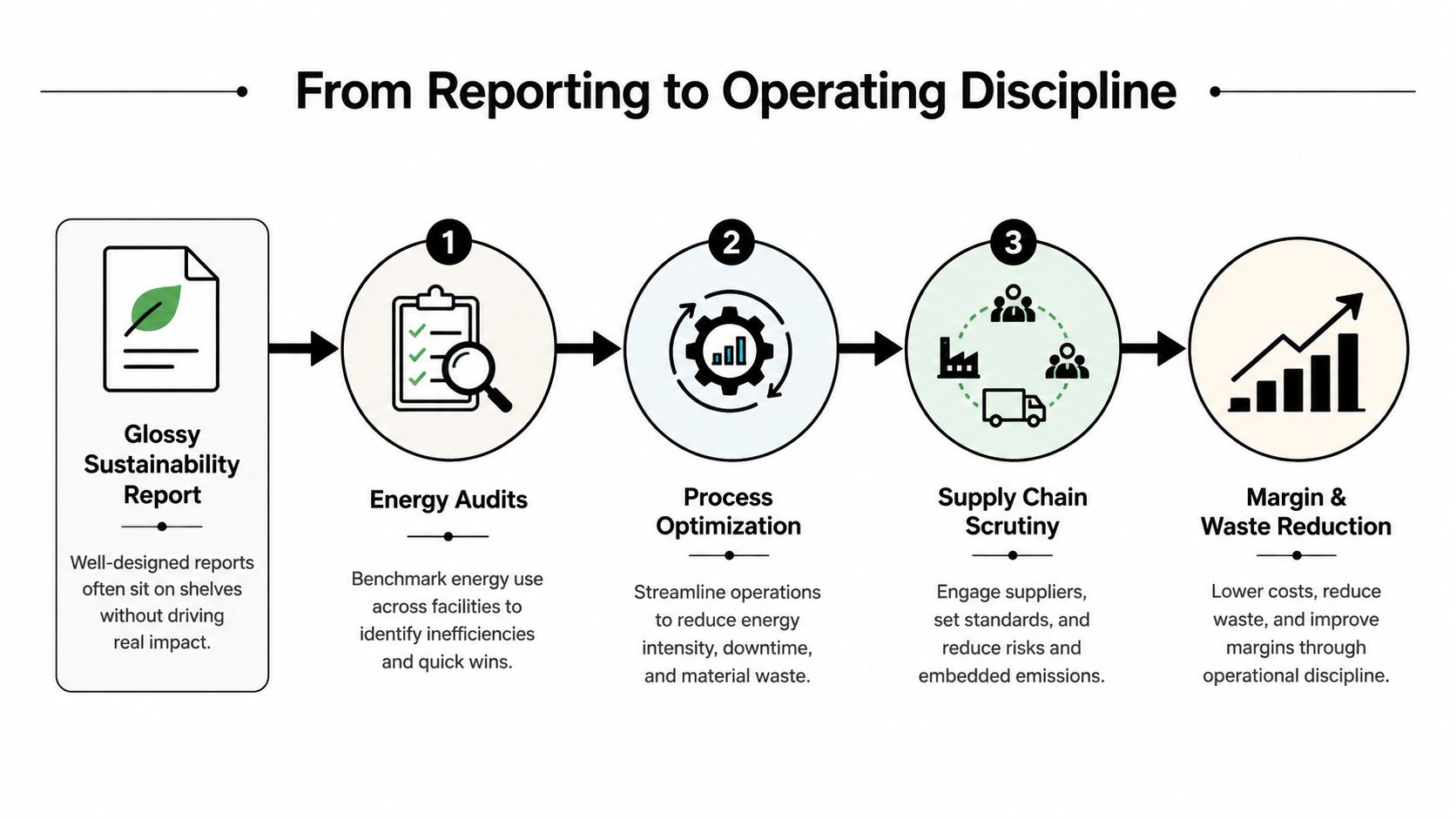
Compare the three levers that actually move the needle
Cash-flow and pricing discipline is the first lever because it shows what the business can afford. If you are underpricing work, carrying slow stock, or paying for avoidable rework, you are funding waste with margin. Sustainability improves when pricing reflects true cost, because the business stops rewarding inefficiency.
Inventory optimisation is the second lever, especially for ecommerce, retail, wholesale, and manufacturing. Old stock is not only a storage problem, it is a cash leak and a disposal risk. Better ordering, tighter replenishment, and faster ageing reviews reduce waste and cut the amount of money trapped on shelves.
Process automation is the third lever, and many founders still underweight it. Repetitive approvals, manual data entry, and inconsistent SOPs create errors, slow decisions, and hide waste. Automation does not make the business “techy”, it makes the business measurable.
The push from reporting into operations is why tools that connect data matter. Platforms built for finance and operational oversight, including intelligent sustainability for CIOs, help because they bring fragmented data together instead of leaving it scattered across systems. That is the core problem for SMEs, not the wording of the report.
What Improvement Looks Like in Practice
An ecommerce operator reduces aged stock and cuts disposal because purchasing is tied to sell-through rather than habit. A hospitality venue tightens ordering and food prep controls, which lowers both waste and emergency buying. A trades business standardises job close-out and material usage, which reduces rework and missing items.
Those are not sustainability projects in the marketing sense. They are operating upgrades that improve environmental performance because they remove waste from the business model.
Use this sequence. Fix waste at the source, automate the repeatable tasks, then report the outcome. That order protects margin and gives you a sustainability story a banker or buyer will respect.
Your 90-Day Business Sustainability Action Plan
Start with the back office, not the brand. Over 90 days, you can build a sustainability operating rhythm that fits a real SME, doesn't require extra headcount, and gives you a cleaner answer the next time a bank, buyer, or insurer asks questions.
Weeks 1 to 3, capture the baseline
Pull the data you already have. Energy bills, fuel records, waste invoices, water usage, supplier lists, stock reports, and aged inventory all matter here. Don't wait for perfection, just get the current state into one place.
A founder running a small ecommerce brand might discover that stock sits too long because purchasing is driven by supplier minimums rather than sell-through. A hospitality operator might find that waste charges are rising because prep and ordering aren't aligned to service patterns. A trades business may see that vehicle fuel use is climbing because job routing and site planning are inconsistent.
Use this stage to establish the baseline, not to solve everything. The goal is visibility.
Weeks 4 to 6, fix the obvious leaks
Now go after the leaks that pay back fastest. Reprice undercharged work, write down dead stock, trim waste-heavy purchasing, and tighten approvals around rush buying. These are working-capital decisions as much as sustainability decisions.
At the same time, set a simple monthly check-in for the metrics that matter, energy intensity, waste volume, water use, inventory ageing, and supplier performance. If a measure can't be reviewed in ten minutes, it's too complicated for an SME.
Weeks 7 to 10, change the structure
Process and automation matter. Automate repetitive finance tasks, standardise purchase approvals, and simplify reporting so managers spend less time gathering numbers and more time acting on them. Renegotiate supplier terms where stock risk or transport waste is being pushed onto you.
If you need a virtual CFO lens, the work usually sits here. Forecasting, KPI design, supplier renegotiation, and cashflow modelling are the tools that make sustainability real. They turn an abstract goal into an operating plan.
For inventory-heavy businesses, this is also the time to reduce SKUs that don't earn their keep. For service businesses, it's the time to clean up job costing and time tracking. For trades, it's the time to standardise materials and job close-out so wastage stops hiding in the system.
Weeks 11 to 13, lock it into the rhythm
The last phase is about embedding discipline. Put the KPIs into the monthly review pack. Set 12-month targets that are tied to cash and operations, not vague ambition. Brief your lender and major customers on the numbers you now track and the actions you've taken.
That's the point where sustainability stops being a special project. It becomes part of how the business is run.
A founder who does this well ends up with three tangible wins, reclaimed management time, freed working capital, and a sustainability story that stands up in procurement and lending conversations. That is the right outcome. Not a prettier website, not a thicker report, just a business that wastes less, controls more, and is easier to back.
If you want help turning sustainability into a cash-flow and operating plan instead of a marketing exercise, talk to Nexist. We help Australian founders tighten margins, clean up inventory and process leaks, and build the KPIs and forecasts that lenders and customers respect. Start with a clearer operating picture, then turn that into action.
business sustainability, ESG Australia, sustainable business, SME finance, virtual CFO

" width="24px"/><g d="M 0 24.129 L 0 0.129 L 24 0.129 L 24 24.129 Z M 0 24.129 L 0 0.129 L 24 0.129 L 24 24.129 Z M 24 3 C 24 1.344 22.656 0 21 0 L 3 0 C 1.344 0 0 1.344 0 3 L 0 21 C 0 22.656 1.344 24 3 24 L 21 24 C 22.656 24 24 22.656 24 21 Z M 6.883 8.375 L 2.863 8.375 L 2.863 20.467 L 6.883 20.467 Z M 4.899 2.545 C 3.524 2.545 2.625 3.449 2.625 4.634 C 2.625 5.795 3.496 6.724 4.846 6.724 L 4.872 6.724 C 6.273 6.724 7.146 5.795 7.146 4.634 C 7.12 3.449 6.274 2.545 4.899 2.545 Z M 16.747 8.09 C 14.614 8.09 13.659 9.263 13.124 10.086 L 13.124 8.374 L 9.105 8.374 C 9.159 9.508 9.105 20.466 9.105 20.466 L 13.124 20.466 L 13.124 13.713 C 13.124 13.352 13.15 12.99 13.257 12.732 C 13.547 12.01 14.209 11.262 15.319 11.262 C 16.773 11.262 17.355 12.372 17.355 13.996 L 17.355 20.466 L 21.374 20.466 L 21.374 13.532 C 21.374 9.818 19.391 8.09 16.747 8.09 Z" fill="transparent" height="24.12890599668026px" id="dSFdkJotL" width="24px"><path d="M 0 24 L 0 0 L 24 0 L 24 24 Z" fill="transparent" height="24px" id="wscNJE44G" transform="translate(0 0.129)" width="24px"/><g d="M 0 24.129 L 0 0.129 L 24 0.129 L 24 24.129 Z M 24 3 C 24 1.344 22.656 0 21 0 L 3 0 C 1.344 0 0 1.344 0 3 L 0 21 C 0 22.656 1.344 24 3 24 L 21 24 C 22.656 24 24 22.656 24 21 Z M 6.883 8.375 L 2.863 8.375 L 2.863 20.467 L 6.883 20.467 Z M 4.899 2.545 C 3.524 2.545 2.625 3.449 2.625 4.634 C 2.625 5.795 3.496 6.724 4.846 6.724 L 4.872 6.724 C 6.273 6.724 7.146 5.795 7.146 4.634 C 7.12 3.449 6.274 2.545 4.899 2.545 Z M 16.747 8.09 C 14.614 8.09 13.659 9.263 13.124 10.086 L 13.124 8.374 L 9.105 8.374 C 9.159 9.508 9.105 20.466 9.105 20.466 L 13.124 20.466 L 13.124 13.713 C 13.124 13.352 13.15 12.99 13.257 12.732 C 13.547 12.01 14.209 11.262 15.319 11.262 C 16.773 11.262 17.355 12.372 17.355 13.996 L 17.355 20.466 L 21.374 20.466 L 21.374 13.532 C 21.374 9.818 19.391 8.09 16.747 8.09 Z" fill="transparent" height="24.12890599668026px" id="sTpjGo1tb" width="24px"><path d="M 0 24 L 0 0 L 24 0 L 24 24 Z" fill="transparent" height="24px" id="s7ffpmKOD" transform="translate(0 0.129)" width="24px"/><g d="M 24 3 C 24 1.344 22.656 0 21 0 L 3 0 C 1.344 0 0 1.344 0 3 L 0 21 C 0 22.656 1.344 24 3 24 L 21 24 C 22.656 24 24 22.656 24 21 Z M 6.883 8.375 L 2.863 8.375 L 2.863 20.467 L 6.883 20.467 Z M 4.899 2.545 C 3.524 2.545 2.625 3.449 2.625 4.634 C 2.625 5.795 3.496 6.724 4.846 6.724 L 4.872 6.724 C 6.273 6.724 7.146 5.795 7.146 4.634 C 7.12 3.449 6.274 2.545 4.899 2.545 Z M 16.747 8.09 C 14.614 8.09 13.659 9.263 13.124 10.086 L 13.124 8.374 L 9.105 8.374 C 9.159 9.508 9.105 20.466 9.105 20.466 L 13.124 20.466 L 13.124 13.713 C 13.124 13.352 13.15 12.99 13.257 12.732 C 13.547 12.01 14.209 11.262 15.319 11.262 C 16.773 11.262 17.355 12.372 17.355 13.996 L 17.355 20.466 L 21.374 20.466 L 21.374 13.532 C 21.374 9.818 19.391 8.09 16.747 8.09 Z" fill="transparent" height="24.000006px" id="D0ecaHEcW" transform="translate(0 0)" width="24px"><path d="M 24 3 C 24 1.344 22.656 0 21 0 L 3 0 C 1.344 0 0 1.344 0 3 L 0 21 C 0 22.656 1.344 24 3 24 L 21 24 C 22.656 24 24 22.656 24 21 Z" fill="rgb(55, 184, 218)" height="24.000006px" id="IPLFE6zXx" width="24px"/><path d="M 4.02 0 L 0 0 L 0 12.092 L 4.02 12.092 Z" fill="rgb(255, 255, 255)" height="12.09201px" id="FWhtzAyuY" transform="translate(2.863 8.375)" width="4.02px"/><path d="M 2.274 0 C 0.899 0 0 0.904 0 2.089 C 0 3.25 0.871 4.179 2.221 4.179 L 2.247 4.179 C 3.648 4.179 4.521 3.25 4.521 2.089 C 4.495 0.904 3.649 0 2.274 0 Z" fill="rgb(255, 255, 255)" height="4.17876px" id="VmOsKv4kO" transform="translate(2.625 2.545)" width="4.52095px"/><path d="M 7.641 0 C 5.509 0 4.554 1.173 4.019 1.996 L 4.019 0.284 L 0 0.284 C 0.053 1.419 0 12.376 0 12.376 L 4.019 12.376 L 4.019 5.623 C 4.019 5.262 4.045 4.9 4.151 4.642 C 4.442 3.92 5.103 3.172 6.214 3.172 C 7.667 3.172 8.25 4.282 8.25 5.907 L 8.25 12.376 L 12.269 12.376 L 12.269 5.442 C 12.269 1.728 10.286 0 7.641 0 Z" fill="rgb(255, 255, 255)" height="12.37626px" id="n1XUbhaq0" transform="translate(9.105 8.09)" width="12.268830000000001px"/></g></g></g></g></svg>)