
Inventory Control Warehouse: Boost Your SME Efficiency
Australian SMEs: Master inventory control warehouse strategies. Assess stock, choose methods & implement systems to free up cash. Get started in 2026!
Ansh Malhotra

You're probably seeing some version of this right now. Sales are moving. Orders are going out. The P&L says the business is growing. But the bank account feels tight, suppliers want payment, and every month ends with the same question: where did the cash go?
For inventory-heavy SMEs, the answer is often sitting in the warehouse. Not in one dramatic mistake, but in dozens of small leaks. Extra stock that shouldn't have been bought. Missing stock that triggers expensive rush freight. Manual workarounds between locations. Team members who know the process “well enough” but skip scans when the floor gets busy. An inventory control warehouse isn't just an operations issue. It's a cash flow issue wearing a hi-vis vest.
Founders usually treat stock as a balance sheet asset. That's technically true. But operationally, stock is cash that has changed shape. Until it sells, gets picked correctly, and gets replenished with discipline, it isn't helping your business. It's tying up working capital, creating friction, and masking margin problems.
Table of Contents
Why Your Warehouse Is Hiding Your Profit
A common pattern shows up in growing Australian businesses. Revenue rises first. Complexity follows fast. Then cash starts lagging behind profit because the warehouse is running on habits that no longer fit the volume.
One founder might have three versions of the same truth. The ecommerce platform says one quantity, the spreadsheet says another, and the shelf says something else entirely. Another business keeps buying “just in case” because stockouts hurt, but no one has worked out how much dead stock is now sitting untouched. In both cases, the warehouse isn't supporting growth. It's absorbing cash.
The pressure is only getting bigger. The Australian warehousing and storage market outlook projects growth from AUD 29.94 billion in 2025 to AUD 64.04 billion by 2035, which reflects how strongly Australian founders are prioritising inventory control systems to release profit trapped in stock.
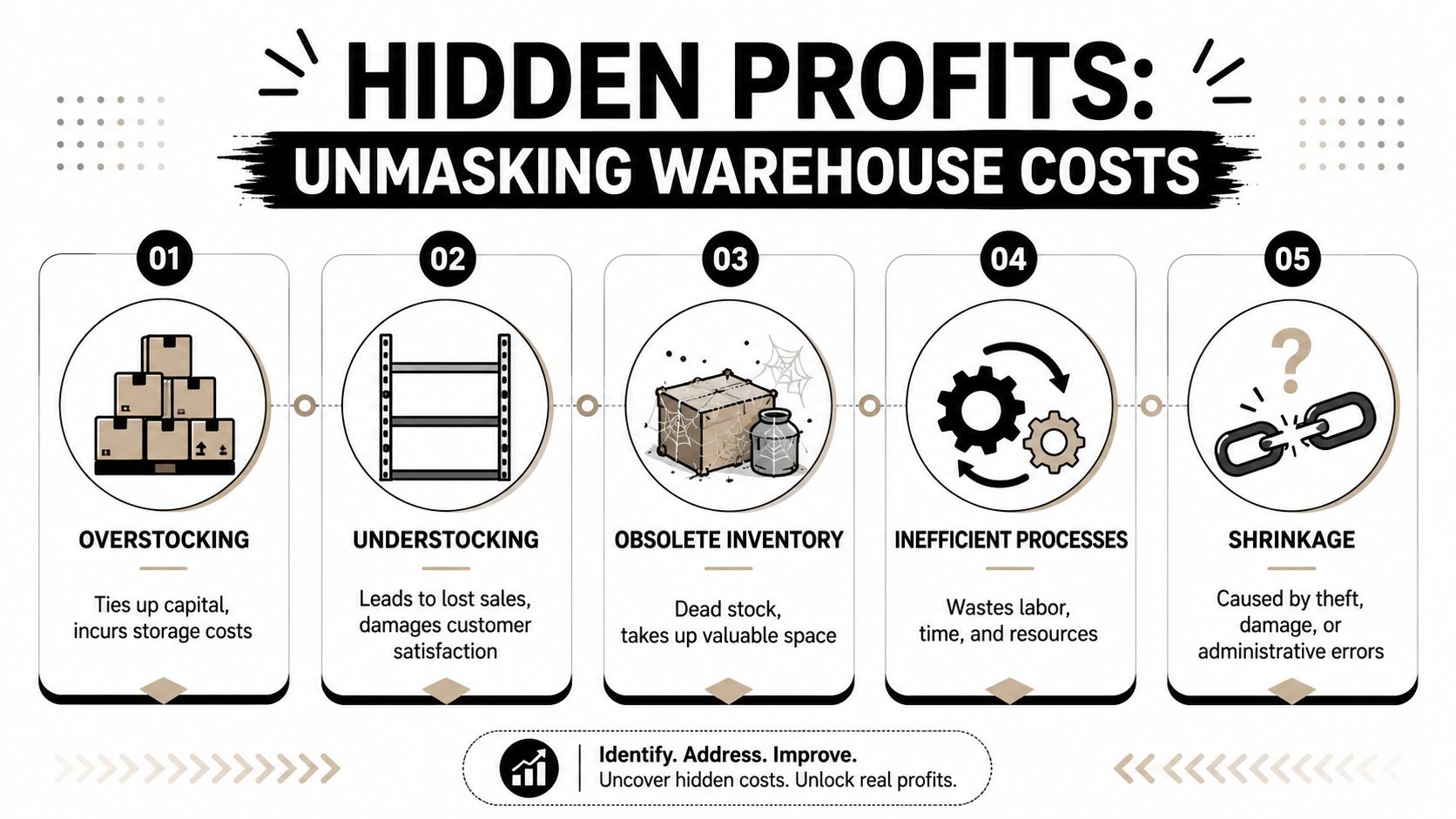
The five leaks that usually matter most
Overstocking ties up capital that should be available for payroll, supplier negotiations, marketing, or debt reduction.
Understocking creates missed sales, backorders, and urgent freight costs that strip margin.
Obsolete inventory occupies space and keeps showing up as an “asset” long after it stopped being commercially useful.
Inefficient processes waste labour through extra touches, double handling, rework, and searching.
Shrinkage includes theft, damage, and administrative mistakes that make your reports look healthier than reality.
Practical rule: If your warehouse team spends too much time “checking what's really there”, your finance numbers are already compromised.
This is why I don't look at warehouse control as a narrow operations project. I look at it the same way I look at receivables or pricing leakage. It's a profit recovery exercise. Once founders see that, they start asking better questions. Not just “How do we improve picking?” but “How much cash is trapped because our control is weak?”
That lens also changes where you focus first. A warehouse doesn't need to be fancy. It needs to be trustworthy. You need reliable stock data, disciplined movements, and a way to spot the stock that's a hidden drain on return on capital. That's the same mindset behind proper profitability analysis for growing businesses. You don't fix cash flow by working harder around bad information. You fix it by exposing where profit is getting stuck.
Conducting Your Warehouse Health Check
Before changing software, racking, or staffing, get a clear read on the current state of the floor. Most warehouse reviews are too shallow. They count stock, compare it to the system, and stop there. That misses the fundamental issue, which is how cash leaks through everyday behaviour.
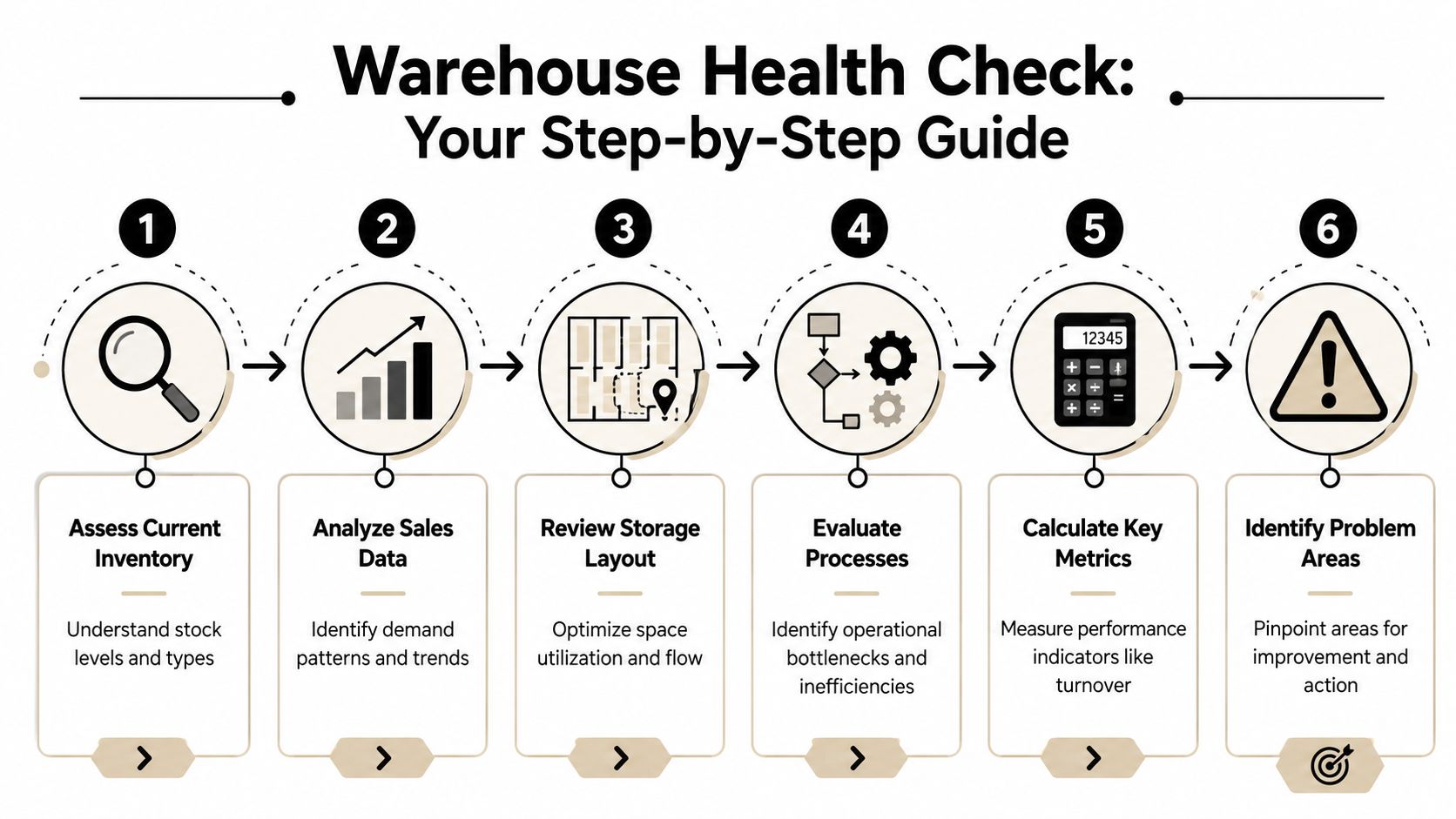
Start with stock you already own
Don't begin with what you plan to buy next. Start with what's already on hand.
Pull a list of SKUs and review them through a finance lens:
Fast movers that must always be available because they drive revenue and customer retention
Slow movers that may still be strategic but need tighter purchasing discipline
Dead stock that has become a storage and cash burden
Problem items with frequent adjustments, returns, write-offs, or picking issues
Then walk the floor and compare the system record to the physical reality. If the team says, “that pallet is probably somewhere out back,” treat that as a control failure, not a minor inconvenience.
Check movements between locations
Multi-site businesses often lose control in transit, not at receipt or dispatch. One site sends stock to another. Someone updates a message thread. Another person assumes it has arrived. The system doesn't reflect the move properly, and now both locations are making decisions off incomplete information.
The Triumph guidance on multi-location inventory challenges notes that 37% of Australian inventory discrepancies stem from untracked inter-warehouse transfers handled via informal messages, and that this can trap up to AU$450,000 annually for SMEs by distorting real-time visibility.
Ask these questions during the review:
Are transfers formalised? Every movement between warehouses should have a manifest, dispatch record, and receiving confirmation.
Is stock marked in transit? If not, one site believes it has less and the other may believe it has more.
Are warehouses treated as separate entities? They should be. Internal transfers need the same discipline as supplier receipts.
If you run sites across WA, NSW, and QLD, informal transfers create accounting noise first and cash pain second.
Inspect the layout and storage logic
Warehouse control isn't only software. Physical layout affects speed, accuracy, and labour cost. Fast-moving items should be easy to access. Similar-looking SKUs should be separated clearly. Overflow stock shouldn't become a black hole.
For practical ideas on making limited space work harder, especially when businesses are using container-based storage or overflow areas, Quickfit's smart container storage is a useful reference point. It's a good reminder that poor visibility often starts with poor physical organisation.
A proper health check should also test process discipline:
Receiving discipline. Are quantities checked before stock is booked in?
Putaway logic. Does every item have a defined location, or do staff improvise?
Picking reliability. Do errors cluster around certain zones, shifts, or SKUs?
Adjustment controls. Who can change stock records, and why?
If you can't answer those questions clearly, your inventory control warehouse setup is still running on trust rather than control.
Choosing the Right Inventory Control Methods
There isn't one best method. There's only the right mix for your business model, stock profile, and operational maturity. The mistake I see most often is founders adopting a method because it sounds impressive, not because it suits the way their stock moves.
A wholesale distributor with dated products needs different controls from an ecommerce brand carrying a wide catalogue. A manufacturer managing components and finished goods needs a different rhythm again. Good inventory control warehouse design is selective. It uses simple methods consistently rather than advanced methods badly.
Methods that suit different business models
ABC analysis works well when a small group of SKUs drives most of the financial importance. Your A items deserve tighter counting, tighter replenishment, and better shelf access. Your C items don't need the same operational attention.
FIFO is essential when age matters. Food, beverage, cosmetics, pharmaceuticals, and any dated or batch-sensitive stock need disciplined first-in-first-out handling. If older stock sits behind newer receipts, your margin gets hit twice. First through write-offs, then through avoidable markdowns.
LIFO is less common as a practical floor discipline in SMEs. In most physical warehouse settings, it usually creates more operational complexity than value unless there's a specific reason your stock flow supports it.
Cycle counting is usually stronger than relying on infrequent full stocktakes. It builds control into normal operations and surfaces issues earlier. For businesses with a broad SKU range, it's more realistic than shutting the operation down for major counts.
Periodic counting still has a place in smaller businesses or low-complexity environments, but it tends to find errors too late. By the time you discover a mismatch, the root cause is often long gone.
Perpetual tracking through barcode or RFID-supported movements is the strongest option when order volume is high and multiple channels rely on the same stock file. It requires cleaner process discipline, but it gives management faster visibility.
For founders selling online, this becomes even more important once SKU count, sales channels, and warehouse activity start climbing, transforming disciplined ecommerce inventory management from a back-office issue into part of margin protection.
Inventory Control Method Comparison
Method | Best For | Key Benefit | Implementation Effort |
|---|---|---|---|
ABC Analysis | Ecommerce, wholesale, broad SKU ranges | Prioritises control where most cash or sales value sits | Moderate |
FIFO | Food, beverage, pharma, cosmetics, dated goods | Reduces expiry risk and protects stock rotation | Moderate |
LIFO | Limited niche use cases | Can suit specific stock flow logic | Higher |
Cycle Counting | Growing SMEs with active warehouses | Finds errors early without major shutdowns | Moderate |
Periodic Counting | Smaller or simpler operations | Simple to start with | Low |
Perpetual Tracking | Multi-channel, multi-location, higher-volume businesses | Improves visibility of movements and availability | Higher |
A few practical fits are worth calling out:
Ecommerce brand with many SKUs. Use ABC analysis plus cycle counting and perpetual tracking.
Food distributor. Use FIFO, batch discipline, and frequent counts on critical lines.
Manufacturer. Use location control, component tracking, and tighter review of work-in-progress movements.
Retail and wholesale hybrid. Use ABC analysis to stop low-value lines from consuming high-value management time.
The right method is the one your team can execute every day without shortcuts.
Setting Reorder Points and Safety Stock
Most founders either order too late or too early. Late ordering creates stockouts, rushed freight, and annoyed customers. Early ordering protects availability but starves cash flow. Reorder points and safety stock exist to create a better middle ground.

Use a simple reorder point formula
At a practical level, founders don't need an academic model to begin. A workable starting formula is:
Reorder point = average daily usage × lead time in days + safety stock
That gives you a trigger. When stock falls to that level, it's time to reorder.
A simple example makes this easier. If a SKU sells around 10 units a day, and your supplier lead time is 12 days, your lead-time demand is 120 units. If you decide to keep an extra buffer because of demand swings or supplier inconsistency, that buffer sits on top as safety stock.
The important part isn't the maths. It's the discipline. If reorder points are guessed, ignored, or overridden casually, they stop being controls and become decoration.
Treat safety stock as paid insurance
Safety stock isn't free. It's insurance you pay for in cash, storage space, and carrying cost. Some businesses need more of it because supplier reliability is poor or demand is lumpy. Others carry too much because no one trusts the purchasing process.
That's where judgement matters. A top-selling item with long lead times may justify a stronger buffer. A slow-moving SKU often doesn't. Keeping extra units of the wrong item feels safe operationally, but financially it's expensive.
The right question isn't “Can we hold more stock?” It's “Which stock is worth protecting with capital?”
When teams calculate reorder points, they should review three inputs closely:
Lead time reality. Use the supplier performance you experience, not the promise on the quote.
Sales velocity. Base decisions on recent movement patterns and seasonality where relevant.
Service expectation. Decide where you can tolerate delay and where you can't.
A short explainer can help if your team needs a refresher on the logic behind replenishment settings.
For an inventory control warehouse setup to support cash flow, reorder points shouldn't live in one buyer's head or on a spreadsheet no one else understands. They should be documented, reviewed, and adjusted when supplier behaviour or demand changes. That keeps purchasing from becoming a reactive guessing game.
Implementing Systems and Standard Operating Procedures
Technology helps, but it doesn't rescue a warehouse that runs on inconsistent habits. The strongest setups combine a capable system with very plain, enforceable SOPs. One without the other usually disappoints.
What the system should do well
A modern WMS gives you a cleaner operating backbone. The HashMicro overview of warehouse software in Australia states that WMS implementation can improve inventory accuracy to over 95% and reduce picking errors by up to 40%. It also notes processing speed gains of 25–40% and labour cost reductions of up to 30% when the system is implemented well.
Those outcomes matter because they convert directly into financial improvements. Better accuracy means fewer emergency purchases, fewer stock disputes, and less time spent reconciling. Faster processing reduces labour drag. Lower picking error rates reduce rework, credits, and customer friction.
A useful system should handle these basics reliably:
Real-time stock updates after each movement
Location control so staff know exactly where to put and pick
Transfer tracking between sites, including in-transit status
Reporting on stock accuracy, fill rate, and order cycle time
User discipline through barcode scanning or equivalent validation
If you're reviewing where automation should sit in the bigger operating model, this broader look at automating business processes is a practical companion to warehouse-specific decisions.
What the SOPs must remove
Even a strong system fails when staff work around it. Most SMEs don't need a giant SOP manual. They need short, specific procedures for the moments where data integrity usually breaks.
Focus on four core workflows:
Receiving
Stock isn't available for sale until quantities are checked and booked correctly. If goods are waved through because the dock is busy, the problem starts there.Putaway
Every item needs a defined location rule. “Put it wherever there's room” creates search time, mispicks, and ghost stock.Picking and packing
Staff should scan, confirm, and resolve exceptions the same way every time. Similar SKUs need extra controls.Adjustments and write-offs
Inventory changes should require reason codes and clear accountability. Casual adjustments are a direct attack on data trust.
For businesses handling equipment, tools, or movable operational assets alongside inventory, Evright Industrial on asset tracking is worth reading. The same principle applies in both contexts. If movement isn't recorded consistently, visibility breaks down fast.
Build behaviour into the process
This is the part most businesses skip. They buy software and assume the team will adapt. But warehouse accuracy problems often come from missed scans, shortcuts, and inconsistent follow-through, not from software design.
The same HashMicro source above notes that gamifying tasks like cycle counts has been shown to reduce staff errors by 30% in 6 months. That matters because control isn't just technical. It's behavioural.
“If the team can bypass the process on a busy day, they will. Your control system has to work under pressure, not only when the floor is quiet.”
What works in practice:
Visible scoreboards for count accuracy, receiving accuracy, or pick quality
Tight onboarding so casual or new staff learn the essential rules early
Simple exception handling so people know what to do when stock doesn't match the screen
Regular floor audits by supervisors who check behaviour, not just outcomes
An inventory control warehouse system becomes reliable when the technology records the movement and the SOPs make the right movement the easiest one to perform.
Measuring Success to Keep Your Cash Flowing
Warehouse control doesn't stay healthy by accident. Once the basics are in place, you need a small set of KPIs that connect floor activity to cash consequences. If founders only look at revenue and gross margin, they miss the operational signals that explain why cash still feels tight.
The dashboard that matters
A useful warehouse dashboard doesn't need to be huge. It needs to answer a few hard questions clearly.
Inventory turnover
How quickly are you converting stock into sales? Slow turnover usually means cash is sitting too long in the warehouse.Order accuracy rate
Are customers getting the right items in the right quantities? Poor accuracy creates credits, reships, and avoidable labour.Fill rate
Can you fulfil demand from available stock when the order arrives? If not, planning or replenishment discipline is off.Carrying cost of inventory
What is it costing you to hold stock through storage, insurance, handling, and capital tied up? Even without a precise benchmark, this should be reviewed regularly.Adjustment frequency
How often is stock being manually corrected? Frequent adjustments usually point to process weakness, not bad luck.
What good founders review regularly
Review patterns, not isolated incidents. One picking error is noise. Repeated errors in one zone, on one shift, or with one product family reveal where control is slipping.
Use a rhythm that fits the business:
KPI | Why It Matters | Review Cadence |
|---|---|---|
Inventory turnover | Shows how efficiently cash moves through stock | Monthly |
Order accuracy rate | Protects margin and customer trust | Weekly |
Fill rate | Exposes replenishment and availability issues | Weekly |
Carrying cost of inventory | Highlights the cost of excess stock | Monthly |
Adjustment frequency | Reveals where process discipline is weak | Weekly |
The best operators pair the dashboard with action rules. If turnover slows, they review buying. If adjustments spike, they audit receiving or putaway. If fill rate drops, they investigate lead times and reorder settings.
Cash lens: Every warehouse KPI should answer one question. Is this helping us turn stock into cash faster and with less waste?
That's the standard worth keeping. A well-run warehouse reduces stress because the numbers become believable. It gives founders room to plan, buy, and grow with more confidence. It puts real money back into the business by stopping stock from behaving like a silent drain on working capital.
If your stock levels, warehouse habits, and cash flow no longer line up, Nexist can help you fix the leak at the source. The team works with Australian founders to uncover profit trapped in inventory, tighten operational controls, build practical KPIs, and turn messy warehouse data into clear financial decisions. If you want a finance-first view of what your warehouse is really costing you, start there.
inventory control warehouse, inventory management, warehouse optimisation, cash flow for smes, australian business

" width="24px"/><g d="M 0 24.129 L 0 0.129 L 24 0.129 L 24 24.129 Z M 0 24.129 L 0 0.129 L 24 0.129 L 24 24.129 Z M 24 3 C 24 1.344 22.656 0 21 0 L 3 0 C 1.344 0 0 1.344 0 3 L 0 21 C 0 22.656 1.344 24 3 24 L 21 24 C 22.656 24 24 22.656 24 21 Z M 6.883 8.375 L 2.863 8.375 L 2.863 20.467 L 6.883 20.467 Z M 4.899 2.545 C 3.524 2.545 2.625 3.449 2.625 4.634 C 2.625 5.795 3.496 6.724 4.846 6.724 L 4.872 6.724 C 6.273 6.724 7.146 5.795 7.146 4.634 C 7.12 3.449 6.274 2.545 4.899 2.545 Z M 16.747 8.09 C 14.614 8.09 13.659 9.263 13.124 10.086 L 13.124 8.374 L 9.105 8.374 C 9.159 9.508 9.105 20.466 9.105 20.466 L 13.124 20.466 L 13.124 13.713 C 13.124 13.352 13.15 12.99 13.257 12.732 C 13.547 12.01 14.209 11.262 15.319 11.262 C 16.773 11.262 17.355 12.372 17.355 13.996 L 17.355 20.466 L 21.374 20.466 L 21.374 13.532 C 21.374 9.818 19.391 8.09 16.747 8.09 Z" fill="transparent" height="24.12890599668026px" id="dSFdkJotL" width="24px"><path d="M 0 24 L 0 0 L 24 0 L 24 24 Z" fill="transparent" height="24px" id="wscNJE44G" transform="translate(0 0.129)" width="24px"/><g d="M 0 24.129 L 0 0.129 L 24 0.129 L 24 24.129 Z M 24 3 C 24 1.344 22.656 0 21 0 L 3 0 C 1.344 0 0 1.344 0 3 L 0 21 C 0 22.656 1.344 24 3 24 L 21 24 C 22.656 24 24 22.656 24 21 Z M 6.883 8.375 L 2.863 8.375 L 2.863 20.467 L 6.883 20.467 Z M 4.899 2.545 C 3.524 2.545 2.625 3.449 2.625 4.634 C 2.625 5.795 3.496 6.724 4.846 6.724 L 4.872 6.724 C 6.273 6.724 7.146 5.795 7.146 4.634 C 7.12 3.449 6.274 2.545 4.899 2.545 Z M 16.747 8.09 C 14.614 8.09 13.659 9.263 13.124 10.086 L 13.124 8.374 L 9.105 8.374 C 9.159 9.508 9.105 20.466 9.105 20.466 L 13.124 20.466 L 13.124 13.713 C 13.124 13.352 13.15 12.99 13.257 12.732 C 13.547 12.01 14.209 11.262 15.319 11.262 C 16.773 11.262 17.355 12.372 17.355 13.996 L 17.355 20.466 L 21.374 20.466 L 21.374 13.532 C 21.374 9.818 19.391 8.09 16.747 8.09 Z" fill="transparent" height="24.12890599668026px" id="sTpjGo1tb" width="24px"><path d="M 0 24 L 0 0 L 24 0 L 24 24 Z" fill="transparent" height="24px" id="s7ffpmKOD" transform="translate(0 0.129)" width="24px"/><g d="M 24 3 C 24 1.344 22.656 0 21 0 L 3 0 C 1.344 0 0 1.344 0 3 L 0 21 C 0 22.656 1.344 24 3 24 L 21 24 C 22.656 24 24 22.656 24 21 Z M 6.883 8.375 L 2.863 8.375 L 2.863 20.467 L 6.883 20.467 Z M 4.899 2.545 C 3.524 2.545 2.625 3.449 2.625 4.634 C 2.625 5.795 3.496 6.724 4.846 6.724 L 4.872 6.724 C 6.273 6.724 7.146 5.795 7.146 4.634 C 7.12 3.449 6.274 2.545 4.899 2.545 Z M 16.747 8.09 C 14.614 8.09 13.659 9.263 13.124 10.086 L 13.124 8.374 L 9.105 8.374 C 9.159 9.508 9.105 20.466 9.105 20.466 L 13.124 20.466 L 13.124 13.713 C 13.124 13.352 13.15 12.99 13.257 12.732 C 13.547 12.01 14.209 11.262 15.319 11.262 C 16.773 11.262 17.355 12.372 17.355 13.996 L 17.355 20.466 L 21.374 20.466 L 21.374 13.532 C 21.374 9.818 19.391 8.09 16.747 8.09 Z" fill="transparent" height="24.000006px" id="D0ecaHEcW" transform="translate(0 0)" width="24px"><path d="M 24 3 C 24 1.344 22.656 0 21 0 L 3 0 C 1.344 0 0 1.344 0 3 L 0 21 C 0 22.656 1.344 24 3 24 L 21 24 C 22.656 24 24 22.656 24 21 Z" fill="rgb(55, 184, 218)" height="24.000006px" id="IPLFE6zXx" width="24px"/><path d="M 4.02 0 L 0 0 L 0 12.092 L 4.02 12.092 Z" fill="rgb(255, 255, 255)" height="12.09201px" id="FWhtzAyuY" transform="translate(2.863 8.375)" width="4.02px"/><path d="M 2.274 0 C 0.899 0 0 0.904 0 2.089 C 0 3.25 0.871 4.179 2.221 4.179 L 2.247 4.179 C 3.648 4.179 4.521 3.25 4.521 2.089 C 4.495 0.904 3.649 0 2.274 0 Z" fill="rgb(255, 255, 255)" height="4.17876px" id="VmOsKv4kO" transform="translate(2.625 2.545)" width="4.52095px"/><path d="M 7.641 0 C 5.509 0 4.554 1.173 4.019 1.996 L 4.019 0.284 L 0 0.284 C 0.053 1.419 0 12.376 0 12.376 L 4.019 12.376 L 4.019 5.623 C 4.019 5.262 4.045 4.9 4.151 4.642 C 4.442 3.92 5.103 3.172 6.214 3.172 C 7.667 3.172 8.25 4.282 8.25 5.907 L 8.25 12.376 L 12.269 12.376 L 12.269 5.442 C 12.269 1.728 10.286 0 7.641 0 Z" fill="rgb(255, 255, 255)" height="12.37626px" id="n1XUbhaq0" transform="translate(9.105 8.09)" width="12.268830000000001px"/></g></g></g></g></svg>)