
How to Improve Cash Flow in Small Business: Key Tips
Learn how to improve cash flow in small business with actionable strategies, from invoicing tips to expense tracking, to boost financial health.
Ansh Malhotra

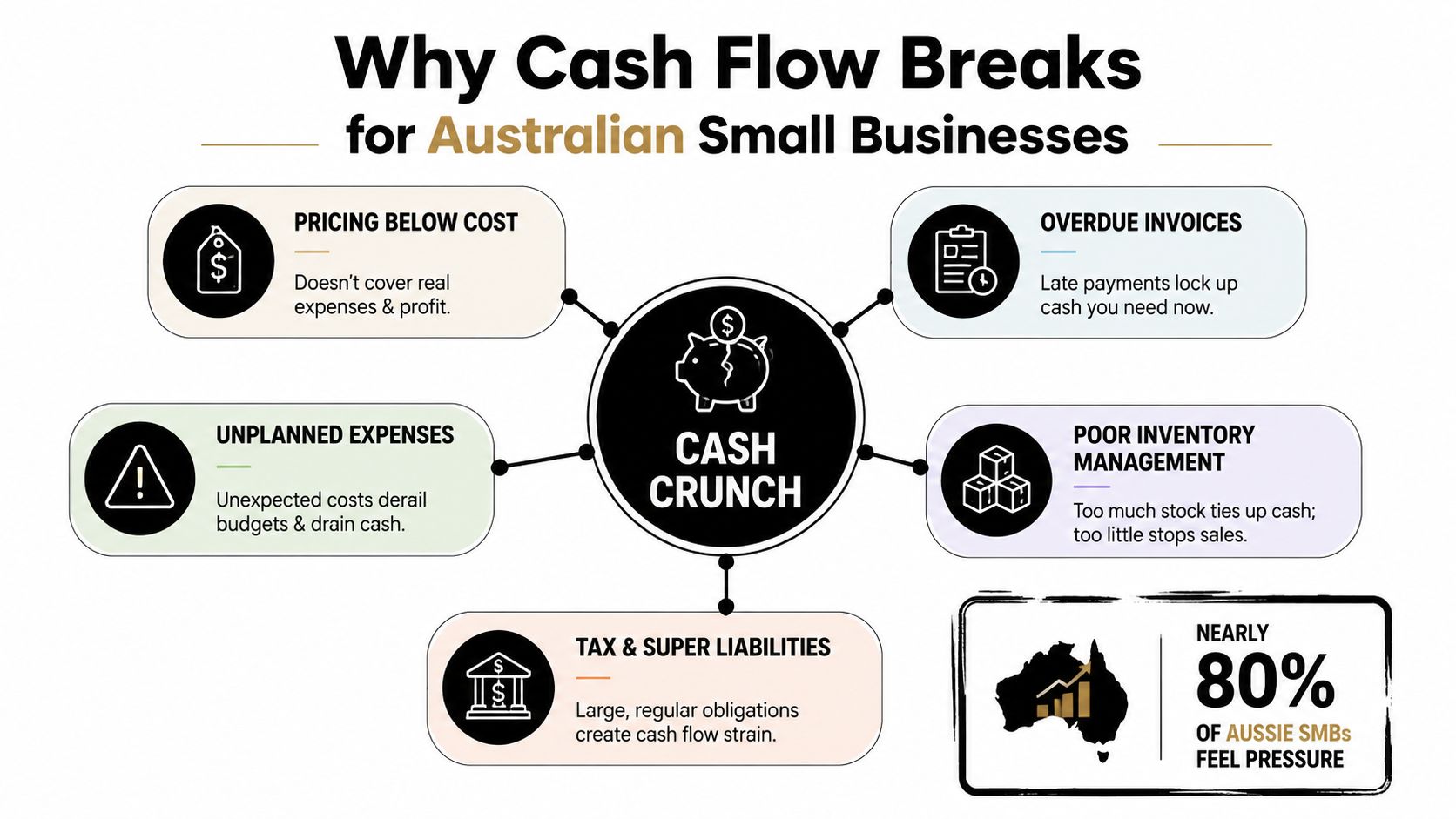
Nearly 80% of Australian small and medium-sized businesses experienced a cash-flow impact in the previous 12 months, according to a CommBank-commissioned survey reported by UNSW Newsroom. That isn't a bookkeeping nuisance. It means a cash squeeze is a normal operating risk for Australian owners, including businesses that appear profitable on paper.
The fix isn't another generic list telling you to cut costs and chase invoices. Cash usually leaks through a sequence: prices that don't recover the full cost of delivery, slow receivables, stock that sits idle, supplier payments that arrive before customer money, and payroll obligations that owners haven't planned for properly. The practical answer is to find the first leak, fix it, then move to the next one.
Table of Contents
Why Cash Flow Breaks for Australian Small Businesses
Cash-flow pressure usually starts in one of three places: revenue that does not cover delivery costs, cash reserves that are too thin, or seasonal income that arrives later than expenses. Each leak needs a different response. Review pricing and sales when revenue is the problem. Separate operating cash and build a forecast when reserves are weak. Plan ahead for seasonal gaps instead of cutting costs in panic.
The survey found that 85% of businesses used at least one cash-flow management tactic, such as reducing expenses, holding a reserve, finding new revenue streams, or increasing sales and pricing. Yet 27% reported dipping into personal savings or not paying themselves. That response hides the operating deficit rather than fixing it. Personal funds should not become the default working-capital facility for an Australian SME.
Find the leak before choosing the fix
Start with cleared bank transactions, then compare them with the profit and loss statement. Classify every material movement under five headings:
Pricing: Sales may not recover labour, materials, overheads, tax and super obligations.
Receivables: Customers may be using your product or labour while you fund their late payment.
Inventory: Slow-moving or obsolete stock traps cash that could otherwise cover bills.
Payables: Supplier terms may require payment before your customers pay you.
Tax and super: Unplanned liabilities can build into a large cash outflow.
Follow that order when deciding what to fix. Repricing a low-margin service can improve cash within the next billing cycle. Tightening deposits and collection dates can shorten the gap between work and payment. Stock controls release cash already sitting on shelves. Supplier terms can reduce the timing mismatch. A forecast then shows whether those changes protect the bank balance through slower trading periods.
Super requires its own deadline. Employers will need to pay super at the same time as salary and wages from 1 July 2026, removing the quarterly timing buffer many small businesses have used. Build that outflow into pricing, payroll planning and weekly cash reviews before the rule starts.
Practical rule: Do not chase more sales until you know whether each sale creates cash, margin and enough liquidity to fund the obligations that follow.
Fix the first leak, measure the bank balance, then address the next one. That sequence beats a broad marketing push when the problem is margin, collection timing, stock or payroll obligations.
Build a 13-Week Cash Forecast You Will Keep Open
A forecast earns its place when the owner opens it every week and updates it from the accounting system, bank feed and payroll calendar. Use a rolling 13-week view to expose recurring patterns, tax obligations, supplier runs and payroll pressure before they hit the bank together.
Set up the forecast in cash-moving order. Start with the cleared bank balance, then map receipts and payments into the week they should leave or enter the account:
Opening cash: Use the actual cleared bank balance, excluding uncleared transactions.
Receipts: Record realistic customer collections by expected payment week, not invoice issue date.
Payroll and super: Put every pay run in its bank week. From 1 July 2026, model super leaving with salary and wages rather than relying on the former quarterly buffer.
Suppliers and costs: Include rent, subscriptions, utilities, stock purchases, loan repayments and known one-off bills.
BAS and tax: Enter the actual due dates and the amount your accountant or bookkeeper expects.
Closing cash: Add receipts to opening cash, then subtract every expected outflow.
Use the cash-flow forecast template as your starting structure, then add business-specific payroll, super, BAS, stock and debt lines.
A worked example shows how quickly the balance changes. A fictional café opens week one with $40,000. It expects weekly takings of $18,000, fortnightly payroll and super of $11,000, monthly supplier and operating costs of $14,000, and a BAS or tax payment of $8,000 in week four. These are illustrative planning inputs, not an industry benchmark.
Week | Opening Cash | Receipts | Payroll + Super | Suppliers & Costs | BAS / Tax | Closing Cash |
|---|---|---|---|---|---|---|
1 | $40,000 | $18,000 | $0 | $14,000 | $0 | $44,000 |
2 | $44,000 | $18,000 | $11,000 | $0 | $0 | $51,000 |
3 | $51,000 | $18,000 | $0 | $14,000 | $0 | $55,000 |
4 | $55,000 | $18,000 | $11,000 | $0 | $8,000 | $54,000 |
The calculation is simple. The discipline creates value. If customers pay late or a supplier run rises, the closing balance changes immediately. Mark the minimum cash week, meaning the lowest closing balance in the forecast. That week sets the action date: accelerate collections, postpone a discretionary purchase or arrange funding before the account becomes critical.
Colour-code any week below your chosen operating buffer. Review the forecast at the same time each week, assign an owner to every uncertain receipt or payment, and replace estimates with actuals as soon as they are known. The owner should see the risk at a glance, especially as same-time super approaches, rather than open a complicated workbook after cash has already left the account.
Tighten Receivables and Get Paid Faster
Receivables are usually the fastest place to recover cash. The sale is complete, the product has arrived, or the customer has accepted the work. Your business is carrying the cost while the customer keeps the cash.
A 2026 Australian report summarising Xero Small Business Insights data found that Australian small businesses waited 24.1 days to be paid after issuing an invoice, and invoices were settled 6.9 days past their due date. It also reported an average late-payment cost of approximately AU$2,408 per month, or nearly AU$29,000 per year, with 84% of surveyed owners losing up to AU$4,999 per month. The figures appear in the Australian late-payment report. Use them as a warning, not as a reason to tolerate slow collection.

Set terms before the work starts
Stop giving every customer identical credit terms. For new customers and smaller jobs, use 7-day or 14-day terms where the relationship allows it. For project work, request payment before ordering materials or assigning labour. A 30% to 50% deposit keeps your business from financing the job. Put the arrangement in writing and apply it consistently.
Send the invoice as soon as the work is delivered. Month-end batching gives customers free time before their payment clock starts. Use a clear invoice, accepted electronic payment methods and one named contact for queries. A disputed invoice should reach the person who can resolve it, not sit in a shared inbox.
Automated reminders should support a collection process, not replace one:
Before the due date: Confirm receipt and check that the amount and purchase order details are correct.
Day 1 overdue: Send a direct reminder with the invoice attached.
Day 7 overdue: Call the accounts contact and obtain a specific payment date.
Day 14 overdue: Escalate to the owner or finance manager, apply agreed late charges and pause further supply where the contract permits.
Run a debtor ageing report every Monday. Sort it by amount, days overdue and customer importance. Call the largest and oldest debts first. Record the promised payment date, then follow up on that date. Contractors handling milestone billing can review late invoice payment solutions for contractors for options when collection cycles stretch.
Collection standard: An overdue account is a customer using your working capital.
Write the escalation policy before a customer becomes difficult. State when interest applies, who can approve a payment arrangement and when supply stops. Do not issue threats your team will ignore. A documented pause on new work creates more pressure than repeated reminders without a consequence.
Review the full workflow with this guide to accounts receivable management. The target is straightforward: shorten the time between delivery and cleared cash, then record realistic receipt dates in the 13-week forecast. That makes receivables a managed cash lever rather than an overdue list.
Fix Payables, Inventory and Stock-to-Cash Cycles
Receivables bring cash in. Payables and inventory determine how quickly it leaves again. Product businesses can show strong sales while their bank balance deteriorates because cash is sitting in goods that haven't sold.
Start with the suppliers consuming the most cash, not the supplier sending the most reminders. Ask for terms that match your collection cycle. You might request a move from 14-day to 30-day terms, a split arrangement over a longer period, or fortnightly billing for high-volume stock. Approach the supplier with a payment history, expected order volume and a proposal that makes the arrangement commercially credible.
Turn stock into a controlled decision
Use ABC analysis to separate high-value working-capital items from low-value lines. The exact split will vary by business, but the principle is fixed: review the products tying up the most money before reviewing minor consumables.
For slow movers, set a rule rather than relying on optimism. If a line remains unsold for 90 days, decide whether to mark it down, bundle it, return it, transfer it or stop reordering. Low-velocity products may be better supplied through just-in-time purchasing or dropship arrangements where the supplier model supports them.
The stock-to-cash cycle is:
Days Inventory Outstanding + Days Sales Outstanding − Days Payable Outstanding
A product business turning over $80,000 per month can use this formula to see whether sales growth is consuming liquidity. If stock stays on hand longer, customers pay slowly and suppliers demand payment early, more money is trapped even when revenue rises. Reducing each part of the cycle by five days would release cash relative to the business's daily cost base, but the exact amount depends on its cost of goods, payroll and payment patterns. Don't promise a dollar result until those inputs are known.
Metric | Before | After | Cash Freed |
|---|---|---|---|
Days Inventory Outstanding | 60 days | 55 days | Recalculate using average daily stock cost |
Days Sales Outstanding | 30 days | 25 days | Recalculate using average daily credit sales |
Days Payable Outstanding | 14 days | 19 days | Recalculate using average daily supplier spend |
Stock-to-cash cycle | 76 days | 61 days | Value depends on the business's cost base |
The table shows the direction of improvement. Inventory and receivables fall, while payable days rise, reducing the time cash is committed to the operating cycle. Use a current stock report and supplier ledger rather than guessing.
A supplier conversation can be direct: “We want to keep ordering, but our current terms make us fund the full cycle before customer cash arrives. If you can move us to 30-day terms, or split larger orders across fortnightly invoices, we can plan orders more reliably and keep volume with you.”
Automating the approval and payment workflow can also prevent accidental early payments. Review accounts payable automation in Australia as one way to make due dates visible without paying invoices before they are due.
Prepare for Same-Time Super and Reprice for Margin
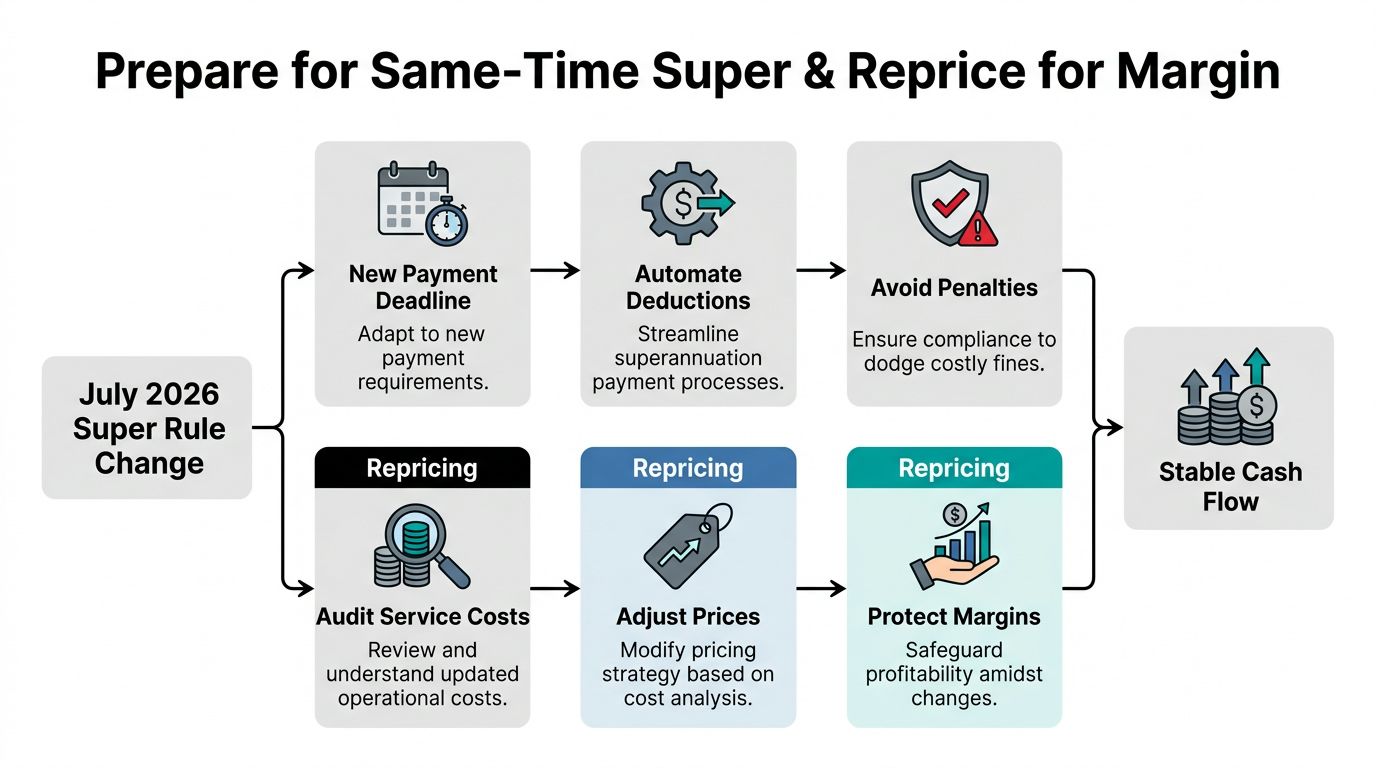
From 1 July 2026, superannuation must be paid at the same time as salary and wages, as the ATO explains. This changes the cash rhythm of every employer. Payroll funding, pricing and cash reserves must be set up before the first affected pay run, not after a shortfall exposes the problem.
Create a dedicated payroll account and transfer the required amount into it two business days before each pay run. Reconcile the super payment on the same day. Treat this balance as restricted cash. It cannot fund stock, marketing or an owner draw.
Australian SME reserves make preparation urgent. The data cited in the cash-flow guidance found that 30% of SMEs had one month or less of expenses in reserve, while 14% had no reserve. A business with limited liquidity cannot absorb a new payroll outflow by relying on the next customer payment.
Price for the cash obligations you create
Every sale needs to fund more than direct materials. Audit your highest-volume products and services against labour, supplier costs, overhead allocation, tax and super. Review customers receiving repeated discounts, free delivery or extra work without a matching price adjustment.
A 1.5% increase on $500,000 of annual revenue, with volume unchanged, produces $7,500 of additional revenue before tax, costs or customer response. That arithmetic shows why better pricing can require less effort than chasing $30,000 in extra sales. It does not guarantee profit or cash. Check the commercial effect before applying changes.
Run this margin audit:
Top 10 products: Compare current gross margin with actual landed and labour costs.
Top 10 customers: Identify discounts, rework, free delivery and slow payment behaviour.
Discount leakage: Find approvals that became permanent without a margin review.
Payroll coverage: Confirm prices recover the full employer cost of each delivery model, including same-time super.
Review cadence: Revisit pricing every 90 days, rather than waiting for an annual review.
Owners delay price changes because they fear customer reactions. That delay leaves the business funding costs attached to every sale. Start with underpriced jobs, customers receiving repeated concessions and services where labour has risen without a corresponding price review. The bank balance improves when each new sale contributes enough cash to cover its obligations.
Track the KPIs That Predict Cash Trouble Early
A bank balance records the past. Your weekly dashboard must expose the cash pressure building next. Keep five indicators visible in Xero, MYOB or QuickBooks, and assign one person to investigate every red result.
KPI | Formula | Target | Red Line | Owner |
|---|---|---|---|---|
Debtor days | Trade receivables ÷ credit sales × days in period | Below your Australian reference point | Rising above the benchmark or worsening for two reviews | Finance lead |
Gross margin | (Sales − direct costs) ÷ sales | Stable or improving over the rolling 13 weeks | Downward trend or margin below the approved price model | Owner or commercial lead |
Cash conversion cycle | Inventory days + debtor days − payable days | Shortening over time | Lengthening while cash reserves fall | Owner and operations lead |
Runway weeks | Available cash ÷ average weekly net burn | Positive and sufficient for planned obligations | Below the internal minimum, set before a crisis | Owner |
Payroll and super reserve | Cash set aside for upcoming payroll and super ÷ upcoming payroll and super due | Fully funded before each pay run | Any shortfall before payroll processing | Payroll owner |
Use debtor days as an external sense check, not as permission to tolerate slow payment. The Xero data summary reported typical payment at 24.1 days, with invoices settling 6.9 days past due. Set your own target below that reference where your customers and contracts allow. A rising result needs action on credit terms, invoicing or collection, not another month of observation.
Review gross margin on a rolling basis rather than relying only on the monthly profit and loss report. A falling result can expose discounting, supplier increases, rework or underquoted jobs before those leaks become a bank crisis. Pair it with the cash conversion cycle. A profitable sale still strains cash when stock sits for too long or customers pay after suppliers are due.
Runway weeks should include known payroll, tax, supplier and super obligations. Set the internal minimum while cash is available, then use the forecast to test whether the business can meet upcoming commitments. For super, track the reserve against each pay run and the July 2026 same-time requirement, rather than treating super as a later payment.
Monday discipline: Review the dashboard in a 15-minute stand-up. Any red number gets a written action plan by close of business, with an owner and a date.
The UNSW survey findings explain why a thin cash buffer deserves immediate attention. The findings identify low reserves as a major pressure driver, while ATO-related SME data records many businesses with limited or no reserve. Act on the red result. Move money into a protected reserve, renegotiate an outflow, collect an overdue balance, or change the commercial decision causing the shortfall. A dashboard that produces no assigned action is administrative work, not cash-flow control.
Your 30-60-90 Day Cash Flow Action Plan
Cash-flow work fails when every task is labelled urgent. Sequence it by speed and control. The first month should create immediate movement, the second should change operating habits, and the third should address funding and structural resilience.
Days 1 to 30 focus on quick wins
Complete these actions in the first month:
Change new invoices: Use 7-day terms where appropriate and request 50% deposits for new jobs.
Automate reminders: Send due-date and overdue notices without relying on memory.
Call overdue debtors: Work from a Monday ageing report and record firm payment dates.
Review supplier timing: Delay non-critical payments only within agreed terms and without damaging key relationships.
Clear dead stock: Sell or bundle slow-moving items using a controlled price decision.
Audit pricing: Identify services, customers and products that don't cover their real delivery cost.
Checkpoint: compare the bank balance with the starting position, then review debtor days and the minimum cash week in the forecast. Don't invent a target uplift. Set a target from your current ledger and document whether the actions changed cleared cash.
Days 31 to 60 build repeatable systems
Make the forecast a Friday ritual. Update actual receipts, replace assumptions with evidence and add every known payroll, super, BAS, supplier and debt obligation. Renegotiate terms with the suppliers consuming the most cash, introduce tighter stock ordering and reprice low-margin products after the margin audit.
Open the dedicated super clearing account before the July 2026 rule takes effect. Configure payroll so the required amount is available before each run, then reconcile payments immediately. If the business uses Xero, MYOB or QuickBooks, connect the reporting workflow to the forecast rather than leaving the forecast as a separate spreadsheet nobody maintains.
Checkpoint: measure whether debtor days are falling, whether stock days are reducing and whether the payroll and super reserve is fully funded before each run.
Days 61 to 90 address structural pressure
If cash remains tight after operational fixes, investigate financing before the next crisis. An overdraft refinance may help if its cost and terms improve the existing arrangement. Invoice finance or debtor finance can be considered where collections remain slow, but compare fees, recourse, customer notification and the effect on margins. A facility should support a sound operating cycle, not conceal poor pricing or uncontrolled stock.
Build the reserve from actual upcoming obligations and review financing costs quarterly. The ATO guidance on managing small-business cash flow should remain part of the payroll and compliance calendar as the same-time super date approaches.
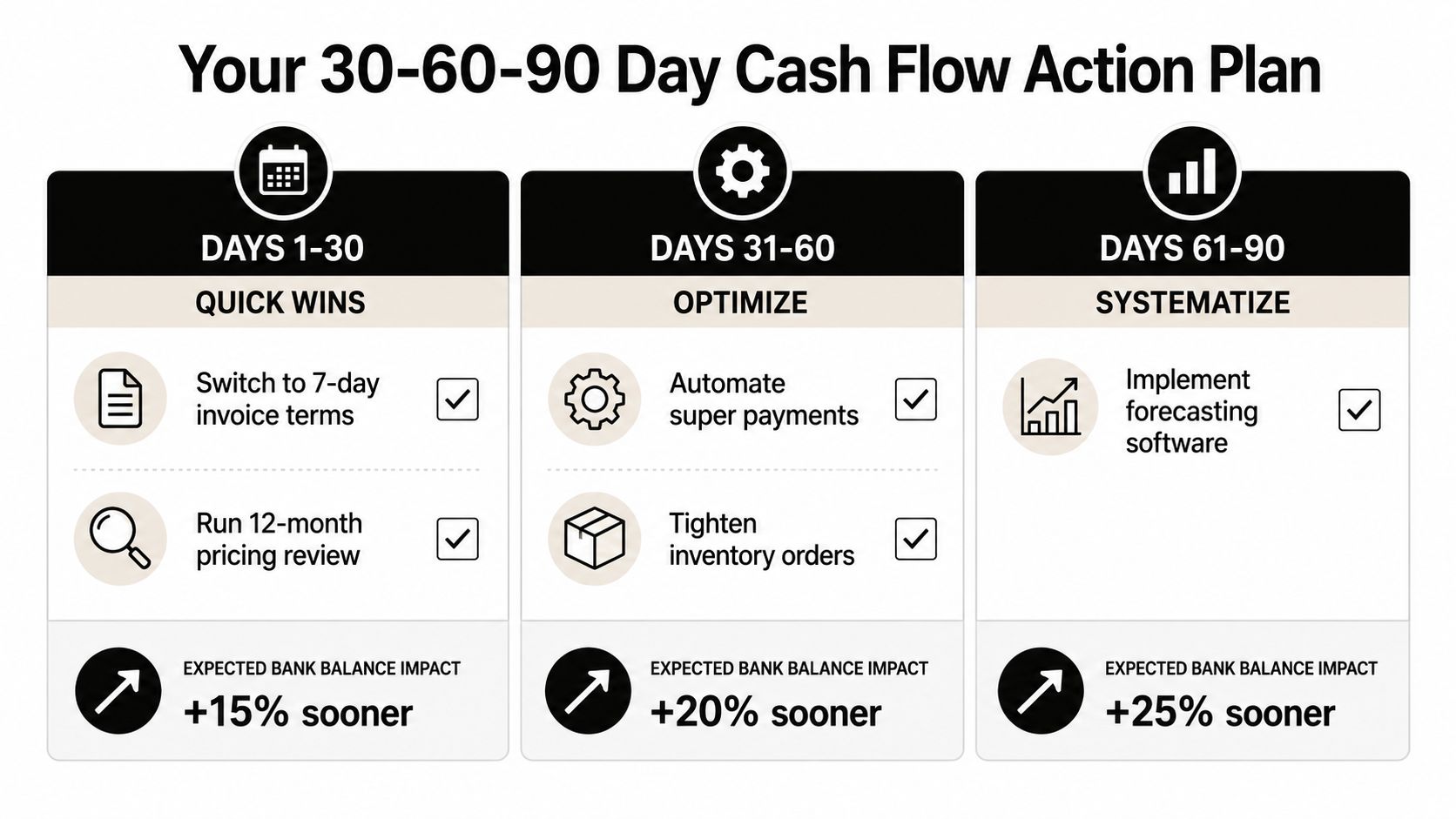
Checkpoint: confirm that the forecast stays current, the lowest cash week is understood, debtor and stock trends are improving, and payroll obligations are funded without personal money. That is the evidence that your cash system is working.
Nexist helps Australian founders build rolling cash-flow forecasts, review receivables, payables, inventory and pricing, and turn weekly KPIs into operating decisions. If your bank balance still feels unpredictable, visit Nexist and start with a practical review of the leaks that are keeping cash out of your business.
cash flow, small business, cash flow management, cash flow forecast, working capital

" width="24px"/><g d="M 0 24.129 L 0 0.129 L 24 0.129 L 24 24.129 Z M 0 24.129 L 0 0.129 L 24 0.129 L 24 24.129 Z M 24 3 C 24 1.344 22.656 0 21 0 L 3 0 C 1.344 0 0 1.344 0 3 L 0 21 C 0 22.656 1.344 24 3 24 L 21 24 C 22.656 24 24 22.656 24 21 Z M 6.883 8.375 L 2.863 8.375 L 2.863 20.467 L 6.883 20.467 Z M 4.899 2.545 C 3.524 2.545 2.625 3.449 2.625 4.634 C 2.625 5.795 3.496 6.724 4.846 6.724 L 4.872 6.724 C 6.273 6.724 7.146 5.795 7.146 4.634 C 7.12 3.449 6.274 2.545 4.899 2.545 Z M 16.747 8.09 C 14.614 8.09 13.659 9.263 13.124 10.086 L 13.124 8.374 L 9.105 8.374 C 9.159 9.508 9.105 20.466 9.105 20.466 L 13.124 20.466 L 13.124 13.713 C 13.124 13.352 13.15 12.99 13.257 12.732 C 13.547 12.01 14.209 11.262 15.319 11.262 C 16.773 11.262 17.355 12.372 17.355 13.996 L 17.355 20.466 L 21.374 20.466 L 21.374 13.532 C 21.374 9.818 19.391 8.09 16.747 8.09 Z" fill="transparent" height="24.12890599668026px" id="dSFdkJotL" width="24px"><path d="M 0 24 L 0 0 L 24 0 L 24 24 Z" fill="transparent" height="24px" id="wscNJE44G" transform="translate(0 0.129)" width="24px"/><g d="M 0 24.129 L 0 0.129 L 24 0.129 L 24 24.129 Z M 24 3 C 24 1.344 22.656 0 21 0 L 3 0 C 1.344 0 0 1.344 0 3 L 0 21 C 0 22.656 1.344 24 3 24 L 21 24 C 22.656 24 24 22.656 24 21 Z M 6.883 8.375 L 2.863 8.375 L 2.863 20.467 L 6.883 20.467 Z M 4.899 2.545 C 3.524 2.545 2.625 3.449 2.625 4.634 C 2.625 5.795 3.496 6.724 4.846 6.724 L 4.872 6.724 C 6.273 6.724 7.146 5.795 7.146 4.634 C 7.12 3.449 6.274 2.545 4.899 2.545 Z M 16.747 8.09 C 14.614 8.09 13.659 9.263 13.124 10.086 L 13.124 8.374 L 9.105 8.374 C 9.159 9.508 9.105 20.466 9.105 20.466 L 13.124 20.466 L 13.124 13.713 C 13.124 13.352 13.15 12.99 13.257 12.732 C 13.547 12.01 14.209 11.262 15.319 11.262 C 16.773 11.262 17.355 12.372 17.355 13.996 L 17.355 20.466 L 21.374 20.466 L 21.374 13.532 C 21.374 9.818 19.391 8.09 16.747 8.09 Z" fill="transparent" height="24.12890599668026px" id="sTpjGo1tb" width="24px"><path d="M 0 24 L 0 0 L 24 0 L 24 24 Z" fill="transparent" height="24px" id="s7ffpmKOD" transform="translate(0 0.129)" width="24px"/><g d="M 24 3 C 24 1.344 22.656 0 21 0 L 3 0 C 1.344 0 0 1.344 0 3 L 0 21 C 0 22.656 1.344 24 3 24 L 21 24 C 22.656 24 24 22.656 24 21 Z M 6.883 8.375 L 2.863 8.375 L 2.863 20.467 L 6.883 20.467 Z M 4.899 2.545 C 3.524 2.545 2.625 3.449 2.625 4.634 C 2.625 5.795 3.496 6.724 4.846 6.724 L 4.872 6.724 C 6.273 6.724 7.146 5.795 7.146 4.634 C 7.12 3.449 6.274 2.545 4.899 2.545 Z M 16.747 8.09 C 14.614 8.09 13.659 9.263 13.124 10.086 L 13.124 8.374 L 9.105 8.374 C 9.159 9.508 9.105 20.466 9.105 20.466 L 13.124 20.466 L 13.124 13.713 C 13.124 13.352 13.15 12.99 13.257 12.732 C 13.547 12.01 14.209 11.262 15.319 11.262 C 16.773 11.262 17.355 12.372 17.355 13.996 L 17.355 20.466 L 21.374 20.466 L 21.374 13.532 C 21.374 9.818 19.391 8.09 16.747 8.09 Z" fill="transparent" height="24.000006px" id="D0ecaHEcW" transform="translate(0 0)" width="24px"><path d="M 24 3 C 24 1.344 22.656 0 21 0 L 3 0 C 1.344 0 0 1.344 0 3 L 0 21 C 0 22.656 1.344 24 3 24 L 21 24 C 22.656 24 24 22.656 24 21 Z" fill="rgb(55, 184, 218)" height="24.000006px" id="IPLFE6zXx" width="24px"/><path d="M 4.02 0 L 0 0 L 0 12.092 L 4.02 12.092 Z" fill="rgb(255, 255, 255)" height="12.09201px" id="FWhtzAyuY" transform="translate(2.863 8.375)" width="4.02px"/><path d="M 2.274 0 C 0.899 0 0 0.904 0 2.089 C 0 3.25 0.871 4.179 2.221 4.179 L 2.247 4.179 C 3.648 4.179 4.521 3.25 4.521 2.089 C 4.495 0.904 3.649 0 2.274 0 Z" fill="rgb(255, 255, 255)" height="4.17876px" id="VmOsKv4kO" transform="translate(2.625 2.545)" width="4.52095px"/><path d="M 7.641 0 C 5.509 0 4.554 1.173 4.019 1.996 L 4.019 0.284 L 0 0.284 C 0.053 1.419 0 12.376 0 12.376 L 4.019 12.376 L 4.019 5.623 C 4.019 5.262 4.045 4.9 4.151 4.642 C 4.442 3.92 5.103 3.172 6.214 3.172 C 7.667 3.172 8.25 4.282 8.25 5.907 L 8.25 12.376 L 12.269 12.376 L 12.269 5.442 C 12.269 1.728 10.286 0 7.641 0 Z" fill="rgb(255, 255, 255)" height="12.37626px" id="n1XUbhaq0" transform="translate(9.105 8.09)" width="12.268830000000001px"/></g></g></g></g></svg>)