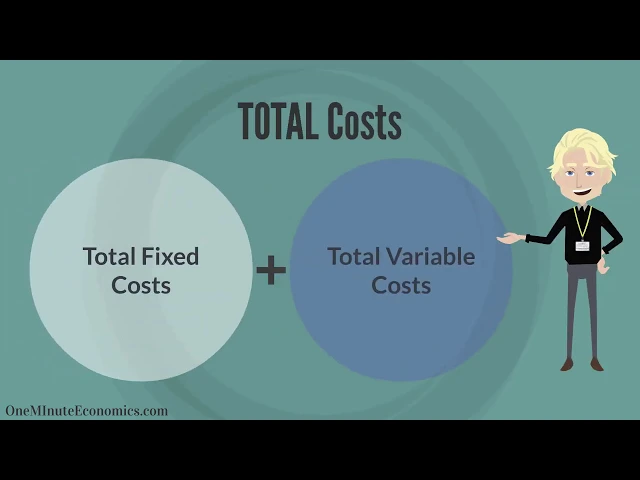
Fixed vs Variable Costs: Boost Your Business Profit
Learn how fixed vs variable costs impact break-even, pricing, & cash flow. Essential 2026 guide for Australian SMEs.
Ansh Malhotra

Sales are coming in. The workshop is busy, the café is full on weekends, or your Shopify dashboard looks healthy. Yet your bank balance keeps disappointing you.
That gap rattles founders because it feels irrational. If revenue is rising, cash should rise too. In practice, the problem usually sits inside your cost structure. Some costs turn up every month whether you sell one job or one hundred. Others move with activity. A third group looks steady until you cross a usage threshold, then jumps.
If you don't separate those costs properly, you'll misread profit, price too loosely, and wonder why growth feels harder than it should. That's also why strong managing small business cash flow habits matter alongside understanding your cash conversion cycle. Cash doesn't disappear randomly. It usually leaks through stock, timing, labour, and overhead decisions that weren't modelled clearly enough.
Table of Contents
Why Is My Profit Not Matching My Cash Flow
A founder runs a trade business that just had its best invoicing month of the year. On paper, things look solid. Then BAS is due, suppliers need paying, payroll clears, and the bank account drops harder than expected.
A café owner sees the same pattern. Strong weekend sales create confidence, but Monday arrives with rent, wages, utilities, merchant fees, and fresh stock orders. The till was busy, but the cash buffer barely moved.
Fixed vs variable costs stops being accounting jargon and starts becoming a management tool. If you don't know which costs stay put and which move with activity, you can't explain why a profitable month still feels tight. You also can't forecast properly, because your decisions are based on total spend, not cost behaviour.
Most cash stress in SMEs isn't caused by one dramatic mistake. It's caused by ordinary costs behaving differently from what the owner assumed.
I've seen founders cut marketing because cash is tight, while ignoring the bigger issue: a fixed overhead base that was set for a stronger sales month than the business is now having. Others focus on revenue alone and miss the fact that each additional sale is carrying too much stock, freight, labour, or rework cost.
The fix starts with classifying costs properly. Once you do that, your P&L becomes more useful. You can see what must be covered every month, what scales with revenue, and where cash pressure will show up first.
Fixed Variable and Semi-Variable Costs Explained
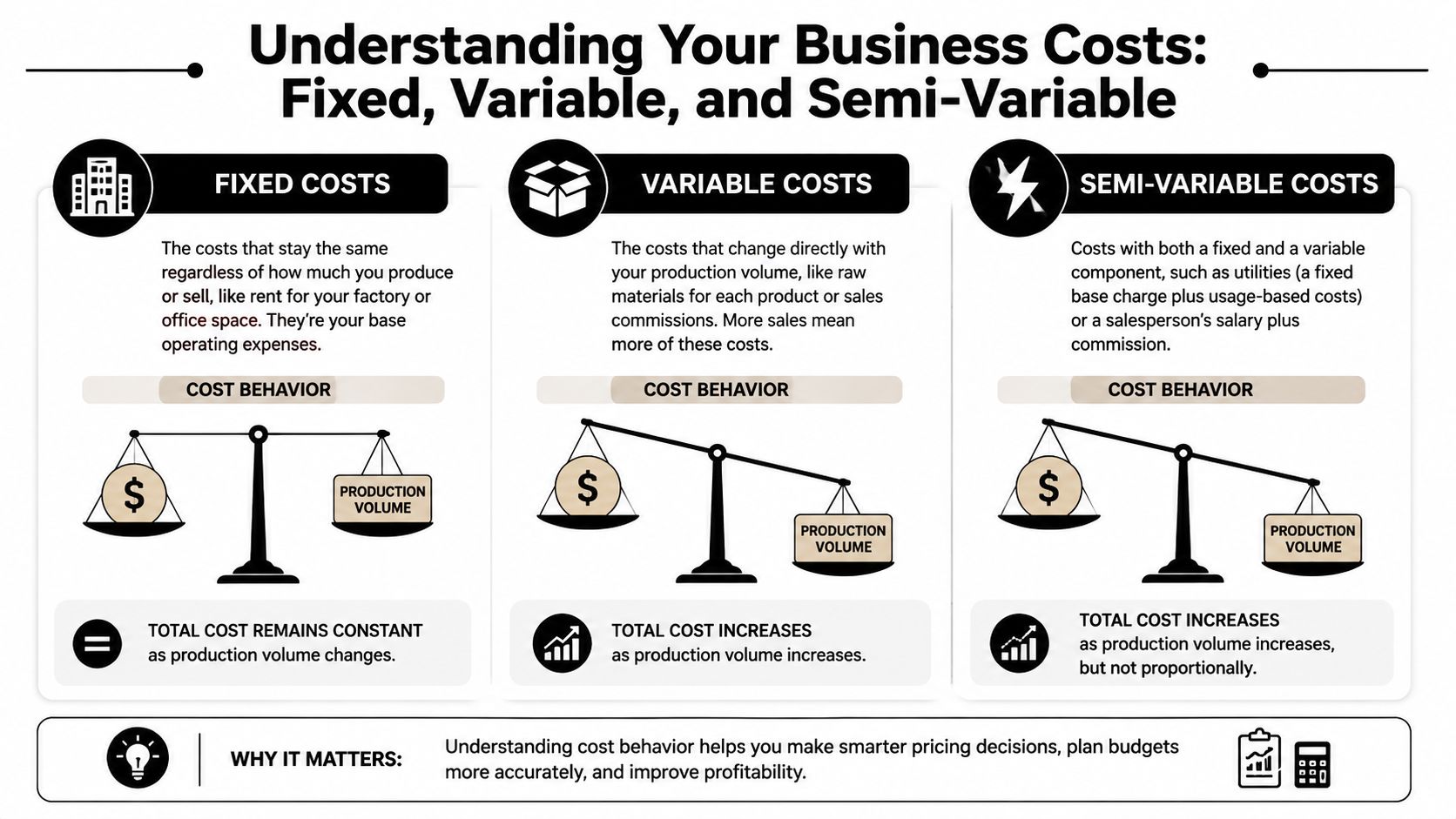
The cleanest way to think about this is simple. Fixed costs are the costs of being open. Variable costs are the costs of delivering the next sale. Semi-variable costs sit in the middle and change in tiers, not in a smooth line.
Early on, a lot of founders lump them together because the bank account only shows money going out. But for pricing, forecasting, and hiring, the difference matters.
Cost type | How it behaves | SME example | What it means for decisions |
|---|---|---|---|
Fixed costs | Stays broadly the same in the short term | Rent, salaried admin staff, insurance, Xero subscription | Raises your monthly break-even |
Variable costs | Moves with sales, jobs, or units sold | Materials, freight, payment fees, casual labour tied to workload | Shapes gross margin and per-job profit |
Semi-variable costs | Has a base level, then steps up at thresholds | Utilities, tiered software plans, added warehouse space, extra supervisor hours | Creates forecasting surprises if you ignore thresholds |
The costs of opening the doors
Fixed costs don't disappear just because sales slow down. Your lease still needs paying. Your insurance still renews. Your salaried operations manager still receives the same wage.
That matters even more in Australia because labour is a real fixed-cost pressure. In the December 2024 quarter, the Wage Price Index rose 3.4% over the year, and employers also need to plan for the Super Guarantee moving to 12% from 1 July 2025 according to this explanation of fixed expenses and employer cost pressure. If your team structure is heavy, your overhead floor keeps lifting even when sales don't.
For most founders, fixed costs belong in monthly planning, not guesswork. They tell you the minimum revenue your business must generate before you can even start talking about real profit.
The costs of serving the next sale
Variable costs behave differently. If your online store sells more units, you buy more stock, pay more pick-and-pack, and incur more card fees and freight. If your trade business books more installs, materials and job-linked labour move with that workload.
This is why profitability analysis matters at the unit level. Looking only at monthly totals hides what each sale contributes. A proper profitability analysis shows whether volume is helping you or just creating busier, lower-quality revenue.
Practical rule: If a cost rises because you sold one more unit, booked one more job, or served one more customer, treat it as variable until proven otherwise.
The category most founders miss
Semi-variable costs are where simple spreadsheets break. Your internet bill might have a fixed base plus usage. Your software may stay flat until another team member is added. A service business can handle more work with the current team for a while, then suddenly needs another coordinator, van, or supervisor.
These are often called step costs. They don't climb smoothly. They jump.
That's why a founder can feel profitable one month and squeezed the next, even without a dramatic change in sales. The business crossed a threshold. A new software tier kicked in. An extra casual became a regular roster. Warehouse overflow storage became necessary. None of that is random. It just wasn't modelled.
The Strategic Impact on Your Business Model
Your cost structure shapes more than your P&L. It changes your risk profile, how aggressive you can be on pricing, and how much pressure a slow month puts on cash.
Break-even changes how risk feels
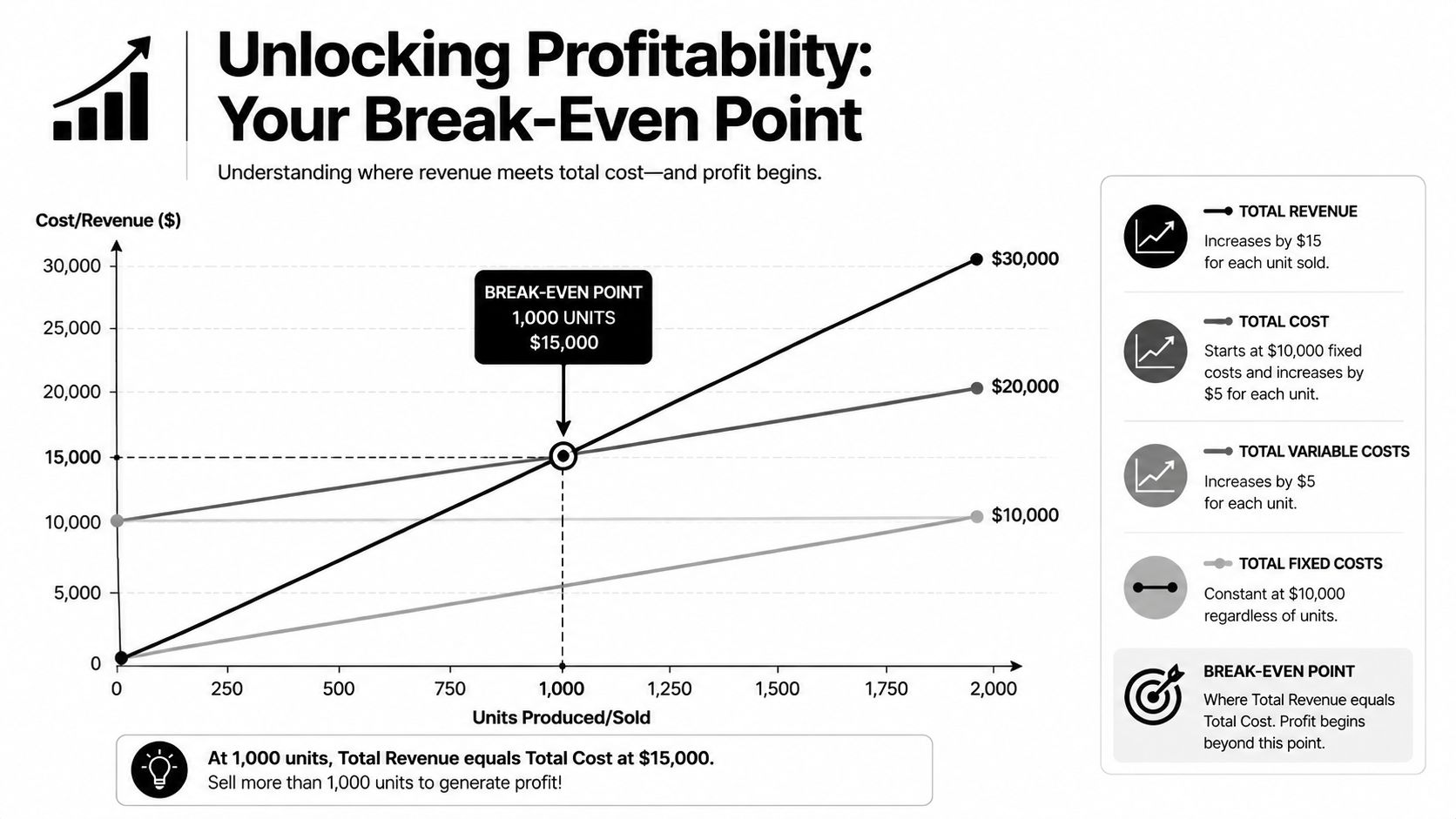
For Australian SMEs, fixed costs establish the operational baseline for earnings expansion. They don't fall when activity slows, so contribution margin must cover them before profit appears. Businesses with higher fixed overhead have a higher break-even threshold, but profit can ramp faster once that level is passed, as outlined in this guide to fixed costs, variable costs, and operating leverage.
That trade-off matters. A warehouse-based wholesale business with committed rent, permanent staff, and equipment leases may look efficient in a strong month. In a weaker month, the same structure becomes demanding because the overhead base stays put.
A leaner service firm that outsources some work may have a higher proportion of variable costs. It won't keep as much from each additional dollar of sales, but it can usually absorb demand swings more calmly.
If you want a plain-English refresher on the maths behind break-even, this explanation of Bookkeeping and Accounting's financial calculations is useful. The important point isn't the formula itself. It's what the formula tells you about pressure.
Pricing starts with contribution not guesswork
A lot of small businesses price from the market backwards. They look at what competitors charge, add a rough margin, and hope the month works out. That usually fails because the founder hasn't separated overhead recovery from job-level cost recovery.
A café menu is a good example. Beans, milk, cups, merchant fees, and some labour are variable. Rent, subscriptions, insurance, and the salaried venue manager are not. If the margin on each coffee isn't enough to contribute toward that fixed base, higher volume can still leave the owner tired and underpaid.
The same applies in trades. If a job quote covers materials and direct labour but leaves too little contribution for office wages, vehicles, software, compliance, and owner drawings, the business grows revenue without strengthening cash.
Healthy pricing doesn't just cover the direct cost of the sale. It also leaves enough contribution to carry the business above break-even.
Cash resilience depends on cost flexibility
Cash resilience is where the fixed vs variable costs discussion becomes very practical. A business with flexible costs can scale purchases, casual labour, packaging, and ad spend down faster when demand cools. A business loaded with fixed commitments can't move as quickly.
That doesn't mean fixed costs are bad. It means they need stronger forecasting, more disciplined sales targets, and clearer trigger points for hiring or expansion.
Use this lens when you make growth decisions:
Adding fixed overhead makes sense when demand is stable enough to support it and the added capacity should improve margin or control.
Keeping costs variable suits businesses with uneven sales, project-based revenue, or uncertain volume.
Ignoring semi-variable thresholds leads to surprise cash squeezes, especially around staffing tiers, warehouse capacity, and software plans.
When founders say growth feels chaotic, cost structure is often the hidden reason. Revenue is moving, but the model underneath it hasn't been designed deliberately.
A Step-by-Step Guide to Classifying Your Costs
Most founders don't need a textbook model. You need a working view of your cost base that helps you make better calls this month.

Start with your actual P and L
Export your Profit & Loss from Xero, MYOB, or QuickBooks. Use a recent period that reflects normal trading. If your business is seasonal, use enough months to avoid fooling yourself with one unusual period.
Then create three columns in a spreadsheet:
Fixed
Variable
Semi-variable
Don't overcomplicate this. You're not trying to produce a perfect accountant's memo. You're trying to understand how your business behaves.
A short walkthrough can help if your team needs a visual prompt before starting:
Use one simple test for every line item
Go line by line and ask one question.
If sales doubled next month, would this cost change? If sales went close to zero next month, would this cost still be there?
That simple test gets you most of the way. Here are common examples:
Rent and premises costs: Usually fixed in the short term.
Insurance and accounting software: Usually fixed.
Raw materials or cost of goods sold: Usually variable.
Courier, shipping, and merchant fees: Usually variable.
Electricity, phone, and internet: Often semi-variable.
Salaried admin or management wages: Usually fixed.
Casual labour linked directly to workload: Often variable or semi-variable, depending on rostering reality.
Marketing spend: Depends on how you use it. Always-on retainers may act fixed. campaign-based ad spend is often flexible.
If a cost only changes after you hire another person, add another vehicle, or exceed a usage band, classify it as semi-variable. That's where many forecasts go wrong.
Build a rough first pass not a perfect model
Your first pass should be good enough to answer practical questions:
What must the business pay even in a soft month?
What costs rise every time you sell more?
Where are the step changes that could surprise cash flow?
A simple summary table helps.
Expense line | Typical classification | Why |
|---|---|---|
Warehouse rent | Fixed | Time-based commitment |
Shopify shipping labels | Variable | Moves with orders |
Factory power bill | Semi-variable | Base charge plus usage |
Office manager salary | Fixed | Doesn't move with weekly sales |
Casual event staff | Variable | Added when workload increases |
Once you've done this once, revisit it quarterly. Cost behaviour changes as the business matures. What started as variable contractor spend can become a fixed payroll decision. What looked fixed can become flexible once you renegotiate suppliers or move to outsourced fulfilment.
Cost Structures in Action Australian Business Examples
The theory is useful. The ultimate test is whether you can see your own business in it.
An e-commerce brand in Sydney
An online retailer often looks lean because there is no shopfront. But the variable-cost load can be heavy: inventory, freight, packaging, payment fees, returns handling, and paid acquisition.
That flexibility helps in a downturn. Purchasing can be trimmed. ad campaigns can be narrowed. Fulfilment labour can often be adjusted more quickly than a business can unwind a lease.
The trap is stock. The ABS found that in the March quarter 2024, Australian retail turnover fell 0.4%, while retail volumes fell 1.4%, and inventories were up 1.0%, which shows how revenue pressure can hit while stock remains tied up in the system according to this summary of retail turnover, volumes, and inventory pressure. For an e-commerce founder, that means variable costs don't always stay flexible if you've already bought too much inventory.
A café in Brisbane
A café carries both fixed and variable strain. Rent, equipment leases, software, insurance, and some wages sit there every week. Then milk, coffee beans, food inputs, merchant fees, and casual rostering move with trade.
This mix creates a narrow operating lane. Quiet mornings hurt because the fixed base still needs covering. Busy periods can look strong, but only if wastage, roster discipline, and menu pricing are tight.
The founders who manage this well usually watch a few things constantly: roster efficiency, gross margin on core items, wastage, and supplier pricing. They don't assume a busy venue is a profitable one.
An electrical contractor in Perth
A trade business often starts with a relatively flexible model. The owner does the quoting, uses subcontractors selectively, and keeps overhead modest. Then growth arrives.
The next van, apprentice, office support person, and scheduling software plan don't increase neatly one job at a time. They arrive in blocks. That's the step-cost problem.
For this kind of business, the decision isn't just whether labour is fixed or variable. It's whether the next capacity jump is justified by repeatable demand. If the pipeline is patchy, fixed expansion adds pressure. If the work is stable and the bottlenecks are real, adding fixed capacity can improve control, margin, and service quality.
The right cost structure depends on how predictable your demand is. Not on what another business in your industry happens to be doing.
Advanced Cost Optimisation and Control Tactics
Once you've classified costs, the next question is straightforward. Which levers will improve cash fastest without weakening the business?
Convert selected fixed costs into flexible costs
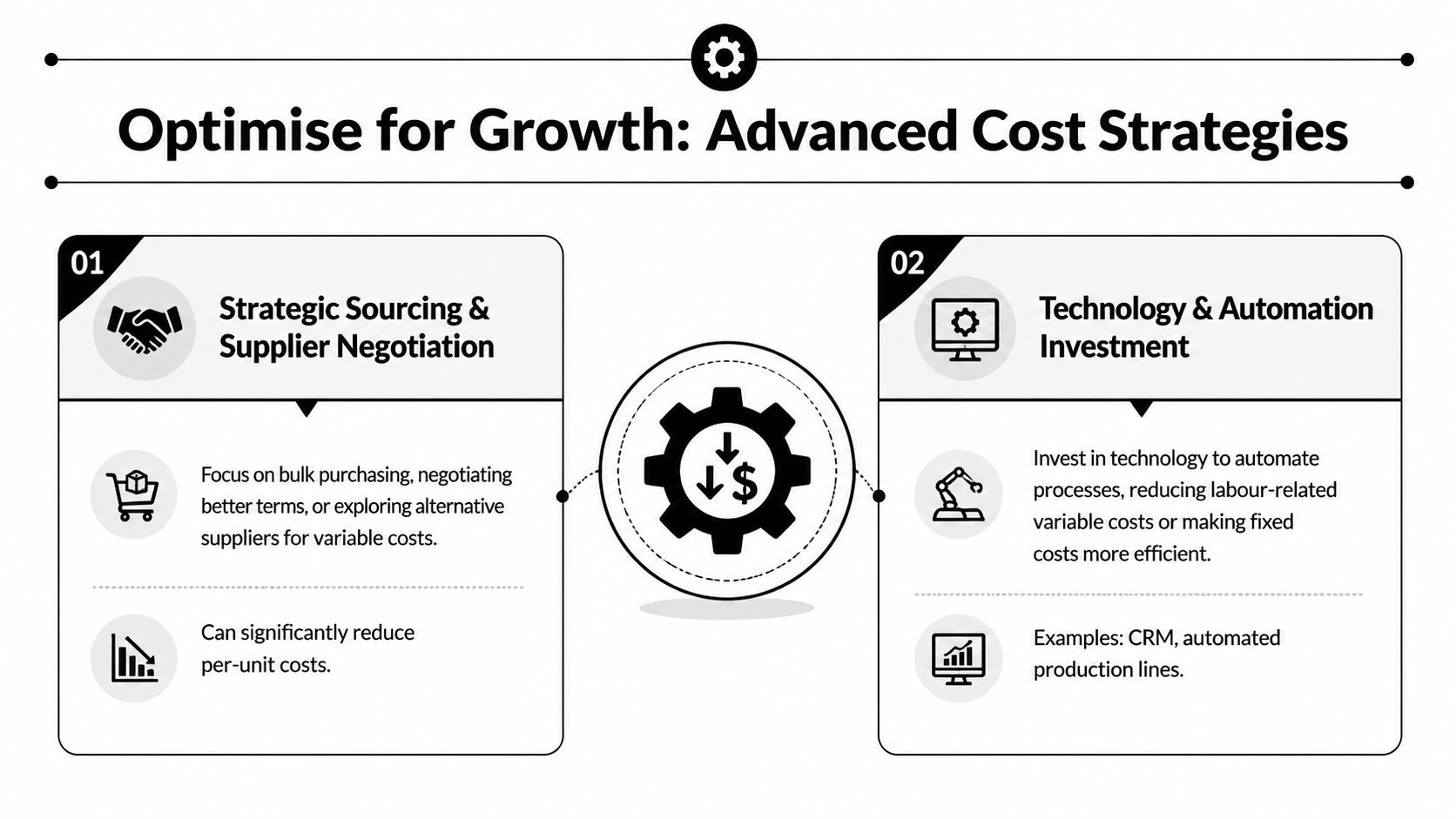
Founders often assume the answer is to cut overhead broadly. That's rarely the best first move. A better approach is to ask whether some fixed commitments should stay fixed at all.
Examples that often work:
Fulfilment and warehousing: Moving from your own leased space to a 3PL can convert premises and labour commitments into activity-linked costs.
Marketing execution: A part-time specialist or fractional agency can give you capability without a full-time salary.
Administration support: Outsourced bookkeeping, payroll processing, or customer service can smooth cost with demand.
Equipment access: Leasing arrangements, short-term hire, or subcontractor-owned gear can reduce capital lock-in in some trades.
This isn't about avoiding fixed costs forever. It's about earning the right to lock them in. If demand is still uneven, flexibility is valuable.
Attack variable costs first when cash is tight
For founders, the fastest path to cash improvement is often variable-cost control. Renegotiating suppliers, improving inventory turn, and reducing rework lowers cost per unit and improves gross margin more immediately than most fixed-cost cuts, as explained in this practical guide to variable-cost control and cash flow improvement.
That means your first review should look like this:
Supplier terms: Ask for better buy prices, smaller minimums, or improved payment timing.
Inventory discipline: Cut slow movers, tighten reorder points, and stop buying based on hope.
Rework reduction: If your team keeps remaking, redelivering, or revisiting jobs, variable cost is leaking through quality problems.
Process automation: Use tools that reduce handling time per order, per invoice, or per service job.
Labour scheduling: Match roster hours to real trading patterns, not habit.
For hospitality businesses, labour planning deserves its own discipline. A simple tool for forecasting restaurant labor expenses can help owners test roster decisions before the week starts rather than after payroll hits.
Where founders usually get this wrong
The common mistake is going after the line items that feel emotionally satisfying instead of financially important. Cancelling a small software subscription feels decisive. It often won't change the month.
The bigger wins usually come from operational drivers:
Buying too much stock
Discounting without margin control
Poor scheduling
Supplier drift
Too much waste or rework
Keeping underperforming channels alive for too long
Founders don't need to become obsessed with every expense. You do need to focus on the costs that move with every sale, every job, and every delivery cycle. That's where margin is won or lost.
How a Virtual CFO Reports on Cost Structure
Good cost management isn't a once-a-year clean-up. It needs a monthly reporting rhythm that turns cost behaviour into decisions.
What goes on the monthly dashboard
A solid report doesn't just list expenses. It shows how your model is performing. In practice, that usually means tracking:
Contribution margin by product line, service category, or channel
Break-even sales level in dollars for the month
Major cost buckets such as wages, cost of goods, freight, and marketing as a share of revenue over time
Variance to forecast so you can see where cost behaviour didn't match assumptions
Step-cost alerts when staffing, software, storage, or logistics are nearing a threshold
A founder doesn't need fifty charts. You need the few measures that explain why the bank balance moved the way it did and what should change next month.
What founders should look for each month
The most useful monthly conversation is not "Did we spend too much?" It's "Which costs moved, why did they move, and did revenue quality justify it?"
That's where strategic finance becomes operational. If contribution is weakening, pricing or direct cost needs attention. If revenue is up but cash is flat, inventory, receivables, or overhead timing may be the culprit. If break-even keeps rising, hiring and fixed commitments may be running ahead of demand.
For many Australian founders, that level of clarity is exactly what a virtual chief financial officer is there to provide. Not just reports. Direction.
When cost structure is reported properly, you stop reacting to the month after it's gone. You start steering the business while there's still time to improve the outcome.
If you want clearer visibility on fixed vs variable costs, stronger forecasts, and reporting that helps you protect cash, Nexist can help. The team works with Australian founders to turn messy numbers into practical decisions on pricing, inventory, payroll, margins, and growth.
fixed vs variable costs, cost management australia, sme financial management, break even analysis, virtual cfo services

" width="24px"/><g d="M 0 24.129 L 0 0.129 L 24 0.129 L 24 24.129 Z M 0 24.129 L 0 0.129 L 24 0.129 L 24 24.129 Z M 24 3 C 24 1.344 22.656 0 21 0 L 3 0 C 1.344 0 0 1.344 0 3 L 0 21 C 0 22.656 1.344 24 3 24 L 21 24 C 22.656 24 24 22.656 24 21 Z M 6.883 8.375 L 2.863 8.375 L 2.863 20.467 L 6.883 20.467 Z M 4.899 2.545 C 3.524 2.545 2.625 3.449 2.625 4.634 C 2.625 5.795 3.496 6.724 4.846 6.724 L 4.872 6.724 C 6.273 6.724 7.146 5.795 7.146 4.634 C 7.12 3.449 6.274 2.545 4.899 2.545 Z M 16.747 8.09 C 14.614 8.09 13.659 9.263 13.124 10.086 L 13.124 8.374 L 9.105 8.374 C 9.159 9.508 9.105 20.466 9.105 20.466 L 13.124 20.466 L 13.124 13.713 C 13.124 13.352 13.15 12.99 13.257 12.732 C 13.547 12.01 14.209 11.262 15.319 11.262 C 16.773 11.262 17.355 12.372 17.355 13.996 L 17.355 20.466 L 21.374 20.466 L 21.374 13.532 C 21.374 9.818 19.391 8.09 16.747 8.09 Z" fill="transparent" height="24.12890599668026px" id="dSFdkJotL" width="24px"><path d="M 0 24 L 0 0 L 24 0 L 24 24 Z" fill="transparent" height="24px" id="wscNJE44G" transform="translate(0 0.129)" width="24px"/><g d="M 0 24.129 L 0 0.129 L 24 0.129 L 24 24.129 Z M 24 3 C 24 1.344 22.656 0 21 0 L 3 0 C 1.344 0 0 1.344 0 3 L 0 21 C 0 22.656 1.344 24 3 24 L 21 24 C 22.656 24 24 22.656 24 21 Z M 6.883 8.375 L 2.863 8.375 L 2.863 20.467 L 6.883 20.467 Z M 4.899 2.545 C 3.524 2.545 2.625 3.449 2.625 4.634 C 2.625 5.795 3.496 6.724 4.846 6.724 L 4.872 6.724 C 6.273 6.724 7.146 5.795 7.146 4.634 C 7.12 3.449 6.274 2.545 4.899 2.545 Z M 16.747 8.09 C 14.614 8.09 13.659 9.263 13.124 10.086 L 13.124 8.374 L 9.105 8.374 C 9.159 9.508 9.105 20.466 9.105 20.466 L 13.124 20.466 L 13.124 13.713 C 13.124 13.352 13.15 12.99 13.257 12.732 C 13.547 12.01 14.209 11.262 15.319 11.262 C 16.773 11.262 17.355 12.372 17.355 13.996 L 17.355 20.466 L 21.374 20.466 L 21.374 13.532 C 21.374 9.818 19.391 8.09 16.747 8.09 Z" fill="transparent" height="24.12890599668026px" id="sTpjGo1tb" width="24px"><path d="M 0 24 L 0 0 L 24 0 L 24 24 Z" fill="transparent" height="24px" id="s7ffpmKOD" transform="translate(0 0.129)" width="24px"/><g d="M 24 3 C 24 1.344 22.656 0 21 0 L 3 0 C 1.344 0 0 1.344 0 3 L 0 21 C 0 22.656 1.344 24 3 24 L 21 24 C 22.656 24 24 22.656 24 21 Z M 6.883 8.375 L 2.863 8.375 L 2.863 20.467 L 6.883 20.467 Z M 4.899 2.545 C 3.524 2.545 2.625 3.449 2.625 4.634 C 2.625 5.795 3.496 6.724 4.846 6.724 L 4.872 6.724 C 6.273 6.724 7.146 5.795 7.146 4.634 C 7.12 3.449 6.274 2.545 4.899 2.545 Z M 16.747 8.09 C 14.614 8.09 13.659 9.263 13.124 10.086 L 13.124 8.374 L 9.105 8.374 C 9.159 9.508 9.105 20.466 9.105 20.466 L 13.124 20.466 L 13.124 13.713 C 13.124 13.352 13.15 12.99 13.257 12.732 C 13.547 12.01 14.209 11.262 15.319 11.262 C 16.773 11.262 17.355 12.372 17.355 13.996 L 17.355 20.466 L 21.374 20.466 L 21.374 13.532 C 21.374 9.818 19.391 8.09 16.747 8.09 Z" fill="transparent" height="24.000006px" id="D0ecaHEcW" transform="translate(0 0)" width="24px"><path d="M 24 3 C 24 1.344 22.656 0 21 0 L 3 0 C 1.344 0 0 1.344 0 3 L 0 21 C 0 22.656 1.344 24 3 24 L 21 24 C 22.656 24 24 22.656 24 21 Z" fill="rgb(55, 184, 218)" height="24.000006px" id="IPLFE6zXx" width="24px"/><path d="M 4.02 0 L 0 0 L 0 12.092 L 4.02 12.092 Z" fill="rgb(255, 255, 255)" height="12.09201px" id="FWhtzAyuY" transform="translate(2.863 8.375)" width="4.02px"/><path d="M 2.274 0 C 0.899 0 0 0.904 0 2.089 C 0 3.25 0.871 4.179 2.221 4.179 L 2.247 4.179 C 3.648 4.179 4.521 3.25 4.521 2.089 C 4.495 0.904 3.649 0 2.274 0 Z" fill="rgb(255, 255, 255)" height="4.17876px" id="VmOsKv4kO" transform="translate(2.625 2.545)" width="4.52095px"/><path d="M 7.641 0 C 5.509 0 4.554 1.173 4.019 1.996 L 4.019 0.284 L 0 0.284 C 0.053 1.419 0 12.376 0 12.376 L 4.019 12.376 L 4.019 5.623 C 4.019 5.262 4.045 4.9 4.151 4.642 C 4.442 3.92 5.103 3.172 6.214 3.172 C 7.667 3.172 8.25 4.282 8.25 5.907 L 8.25 12.376 L 12.269 12.376 L 12.269 5.442 C 12.269 1.728 10.286 0 7.641 0 Z" fill="rgb(255, 255, 255)" height="12.37626px" id="n1XUbhaq0" transform="translate(9.105 8.09)" width="12.268830000000001px"/></g></g></g></g></svg>)