Your Exit Strategy Company Guide for Founders
Thinking of selling? Learn what an exit strategy company does and how to prepare your business. Our founder's guide covers readiness, checklists, and timelines.
Ansh Malhotra

You're running the business, the calendar's full, and the bank balance looks fine on paper, yet one uncomfortable question keeps surfacing late at night. If you stepped away for three months, would the business still hold its value, or would customers, staff, and cash flow start leaning on you harder than ever?
That's the starting point for an exit strategy company conversation. Not “how do I sell someday?”, but “what have I built that another owner can trust?”. For Australian founders, that distinction matters because the tax outcome, buyer confidence, and sale timing all depend on how the business is structured, documented, and run.
A practical way to think about this is simple. An exit is not the moment you start planning. It's the moment years of decisions are tested at once. If you want a broader framework before diving in, the comprehensive guide for business owners is a useful companion, and if you're aligning this with longer-term finance work, your strategic and financial planning needs to point in the same direction.
Table of Contents
Planning Your Endgame From Day One
A founder who's the final approver, the relationship keeper, the debt chaser, and the fire-fighter has already learned the hard truth. The business may be profitable, but it's not yet fully transferable. Buyers can see that straight away, and they'll discount the price when the company depends on one person for too many decisions.
The smart move is to treat the exit as the most serious form of strategic leadership. You're not planning to leave because you've given up. You're building an asset that can survive you, which is exactly what a buyer, investor, or successor wants to see.
Start with transferability, not just growth
Revenue growth helps, but growth alone doesn't create an exit-ready company. If the owner still signs every contract, resolves every customer complaint, and knows every number from memory, the business is fragile. A sale process will expose that quickly.
Practical rule: if the company can't function without your daily involvement, the buyer isn't buying a business. They're buying a job with baggage.
That's why an exit strategy company often looks more like a strategic advisor than a simple seller's agent. It works backward from the future deal, then fixes the gaps in finance, documentation, and leadership so the business becomes easier to hand over. For many founders, that shift changes how they run the company today.
A good owner starts asking different questions. Which customers would stay if I stepped back? Which processes live in people's heads? Which parts of the operation still require my approval? Those questions don't slow growth. They make growth saleable.
What an Exit Strategy Company Actually Does
A strong advisor doesn't just hunt for a buyer and wait for the phone to ring. They shape the business so the right buyer sees a cleaner story, a lower-risk handover, and fewer excuses to discount the offer. That's a very different job from a traditional broker.
They position the business before they market it
A broker often focuses on listing, introductions, and managing offers. An exit strategy company should go deeper. It looks at who the likely buyer is, what synergies that buyer will pay for, and where the business is currently leaking value. That can mean tightening reporting, clarifying recurring revenue, or reducing owner dependence before the sale process starts.
They also help you tell the financial story in a way a buyer can trust. In private-company settings, exit planning guidance often stresses normalising quality of earnings, removing non-recurring add-backs, installing reliable reporting, and building projections that make sense to a buyer, not just to the founder PwC private company exit guidance. That work matters because buyers don't pay for hope, they pay for evidence.
They manage the transaction, but the prep is the value
The actual sale process can be messy. There are NDAs, information requests, term sheets, legal review, and a lot of back-and-forth over assumptions. The best advisors keep that moving, but the bigger value is earlier. They help convert a founder-led operation into something a third party can assess without constant translation.
An experienced virtual CFO-style operator adds another layer here. They can spot cash leaks, sharpen reporting rhythms, and connect the numbers to operational reality. In practical terms, that's how a business stops looking like a spreadsheet full of exceptions and starts looking like a platform a buyer can run.
If you're comparing providers, ask who does the hard preparation work and who only appears once a buyer is already interested. The difference shows up in valuation, due diligence speed, and how much of the sale proceeds you keep.
Are You Ready for a Sale
A lot of founders say they're ready because the business is busy, profitable, and getting attention. That only covers part of the picture. There are two separate questions here, business readiness and owner readiness, and they do not usually line up at the same time.

Business readiness is what the buyer can inspect
Australian deal activity in 2024 gives a useful backdrop. Mergermarket recorded 1,791 announced M&A deals and a deal value of about US$148.4 billion, with PwC Australia noting that activity value was more than double the prior year ZoomInfo summary of Mergermarket and PwC Australia. In a stronger market, prepared sellers usually get more attention, but only if the business is clean enough to stand up to scrutiny.
The practical test is simple. Are the accounts tidy enough that a buyer will not need to rebuild them from scratch? Are customer contracts documented? Can the management team keep the business running without you in the room? If the answer is “mostly” or “sort of”, that uncertainty will show up in price, deal structure, or both.
A deal-ready business usually has visible patterns. Cash flow is understandable. Reporting is consistent. The buyer can see how profit is created, not just that profit exists.
Owner readiness is what the founder often avoids
Owner readiness is different. You need to know what happens after the sale. Do you need the cash to fund retirement, reduce debt, or move into another venture? Can you let go if the business changes under new ownership? Will you stay on for a transition period, and if so, on what terms?
Many deals fall apart because the founder was not ready to stop being the centre of every decision.
Australian SME reality bites. The ABS reports that businesses with fewer than 20 employees make up the vast majority of active businesses, which usually means the owner is personally involved in operations Business.com on business exit strategy and ABS context. That involvement can be an advantage while you are growing the company, but it becomes a succession problem if no one else can step in and keep things moving.
The honest test is this. If the buyer asked you to take a full month away before sale, would anything break? If the answer is yes, you are not ready yet. That is not a failure. It is a sign that the work now needs to shift from revenue growth to transferability, and a virtual CFO can help you work through that gap in a practical way, including the cash impact of removing yourself from day-to-day decisions.
Your Ultimate Exit Preparation Checklist
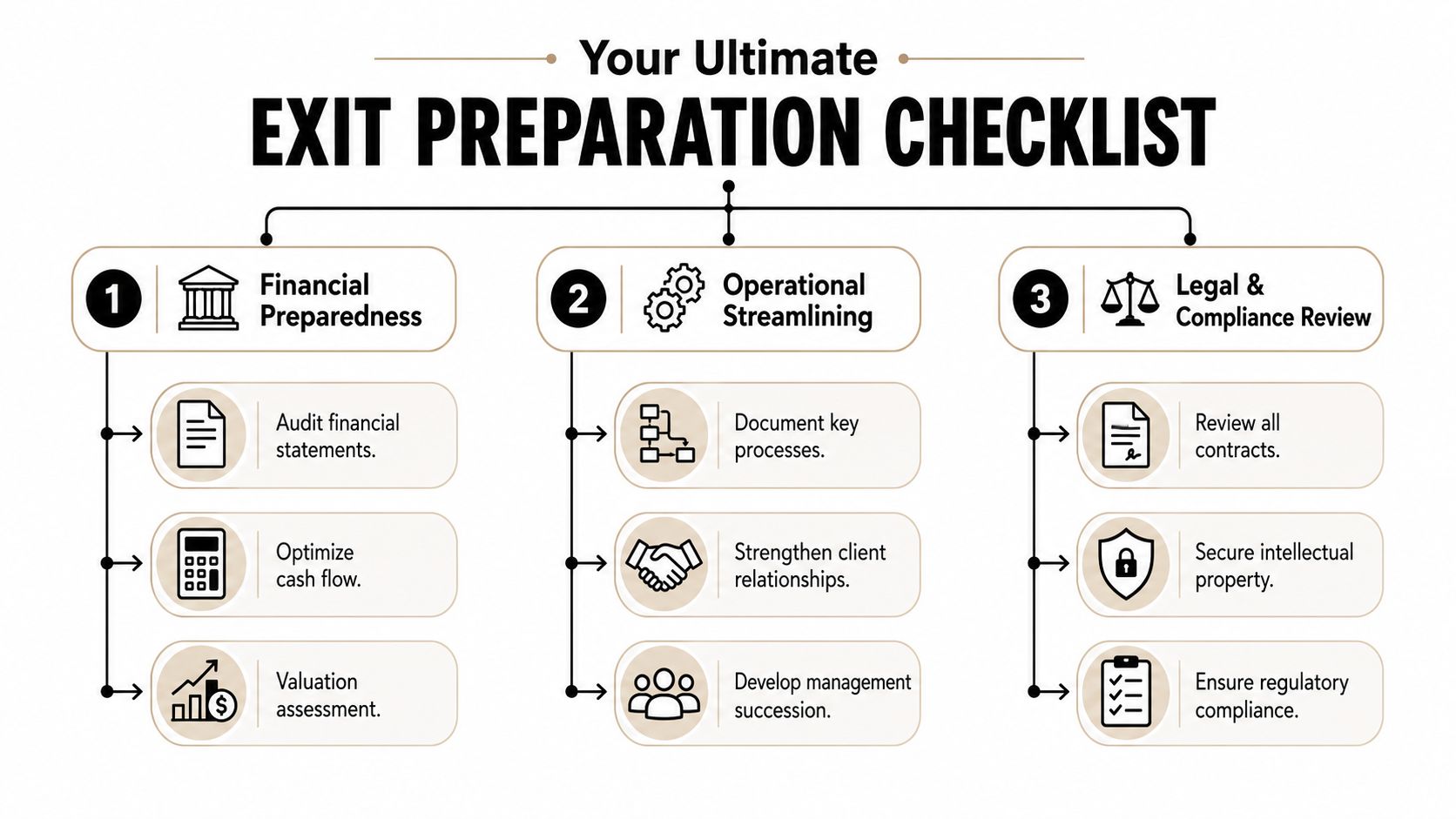
Preparation falls into three buckets, and each one affects deal price differently. Financial cleanup shapes trust. Operational streamlining shapes transferability. Legal and tax structure shapes what you keep after the sale. Miss one, and the others have to carry more weight.
Financial clean-up
The first job is to make the numbers believable. Reconcile the historical accounts, separate personal spend from business spend, and normalise earnings so a buyer can see the underlying performance. If there are one-off items, document them clearly. If margins bounce around because reporting is messy, fix the reporting before you try to fix the valuation.
Use the numbers to tell a forward-looking story, not a defensive one. Buyers want to understand how the business makes money today and how it can keep doing that after you leave. A credible forecast does that better than a polished pitch deck ever will.
Operational systemisation
A buyer wants a business, not a pile of workarounds. Document the steps that sustain the company's operations, including sales handover, delivery, inventory controls, customer support, and finance approvals. If those steps live in one person's head, the business has hidden risk.
Clean systems don't just make due diligence easier. They give the buyer confidence that the business won't wobble the moment the founder stops answering texts.
Management succession matters here too. If the team can't run core functions without constant owner input, the market will notice. For founders who need help tightening reporting discipline, cash visibility, and handover habits, virtual CFO support in Melbourne can fill that gap in a practical way.
Legal and tax structuring
Australia's small business CGT concessions can materially change the economics of a sale. The ATO identifies four main concessions, the 15-year exemption, the 50% active asset reduction, the retirement exemption, and the small business rollover ATO concession overview via Privco reference. Eligibility often depends on ownership history and how the asset is used, so this is not something to leave until the transaction is already on the table.
The active asset test is the key planning trigger. The rules can require the asset to be active for at least half the ownership period, or 7.5 years if owned for at least 15 years. That means exit planning needs to begin well before the sale date.
For founders who want the numbers and tax planning connected properly, virtual CFO in Melbourne can coordinate forecasting, clean-up, and exit sequencing with your accountant and lawyer.
Mapping Your Exit Timeline and Choosing a Partner
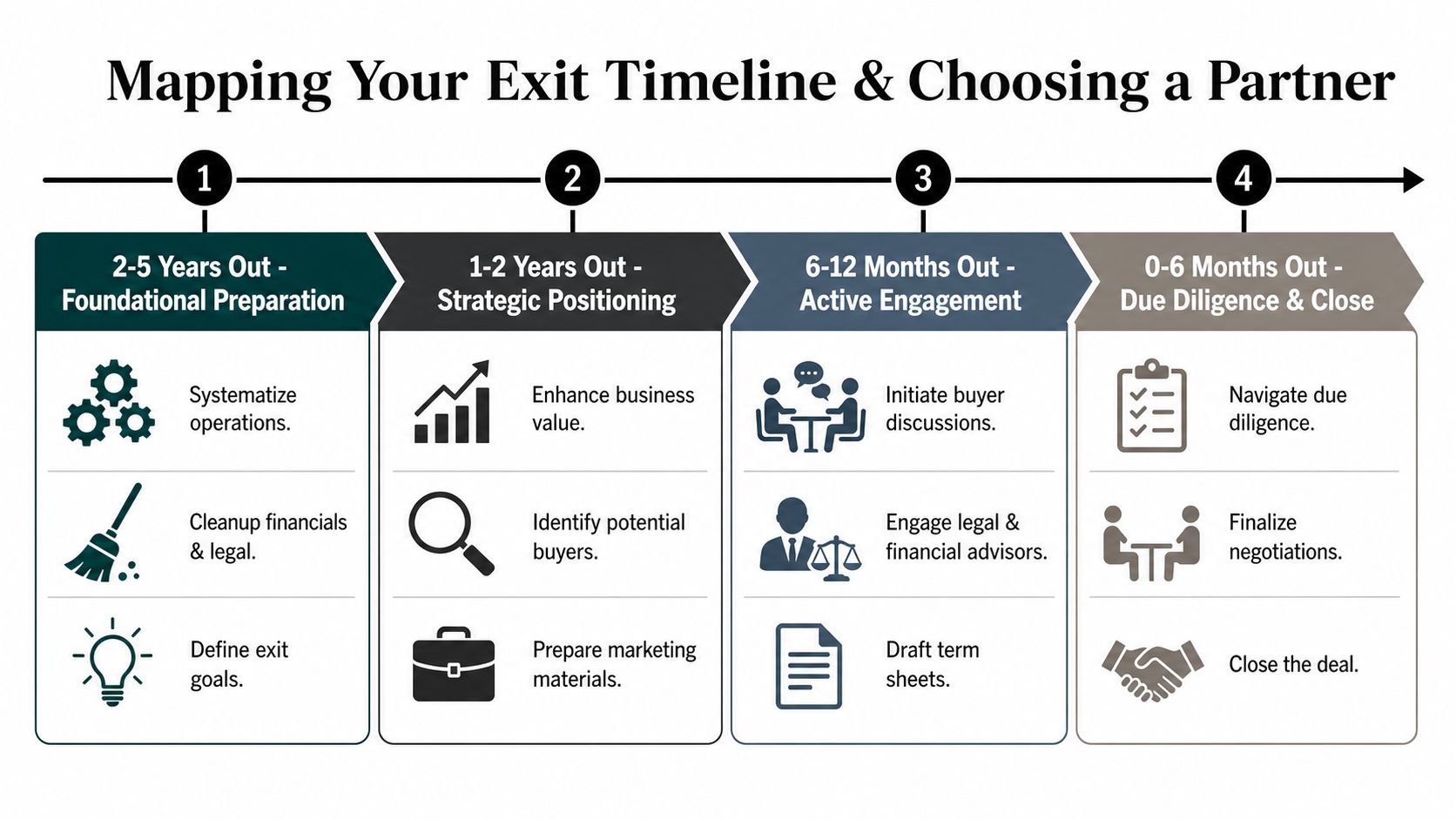
An exit is rarely a one-quarter project. For Australian SMEs, structured preparation usually starts 2–5 years before the target sale date HubSpot exit strategy guidance. That gives you time to clean up the business and the owner's role, not just wrap the company in a sale-ready story.
What the timeline really looks like
Early on, the work sits inside the business. Reporting gets tightened, processes are standardised, and the founder starts stepping back from tasks that only they can perform. If the company still depends on one person to approve everything, answer every operational question, or hold every customer relationship together, buyers will price that risk into the deal.
Around 18 months out, valuation work becomes more useful because the numbers are usually stable enough to model with more confidence HubSpot exit strategy guidance. By then, the focus should shift from raw growth claims to cash quality, margin consistency, and whether the earnings are repeatable without founder intervention.
At around 12 months out, due diligence preparation stops being optional. Legal documents, customer contracts, payroll records, tax files, and the data room need to be in shape before a buyer asks for them. If gaps only appear at that point, the deal team ends up spending time fixing problems instead of negotiating price and terms. A practical transaction advisory services partner can help keep those workstreams aligned.
The right advisor also depends on the stage of the business. Early preparation needs someone who can work across cash flow, systems, and management reporting without losing sight of how the business runs. Sale execution needs someone who can coordinate buyer questions, keep the process moving, and stop the founder from being dragged back into every issue that surfaces.
How to choose the right partner
Fees matter, but they should not be the starting point. Ask who they have worked with, how they deal with owner dependency, and whether they can improve the business before it goes to market. If the conversation stays on valuation and never gets into reporting discipline, handover readiness, or buyer risk, the advice is too thin for a founder-led SME.
A better question is simple. “What will be materially better in my business six months after we start working together?” If they cannot answer that clearly, keep looking.
Fit matters as much as technical skill. A family-owned distributor, a trade business, and a software firm do not exit the same way. The advisor should understand the buyer pool, the cash implications of the handover, and how much operational dependence the business can carry without weakening the deal. For a useful lens on buyer scrutiny, the guide for founders on investor scrutiny is helpful context, even though the transaction type differs.
The Due Diligence and Negotiation Playbook
Due diligence is where value gets tested, not where it gets made. If the preparation work was done properly, this stage confirms the story. If it was rushed, every missing contract, weak report, or unclear answer becomes a negotiation point, and every gap gives the buyer more room to push back.

The data room tells the story before you do
Buyers and their advisers want the numbers to line up with the paperwork. They will check financials, contracts, staffing, tax records, customer concentration, and whether the business can keep operating without the founder stepping into every issue. A tidy data room saves time, but it also reveals a business run with discipline.
The practical work starts well before the sale process opens. Clean SOPs, documented approvals, and forecasts that stand up to scrutiny make it harder for a buyer to rewrite the price or the terms after the first review. They also reduce the strain on the founder, because fewer loose ends need to be explained under pressure.
The guide for founders on investor scrutiny is useful context here, even though the deal type is different. The habit is the same. Prepare for sceptical questions before they arrive, and make sure the answers are backed by records, not recollection.
Keep leverage by keeping the business boring
Negotiation improves when the business looks predictable. Revenue that jumps without explanation, add-backs that are not documented, or a missing handover plan all give the buyer a reason to discount the offer. Those gaps often turn into earn-outs, deferred consideration, or tighter warranty terms.
Founder dependency can do the same damage. If the sale only works because you are still needed for a long stretch, the buyer knows the business has not effectively been de-risked. For many Australian SMEs, that is the fundamental divide between being sale-ready on paper and being ready for life after the sale, because the owner can still be the main sales contact, the final approver, and the person everyone relies on when something breaks.
The owner-dependence problem is also where transaction support earns its keep. A firm such as transaction advisory services in Melbourne can help coordinate the process alongside legal and tax advisers, keep buyer questions moving, and make sure cash, timing, and handover obligations stay visible while the deal is being negotiated.
exit strategy company, business exit strategy, sell a business australia, founder exit plan, virtual cfo

" width="24px"/><g d="M 0 24.129 L 0 0.129 L 24 0.129 L 24 24.129 Z M 0 24.129 L 0 0.129 L 24 0.129 L 24 24.129 Z M 24 3 C 24 1.344 22.656 0 21 0 L 3 0 C 1.344 0 0 1.344 0 3 L 0 21 C 0 22.656 1.344 24 3 24 L 21 24 C 22.656 24 24 22.656 24 21 Z M 6.883 8.375 L 2.863 8.375 L 2.863 20.467 L 6.883 20.467 Z M 4.899 2.545 C 3.524 2.545 2.625 3.449 2.625 4.634 C 2.625 5.795 3.496 6.724 4.846 6.724 L 4.872 6.724 C 6.273 6.724 7.146 5.795 7.146 4.634 C 7.12 3.449 6.274 2.545 4.899 2.545 Z M 16.747 8.09 C 14.614 8.09 13.659 9.263 13.124 10.086 L 13.124 8.374 L 9.105 8.374 C 9.159 9.508 9.105 20.466 9.105 20.466 L 13.124 20.466 L 13.124 13.713 C 13.124 13.352 13.15 12.99 13.257 12.732 C 13.547 12.01 14.209 11.262 15.319 11.262 C 16.773 11.262 17.355 12.372 17.355 13.996 L 17.355 20.466 L 21.374 20.466 L 21.374 13.532 C 21.374 9.818 19.391 8.09 16.747 8.09 Z" fill="transparent" height="24.12890599668026px" id="dSFdkJotL" width="24px"><path d="M 0 24 L 0 0 L 24 0 L 24 24 Z" fill="transparent" height="24px" id="wscNJE44G" transform="translate(0 0.129)" width="24px"/><g d="M 0 24.129 L 0 0.129 L 24 0.129 L 24 24.129 Z M 24 3 C 24 1.344 22.656 0 21 0 L 3 0 C 1.344 0 0 1.344 0 3 L 0 21 C 0 22.656 1.344 24 3 24 L 21 24 C 22.656 24 24 22.656 24 21 Z M 6.883 8.375 L 2.863 8.375 L 2.863 20.467 L 6.883 20.467 Z M 4.899 2.545 C 3.524 2.545 2.625 3.449 2.625 4.634 C 2.625 5.795 3.496 6.724 4.846 6.724 L 4.872 6.724 C 6.273 6.724 7.146 5.795 7.146 4.634 C 7.12 3.449 6.274 2.545 4.899 2.545 Z M 16.747 8.09 C 14.614 8.09 13.659 9.263 13.124 10.086 L 13.124 8.374 L 9.105 8.374 C 9.159 9.508 9.105 20.466 9.105 20.466 L 13.124 20.466 L 13.124 13.713 C 13.124 13.352 13.15 12.99 13.257 12.732 C 13.547 12.01 14.209 11.262 15.319 11.262 C 16.773 11.262 17.355 12.372 17.355 13.996 L 17.355 20.466 L 21.374 20.466 L 21.374 13.532 C 21.374 9.818 19.391 8.09 16.747 8.09 Z" fill="transparent" height="24.12890599668026px" id="sTpjGo1tb" width="24px"><path d="M 0 24 L 0 0 L 24 0 L 24 24 Z" fill="transparent" height="24px" id="s7ffpmKOD" transform="translate(0 0.129)" width="24px"/><g d="M 24 3 C 24 1.344 22.656 0 21 0 L 3 0 C 1.344 0 0 1.344 0 3 L 0 21 C 0 22.656 1.344 24 3 24 L 21 24 C 22.656 24 24 22.656 24 21 Z M 6.883 8.375 L 2.863 8.375 L 2.863 20.467 L 6.883 20.467 Z M 4.899 2.545 C 3.524 2.545 2.625 3.449 2.625 4.634 C 2.625 5.795 3.496 6.724 4.846 6.724 L 4.872 6.724 C 6.273 6.724 7.146 5.795 7.146 4.634 C 7.12 3.449 6.274 2.545 4.899 2.545 Z M 16.747 8.09 C 14.614 8.09 13.659 9.263 13.124 10.086 L 13.124 8.374 L 9.105 8.374 C 9.159 9.508 9.105 20.466 9.105 20.466 L 13.124 20.466 L 13.124 13.713 C 13.124 13.352 13.15 12.99 13.257 12.732 C 13.547 12.01 14.209 11.262 15.319 11.262 C 16.773 11.262 17.355 12.372 17.355 13.996 L 17.355 20.466 L 21.374 20.466 L 21.374 13.532 C 21.374 9.818 19.391 8.09 16.747 8.09 Z" fill="transparent" height="24.000006px" id="D0ecaHEcW" transform="translate(0 0)" width="24px"><path d="M 24 3 C 24 1.344 22.656 0 21 0 L 3 0 C 1.344 0 0 1.344 0 3 L 0 21 C 0 22.656 1.344 24 3 24 L 21 24 C 22.656 24 24 22.656 24 21 Z" fill="rgb(55, 184, 218)" height="24.000006px" id="IPLFE6zXx" width="24px"/><path d="M 4.02 0 L 0 0 L 0 12.092 L 4.02 12.092 Z" fill="rgb(255, 255, 255)" height="12.09201px" id="FWhtzAyuY" transform="translate(2.863 8.375)" width="4.02px"/><path d="M 2.274 0 C 0.899 0 0 0.904 0 2.089 C 0 3.25 0.871 4.179 2.221 4.179 L 2.247 4.179 C 3.648 4.179 4.521 3.25 4.521 2.089 C 4.495 0.904 3.649 0 2.274 0 Z" fill="rgb(255, 255, 255)" height="4.17876px" id="VmOsKv4kO" transform="translate(2.625 2.545)" width="4.52095px"/><path d="M 7.641 0 C 5.509 0 4.554 1.173 4.019 1.996 L 4.019 0.284 L 0 0.284 C 0.053 1.419 0 12.376 0 12.376 L 4.019 12.376 L 4.019 5.623 C 4.019 5.262 4.045 4.9 4.151 4.642 C 4.442 3.92 5.103 3.172 6.214 3.172 C 7.667 3.172 8.25 4.282 8.25 5.907 L 8.25 12.376 L 12.269 12.376 L 12.269 5.442 C 12.269 1.728 10.286 0 7.641 0 Z" fill="rgb(255, 255, 255)" height="12.37626px" id="n1XUbhaq0" transform="translate(9.105 8.09)" width="12.268830000000001px"/></g></g></g></g></svg>)