Debt Management Guide for Founders Who Need Cash Now
Debt management guide for Australian SME founders. Learn cashflow triage, repayment strategies and lender negotiation to regain control.
Ansh Malhotra

It's Thursday afternoon. Payroll is due tomorrow. The BAS is sitting there. The ATO has sent another reminder. Your bank wants updated numbers. Two customers are late paying, and the stock you bought to “stay ahead” is now sitting on shelves instead of in your account.
That's what debt stress looks like in a real Australian business. It's rarely just “too much debt”. It's usually bad timing, trapped cash, and obligations that all want to get paid before your customers do.
Most debt advice is built for households. It tells you to pick the smallest balance or the highest rate and chip away. That's fine for credit cards. It's weak advice for founders. In a business, debt management has to protect trading capacity, payroll, tax compliance, supplier confidence, and lender relationships at the same time. If you get the order wrong, you can make the balance sheet look tidier while starving the business of oxygen.
Table of Contents
How to Negotiate With Lenders and the ATO Without Losing Leverage
Refinancing Restructuring and Covenant Management That Protects Cashflow
Why Business Debt Feels Different for Australian Founders
Australian founders don't deal with debt in neat silos. They deal with overlapping pressure. ATO arrears sit next to supplier stretch, vehicle finance, overdrafts, business loans, and often a personal guarantee that turns a company problem into a household problem.
That's why a proper debt management guide for founders starts with triage, not theory.
The pressure point is usually tax debt
The hard reality is that tax debt isn't a side issue for struggling small businesses. It's often the main issue. The Small Business Debt Helpline recorded 6,205 cases of assistance in the 12 months to 31 December 2025, a 21% year-on-year increase, and since launch in 2020 it has supported 18,533 cases across 16,254 unique businesses. In that same dataset, 64% of cases involved debt with the ATO, with clients carrying more than $429 million in ATO debts and a median ATO debt size of $70,000 (Financial Counselling Australia fact sheet).
That fits what many founders already know in their gut. The ATO debt starts as “we'll catch it up next quarter”. Then cash gets tighter, supplier terms stretch, and the tax debt becomes the anchor that drags everything else with it.
Practical rule: If ATO debt is growing, you do not have a tax problem first. You have a cash conversion problem.
Business debt compounds faster than personal debt
Personal debt usually hurts one budget. Business debt hits the whole operating system. If you miss a repayment, you don't just pay more interest. You can trigger follow-up calls from lenders, shorten supplier patience, lose stock access, and force yourself into reactive decisions.
Australian SMEs have long relied heavily on debt finance, and bank lending still dominates. A Productivity Commission research paper cited in competition-regulator material found that more than 90% of outstanding SME debt is held by banks, 69% of SMEs seeking debt finance applied to banks in 2017–18, and 84% of applicants who sought debt finance in 2018–19 were successful (Productivity Commission paper cited in ACCC material).
That means many founders are carrying debt structures built around bank expectations, formal reporting, and covenant logic, not just monthly repayments. If you need growth capital after the clean-up, a traction-first funding approach is far more useful than chasing capital before your numbers make sense.
If you're still mixing growth plans with emergency borrowing, it also helps to revisit the basics of funding the business before taking on fresh obligations.
What good debt management actually looks like
Good debt management doesn't mean paying everything off fast. It means:
Cash stays visible so surprises don't dictate decisions.
Priority debts are identified by risk, not emotion.
Repayment plans match trading reality rather than wishful thinking.
Receivables, stock, and margins improve so debt reduces from operating strength.
Lenders and the ATO hear from you early with credible numbers.
That's the standard. Calm, organised, and finance-led.
Getting Clear on What You Owe and What Cash You Have
Most founders don't need more motivation. They need one clean page that tells the truth.
Start there.
Build the debt register first
Use a spreadsheet if you have to. Better to have a plain, accurate sheet than a polished dashboard built on missing data. List every debt and quasi-debt item in one place:
ATO liabilities: Include BAS, PAYG withholding, super obligations, and any existing payment arrangement.
Bank facilities: Term loans, overdrafts, credit cards, trade finance, and any review dates.
Asset finance: Vehicles, equipment, machinery, fit-out finance.
Supplier arrears: Any account you're carrying beyond agreed terms.
Related party and director exposure: Loans from owners, personal guarantees, and security tied to family assets.
For each item, record the current balance, repayment amount, next due date, whether interest or penalties apply, what security sits behind it, and what happens if you miss it. Add one more column: operational consequence. That's where founders usually see the problem clearly.
A supplier account that keeps production moving may matter more this week than the mathematically highest rate.

Then build a short cash view
Don't jump straight into annual budgets. Do a 13-week cashflow. Week by week. Opening bank balance, cash in, cash out, closing balance.
Fantasy gets removed from the process.
Include only receipts you reasonably expect to collect and payments you reasonably expect to make. Split payments into two buckets:
Must pay
Payroll, super, rent, critical suppliers, minimum debt service, and anything that keeps the doors open.Can negotiate
Arrears, deferred tax balances, stretched supplier amounts, non-essential subscriptions, owner drawings, and low-priority capex.
Founders often say, “we're profitable, so we'll be fine.” Profit doesn't clear debt. Cash does.
Add a separate line for receipts you think are coming but aren't committed yet. Don't blend them into the core forecast. If a debtor promises payment, mark it as uncertain until the money lands.
Later in the week, if you want a practical example of how owners package financials cleanly for review, this article on how to prepare financials for selling your route is useful because it forces the same discipline lenders and buyers expect.
Find the cash leaks funding the debt
The debt itself may not be the original problem. In many businesses, debt is filling the gap created by slow collections, stale stock, low prices, or weak process.
Australian SME debtor management data shows businesses wrote off $4.7 billion in bad debts in 2023 and the average SME had 42 days sales outstanding, meaning a $2 million revenue business can have roughly $230,000 trapped in unpaid invoices (debtor management strategies for Australian small businesses).
Use that as a prompt to inspect three areas:
Receivables: Which customers are overdue, disputed, or habitually late?
Inventory: What stock is slow, duplicated, obsolete, or bought in the wrong quantities?
Pricing and margin: Which jobs or products are busy but underpriced?
Score urgency so you know what moves first
Don't rank debts by balance alone. Score each item against three questions:
Legal and enforcement risk: What happens if you ignore this?
Operational risk: Does non-payment interrupt trading?
Cash impact: Does this payment buy meaningful breathing room or just make you feel better?
Keep the scoring simple. High, medium, low is enough. The point is to stop making repayment decisions based on whichever creditor called last.
Choosing How to Prioritise and Repay Business Debt
The usual personal-finance debate misses the mark for founders. Smallest debt first can improve morale. Highest-rate first can reduce interest cost. Neither is automatically right in a business.
A founder needs to ask a harder question: Which debt order protects cashflow, keeps operations moving, and reduces the chance of forced action?
The right order depends on risk, not slogans
If you've got supplier arrears that threaten stock access, those may need attention before a lower-risk facility with a predictable minimum payment. If you've got an ATO balance that's escalating and no plan in place, that deserves immediate structure. If a bank covenant review is close, preserving lender confidence may matter more than clearing a small trade account.
The repayment method has to match the constraint.
Strategy | Best When | Cashflow Impact | Risk to Manage |
|---|---|---|---|
Highest-cost first | Debt is expensive and other creditors are stable | Can reduce future finance drag if minimums are maintained elsewhere | May ignore operationally sensitive debts |
ATO-first stabilisation | Tax arrears are growing and compliance pressure is building | Often improves certainty once a formal arrangement is in place | Can starve suppliers if the plan is too aggressive |
Supplier protection first | Critical suppliers control your ability to deliver | Protects revenue continuity and stock flow | Leaves formal lenders waiting longer |
Covenant-sensitive repayment | A review, waiver request, or lender scrutiny is close | Supports banking relationship and reduces breach risk | Doesn't always solve day-to-day cash stress |
Consolidated arrears clean-up | Multiple overdue accounts are creating noise and admin drag | Simplifies weekly decision-making if terms are realistic | Can hide the root cause if cash conversion stays weak |
Use four filters before you commit to a plan
Founders need a practical lens. I use these four filters.
Cost: Interest matters. Penalties matter. But they are not the only variable.
Consequence: Ask what failure triggers next. Collection action, stock holds, covenant issues, or reputational damage.
Cash release: Some repayments release trading capacity. Others reduce a number on paper.
Control: Favour repayments that increase your room to operate, forecast, and negotiate.
If you want a founder-focused primer on pricing debt and understanding how the facility itself affects decision-making, this cost of debt guide for founders is a useful companion.
Ring-fence cash before you accelerate repayments
A common mistake is throwing every spare dollar at debt and then scrambling a week later when payroll, GST, or urgent stock lands. That's not discipline. That's volatility.
Set the rules first:
Automate minimums where possible: Missed basics destroy trust fast.
Hold a trading buffer: Leave room for wages, tax, and core purchasing.
Sweep true surplus only: Extra repayments should come from forecast surplus, not hope.
Match cadence to receipts: If customers pay unevenly, don't commit to a repayment rhythm your inflows can't support.
Clear debt with surplus cash, not with rent money wearing a different label.
Choose one lead strategy
Don't run five repayment philosophies at once. Pick one lead strategy for the next period and document it. For example:
stabilise the ATO,
protect two critical suppliers,
maintain bank minimums,
sweep collections above forecast into arrears reduction.
That's a coherent plan. It's measurable. Your team can follow it.
How to Negotiate With Lenders and the ATO Without Losing Leverage
Negotiation goes badly when founders call late, talk vaguely, and promise repayments the business can't sustain. It goes better when the numbers are clean and the ask is specific.
Creditors don't expect perfection. They expect preparation.
What to prepare before you contact anyone
Before you call the bank, broker, financier, or the ATO, assemble a tight pack:
Current aged receivables and payables
A 13-week cashflow forecast
Latest profit and loss and balance sheet
List of all debt facilities and arrears
Short explanation of what caused the squeeze
Proposed repayment amount and timing
Actions already taken to improve cash collection and reduce spend
Keep the explanation factual. Late debtor receipts. Margin compression. Inventory bought too early. Contract timing. Don't write a dramatic essay.
If tax debt is part of the issue, keep your reporting current. An outdated compliance position weakens your credibility fast. This overview of tax and compliance is a good refresher on the discipline lenders expect to see behind the numbers.
Make a proposal they can say yes to
Don't ask, “Can you help us out?” Ask for a specific structure.
For example:
temporary reduced payments,
a formal payment plan on arrears,
an interest pause or fee relief where available,
a term extension,
covenant waiver or reset,
consolidation of multiple short-term obligations into one schedule.
Your proposal needs to be anchored in forecast cashflow, not in what would feel nice. If the business can only support a certain weekly or monthly amount after wages, critical suppliers, and current obligations, say that plainly.
Use direct language
A good talk track sounds like this:
We've identified the cause of the shortfall, updated the forecast, and tightened collections. We can meet current trading obligations, but we need a formal arrangement on the arrears that matches actual cash generation. Here is the payment amount we can sustain, and here is the evidence behind it.
That approach is stronger than apology-heavy calls that drift into excuses.
Another point many founders miss: separate debt collection from customer relationship management. The same broader hardship data cited earlier also notes that AFCA recorded 5,715 financial difficulty complaints in 2023–24, including 2,838 involving a firm's failure to respond to assistance requests and 1,500 involving declined hardship requests. The practical lesson is simple. Delays and poor documentation make debt situations worse, fast. The underlying figures are summarised in the earlier debtor management source.
Avoid the mistakes that weaken your position
Three mistakes show up repeatedly:
Calling too late
Once a lender or agency thinks you're avoiding the issue, flexibility shrinks.Sending inconsistent numbers
If your forecast, BAS, and management accounts tell different stories, trust drops.Overpromising
The fastest way to lose your position is to agree to a payment plan you already know you can't maintain.
If you need outside help at this point, one option is a virtual CFO process that combines forecasting, debt review, covenant tracking, and working-capital actions. Nexist provides that kind of support in practice, alongside normal finance operations, but the principle matters more than the provider. Bring in support if you need someone to turn rough numbers into a credible negotiation pack.
Refinancing Restructuring and Covenant Management That Protects Cashflow
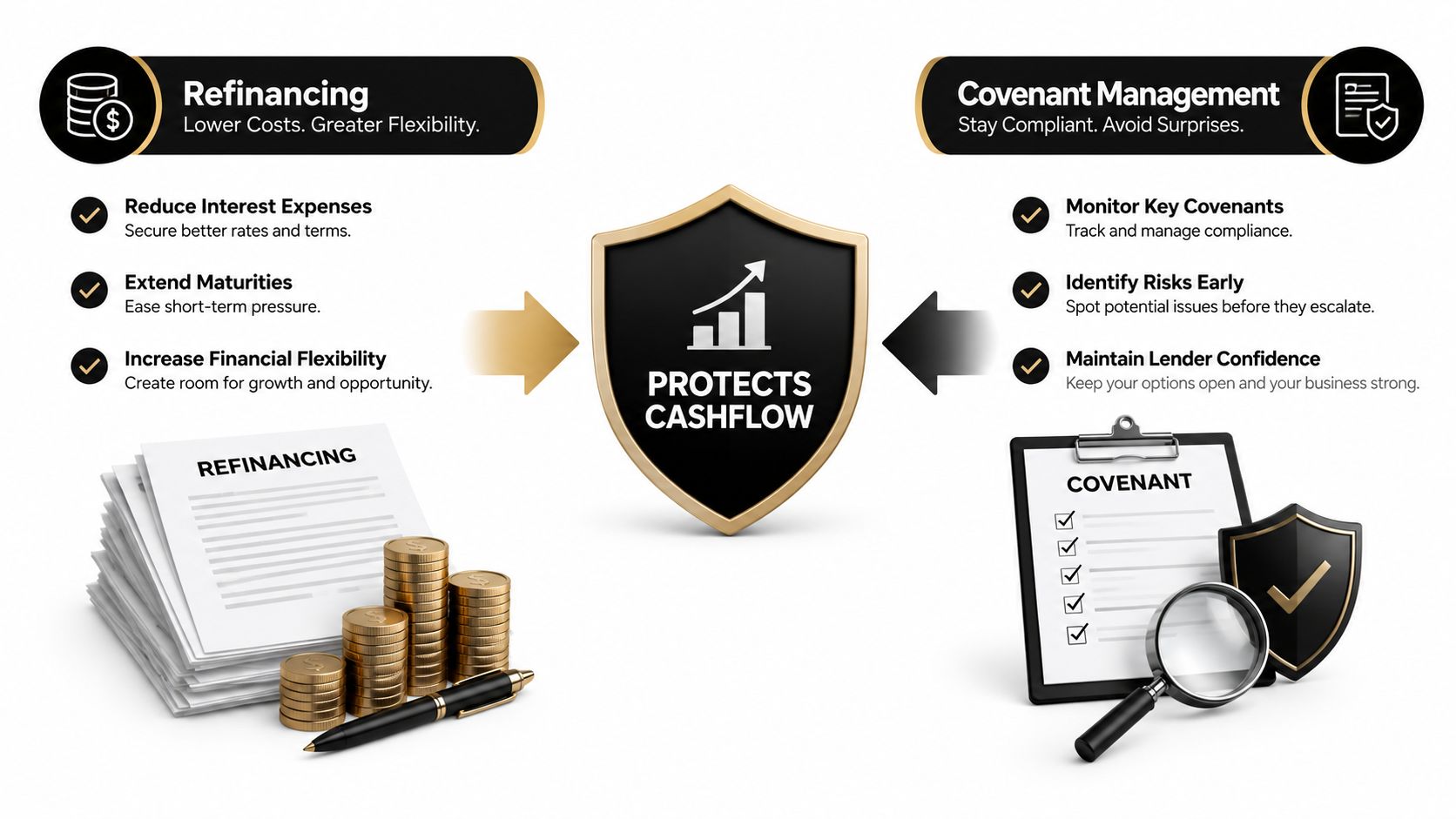
Some businesses don't need more hustle. They need a better debt structure.
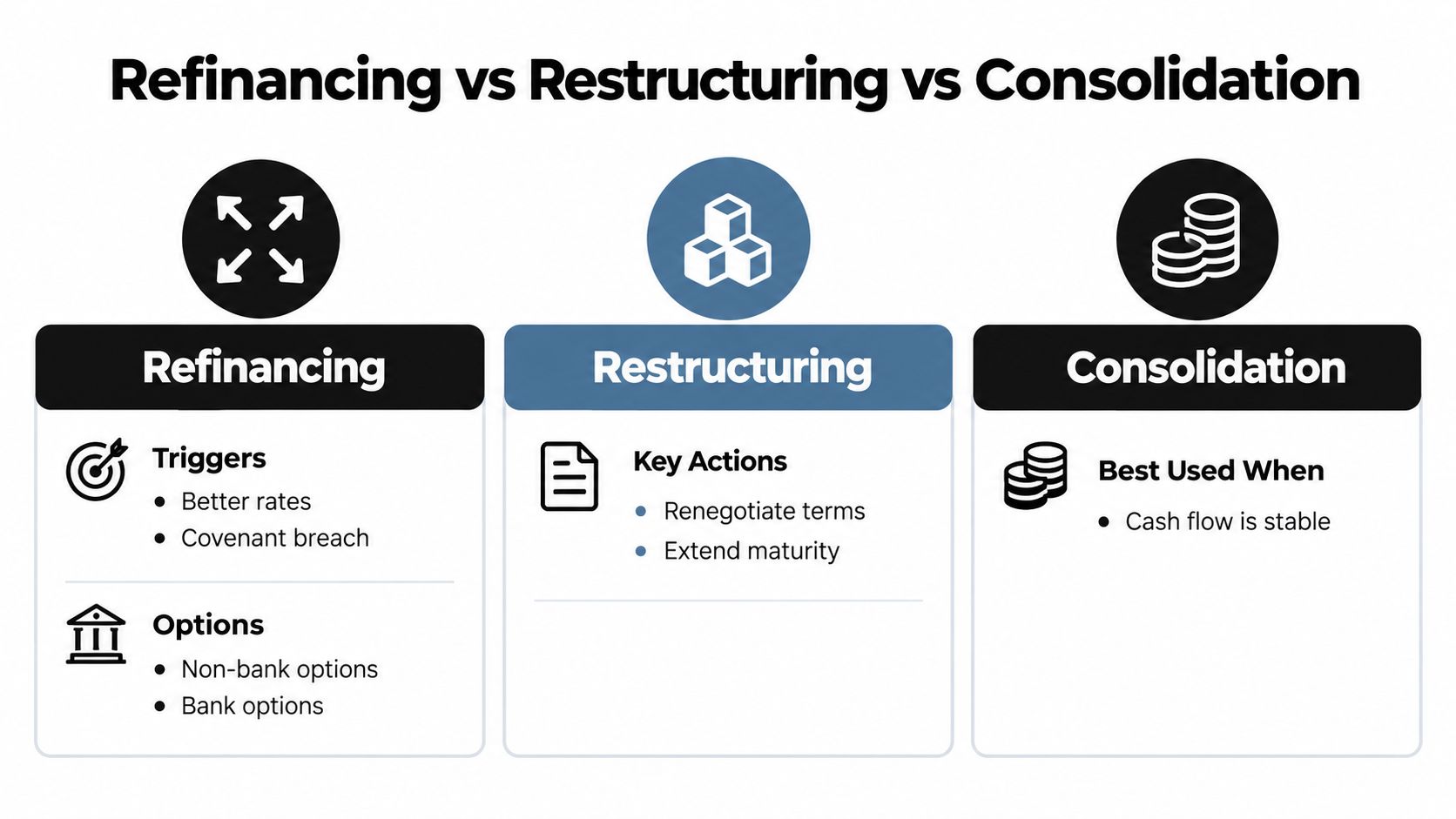
That's where founders often confuse three different moves: refinancing, restructuring, and consolidation. They are not interchangeable.
Refinancing works when the business is sound but the facility is wrong
Refinancing makes sense when the debt product no longer matches the business. Common examples include short-term repayments against long-life assets, facilities priced for old risk, or lending structures that don't fit seasonal cashflow.
Use refinancing when:
the business is still commercially viable,
reporting is current,
debt service is possible under a better structure,
the new facility improves cash timing without masking deeper losses.
The key test is simple. Does the refinance create breathing room and preserve control, or does it just postpone a problem you haven't fixed?
Restructuring is for when the operating model has changed
Restructuring goes further. You use it when repayment terms need to be renegotiated because the original assumptions no longer hold. That can mean extending maturity, resetting amortisation, changing repayment profiles, or negotiating revised lender terms around performance triggers.
This isn't a cosmetic move. It requires an honest view of the business model.
Inventory-heavy businesses and service businesses often need different answers even with similar debt loads. A wholesaler may be holding too much cash in stock and need a working-capital reset plus purchasing discipline. A services firm may have decent gross margin but poor billing speed and patchy project recovery. Same stress. Different fix.
Consolidation only helps if cashflow is already stabilising
Consolidation can reduce admin noise and create one cleaner repayment stream. That's useful when you're juggling multiple small fires. But consolidation is dangerous if the core issue is still unresolved.
Don't consolidate debt just to make the pain less visible.
If collections are weak, margins are soft, and stock turns are poor, a new single facility won't solve much. It can make things worse by adding comfort before control.
Covenants need active management, not occasional panic
Many founders treat covenants like a legal appendix until the bank asks a question. Wrong move. Covenant management is weekly finance work.
Track:
Headroom: How close are you to the threshold?
Forecast path: Will the next quarter improve or tighten that gap?
Reporting dates: When does the lender review the numbers?
Trigger assumptions: What happens if revenue slips or debtor receipts delay?
A covenant breach is often visible in the forecast before it appears in the bank's review pack.
Broader debt pressure in Australia is still high. Household debt sat at 177.7% of annual disposable income in the March quarter 2026, up from 174.1% in 2015 and below a peak near 187.7% in June quarter 2018, while the RBA's March 2026 Financial Stability Review also noted that mortgage prepayment buffers remained larger than before the pandemic across income quartiles (RBA Financial Stability Review, March 2026). For founders, the point isn't to compare your business to household borrowers. It's to recognise that debt resilience depends on buffers and shock capacity, not just whether payments are manageable today.
Recent coverage discussed in that same RBA-linked context also noted that insolvencies were up year on year and more than 12,000 insolvencies were recorded in FY24–25. That's why covenant headroom and stress testing matter. “We can pay this month” isn't a financing strategy.
Building a Debt Smart System With Forecasting and KPIs
The clean-up only sticks if debt management becomes part of your operating rhythm. Otherwise, the same pattern returns. Late invoicing. Loose credit terms. Stock creep. Tax drift. Then debt fills the gap again.
A founder doesn't need a more complicated system. A founder needs a repeatable one.
Watch the small set of numbers that actually matter
Use a weekly dashboard built around decision-making, not vanity.
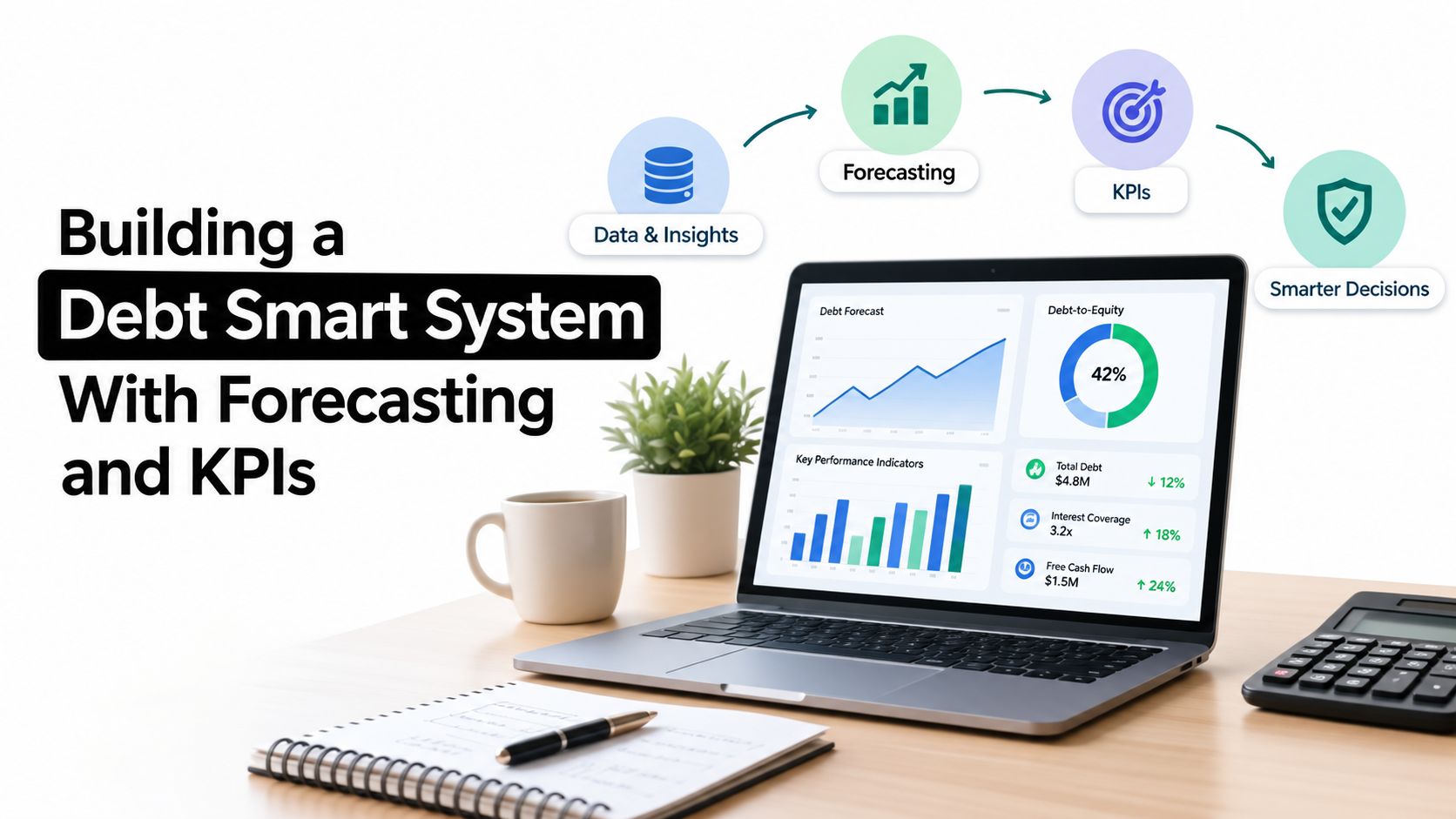
Track at least these items:
Cash runway: How many weeks of practical trading capacity you have at current conditions.
Debtor days and aged receivables: Whether collections are improving or slipping.
Inventory position: What cash is sitting in stock longer than planned.
Debt service capacity: Whether operating cash can support the repayment schedule.
Covenant headroom: How much room remains before lender thresholds become a problem.
If you want the forecasting backbone behind that dashboard, build it into a proper three-way forecast so the profit and loss, balance sheet, and cash movement reconcile.
Set the operating cadence
Keep the rhythm simple and consistent.
Weekly cash review: Compare forecast to actual receipts and payments. Chase variances immediately.
Monthly debt review: Check balances, arrears, minimums, covenant position, and collection outcomes.
Quarterly stress test: Run a downside case for slower receipts, margin pressure, or a sales dip and see what breaks first.
That cadence matters more than another spreadsheet tab.
Build habits that stop relapse
Most debt pressure returns through operational drift. Tighten these habits:
Set customer credit limits up front
Invoice immediately when work is delivered
Escalate overdue accounts on a fixed schedule
Separate account management from collections
Review purchasing against real demand, not optimism
Stop owner drawings that ignore forecast reality
The businesses that manage debt well aren't always the ones with the cheapest facilities. They're the ones with the cleanest cash discipline.
Good debt management is less about heroic repayments and more about making sure cash stops leaking before it reaches the lender.
If your forecast is always late, your debt conversations will always be defensive. Fix that first.
Nexist helps founders turn debt pressure into an operating plan. That includes forecasting, receivables discipline, covenant visibility, ATO and lender preparation, and the weekly finance rhythm that keeps cash in the bank. If you want hands-on help building a debt management system that fits how your business trades, visit Nexist.
debt management guide, SME debt management, business debt restructuring, cash flow management, debt refinancing Australia

" width="24px"/><g d="M 0 24.129 L 0 0.129 L 24 0.129 L 24 24.129 Z M 0 24.129 L 0 0.129 L 24 0.129 L 24 24.129 Z M 24 3 C 24 1.344 22.656 0 21 0 L 3 0 C 1.344 0 0 1.344 0 3 L 0 21 C 0 22.656 1.344 24 3 24 L 21 24 C 22.656 24 24 22.656 24 21 Z M 6.883 8.375 L 2.863 8.375 L 2.863 20.467 L 6.883 20.467 Z M 4.899 2.545 C 3.524 2.545 2.625 3.449 2.625 4.634 C 2.625 5.795 3.496 6.724 4.846 6.724 L 4.872 6.724 C 6.273 6.724 7.146 5.795 7.146 4.634 C 7.12 3.449 6.274 2.545 4.899 2.545 Z M 16.747 8.09 C 14.614 8.09 13.659 9.263 13.124 10.086 L 13.124 8.374 L 9.105 8.374 C 9.159 9.508 9.105 20.466 9.105 20.466 L 13.124 20.466 L 13.124 13.713 C 13.124 13.352 13.15 12.99 13.257 12.732 C 13.547 12.01 14.209 11.262 15.319 11.262 C 16.773 11.262 17.355 12.372 17.355 13.996 L 17.355 20.466 L 21.374 20.466 L 21.374 13.532 C 21.374 9.818 19.391 8.09 16.747 8.09 Z" fill="transparent" height="24.12890599668026px" id="dSFdkJotL" width="24px"><path d="M 0 24 L 0 0 L 24 0 L 24 24 Z" fill="transparent" height="24px" id="wscNJE44G" transform="translate(0 0.129)" width="24px"/><g d="M 0 24.129 L 0 0.129 L 24 0.129 L 24 24.129 Z M 24 3 C 24 1.344 22.656 0 21 0 L 3 0 C 1.344 0 0 1.344 0 3 L 0 21 C 0 22.656 1.344 24 3 24 L 21 24 C 22.656 24 24 22.656 24 21 Z M 6.883 8.375 L 2.863 8.375 L 2.863 20.467 L 6.883 20.467 Z M 4.899 2.545 C 3.524 2.545 2.625 3.449 2.625 4.634 C 2.625 5.795 3.496 6.724 4.846 6.724 L 4.872 6.724 C 6.273 6.724 7.146 5.795 7.146 4.634 C 7.12 3.449 6.274 2.545 4.899 2.545 Z M 16.747 8.09 C 14.614 8.09 13.659 9.263 13.124 10.086 L 13.124 8.374 L 9.105 8.374 C 9.159 9.508 9.105 20.466 9.105 20.466 L 13.124 20.466 L 13.124 13.713 C 13.124 13.352 13.15 12.99 13.257 12.732 C 13.547 12.01 14.209 11.262 15.319 11.262 C 16.773 11.262 17.355 12.372 17.355 13.996 L 17.355 20.466 L 21.374 20.466 L 21.374 13.532 C 21.374 9.818 19.391 8.09 16.747 8.09 Z" fill="transparent" height="24.12890599668026px" id="sTpjGo1tb" width="24px"><path d="M 0 24 L 0 0 L 24 0 L 24 24 Z" fill="transparent" height="24px" id="s7ffpmKOD" transform="translate(0 0.129)" width="24px"/><g d="M 24 3 C 24 1.344 22.656 0 21 0 L 3 0 C 1.344 0 0 1.344 0 3 L 0 21 C 0 22.656 1.344 24 3 24 L 21 24 C 22.656 24 24 22.656 24 21 Z M 6.883 8.375 L 2.863 8.375 L 2.863 20.467 L 6.883 20.467 Z M 4.899 2.545 C 3.524 2.545 2.625 3.449 2.625 4.634 C 2.625 5.795 3.496 6.724 4.846 6.724 L 4.872 6.724 C 6.273 6.724 7.146 5.795 7.146 4.634 C 7.12 3.449 6.274 2.545 4.899 2.545 Z M 16.747 8.09 C 14.614 8.09 13.659 9.263 13.124 10.086 L 13.124 8.374 L 9.105 8.374 C 9.159 9.508 9.105 20.466 9.105 20.466 L 13.124 20.466 L 13.124 13.713 C 13.124 13.352 13.15 12.99 13.257 12.732 C 13.547 12.01 14.209 11.262 15.319 11.262 C 16.773 11.262 17.355 12.372 17.355 13.996 L 17.355 20.466 L 21.374 20.466 L 21.374 13.532 C 21.374 9.818 19.391 8.09 16.747 8.09 Z" fill="transparent" height="24.000006px" id="D0ecaHEcW" transform="translate(0 0)" width="24px"><path d="M 24 3 C 24 1.344 22.656 0 21 0 L 3 0 C 1.344 0 0 1.344 0 3 L 0 21 C 0 22.656 1.344 24 3 24 L 21 24 C 22.656 24 24 22.656 24 21 Z" fill="rgb(55, 184, 218)" height="24.000006px" id="IPLFE6zXx" width="24px"/><path d="M 4.02 0 L 0 0 L 0 12.092 L 4.02 12.092 Z" fill="rgb(255, 255, 255)" height="12.09201px" id="FWhtzAyuY" transform="translate(2.863 8.375)" width="4.02px"/><path d="M 2.274 0 C 0.899 0 0 0.904 0 2.089 C 0 3.25 0.871 4.179 2.221 4.179 L 2.247 4.179 C 3.648 4.179 4.521 3.25 4.521 2.089 C 4.495 0.904 3.649 0 2.274 0 Z" fill="rgb(255, 255, 255)" height="4.17876px" id="VmOsKv4kO" transform="translate(2.625 2.545)" width="4.52095px"/><path d="M 7.641 0 C 5.509 0 4.554 1.173 4.019 1.996 L 4.019 0.284 L 0 0.284 C 0.053 1.419 0 12.376 0 12.376 L 4.019 12.376 L 4.019 5.623 C 4.019 5.262 4.045 4.9 4.151 4.642 C 4.442 3.92 5.103 3.172 6.214 3.172 C 7.667 3.172 8.25 4.282 8.25 5.907 L 8.25 12.376 L 12.269 12.376 L 12.269 5.442 C 12.269 1.728 10.286 0 7.641 0 Z" fill="rgb(255, 255, 255)" height="12.37626px" id="n1XUbhaq0" transform="translate(9.105 8.09)" width="12.268830000000001px"/></g></g></g></g></svg>)