What Does a Chief Financial Officer Do? a Guide for AU SMEs
What does a Chief Financial Officer do? We explain the CFO role, strategic value for Australian SMEs, and how a virtual CFO can fix your cash flow and margins.
Ansh Malhotra

You started the business to build something valuable, not to spend your week checking the bank balance, chasing overdue invoices, and wondering why profit on paper still feels tight in practice.
For a lot of Australian founders, that's the point where the business begins to feel heavier. Stock arrives before cash does. Margins look acceptable until freight, discounting, write-offs, and slow-moving inventory drag them down. One large supplier payment can wipe out your comfort for the month. You end up as the financial watchman of the company, guarding the gate every day, reacting instead of leading.
That's usually when the question changes from “Do we need better bookkeeping?” to “What does a Chief Financial Officer do?”
A proper CFO doesn't just keep score. They turn the numbers into operating decisions. They help you see what's coming, where cash is getting trapped, which products or jobs are carrying the business, and which ones are draining it. They build the systems, reporting rhythm, and decision framework that let the owner stop hovering over every dollar.
For inventory-heavy SMEs, this matters even more. Cash doesn't only disappear through poor spending. It gets stuck in stock, in weak purchasing discipline, in underpriced product lines, in receivables that drift, and in processes no one has tightened because everyone is too busy.
A CFO's real value is moving the founder from watchman to visionary. Less guesswork. More control. More cash in the bank. More time to make commercial decisions that grow the business.
Table of Contents
Introduction From Watchman to Visionary
Founders rarely notice the shift straight away. At first, keeping a close eye on every dollar feels responsible. Then the business grows and that habit becomes a bottleneck. Every purchasing decision lands on your desk. Every cash dip feels personal. Every month-end result arrives too late to fix anything.
That's the trap of operating as a watchman. You're protecting the business, but you're also stuck inside it.
For inventory-heavy SMEs, the pressure is sharper. You can be busy, shipping product, and still feel short of cash. Stock can look like an asset in the accounts while behaving like a handbrake in the business. If your reporting isn't timely and your margins aren't clear, you end up making decisions from instinct. Sometimes instinct is useful. It's not a finance system.
A CFO changes the role of finance inside the company. Instead of using reports to explain surprises after the fact, they build a rhythm that helps you make better calls before those surprises hit. They connect pricing, purchasing, receivables, staffing, and growth plans back to one commercial question. What puts real cash in the bank without breaking the business?
Most founders don't need more spreadsheets. They need fewer blind spots.
That's why a CFO isn't just for large corporates. In Australia, the CFO is recognised as the highest-ranking finance position in an organisation, responsible for capital structure, funding, investment opportunities, cost management, long-term planning, forecasting, and risk management, while overseeing the finance function and advising the CEO and board, as outlined in Randstad's CFO profile for Australia.
For an SME, that same logic applies at a different scale. The title matters less than the function. Someone has to own financial clarity, convert numbers into action, and help the founder step back from daily financial firefighting. That's the shift from watchman to visionary.
Beyond the Balance Sheet A CFO's Dual Role
A lot of business owners still picture the CFO as a more senior accountant. That misses the point. The modern CFO carries two jobs at once. They are both financial steward and strategic advisor.
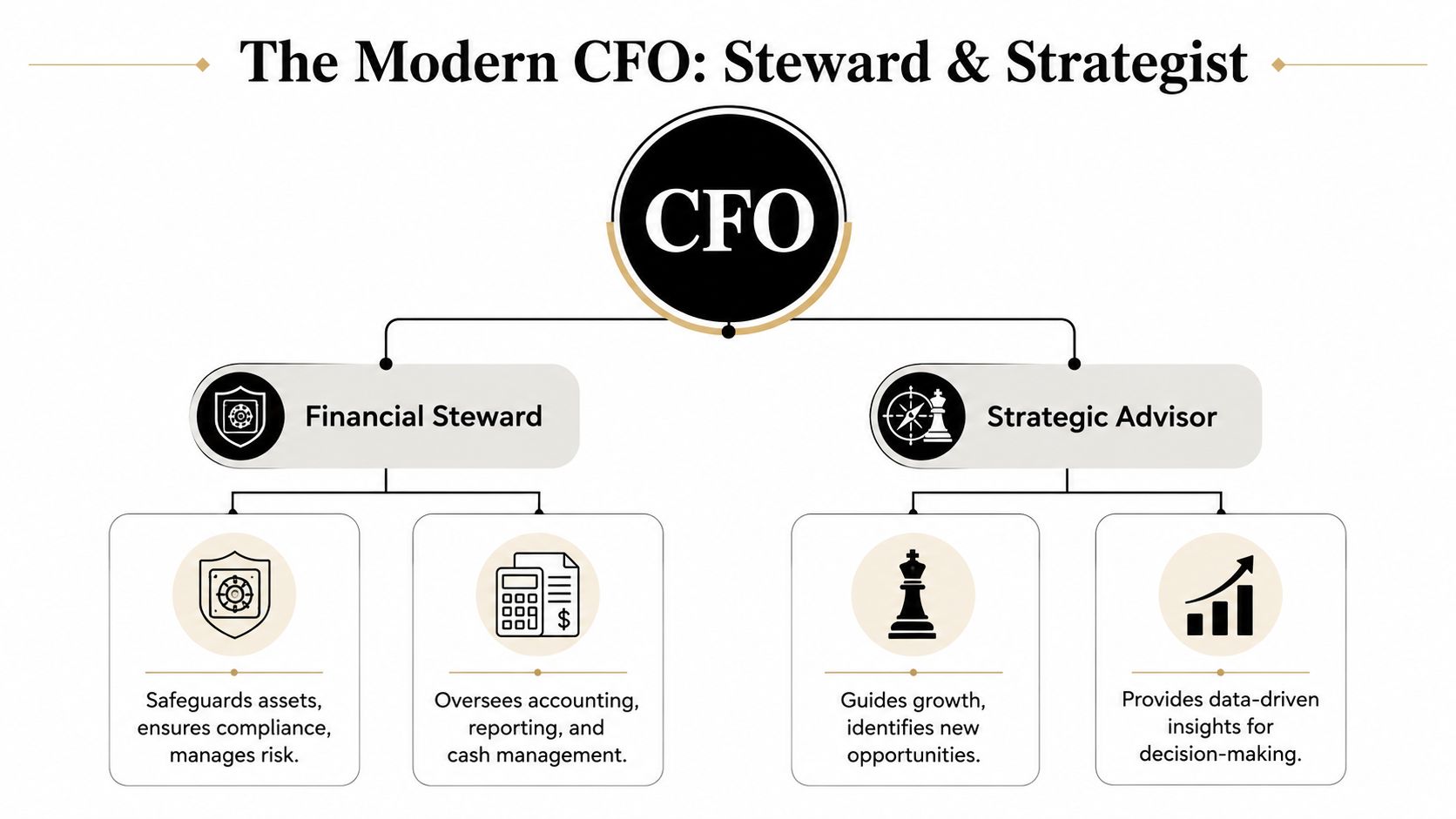
The easiest way to think about it is this. The CEO is the captain of the ship. The CFO has to be both the engineer who keeps the vessel sound and the navigator who helps choose the route.
The steward role protects the business
The steward side is the discipline layer; here, the CFO makes sure the financial foundations are solid enough to trust.
That includes work such as:
Cash oversight: knowing the cash position, upcoming obligations, and likely pressure points
Reporting accuracy: making sure the balance sheet, profit and loss, and cash flow reporting reflect reality
Compliance control: overseeing financial reporting obligations, tax processes, and governance discipline
Risk management: protecting assets, tightening controls, and reducing the chance of expensive surprises
In Australian practice, that stewardship role is explicit. Analysis of the CFO role identifies the split between the “steward” function of tracking cash flows, managing balance sheets, and ensuring income statement accuracy, and the strategic role discussed below in TOA Global's guide to the CFO role.
If you're trying to separate responsibilities inside your finance team, HireAccountants explains CFO vs Controller in a useful way. It's a practical distinction. The controller owns the quality and discipline of the financial records. The CFO uses that information to guide the business.
The strategic advisor role shapes what happens next
Once the numbers can be trusted, the CFO's second job begins. This is the forward-looking side. They help shape decisions before money is spent, before stock is ordered, and before growth creates strain.
A strategic CFO will weigh questions like:
Should you fund growth through debt, internal cash generation, or a slower rollout?
Which product lines or customers deserve more working capital?
What happens to cash if sales rise but inventory turns slow down?
When should you hire, and when should you tighten operations first?
Practical rule: If finance only reports history, it's incomplete. A CFO should help management decide what to do next.
That's the answer to what a Chief Financial Officer does. They keep the financial engine safe, then use it to steer the company. One without the other creates problems. Good controls without strategy make the business cautious and slow. Ambition without controls usually creates avoidable mess.
The CFO's Strategic Toolkit for Driving SME Growth
A CFO's work becomes most visible when the business is growing and cash gets tighter instead of easier. That's common in wholesale, ecommerce, retail, manufacturing, and trade businesses. More sales can create more stress if receivables stretch, stock builds up, or pricing discipline slips.

Cash flow starts before the bank account
Most owners watch the bank balance. CFOs watch the drivers behind it.
That means looking at receivables ageing, supplier terms, purchasing cadence, stock holdings, payment timing, and upcoming tax obligations together. A cash problem rarely starts in the bank account. It usually starts earlier in operations.
For inventory-heavy SMEs, a lot of trapped cash sits in inventory. A CFO will question reorder points, supplier minimums, slow-moving stock, and whether your sales plan and purchasing plan are aligned. In some businesses, the answer is tighter procurement discipline. In others, it's better collections, staged purchasing, or cleaning up unprofitable SKUs.
Margin analysis shows where profit is leaking
Revenue can hide weak economics. That's why a CFO gets underneath the headline sales number.
They'll break the business down by product line, channel, customer group, or job type. Then they test what's really left after direct costs, freight, discounting, rework, wastage, and servicing overhead. This is often where founders discover that their busiest line isn't their most valuable one.
The practical outcome isn't just a report. It's action. Price adjustments, buying changes, product rationalisation, supplier renegotiation, or changes to fulfilment and workflow.
Forecasting turns uncertainty into decisions
A good forecast isn't a ceremonial budget that gets ignored after approval. It's a working model of the business.
In Commonwealth entities, CFOs are expected to handle rigorous financial reporting and budgeting duties, while also obtaining funding, recommending mergers and acquisitions, and working with department heads to analyse financial data for budgets and revenue decisions, according to the Victorian Auditor-General's overview of CFO responsibilities. SMEs need the same mindset, adjusted for size. Forecasts should support real decisions, not satisfy a filing cabinet.
A practical setup usually includes:
A rolling cash forecast: so management can see pressure early
Scenario planning: so a slower sales month or larger stock buy doesn't create panic
Funding planning: so debt, owner drawings, and growth plans don't clash
Operating assumptions: so sales, stock, wages, and overheads move from guesswork to controlled inputs
For founders building that planning muscle, strategic and financial planning is where the finance function starts becoming useful.
One niche example worth looking at is optimising Aave crypto treasury operations. It sits outside traditional SME finance, but it's a useful reminder that treasury management always comes back to the same principles: control liquidity, understand risk, and match funding decisions to operating reality.
KPIs should drive action not decoration
Most KPI dashboards fail because they answer the wrong question. They look polished, but they don't change behaviour.
A CFO chooses measures that force a decision. In an inventory business, that might mean watching stock ageing, purchasing accuracy, gross margin by line, receivables drift, cash conversion pressure, and forecast variance. In a services business, it may be utilisation, labour recovery, project margin, and debtor days.
The right KPI isn't the one that looks impressive in a board pack. It's the one that tells a manager what to fix this week.
This is also where firms such as Nexist often sit. The role isn't just producing reports. It's building finance-first operating systems that connect forecasting, cash control, reporting, inventory discipline, and workflow decisions into one management rhythm.
A Day in the Life CFO Tasks and Deliverables
The phrase “Chief Financial Officer” can still sound abstract, so it helps to make it concrete. What does a CFO do in a normal month? Less glamour than commonly perceived. More commercial judgment than commonly expected.

What happens during the week
On a daily or weekly cadence, the CFO usually stays close to the moving parts that create financial pressure.
That often includes reviewing cash position, checking collections, looking at supplier commitments, questioning unusual spend, and helping management decide whether a purchase should happen now, later, or not at all. In a stock business, they'll often pay attention to purchase orders, inventory build-up, and whether upcoming sales justify the working capital being committed.
They also act as a translator between departments. Sales wants inventory available. Operations wants fewer disruptions. The owner wants growth without a cash crunch. The CFO sits in that tension and forces trade-offs into the open.
A typical weekly touchpoint might involve:
Cash review: current cash, expected inflows, expected outflows, and near-term pressure points
Working capital review: receivables, payables, stock movement, and overdue problem areas
Decision support: pricing calls, supplier negotiations, hiring timing, or capital purchases
Exception spotting: unusual margin changes, process failures, or reporting gaps that need action
What gets delivered each month
Month-end is where the CFO earns trust. If the reporting is late, confusing, or disconnected from operations, management usually falls back to instinct.
A good monthly cycle produces a small set of clear deliverables:
Deliverable | Why it matters |
|---|---|
Management P&L with commentary | Explains what changed and why |
Balance sheet review | Shows what's sitting in stock, debtors, creditors, and liabilities |
Cash flow view | Connects profit to actual movement of cash |
KPI dashboard | Highlights the few numbers management should act on |
Updated forecast | Adjusts decisions before problems harden |
One of the most useful tools here is a three-way forecast, which links profit and loss, balance sheet, and cash flow into a single model. If you want a practical breakdown, this guide to a three-way forecast explains why it's often the difference between seeing trouble early and getting blindsided later.
Here's a short explainer that does a decent job of showing how the role extends beyond compliance and into commercial leadership:
What changes at quarter end and year end
Quarterly and annual work is less about routine and more about direction, with the CFO helping to shape the next phase of the business.
That can mean board reporting, annual budgeting, lender conversations, tax planning, capital planning, restructuring the chart of accounts, reviewing finance systems, or tightening internal processes that have become messy under growth. For some businesses, it also means stress-testing expansion plans before management commits cash.
A useful CFO deliverable doesn't just tell you where the money went. It tells you what to stop, what to fix, and what to fund next.
The Tipping Point 5 Signs Your Business Needs a CFO
Most businesses don't wake up one day and formally decide they've reached CFO stage. It usually arrives as friction. The numbers feel harder to trust. Cash gets tighter even when sales are strong. The owner spends more time in finance than they ever intended.
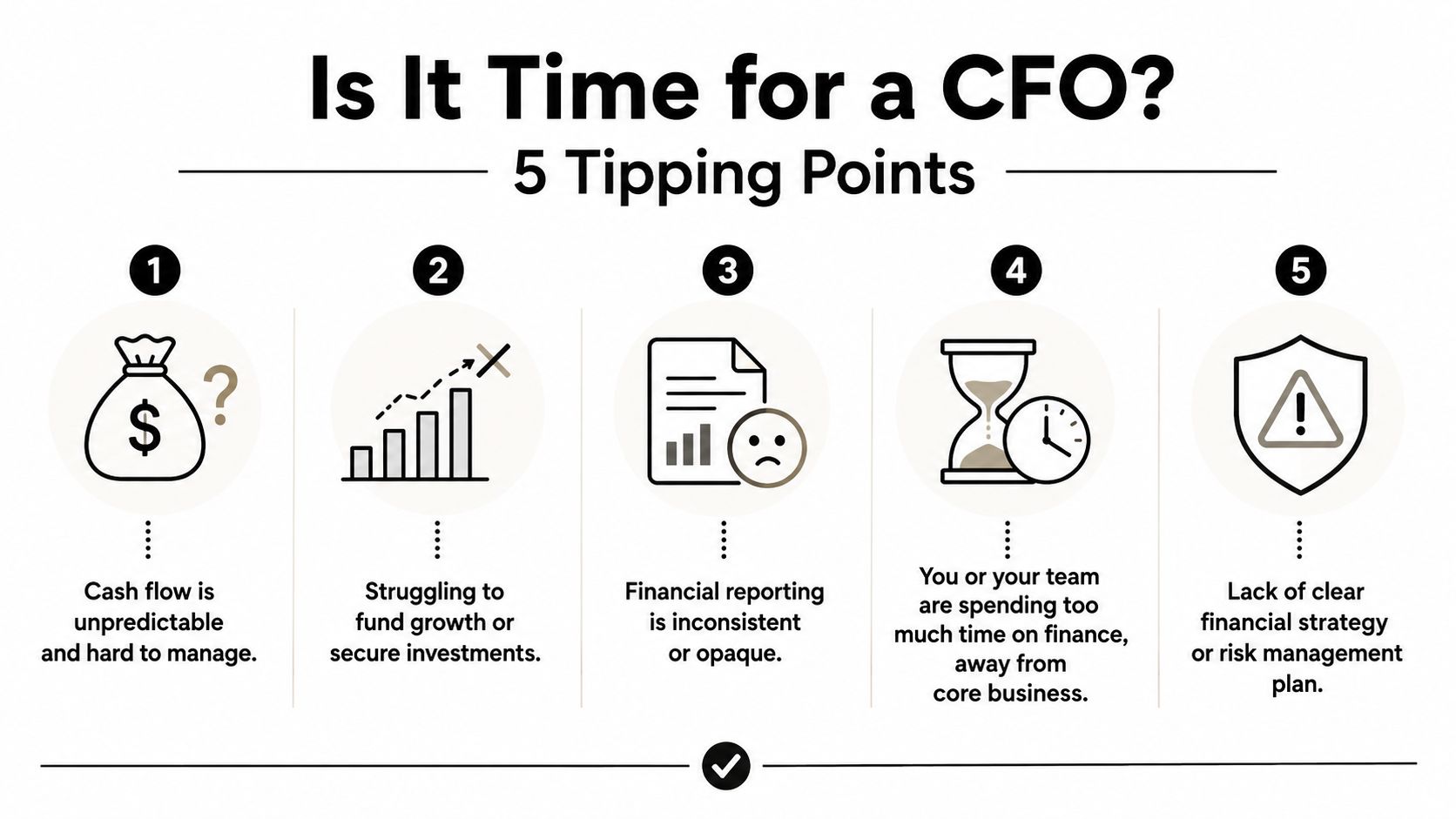
Five signs the business has outgrown reactive finance
You don't have a forecast you trust
If next month's cash position is mostly a guess, management is operating blind. The issue isn't only uncertainty. It's that every hiring, stock, pricing, and spending decision becomes slower and riskier because nobody can see the knock-on effect.Profit looks acceptable but cash keeps surprising you
This is one of the clearest warning signs. It usually points to working capital pressure, margin leakage, poor timing, or weak process discipline. If you regularly ask, “Where did the cash go?” the business needs stronger financial control than bookkeeping alone can provide.A major growth move is on the table
New sites, larger contracts, expanded ranges, equipment purchases, debt discussions, or investor conversations all raise the stakes. At that point, the business needs more than historical reporting. It needs modelling, scenario planning, and a clear funding path.Inventory is eating your flexibility
If too much money is tied up in stock, every other decision gets squeezed. Owners often misread this as a sales problem, when it's really a purchasing, forecasting, or SKU discipline problem. A CFO helps separate useful stock from expensive clutter.You're spending too much leadership time on finance admin
When the founder becomes the default approver, collector, analyst, and worrier-in-chief, the business loses strategic capacity. The issue isn't just workload. It's opportunity cost. Time spent patching finance problems is time not spent leading sales, team capability, customer experience, or expansion.
If finance depends on the owner's memory and vigilance, the business is still fragile.
These signs don't mean you need a large internal finance department. They mean someone needs to own the commercial logic of the numbers. That's the tipping point.
Full-Time vs Virtual CFO The Smart Model for Australian SMEs
A common founder scenario looks like this. Sales are growing, stock is arriving in bigger volumes, cash feels tighter than it should, and the finance load keeps landing back on the owner. The business needs better decisions, not another expensive salary before the role is fully justified.
That is the actual trade-off.
A full-time CFO can be the right call for a business with daily executive-level finance demands, multiple entities, active funding work, or a sizeable internal team that needs constant leadership. But many Australian SMEs, especially inventory-heavy businesses, sit in the middle. They need senior judgement on cashflow, margins, stock, supplier terms, and planning, yet they do not need that capacity five days a week.
In Australia, the average annual remuneration package for a CFO is $210,000, with entry-level salaries starting at approximately $200,000 and increasing to over $220,000 for highly experienced professionals, according to Randstad's Australian CFO salary guide.
For an SME, that cost is only part of the decision. A single executive hire can still leave execution gaps if the reporting pack is weak, inventory controls are inconsistent, or no one is driving follow-through across the finance function. I have seen founders hire senior finance talent too early, then feel disappointed because the business was still missing process discipline and timely data.
That is why the virtual model works well for many growth-stage SMEs. It gives the business access to CFO-level thinking, but the value is in what happens after the numbers are reviewed. Cash forecasting gets tighter. Stock buying gets challenged. Margin issues get surfaced earlier. Board and bank conversations get clearer. A provider such as Nexist can also help translate strategy into weekly and monthly actions, which is often what busy founders need.
Full-Time CFO vs Virtual CFO at a Glance
Attribute | Full-Time CFO | Virtual CFO (vCFO) |
|---|---|---|
Cost structure | Fixed executive salary and employment overhead | Flexible service arrangement based on scope |
Commitment | Permanent hire | Adjustable engagement |
Access model | One senior individual | Often access to a broader team and systems support |
Best fit | Larger or more complex businesses needing daily executive presence | SMEs needing strategic guidance without full-time overhead |
Scalability | Harder to right-size quickly | Easier to increase or reduce scope as needs change |
The best model depends on business readiness, not just budget. If the company still needs sharper reporting rhythms, cleaner inventory visibility, and better working-capital control, a virtual CFO is often the smarter first step. It helps the owner move from financial watchman to visionary leader because someone is finally turning the numbers into decisions, priorities, and cash outcomes.
If you want a practical view of how that setup works, this guide to a virtual Chief Financial Officer explains the model in more detail. Founders who are still weighing CFO support against accounting-only support may also find ClaimKit's certified accountant guide useful for understanding where day-to-day accounting ends and strategic finance leadership begins.
Hiring a CFO Pricing Timelines and Questions to Ask
Once a founder decides they need CFO-level support, the next challenge is choosing the right model and the right person. Many businesses tend to get distracted by credentials alone. Experience matters, but fit matters just as much. The CFO has to understand your commercial engine, not just your chart of accounts.
What pricing usually reflects
Pricing for CFO support varies because the workload varies. A business with simple reporting and stable cash patterns needs something very different from a business carrying stock, juggling suppliers, managing debt, and trying to scale.
As a benchmark for the full-time market, CFO roles in Australia can command $220,000 to $350,000 plus Superannuation, reflecting responsibility for both operational reporting and strategic capital structure management, according to Richard Lloyd's Australian CFO market overview.
A virtual arrangement is usually framed around scope rather than title. The fee tends to reflect complexity, reporting cadence, decision support required, and whether the provider is also helping implement systems, cash controls, and process fixes.
That means the cheapest option often isn't the least expensive in practice. If someone produces reports but doesn't help management act on them, the business still carries the cost of indecision.
A practical first 90 days
A good CFO engagement usually settles into three phases.
First phase. Discovery and diagnosis. They review the quality of financial data, current reporting, cash pressure points, stock behaviour, systems, and management rhythm. This stage should uncover where the biggest decision bottlenecks and cash leaks are.
Second phase. Build the core finance engine. That often means improving reporting packs, introducing or tightening forecasts, clarifying KPIs, cleaning up working capital routines, and setting a better monthly cadence.
Third phase. Drive decisions from the numbers. In this phase, finance starts shaping pricing, purchasing, staffing, capital allocation, and growth planning. The value becomes visible because management decisions get faster and cleaner.
If you're also checking foundational qualifications while comparing providers, ClaimKit's certified accountant guide is a reasonable resource for understanding what to verify when you're speaking with finance professionals.
Questions worth asking before you engage anyone
Don't ask only about reports. Ask how they think.
How do you approach cash flow optimisation in an inventory-based business?
How do you identify margin leakage across pricing, freight, discounts, and stock?
What reports will we receive each month, and how will they influence decisions?
How do you build a forecast that management will keep using?
How do you work with operations, sales, and purchasing rather than only finance?
What systems or process changes do you usually recommend to give founders time back?
How do you handle BAS, tax coordination, compliance, and management reporting together?
What would you focus on first in our business?
Strong answers should feel commercial, not theoretical. They should connect finance to action, not just compliance.
If your business is profitable on paper but cash still feels tighter than it should, or you're spending too much time being the watchman, Nexist helps Australian founders build the finance discipline and strategic clarity that turn numbers into action. That includes forecasting, cash flow control, margin visibility, reporting rhythm, and process improvements that free up time while improving decision-making.
what does a chief financial officer do, virtual cfo australia, cfo for smes, financial planning, cash flow management

" width="24px"/><g d="M 0 24.129 L 0 0.129 L 24 0.129 L 24 24.129 Z M 0 24.129 L 0 0.129 L 24 0.129 L 24 24.129 Z M 24 3 C 24 1.344 22.656 0 21 0 L 3 0 C 1.344 0 0 1.344 0 3 L 0 21 C 0 22.656 1.344 24 3 24 L 21 24 C 22.656 24 24 22.656 24 21 Z M 6.883 8.375 L 2.863 8.375 L 2.863 20.467 L 6.883 20.467 Z M 4.899 2.545 C 3.524 2.545 2.625 3.449 2.625 4.634 C 2.625 5.795 3.496 6.724 4.846 6.724 L 4.872 6.724 C 6.273 6.724 7.146 5.795 7.146 4.634 C 7.12 3.449 6.274 2.545 4.899 2.545 Z M 16.747 8.09 C 14.614 8.09 13.659 9.263 13.124 10.086 L 13.124 8.374 L 9.105 8.374 C 9.159 9.508 9.105 20.466 9.105 20.466 L 13.124 20.466 L 13.124 13.713 C 13.124 13.352 13.15 12.99 13.257 12.732 C 13.547 12.01 14.209 11.262 15.319 11.262 C 16.773 11.262 17.355 12.372 17.355 13.996 L 17.355 20.466 L 21.374 20.466 L 21.374 13.532 C 21.374 9.818 19.391 8.09 16.747 8.09 Z" fill="transparent" height="24.12890599668026px" id="dSFdkJotL" width="24px"><path d="M 0 24 L 0 0 L 24 0 L 24 24 Z" fill="transparent" height="24px" id="wscNJE44G" transform="translate(0 0.129)" width="24px"/><g d="M 0 24.129 L 0 0.129 L 24 0.129 L 24 24.129 Z M 24 3 C 24 1.344 22.656 0 21 0 L 3 0 C 1.344 0 0 1.344 0 3 L 0 21 C 0 22.656 1.344 24 3 24 L 21 24 C 22.656 24 24 22.656 24 21 Z M 6.883 8.375 L 2.863 8.375 L 2.863 20.467 L 6.883 20.467 Z M 4.899 2.545 C 3.524 2.545 2.625 3.449 2.625 4.634 C 2.625 5.795 3.496 6.724 4.846 6.724 L 4.872 6.724 C 6.273 6.724 7.146 5.795 7.146 4.634 C 7.12 3.449 6.274 2.545 4.899 2.545 Z M 16.747 8.09 C 14.614 8.09 13.659 9.263 13.124 10.086 L 13.124 8.374 L 9.105 8.374 C 9.159 9.508 9.105 20.466 9.105 20.466 L 13.124 20.466 L 13.124 13.713 C 13.124 13.352 13.15 12.99 13.257 12.732 C 13.547 12.01 14.209 11.262 15.319 11.262 C 16.773 11.262 17.355 12.372 17.355 13.996 L 17.355 20.466 L 21.374 20.466 L 21.374 13.532 C 21.374 9.818 19.391 8.09 16.747 8.09 Z" fill="transparent" height="24.12890599668026px" id="sTpjGo1tb" width="24px"><path d="M 0 24 L 0 0 L 24 0 L 24 24 Z" fill="transparent" height="24px" id="s7ffpmKOD" transform="translate(0 0.129)" width="24px"/><g d="M 24 3 C 24 1.344 22.656 0 21 0 L 3 0 C 1.344 0 0 1.344 0 3 L 0 21 C 0 22.656 1.344 24 3 24 L 21 24 C 22.656 24 24 22.656 24 21 Z M 6.883 8.375 L 2.863 8.375 L 2.863 20.467 L 6.883 20.467 Z M 4.899 2.545 C 3.524 2.545 2.625 3.449 2.625 4.634 C 2.625 5.795 3.496 6.724 4.846 6.724 L 4.872 6.724 C 6.273 6.724 7.146 5.795 7.146 4.634 C 7.12 3.449 6.274 2.545 4.899 2.545 Z M 16.747 8.09 C 14.614 8.09 13.659 9.263 13.124 10.086 L 13.124 8.374 L 9.105 8.374 C 9.159 9.508 9.105 20.466 9.105 20.466 L 13.124 20.466 L 13.124 13.713 C 13.124 13.352 13.15 12.99 13.257 12.732 C 13.547 12.01 14.209 11.262 15.319 11.262 C 16.773 11.262 17.355 12.372 17.355 13.996 L 17.355 20.466 L 21.374 20.466 L 21.374 13.532 C 21.374 9.818 19.391 8.09 16.747 8.09 Z" fill="transparent" height="24.000006px" id="D0ecaHEcW" transform="translate(0 0)" width="24px"><path d="M 24 3 C 24 1.344 22.656 0 21 0 L 3 0 C 1.344 0 0 1.344 0 3 L 0 21 C 0 22.656 1.344 24 3 24 L 21 24 C 22.656 24 24 22.656 24 21 Z" fill="rgb(55, 184, 218)" height="24.000006px" id="IPLFE6zXx" width="24px"/><path d="M 4.02 0 L 0 0 L 0 12.092 L 4.02 12.092 Z" fill="rgb(255, 255, 255)" height="12.09201px" id="FWhtzAyuY" transform="translate(2.863 8.375)" width="4.02px"/><path d="M 2.274 0 C 0.899 0 0 0.904 0 2.089 C 0 3.25 0.871 4.179 2.221 4.179 L 2.247 4.179 C 3.648 4.179 4.521 3.25 4.521 2.089 C 4.495 0.904 3.649 0 2.274 0 Z" fill="rgb(255, 255, 255)" height="4.17876px" id="VmOsKv4kO" transform="translate(2.625 2.545)" width="4.52095px"/><path d="M 7.641 0 C 5.509 0 4.554 1.173 4.019 1.996 L 4.019 0.284 L 0 0.284 C 0.053 1.419 0 12.376 0 12.376 L 4.019 12.376 L 4.019 5.623 C 4.019 5.262 4.045 4.9 4.151 4.642 C 4.442 3.92 5.103 3.172 6.214 3.172 C 7.667 3.172 8.25 4.282 8.25 5.907 L 8.25 12.376 L 12.269 12.376 L 12.269 5.442 C 12.269 1.728 10.286 0 7.641 0 Z" fill="rgb(255, 255, 255)" height="12.37626px" id="n1XUbhaq0" transform="translate(9.105 8.09)" width="12.268830000000001px"/></g></g></g></g></svg>)