Master Revenue Forecasting for Australian SMEs
Master revenue forecasting for your Australian SME. Build accurate models, explore top-down/bottom-up methods, and link to cash flow. Practical 2026 guide.
Ansh Malhotra

You're probably making at least one major decision this month by looking at your bank balance and hoping the timing works out. Can we afford another staff member? Should we place the next stock order now? Is this the right moment to spend more on ads, or should we hold back until receivables clear?
That approach feels practical because the bank balance is real. The problem is that it only tells you where the business has been, not where it's heading. I've seen founders with strong sales momentum delay good decisions because cash looked tight for a week. I've also seen profitable businesses overcommit on stock, labour, or overhead because recent sales created a false sense of safety.
Revenue forecasting fixes that, but not in the way many founders expect. It isn't about producing a perfect number for the next quarter and pretending uncertainty has disappeared. It's about building a decision tool that helps you act earlier, with less stress and fewer expensive surprises.
A useful forecast tells you whether likely sales can support payroll, whether demand justifies inventory purchases, and whether growth will create a cash squeeze before it creates more profit. If you need a simple way to tie those decisions into cash timing, this cash flow forecast template is a practical starting point.
The founders who get the most value from forecasting don't obsess over prediction for its own sake. They track the inputs, revisit assumptions, and watch the operational signals around the numbers. If you want a sharper way to review whether the forecast is holding up, these key forecasting metrics are worth understanding.
Table of Contents
Stop Guessing Start Forecasting
A founder runs a busy wholesale business. Sales are lumpy, customer payments don't always arrive when expected, and supplier lead times keep shifting. One week the business looks flush. The next week it feels exposed. The owner delays a stock purchase, then misses a sales window because popular lines run out. A month later, they overcorrect and buy too much of the slow-moving range, tying up cash that should've gone to payroll and marketing.
That isn't poor management. It's what happens when the business is being steered through the rear-view mirror.
The bank balance is not a strategy
Founders often rely on three inputs when revenue feels uncertain:
Recent sales: “Last month was good, so this month should be fine.”
Pipeline optimism: “There are a few strong deals that should close.”
Cash in the bank: “We'll know if there's a problem when the account gets tight.”
Each one is incomplete on its own. Recent sales can hide seasonality. A pipeline can be full of deals that aren't ready to convert. Cash can look healthy while future obligations are stacking up.
A good forecast doesn't remove uncertainty. It gives you enough visibility to respond before uncertainty becomes a problem.
That's the shift. Revenue forecasting isn't a finance exercise you do for the board, the bank, or your accountant. It's a management habit that helps you decide when to hire, when to buy, when to push growth, and when to protect cash.
Prepared beats precise
The best founders I've worked with don't ask, “Can this forecast guarantee what will happen?” They ask better questions:
What assumptions are carrying the number?
What would need to go right for this target to land?
What happens operationally if demand rises faster than expected?
What's the first move if sales soften?
That mindset matters because a forecast earns its value through decisions, not mathematics. If it tells you to order stock earlier, slow recruitment, follow up overdue invoices harder, or stagger a marketing campaign, it's doing its job.
Choosing the Right Revenue Forecasting Model
The model matters because each business generates revenue differently. A suburban café, an agency, a wholesaler, and a SaaS company don't need the same forecast structure. If you pick the wrong model, the spreadsheet becomes busy but unhelpful.
Match the model to the business
Top-down forecasting starts with market opportunity, then narrows toward the share you believe you can win. This model suits newer businesses, new product lines, or expansion into unfamiliar markets where internal history is thin. It can help with strategic planning, but it becomes dangerous when founders treat ambition as evidence.
A national e-commerce brand entering a new category might start with top-down thinking. How large is the addressable segment? Which channels can realistically reach it? What share is plausible given price point, fulfilment capacity, and competition? Useful for setting direction, less useful for ordering next month's stock.
Bottom-up forecasting starts with known drivers inside the business. Number of leads. Conversion rate. Average order value. Jobs completed per team. Seats filled per day. This is the most practical model for many Australian SMEs because it links revenue to actual operating activity.
A local café can forecast from covers, average spend, day-part mix, and trading days. A trade business can forecast from quoted work, crew capacity, and close likelihood. A wholesaler can build from customer orders, rep pipelines, and reorder patterns.
Cohort analysis groups customers by shared starting point, then tracks their behaviour over time. This is especially useful when retention, repeat purchasing, or customer maturity shapes revenue. If customers bought once and rarely returned, your forecast should look very different from a business where repeat orders deepen over time.
Subscription or SaaS forecasting focuses on recurring revenue mechanics. New sales matter, but so do renewals, downgrades, churn, and expansion. This model is best when customer revenue continues beyond the initial sale and the timing of recurring billing matters operationally.
If you're also thinking about demand patterns, seasonality, and purchasing behaviour, this guide to mastering demand forecasting for businesses can add a useful operations lens alongside revenue forecasting.
Revenue Forecasting Models at a Glance
Model | Best For | Key Advantage | Key Challenge |
|---|---|---|---|
Top-down | New ventures, new markets, strategic planning | Fast way to frame opportunity | Easy to overestimate what the business can actually capture |
Bottom-up | Established SMEs with sales or operating data | Closely tied to real business drivers | Needs clean inputs and regular updating |
Cohort analysis | Businesses with repeat buying or customer lifecycle patterns | Reveals how customer groups behave over time | Can be overcomplicated if customer data is messy |
Subscription or SaaS | Recurring revenue businesses | Captures renewals, churn, and expansion logic | Breaks down if billing and customer data don't line up |
What usually goes wrong
Most forecasting failures aren't caused by weak formulas. They come from mismatch.
Practical rule: If the model can't be explained in plain language to the person responsible for sales, stock, or staffing, it's too complicated for current use.
A few common examples:
Top-down in an operational forecast: Good for investor conversations, weak for weekly management decisions.
Bottom-up without capacity limits: Sales assumptions look strong, but the team can't fulfil the work.
Cohort analysis without reliable customer history: The logic is sound, the data isn't.
Subscription models that ignore collections timing: Revenue may look steady while cash timing remains uneven.
The right model is the one that matches how your business earns, delivers, and collects revenue. That's a much better starting point than trying to use the most complex-looking framework.
Building Your Forecast From Solid Assumptions
A forecast is only as strong as the assumptions under it. If those assumptions live in someone's head, the model becomes a black box. When results drift, nobody knows why.

What inputs belong in the model
Start with the sources that already exist in the business. Don't wait for perfect systems.
Historical sales data: Pull actual revenue by month, customer, product line, channel, or service category from Xero, MYOB, or your ERP.
Sales pipeline information: Use your CRM if you have one. If not, a disciplined spreadsheet still works if it tracks stage, timing, value, and owner.
Marketing plans: Planned campaigns affect demand. If spend is changing, the forecast should reflect that assumption rather than treating revenue as independent.
Seasonality and operating context: School holidays, EOFY cycles, weather exposure, supplier shutdowns, and customer buying patterns all shape timing.
Capacity constraints: There's no point forecasting sales growth that the team, stock position, or production schedule can't support.
This is where a connected view matters. A proper three-way forecast links profit, cash flow, and balance sheet so the revenue line doesn't sit in isolation.
How to document assumptions properly
Write each key assumption in plain English. That sounds obvious, but many businesses skip it.
Instead of burying logic in formulas, document statements such as:
Website enquiries are expected to improve because a campaign goes live in a specific month.
A major customer is likely to reorder on its normal cycle unless a contract review changes timing.
One sales rep will carry a reduced book while onboarding, so conversion may lag early.
A supplier delay may restrict stock availability for selected SKUs.
The discipline of writing assumptions down changes the conversation. Leaders can challenge them, sales can update them, and operations can prepare around them.
According to a study of Australian SMEs, businesses that formally document the assumptions behind their financial forecasts are 60% more likely to meet or exceed their revenue targets (Nexist data-driven insights).
Assumptions should be visible enough that another person can update the forecast without guessing what the original builder meant.
A good practice is to keep a separate assumptions tab with four fields: the assumption itself, the rationale, the owner, and the review date. That single habit prevents a surprising amount of confusion later.
Stress-Testing With Scenario and Contingency Plans
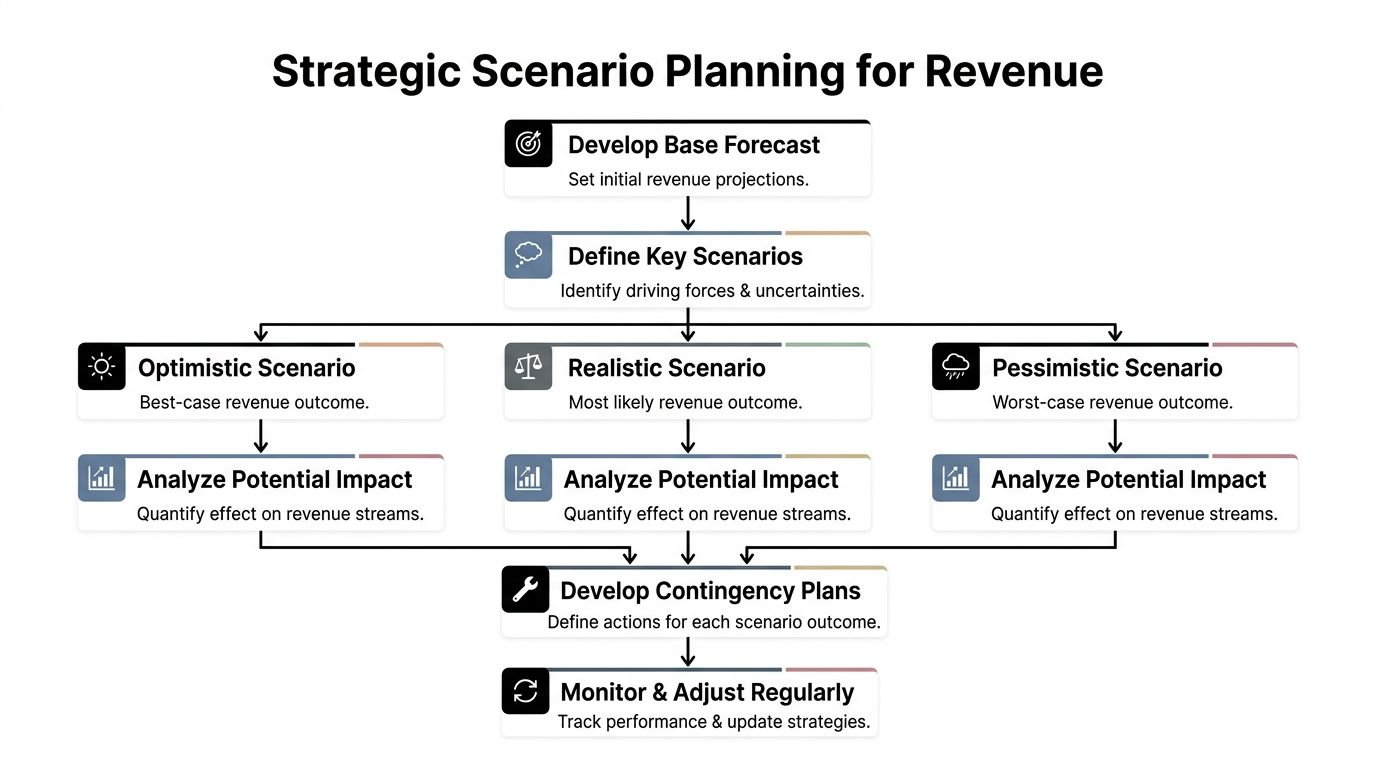
A single forecast line is fragile. The first delayed customer payment, missed campaign, or supplier problem can make it irrelevant. Scenario planning makes the forecast durable.
Build three versions, not one
Most SMEs only need three scenarios:
Base case: What you believe is most likely based on current evidence.
Best case: What happens if key assumptions break in your favour.
Worst case: What happens if sales soften, timing slips, or costs rise while revenue underdelivers.
The point isn't to dramatise risk. It's to make uncertainty manageable.
A wholesaler's best case might assume a strong seasonal pull-through and faster reorder timing. The worst case might assume slower collections, a softer product mix, and a late supplier delivery. An agency's best case might assume better utilisation and quicker proposal conversion. The worst case might assume a major client pauses spend and new work takes longer to land.
Turn scenarios into actions
Scenarios only matter if they trigger decisions. Every version of the forecast should answer two questions:
What signal tells us this scenario is happening?
What action do we take if it does?
Don't build scenarios as storytelling exercises. Build them as decision triggers.
A practical contingency list might include:
Hiring hold: Used if the base case starts slipping and workload no longer supports planned recruitment.
Inventory reduction: Used when demand weakens in specific categories and stock coverage starts stretching.
Marketing reallocation: Shift spend toward channels with shorter payback when cash tightens.
Receivables push: Intensify collections activity if revenue remains healthy but cash conversion slows.
This approach changes the mood around forecasting. Instead of hoping the forecast is right, the leadership team knows what to do under multiple outcomes. That creates calm, especially in businesses with uneven revenue timing.
Connecting Your Forecast to Business Operations
A forecast that doesn't change operations is just admin. The number becomes valuable when it alters what you buy, who you roster, how you sell, and when you protect cash.

Inventory businesses need a forecast before they need stock
Retail, wholesale, manufacturing, and e-commerce businesses often treat revenue forecasting as a finance task when it's really an inventory control tool.
If revenue is expected to rise in a product category, purchasing has to move before the sales arrive. Leave it too late and stock-outs cost margin, damage customer trust, and create fulfilment stress. Buy too aggressively and cash gets trapped in slow stock.
The forecast should influence:
Purchase timing: When POs need to be placed based on lead times.
Range decisions: Which SKUs deserve stock depth and which should be thinned out.
Promotional planning: Whether the business should push selected lines to convert aged stock into cash.
Working capital pressure: How much cash will be tied up before revenue turns back into collections.
Service businesses need a forecast before they hire
In service firms, trades, agencies, consultancies, and labour-based operations, the equivalent problem is capacity.
Revenue forecasting should shape when you recruit, when you use contractors, and when you avoid taking on low-quality work just to keep people busy. Founders often hire after demand has already built, which leaves teams overloaded for too long. Or they hire too early based on confidence rather than committed work.
A grounded forecast helps answer:
Is the current team enough to deliver forecast work without service quality dropping?
Are we carrying too much fixed labour relative to likely demand?
Should we stage onboarding rather than commit to full overhead immediately?
Revenue does not equal cash
Many growing businesses face a common pitfall. Sales improve, the profit and loss looks better, but cash gets tighter. Debtors stretch, stock absorbs working capital, and payroll rises before collections catch up.
That's why revenue forecasting needs to sit inside wider strategic and financial planning, not as a standalone model. If the forecast says revenue is climbing, operations should ask what that means for stock, staffing, supplier terms, and collections timing.
Growth creates pressure before it creates relief. If your forecast doesn't show where that pressure lands, it's incomplete.
The strongest finance teams use the forecast as the central rhythm of the business. Sales updates it. Operations reacts to it. Cash flow planning tests it. Leadership decides from it.
How to Operationalise Your Revenue Forecast
A forecast loses value fast when it's built once and ignored. The fix isn't a more complex model. It's a consistent operating rhythm.

Set a review rhythm people will actually follow
Keep the cadence simple enough that the team will maintain it.
A practical rhythm looks like this:
Monthly forecast versus actual review: Compare what you expected with what happened. Focus on variance drivers, not blame.
Quarterly reforecast: Refresh assumptions, pipeline quality, seasonality, staffing plans, and operational constraints.
Ad hoc updates when material events occur: A major customer loss, supplier disruption, pricing change, or campaign shift should trigger a fresh look.
What matters in the review meeting is not whether someone “missed the number”. It's whether the assumptions stayed valid. If they didn't, update the model and move on.
For founders adopting more systems and cloud tools around finance, ops, and reporting, the operational lessons in addressing AWS challenges for SMEs are relevant. Forecasting tools only help when the underlying setup remains simple, secure, and usable.
Use simple tools until complexity earns its place
Start with a well-structured spreadsheet in Excel or Google Sheets if the business is still building forecasting discipline. A spreadsheet is often enough when the logic is clear, assumptions are documented, and ownership is obvious.
As complexity rises, dedicated tools can help. Fathom and Spotlight Reporting are common options for reporting and planning workflows. Some businesses also use a structured forecasting service such as Nexist's rolling forecast support when they want the model tied more directly to cash flow and operating decisions rather than finance reporting alone.
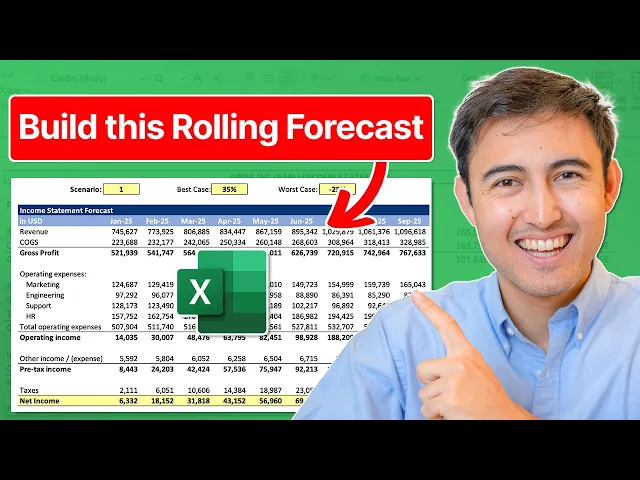
Here's a useful walkthrough on keeping forecast reviews grounded in practice:
A few habits make forecasting stick:
Assign ownership: Someone must update the model, and someone else must challenge assumptions.
Track misses accurately: Over-optimism usually repeats when nobody reviews why the forecast drifted.
Keep definitions tight: Revenue booked, revenue delivered, and cash collected are not the same thing.
Reduce manual friction: If updating the forecast is painful, it won't happen often enough.
The goal isn't to create a forecasting ritual for its own sake. It's to give the business a dependable way to make better calls, earlier.
If you want help turning revenue forecasting into a practical management tool, not just another spreadsheet, Nexist works with Australian SMEs on cash flow visibility, rolling forecasts, and the operational decisions that sit behind the numbers.
revenue forecasting, financial forecasting, sme finance australia, cash flow management, business planning

" width="24px"/><g d="M 0 24.129 L 0 0.129 L 24 0.129 L 24 24.129 Z M 0 24.129 L 0 0.129 L 24 0.129 L 24 24.129 Z M 24 3 C 24 1.344 22.656 0 21 0 L 3 0 C 1.344 0 0 1.344 0 3 L 0 21 C 0 22.656 1.344 24 3 24 L 21 24 C 22.656 24 24 22.656 24 21 Z M 6.883 8.375 L 2.863 8.375 L 2.863 20.467 L 6.883 20.467 Z M 4.899 2.545 C 3.524 2.545 2.625 3.449 2.625 4.634 C 2.625 5.795 3.496 6.724 4.846 6.724 L 4.872 6.724 C 6.273 6.724 7.146 5.795 7.146 4.634 C 7.12 3.449 6.274 2.545 4.899 2.545 Z M 16.747 8.09 C 14.614 8.09 13.659 9.263 13.124 10.086 L 13.124 8.374 L 9.105 8.374 C 9.159 9.508 9.105 20.466 9.105 20.466 L 13.124 20.466 L 13.124 13.713 C 13.124 13.352 13.15 12.99 13.257 12.732 C 13.547 12.01 14.209 11.262 15.319 11.262 C 16.773 11.262 17.355 12.372 17.355 13.996 L 17.355 20.466 L 21.374 20.466 L 21.374 13.532 C 21.374 9.818 19.391 8.09 16.747 8.09 Z" fill="transparent" height="24.12890599668026px" id="dSFdkJotL" width="24px"><path d="M 0 24 L 0 0 L 24 0 L 24 24 Z" fill="transparent" height="24px" id="wscNJE44G" transform="translate(0 0.129)" width="24px"/><g d="M 0 24.129 L 0 0.129 L 24 0.129 L 24 24.129 Z M 24 3 C 24 1.344 22.656 0 21 0 L 3 0 C 1.344 0 0 1.344 0 3 L 0 21 C 0 22.656 1.344 24 3 24 L 21 24 C 22.656 24 24 22.656 24 21 Z M 6.883 8.375 L 2.863 8.375 L 2.863 20.467 L 6.883 20.467 Z M 4.899 2.545 C 3.524 2.545 2.625 3.449 2.625 4.634 C 2.625 5.795 3.496 6.724 4.846 6.724 L 4.872 6.724 C 6.273 6.724 7.146 5.795 7.146 4.634 C 7.12 3.449 6.274 2.545 4.899 2.545 Z M 16.747 8.09 C 14.614 8.09 13.659 9.263 13.124 10.086 L 13.124 8.374 L 9.105 8.374 C 9.159 9.508 9.105 20.466 9.105 20.466 L 13.124 20.466 L 13.124 13.713 C 13.124 13.352 13.15 12.99 13.257 12.732 C 13.547 12.01 14.209 11.262 15.319 11.262 C 16.773 11.262 17.355 12.372 17.355 13.996 L 17.355 20.466 L 21.374 20.466 L 21.374 13.532 C 21.374 9.818 19.391 8.09 16.747 8.09 Z" fill="transparent" height="24.12890599668026px" id="sTpjGo1tb" width="24px"><path d="M 0 24 L 0 0 L 24 0 L 24 24 Z" fill="transparent" height="24px" id="s7ffpmKOD" transform="translate(0 0.129)" width="24px"/><g d="M 24 3 C 24 1.344 22.656 0 21 0 L 3 0 C 1.344 0 0 1.344 0 3 L 0 21 C 0 22.656 1.344 24 3 24 L 21 24 C 22.656 24 24 22.656 24 21 Z M 6.883 8.375 L 2.863 8.375 L 2.863 20.467 L 6.883 20.467 Z M 4.899 2.545 C 3.524 2.545 2.625 3.449 2.625 4.634 C 2.625 5.795 3.496 6.724 4.846 6.724 L 4.872 6.724 C 6.273 6.724 7.146 5.795 7.146 4.634 C 7.12 3.449 6.274 2.545 4.899 2.545 Z M 16.747 8.09 C 14.614 8.09 13.659 9.263 13.124 10.086 L 13.124 8.374 L 9.105 8.374 C 9.159 9.508 9.105 20.466 9.105 20.466 L 13.124 20.466 L 13.124 13.713 C 13.124 13.352 13.15 12.99 13.257 12.732 C 13.547 12.01 14.209 11.262 15.319 11.262 C 16.773 11.262 17.355 12.372 17.355 13.996 L 17.355 20.466 L 21.374 20.466 L 21.374 13.532 C 21.374 9.818 19.391 8.09 16.747 8.09 Z" fill="transparent" height="24.000006px" id="D0ecaHEcW" transform="translate(0 0)" width="24px"><path d="M 24 3 C 24 1.344 22.656 0 21 0 L 3 0 C 1.344 0 0 1.344 0 3 L 0 21 C 0 22.656 1.344 24 3 24 L 21 24 C 22.656 24 24 22.656 24 21 Z" fill="rgb(55, 184, 218)" height="24.000006px" id="IPLFE6zXx" width="24px"/><path d="M 4.02 0 L 0 0 L 0 12.092 L 4.02 12.092 Z" fill="rgb(255, 255, 255)" height="12.09201px" id="FWhtzAyuY" transform="translate(2.863 8.375)" width="4.02px"/><path d="M 2.274 0 C 0.899 0 0 0.904 0 2.089 C 0 3.25 0.871 4.179 2.221 4.179 L 2.247 4.179 C 3.648 4.179 4.521 3.25 4.521 2.089 C 4.495 0.904 3.649 0 2.274 0 Z" fill="rgb(255, 255, 255)" height="4.17876px" id="VmOsKv4kO" transform="translate(2.625 2.545)" width="4.52095px"/><path d="M 7.641 0 C 5.509 0 4.554 1.173 4.019 1.996 L 4.019 0.284 L 0 0.284 C 0.053 1.419 0 12.376 0 12.376 L 4.019 12.376 L 4.019 5.623 C 4.019 5.262 4.045 4.9 4.151 4.642 C 4.442 3.92 5.103 3.172 6.214 3.172 C 7.667 3.172 8.25 4.282 8.25 5.907 L 8.25 12.376 L 12.269 12.376 L 12.269 5.442 C 12.269 1.728 10.286 0 7.641 0 Z" fill="rgb(255, 255, 255)" height="12.37626px" id="n1XUbhaq0" transform="translate(9.105 8.09)" width="12.268830000000001px"/></g></g></g></g></svg>)