
Business Financial Health Check: The Founder's Guide
Run a complete business financial health check to uncover cash leaks, fix margins, and build a resilient finance engine for your Australian SME.
Ansh Malhotra

In Australia, 59% of small business owners experienced cash-flow stress in the previous six months, while 30% had less than one month of cash reserves and 10% had no cash buffer at all, according to March 2026 small business cash-flow data. That changes the purpose of a business financial health check. It isn't an annual exercise for your accountant's file. It's an operating system for finding cash before a late-paying customer, tax bill, stock purchase or margin squeeze finds it for you.
A profitable income statement can hide a business that can't meet payroll. A healthy sales pipeline can conceal slow-moving inventory. Regular ATO payments can mask an accumulating tax liability if the business owner keeps using GST, PAYG or superannuation obligations as working capital. The check must connect profit, cash, working capital and viability, not inspect ratios in isolation.
Table of Contents
Why Your Business Needs a Financial Health Check Now
A 24.1-day payment delay is not an inconvenience for a narrow-margin SME. It can decide whether the business funds wages and suppliers or covers the ATO from money that was never available to spend. 80% of Australian businesses reported late or overdue payments in the previous 12 months, while invoices arrived 6.9 days late on average, according to the Australian business statistics summary. A financial health check must expose the cash trapped behind those delays, not confirm last month's profit.
The risk extends beyond formal insolvency. The Reserve Bank of Australia reported that company insolvencies rose sharply from mid-2022 onward, with more than three-quarters of recent insolvencies involving small businesses with fewer than 20 employees. Formal small business restructures also represented an increasing share, at around 20%, as described in the RBA analysis of recent company insolvencies. ASIC data cited in the IPA's April 2026 research note recorded 14,649 companies becoming insolvent during the 2025 calendar year and 1,260 businesses becoming insolvent in February 2026.
Practical rule: Review the numbers before the bank balance becomes uncomfortable. After that point, you are managing a funding emergency.
Profit is not permission to spend
The profit and loss statement shows whether the business generated an accounting profit during a period. It does not show whether customers have paid, whether stock has sold or whether collected tax remains committed to the ATO. The balance sheet may list receivables and inventory as assets, but neither asset pays a supplier until it converts into cash.
That gap leaves founders with strong sales and a permanently tight bank account. Cash usually gets trapped through unpaid invoices, excess inventory and obligations that have been postponed. Review each sale from invoice to collection, then compare the expected receipt date with payroll, supplier, loan and tax commitments.
Tax debt deserves its own line of investigation. Treating GST, PAYG or superannuation obligations as working capital creates a liability that can grow while reported profit still looks healthy. A cash check should identify the amount reserved for each obligation, the next due date and the consequence of missing it.
Measure the quiet exit risk
Formal insolvency is only one possible endpoint. Australian reporting identified a 37% year-on-year rise in unincorporated SME business exits, a 47.9% year-on-year increase in tax defaults in May 2026 and late payments reaching a six-year high, according to reporting on tax defaults and business cash-flow pressure. Owners can wind down, stop trading or accumulate arrears before the business appears in insolvency figures.
Ask four direct questions: Can the business meet its obligations? Can it collect what it has earned? Can it sell its stock at a sensible margin? Can it operate without using unpaid tax as funding? Government guidance recommends reviewing the balance sheet, profit and loss, cash flow statement, budget and peer benchmarks, using at least three months of financial figures to assess viability, as set out in business.gov.au guidance on reviewing financial health.
The review protects enterprise value, lender and supplier negotiations, and the founder's time. Once a leak is visible, assign an owner, set a deadline and turn the finding into a cash-generating action.
The Core KPIs Every Founder Must Track
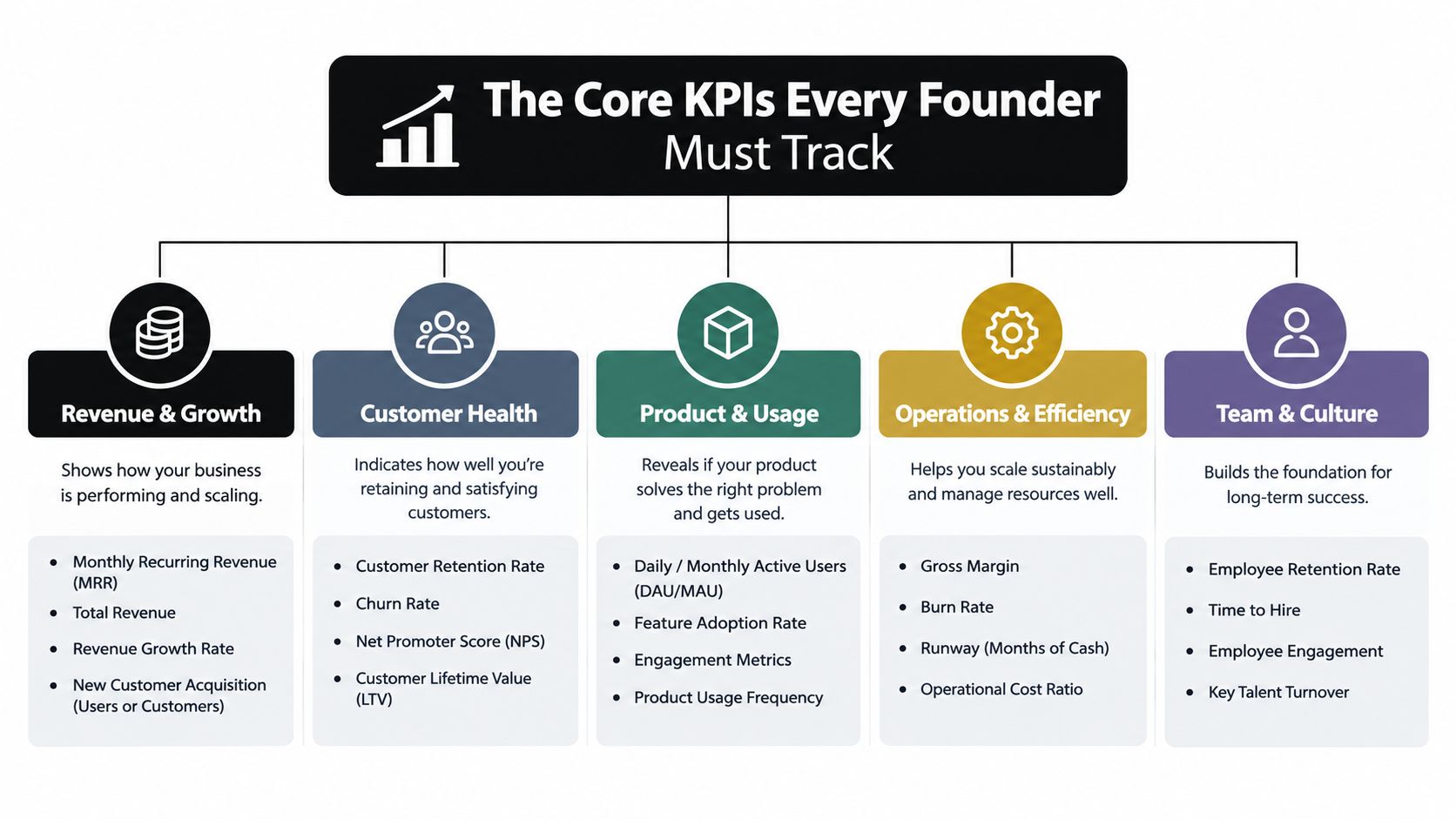
Your accounting system contains plenty of data, but a founder needs a short operating dashboard. Track the indicators that explain how quickly cash moves, how much value each sale creates and where working capital gets stuck.
Cash runway and operating cash
Calculate runway by dividing available, unrestricted cash by the average monthly net cash outflow. If the business is generating cash, track operating cash flow and compare it with the obligations due in the coming weeks. Don't count unpaid invoices as runway, and don't count stock at its purchase cost as available liquidity.
A simple weekly view should show:
Opening cash: Confirm the actual bank position, excluding funds held for GST, payroll or other committed purposes.
Expected inflows: Separate contracted receipts from optimistic sales assumptions.
Committed outflows: Include payroll, suppliers, rent, loan repayments, tax and essential software.
Closing cash: Highlight the lowest projected point, not just the month-end balance.
Gross margin and net margin
Gross margin is (revenue minus cost of goods sold) divided by revenue. It tells you whether pricing covers direct delivery costs before overheads. Net margin is net profit divided by revenue, showing what remains after operating costs, interest and tax-related expenses recorded in the accounts.
Review margins by product, customer, channel and job type. A blended margin can look acceptable while one high-volume SKU, contract or service line destroys cash. For ecommerce and wholesale, include freight, returns, payment fees, discounts and fulfilment in the contribution calculation. For trades and professional services, include the labour time and subcontractor cost required to deliver the work.
Inventory turnover and stock ageing
Inventory turnover is cost of goods sold divided by average inventory. It indicates how often stock cycles through the business during the selected period. The more useful diagnostic is an ageing report that separates current, slow-moving, obsolete and committed stock.
Don't buy more of a product just because it sold well in the past. Check whether the sale required heavy discounting, whether the replenishment order is already committed and whether the stock ties up cash that could fund profitable lines. A warehouse full of low-demand goods can make the balance sheet look stronger while reducing the business's ability to pay bills.
Receivables and payables ageing
Receivables days can be calculated as accounts receivable divided by credit sales, multiplied by the number of days in the reporting period. Review the aged ledger by customer, invoice owner and dispute reason. A rising total often starts with small process failures: invoices sent late, missing purchase order details, unclear payment terms or a sales team that promises exceptions.
Payables ageing needs equal attention. List suppliers by amount, due date, criticality and negotiating position. Extending terms without agreement damages trust, but negotiating a realistic payment schedule can protect both parties when cash timing is temporarily misaligned.
Subscription businesses should add churn, retention, average revenue per user and recurring revenue movement to this dashboard. For a focused reference, review these Shopify subscription performance metrics, then connect them to collection timing and contribution margin rather than viewing growth metrics separately.
Running Diagnostic Checks and Building Your Scorecard
Numbers become useful when you connect them to a decision. Start with the mixed-signal question that catches many founders out: profit looks fine, but cash remains tight. Trace the last reporting period from revenue to bank movement. Identify whether the gap comes from receivables, inventory purchases, tax payments, debt repayments, capital expenditure, owner drawings or an operating loss hidden by timing.
Build the scorecard around viability
Use five categories, then add a sector-risk overlay. The categories should cover liquidity, profitability, working capital, tax and debt obligations, and operational drivers. Compare the current position with the prior period, budget and relevant peer information. Don't turn the scorecard into a decorative dashboard. Every red or amber result needs an owner and a next action.
KPI Category | Red Flag, Critical | Amber, Monitor | Green, Optimal |
|---|---|---|---|
Liquidity | Cash cannot cover committed near-term payments | Cash covers obligations only if expected receipts arrive | Cash position supports committed payments and planned operating needs |
Profitability | Core products, jobs or customers lose money | Margin is positive but declining or inconsistent | Pricing and direct costs produce a stable contribution |
Receivables | Overdue invoices are funding normal operations | Ageing is rising in specific accounts or customer groups | Invoices are issued promptly and collections follow agreed terms |
Inventory | Stock is obsolete, overbought or blocking supplier and tax payments | Slow-moving lines need a clearance or purchasing decision | Stock levels match demand and replenishment rules |
Tax and debt | Arrears, missed obligations or unaffordable repayments | Payment plans or upcoming obligations need active management | Obligations are forecast, funded and paid on schedule |
Operations | Bottlenecks create rework, delays or unbilled work | A process depends heavily on the founder | Responsibilities, controls and handoffs are documented |
Find the cause behind each colour
A red receivables result might reflect one major customer rather than a broad collection failure. A red inventory result might come from a deliberate seasonal purchase, not poor buying. Your diagnostic should record the cause, the cash consequence, the accountable person and the deadline for resolution.
Use a short commentary beside every score. “Receivables red because invoices lack approved purchase order numbers, finance to correct templates and resend disputed invoices” is actionable. “Debtors high” isn't.
For operational maturity, connect financial actions to clear owners and measurable outcomes. The OKR execution maturity guide can help structure that accountability, particularly when a founder needs teams to execute changes rather than merely acknowledge them.
Review the source data before trusting the result
Reconcile bank accounts, clear suspense balances, review aged receivables and payables, and confirm inventory quantities before scoring. Remove or disclose unusual transactions that distort the underlying run rate. If the source data is unreliable, the scorecard will give you precise-looking nonsense.
A useful business scorecard framework should stay small enough to review every week and detailed enough to expose the leak. Start with the indicators that can change a decision this month. Add complexity only when it improves control.
Plugging Cash Leaks and Executing Quick Fixes
The correct response to a weak scorecard isn't blanket cost-cutting. Cutting a productive salesperson, reliable supplier or essential system can reduce future cash generation. Fix the constraint that is consuming cash first.
Turn receivables into a collection process
Assign every overdue invoice to a person, not a department. Set a sequence that starts before the due date, confirms receipt, identifies disputes quickly and escalates non-payment to the decision-maker. Sales staff should see overdue balances before approving additional work or extending informal credit.
Make invoices easy to approve. Use the customer's required purchase order details, accurate descriptions, agreed milestones and a direct payment method. Separate genuine disputes from customers who haven't prioritised payment. For material accounts, call rather than sending another automated reminder.
Review cash-flow management practices alongside your aged receivables report. The purpose isn't to pressure every customer identically. It's to create a predictable collection rhythm and stop the founder from personally chasing every invoice.
Release cash trapped in inventory
Stop replenishment on lines that fail your demand, margin or ageing test. Separate stock into actions:
Keep and replenish: Demand is reliable, margin is acceptable and the purchase cycle supports cash flow.
Clear deliberately: Use bundles, approved discounts, wholesale clearance or channel changes, while measuring the margin impact.
Return or renegotiate: Ask suppliers about returns, exchanges, delayed delivery or smaller purchase commitments.
Stop buying: Write a clear rule for when a product leaves the range.
Don't hide the problem with arbitrary discounts. Calculate the cash recovered, fulfilment cost and remaining contribution before approving a promotion. A low-margin sale can still be sensible if it releases cash from dead stock, but make that decision deliberately.
Treat tax arrears as a solvency issue
Tax debt isn't free working capital. If BAS, PAYG withholding, superannuation or income tax obligations are behind, quantify the arrears, confirm due dates and prepare a realistic payment capacity assessment. Speak with your accountant or registered tax professional early, before missed commitments narrow your options.
Pause discretionary spending, owner drawings and new stock commitments while you stabilise the liability. Don't promise a repayment amount that the forecast cannot support. A formal arrangement that fails creates more pressure than an honest plan based on verified cash.
Renegotiate the operating cycle
Ask key suppliers for terms that match your customer collection cycle, but approach the conversation with a credible forecast and a specific proposal. Consolidate orders where it reduces freight without creating excess stock. Remove duplicate software, unused services and approval delays, but protect the activities that create sales, delivery capacity or reliable collections.
The founder's job is to choose the few interventions with the fastest cash effect. A clean dashboard followed by no action is still a cash leak.
Setting the Cadence and Automating Your Finance Engine
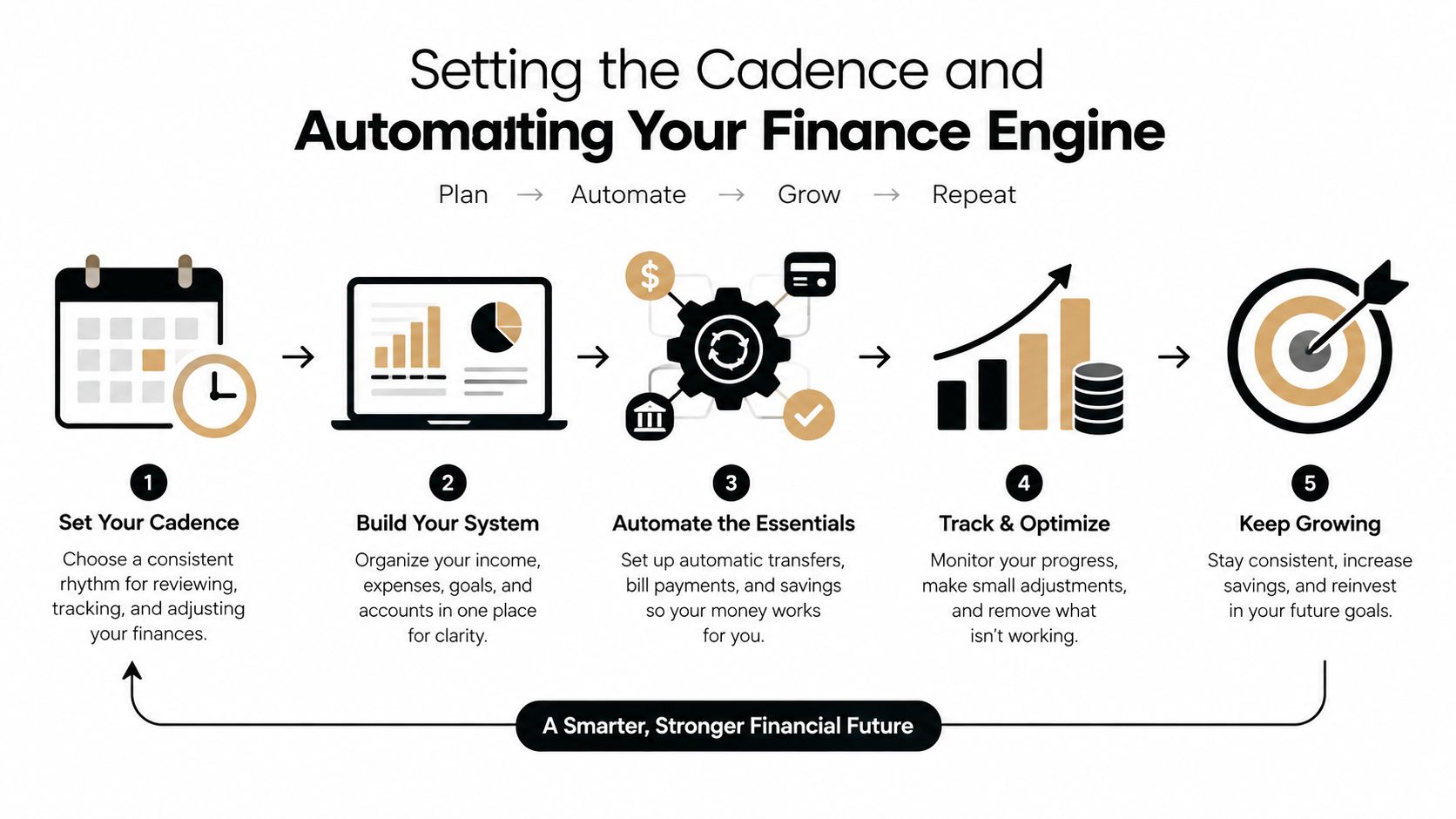
A business financial health check becomes valuable when it runs at the speed of the business. Weekly controls catch cash surprises. Monthly close procedures create reliable data. Quarterly reviews force decisions about pricing, hiring, stock and debt before assumptions harden into commitments.
Use a simple operating rhythm
Every week, update the cash position, committed payments, expected receipts, overdue invoices and the forward cash forecast. Hold a short meeting with the person responsible for collections, purchasing and payroll. The agenda should end with decisions, not observations.
Every month, close the books promptly. Reconcile bank and payment platforms, review profit by segment, update inventory ageing, clear coding issues and publish the scorecard with commentary. Compare actual results with budget and explain the variance in operational language.
Every quarter, rerun the full diagnostic. Review pricing, customer concentration, supplier dependence, debt capacity, tax exposure, stock policy and the reliability of the forecast. Reset targets when the business model or market conditions change.
Automate the handoffs, not the judgement
Connect accounting software such as Xero, MYOB or QuickBooks with banking feeds, payroll, inventory, point-of-sale and billing tools. Use rules for recurring transactions, invoice reminders, approval workflows and exception alerts. Keep a human review for unusual payments, margin changes, new suppliers, tax classifications and inventory adjustments.
Create a data ownership map:
Finance owner: Reconciliations, close timetable and reporting accuracy.
Sales owner: Customer terms, billing triggers and overdue escalation.
Operations owner: Stock purchasing, fulfilment costs and process exceptions.
Founder: Capital allocation, risk thresholds and decisions that change the plan.
Automation should remove repetitive handling, not remove accountability. Your reporting system needs documented definitions for revenue, gross margin, overdue debt, available cash and committed expenditure. Otherwise different teams will use different numbers while believing they're aligned.
For administrative support, a founder may use a provider such as LatHire's Latin American virtual assistants for repeatable finance administration, provided access controls, approval limits and review procedures are explicit. Keep payment authority and final financial judgement with trusted internal leaders.
A structured reporting automation process can then turn reconciled source data into a repeatable management report. Nexist is one Australian option that combines forecasting, cash-flow management, KPI reporting, bookkeeping and finance-engine design for founders who need execution as well as analysis.
Your Prioritized 30-Day Action Plan
A founder who has been checking the bank balance reactively needs sequence, not another spreadsheet. The first month should produce a trusted baseline, recover available cash and establish a rhythm that survives busy trading periods.
Days 1 to 7
Export the latest profit and loss, balance sheet, cash flow, bank position, aged receivables, aged payables, inventory report, payroll commitments and tax obligations. Reconcile the bank and flag anything that makes the reports unreliable. Build a short cash forecast and identify the lowest projected point.
Speak to the five people closest to the cash cycle: whoever sells, invoices, buys, delivers and pays. Ask where work stalls, which customers dispute invoices, which stock doesn't move and which suppliers control delivery. Record each issue beside its cash effect.
Days 8 to 14
Create the scorecard and colour each category using evidence, not instinct. Contact overdue customers, stop unnecessary purchasing and separate inventory into keep, clear, return or stop-buy actions. Confirm all tax liabilities with your accountant and prepare an affordable response for any arrears.
Don't launch a broad cost-cutting programme yet. Protect the activities that produce contribution and target the specific constraint identified by the diagnostic.
Days 15 to 21
Set payment terms, invoice triggers and escalation rules. Renegotiate selected supplier arrangements using the forecast. Remove duplicate subscriptions and approval delays. Assign an owner to every red or amber score, with a dated outcome that can be checked.
Publish a one-page weekly cash report. If the report takes hours to produce, fix the data flow before adding more KPIs.
Days 22 to 30
Close the month, compare actual cash with the forecast and document why the variance occurred. Finalise the monthly close checklist, automate routine reminders and schedule the quarterly diagnostic. Review the dashboard with your leadership team, then make one deliberate decision about pricing, stock, staffing, debt or capacity.
The shift is practical. You stop acting as a watchman waiting for trouble at the bank and start operating as the owner of a controlled finance engine. The data won't make every decision easy, but it will show you which decision deserves attention first.
If your numbers are accurate but your cash still feels tight, Nexist can assess your profit and loss, balance sheet, cash flow, receivables, payables, inventory and payroll to identify the leaks. Book a business scorecard review and turn the findings into a practical cash-flow plan, reporting cadence and operating system for your next stage of growth.
business financial health check, cash flow management, virtual CFO, SME finance, profit margins

" width="24px"/><g d="M 0 24.129 L 0 0.129 L 24 0.129 L 24 24.129 Z M 0 24.129 L 0 0.129 L 24 0.129 L 24 24.129 Z M 24 3 C 24 1.344 22.656 0 21 0 L 3 0 C 1.344 0 0 1.344 0 3 L 0 21 C 0 22.656 1.344 24 3 24 L 21 24 C 22.656 24 24 22.656 24 21 Z M 6.883 8.375 L 2.863 8.375 L 2.863 20.467 L 6.883 20.467 Z M 4.899 2.545 C 3.524 2.545 2.625 3.449 2.625 4.634 C 2.625 5.795 3.496 6.724 4.846 6.724 L 4.872 6.724 C 6.273 6.724 7.146 5.795 7.146 4.634 C 7.12 3.449 6.274 2.545 4.899 2.545 Z M 16.747 8.09 C 14.614 8.09 13.659 9.263 13.124 10.086 L 13.124 8.374 L 9.105 8.374 C 9.159 9.508 9.105 20.466 9.105 20.466 L 13.124 20.466 L 13.124 13.713 C 13.124 13.352 13.15 12.99 13.257 12.732 C 13.547 12.01 14.209 11.262 15.319 11.262 C 16.773 11.262 17.355 12.372 17.355 13.996 L 17.355 20.466 L 21.374 20.466 L 21.374 13.532 C 21.374 9.818 19.391 8.09 16.747 8.09 Z" fill="transparent" height="24.12890599668026px" id="dSFdkJotL" width="24px"><path d="M 0 24 L 0 0 L 24 0 L 24 24 Z" fill="transparent" height="24px" id="wscNJE44G" transform="translate(0 0.129)" width="24px"/><g d="M 0 24.129 L 0 0.129 L 24 0.129 L 24 24.129 Z M 24 3 C 24 1.344 22.656 0 21 0 L 3 0 C 1.344 0 0 1.344 0 3 L 0 21 C 0 22.656 1.344 24 3 24 L 21 24 C 22.656 24 24 22.656 24 21 Z M 6.883 8.375 L 2.863 8.375 L 2.863 20.467 L 6.883 20.467 Z M 4.899 2.545 C 3.524 2.545 2.625 3.449 2.625 4.634 C 2.625 5.795 3.496 6.724 4.846 6.724 L 4.872 6.724 C 6.273 6.724 7.146 5.795 7.146 4.634 C 7.12 3.449 6.274 2.545 4.899 2.545 Z M 16.747 8.09 C 14.614 8.09 13.659 9.263 13.124 10.086 L 13.124 8.374 L 9.105 8.374 C 9.159 9.508 9.105 20.466 9.105 20.466 L 13.124 20.466 L 13.124 13.713 C 13.124 13.352 13.15 12.99 13.257 12.732 C 13.547 12.01 14.209 11.262 15.319 11.262 C 16.773 11.262 17.355 12.372 17.355 13.996 L 17.355 20.466 L 21.374 20.466 L 21.374 13.532 C 21.374 9.818 19.391 8.09 16.747 8.09 Z" fill="transparent" height="24.12890599668026px" id="sTpjGo1tb" width="24px"><path d="M 0 24 L 0 0 L 24 0 L 24 24 Z" fill="transparent" height="24px" id="s7ffpmKOD" transform="translate(0 0.129)" width="24px"/><g d="M 24 3 C 24 1.344 22.656 0 21 0 L 3 0 C 1.344 0 0 1.344 0 3 L 0 21 C 0 22.656 1.344 24 3 24 L 21 24 C 22.656 24 24 22.656 24 21 Z M 6.883 8.375 L 2.863 8.375 L 2.863 20.467 L 6.883 20.467 Z M 4.899 2.545 C 3.524 2.545 2.625 3.449 2.625 4.634 C 2.625 5.795 3.496 6.724 4.846 6.724 L 4.872 6.724 C 6.273 6.724 7.146 5.795 7.146 4.634 C 7.12 3.449 6.274 2.545 4.899 2.545 Z M 16.747 8.09 C 14.614 8.09 13.659 9.263 13.124 10.086 L 13.124 8.374 L 9.105 8.374 C 9.159 9.508 9.105 20.466 9.105 20.466 L 13.124 20.466 L 13.124 13.713 C 13.124 13.352 13.15 12.99 13.257 12.732 C 13.547 12.01 14.209 11.262 15.319 11.262 C 16.773 11.262 17.355 12.372 17.355 13.996 L 17.355 20.466 L 21.374 20.466 L 21.374 13.532 C 21.374 9.818 19.391 8.09 16.747 8.09 Z" fill="transparent" height="24.000006px" id="D0ecaHEcW" transform="translate(0 0)" width="24px"><path d="M 24 3 C 24 1.344 22.656 0 21 0 L 3 0 C 1.344 0 0 1.344 0 3 L 0 21 C 0 22.656 1.344 24 3 24 L 21 24 C 22.656 24 24 22.656 24 21 Z" fill="rgb(55, 184, 218)" height="24.000006px" id="IPLFE6zXx" width="24px"/><path d="M 4.02 0 L 0 0 L 0 12.092 L 4.02 12.092 Z" fill="rgb(255, 255, 255)" height="12.09201px" id="FWhtzAyuY" transform="translate(2.863 8.375)" width="4.02px"/><path d="M 2.274 0 C 0.899 0 0 0.904 0 2.089 C 0 3.25 0.871 4.179 2.221 4.179 L 2.247 4.179 C 3.648 4.179 4.521 3.25 4.521 2.089 C 4.495 0.904 3.649 0 2.274 0 Z" fill="rgb(255, 255, 255)" height="4.17876px" id="VmOsKv4kO" transform="translate(2.625 2.545)" width="4.52095px"/><path d="M 7.641 0 C 5.509 0 4.554 1.173 4.019 1.996 L 4.019 0.284 L 0 0.284 C 0.053 1.419 0 12.376 0 12.376 L 4.019 12.376 L 4.019 5.623 C 4.019 5.262 4.045 4.9 4.151 4.642 C 4.442 3.92 5.103 3.172 6.214 3.172 C 7.667 3.172 8.25 4.282 8.25 5.907 L 8.25 12.376 L 12.269 12.376 L 12.269 5.442 C 12.269 1.728 10.286 0 7.641 0 Z" fill="rgb(255, 255, 255)" height="12.37626px" id="n1XUbhaq0" transform="translate(9.105 8.09)" width="12.268830000000001px"/></g></g></g></g></svg>)