Business Finance Automation Playbook for Australian SMEs
Step-by-step business finance automation playbook for Australian SMEs. Build SOPs, integrate tools, and implement AI to reclaim cash flow and 20+ hours weekly.
Ansh Malhotra

A founder can have cloud accounting, digital bank feeds and online payroll, yet still spend Friday afternoon chasing an approval, correcting an invoice coding error and trying to work out why the cash balance doesn't match the business plan. The records are digital, but the work remains manual.
That gap is where business finance automation earns its place. The aim isn't to install another application and hope the finance function improves. It's to connect the systems, rules and people that move money through the business, so repetitive work follows a reliable path and the founder gets earlier, clearer signals about cash flow.
Table of Contents
The Automation Reality Check for Australian Founders
A growing wholesaler may receive supplier bills by email, save them into cloud storage and record them in cloud accounting software. The bookkeeper still opens each attachment, enters the details, sends the bill to the owner for approval, follows up when it sits unread and later matches the payment against the bank feed. The business has digitised its records, but it hasn't automated the workflow.

Digital records are only the starting point
Digitisation changes the format of information. A paper invoice becomes a PDF, a handwritten expense becomes a receipt image and a spreadsheet becomes a cloud report. Automation changes what happens next. The system reads the document, applies coding rules, checks for duplicates, routes the item to the correct approver and records an auditable result.
That distinction matters because many owners expected cloud software to remove administration automatically. It won't. A cloud ledger can store accurate transactions while approval rules, exception handling and payment decisions still depend on memory, email and manual intervention.
Practical rule: Don't automate the transaction first. Automate the path the transaction follows from receipt to decision to reconciliation.
Start by documenting where work stops. Look at unpaid invoices waiting for approval, expenses needing clarification, customer payments that aren't matched and reports prepared manually at month end. The best opportunities usually sit between systems, where someone copies information, checks it, asks for permission or fixes an exception.
A useful primer on connecting operational workflows with finance is Nexist's guide to automating business processes. The practical test is simple: if a capable team member is repeatedly moving the same information between screens, the process may be ready for redesign.
Understanding the Australian Finance Automation Landscape
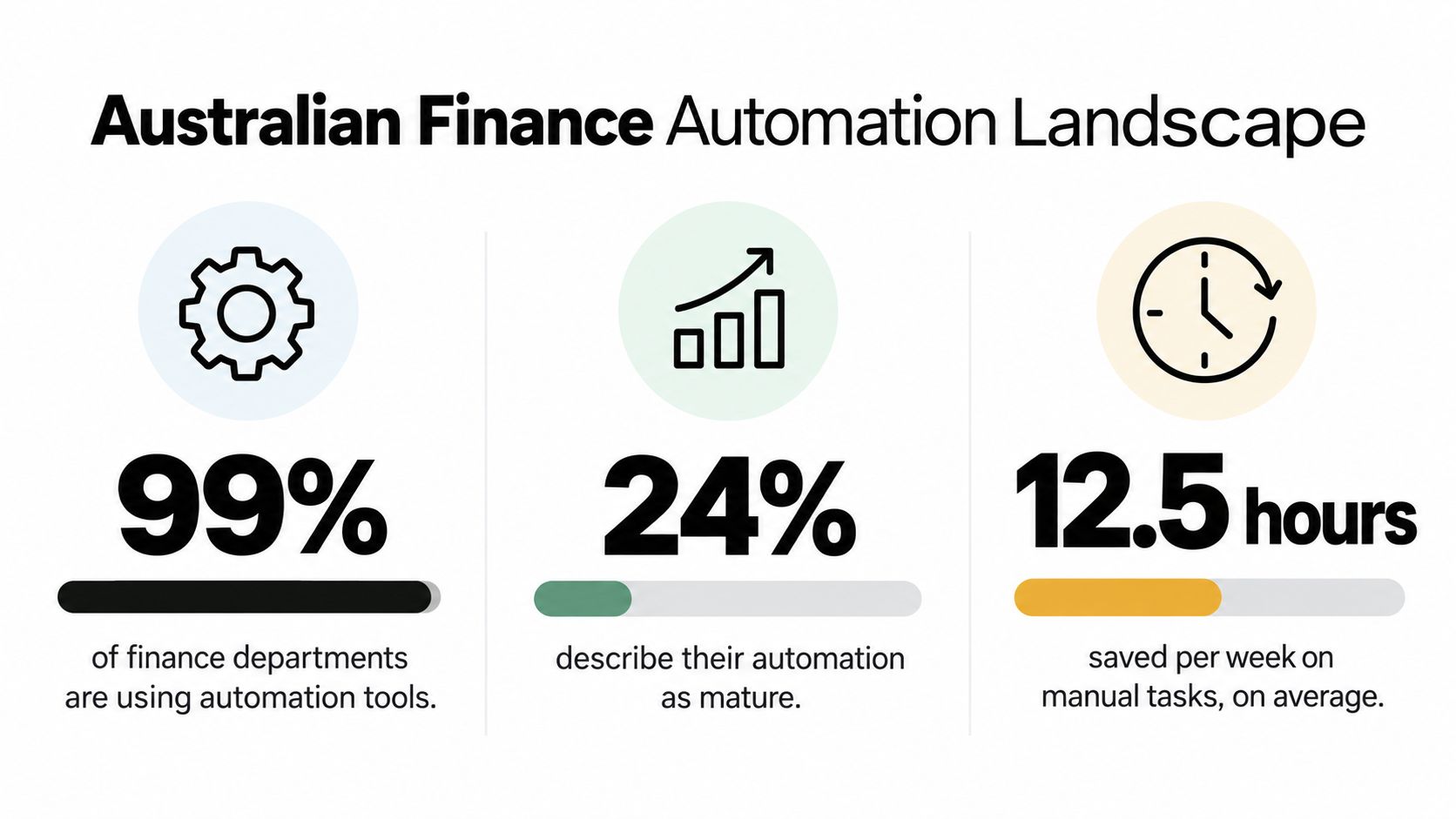
Australian finance teams have already moved beyond treating automation as a novelty. A 2025 Robert Half survey reported that 99% of Australian finance departments used automation in some capacity, while 30% had extensively or fully integrated AI into business operations. Automation was already embedded in financial reporting, accounts payable and invoice processing, budget forecasting and planning, tax compliance, and accounting standards, as detailed in Robert Half's Australian finance automation findings.
Adoption doesn't mean integration
The headline can mislead a small business owner. Using an automated bank feed or invoice capture tool isn't the same as connecting finance data to approval decisions, cash planning and management reporting. Many businesses have adopted individual digital components, but the operating model around those components hasn't changed.
An Australian SME CFO survey reported that 75% of finance leaders were interested in AI for finance workflows, while only 25% were currently using AI-enabled tools. The same survey found that 74% used cloud accounting software and 56% used payroll or HR systems, showing that the basic infrastructure often exists before workflow automation does. The CFO survey on Australia's AI automation gap points to a practical conclusion, most SMEs don't need to replace the ledger first. They need to make the existing stack work together.
Start with repetitive work, not ambitious promises
Manual work remains a material constraint. In the Australian SME finance survey, 75% of respondents estimated that repetitive tasks consumed between 20% and 59% of finance-team time. That makes invoice handling, reconciliations, payment follow-up and recurring reporting sensible starting points before advanced forecasting.
The implementation gap usually comes from unclear ownership, inconsistent coding, poor data quality or fear of losing control. A founder may want automation, while the bookkeeper worries that an incorrectly coded transaction will flow straight into reporting. Good implementation resolves that tension with approval thresholds, exception queues, audit trails and human review at the points where judgement matters.
Building Your Integration Architecture and Tech Stack
A finance stack should be designed as a connected operating system, not a collection of disconnected subscriptions. The core question isn't which application has the longest feature list. It's whether information can move reliably from source to ledger, from ledger to payment, and from payment to reporting without repeated manual entry.
Design the flow before selecting the tool
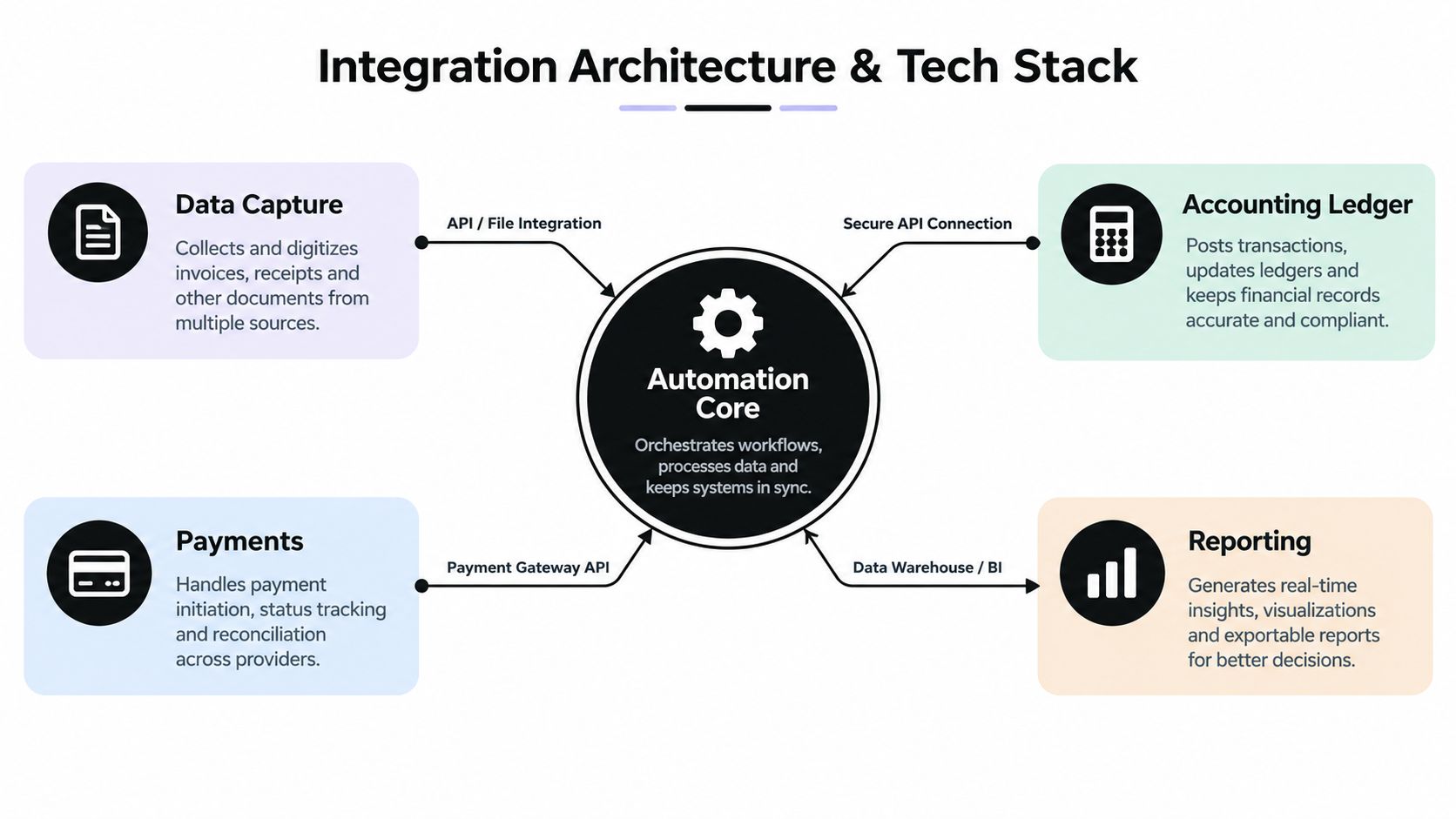
Map the architecture in four layers:
Data capture receives supplier bills, customer invoices, receipts, bank transactions, timesheets and order data. Check whether the system can read structured information, retain the original document and expose an audit trail.
The accounting ledger holds the approved financial record. Confirm that integrations can pass tax codes, account codes, tracking categories, supplier details and dates without flattening the information needed for reporting.
Payments should follow approved instructions rather than create a second, disconnected process. Define who can approve a payment, what happens when bank details change and how the payment status returns to the ledger.
Reporting turns transactions into cash-flow views, margin analysis, aged receivables, payables and performance indicators. Reports should draw from controlled source data, not from spreadsheets that someone rebuilds each month.
Vendor evaluation should include API access, webhooks or other open data flows, integration documentation, export capability and clear permissions. Ask a prospective provider to demonstrate a complete exception, not just a successful invoice. For example, request a walkthrough showing a duplicate bill, a missing GST code, a changed supplier bank account and an approval that expires.
Protect the centre of the system
Choose one source of truth for each data type. Supplier details shouldn't be independently maintained in the invoicing system, payroll platform and payment file. Decide which application owns the record, then allow other systems to consume approved information.
This is also where larger businesses may need a more formal approach to gestione performance con SAP e, particularly when finance sits alongside procurement, inventory and enterprise reporting. Smaller businesses should apply the same principle without importing unnecessary complexity.
Integration design also affects management reporting. A connected stack makes it easier to produce recurring packs and cash-flow views, as described in Nexist's approach to reporting automation. The right architecture reduces duplicate entry, but it doesn't remove the need for ownership. Someone must maintain coding rules, review exceptions and approve changes to the workflow.
Prioritising High-Impact Automation Opportunities
The fastest route to value is rarely the most complex AI project. Start with a workflow that has frequent handoffs, clear rules and an obvious cash-flow consequence. That combination makes the result easier to test and gives the team a practical reason to adopt the change.
Compare the work, not the software
Accounts payable is often a strong first candidate. Bill capture, supplier matching, coding suggestions, duplicate detection and approval routing use repeatable rules. The trade-off is that unusual bills, credits and changed banking details still need human review. A good workflow sends normal items through quickly and directs exceptions to a person.
Accounts receivable has a different value pattern. Automated invoice delivery, payment reminders, receipt matching and overdue escalation can improve visibility of incoming cash. The risk is relationship damage if reminders ignore a customer dispute, so the workflow needs status checks and an override for account managers.
Expenses are a particularly visible source of friction. A 2025 Australian SME finance study found that 80% of organisations used entirely or partially manual processes to reconcile out-of-pocket expenses. It also reported manual data-entry errors as the most common inefficiency for 38% of organisations and approval bottlenecks for 36%, according to OFX's Australian SME digital tools research.
Payroll automation can remove repetitive imports, reminders and checks, but payroll rules carry greater compliance sensitivity. Treat payroll as a controlled workflow with review points, rather than a process to switch to fully automatic approval immediately.
Sequence the rollout around cash
Use a simple priority test:
Frequency: How often does the team perform the task?
Friction: How many handoffs, corrections or follow-ups does it require?
Control: Can the business define the rule and identify an exception?
Cash impact: Does the task affect collections, supplier commitments or working capital?
The OFX research also found that 71% considered real-time transaction oversight essential, while 94% reported tangible benefits from automation. Those findings support starting with visibility and control, not just data entry. Accounts payable automation in Australia should therefore be judged by whether it improves approval discipline, coding quality and payment awareness, not merely whether it reads an invoice.
A process map should show the current state before anyone configures the future state. Once the first workflow is stable, extend the same controls to adjacent activities.
Establishing Robust Standard Operating Procedures
Automation can only apply the instructions a business has made explicit. If staff members use different approval rules, supplier names or GST treatments, software will reproduce the inconsistency faster. A standard operating procedure, or SOP, converts informal knowledge into an agreed sequence with owners, inputs, decisions and evidence.
Document the current process honestly
Choose one workflow and observe it from start to finish. Don't document the process people say they follow. Document what happens, including side emails, spreadsheets, workarounds and approvals that occur verbally.
Capture:
Trigger: What starts the process?
Inputs: Which document, transaction or request is required?
Actions: What does each person or system do?
Decision rules: What makes an item routine or exceptional?
Evidence: What proves that the action occurred?
Escalation: Who resolves missing information or disagreement?
This exercise usually exposes avoidable loops. A supplier bill might be entered before the purchase owner confirms receipt, then returned for correction after payment approval. Redesign the sequence so the necessary evidence arrives earlier.
Turn the SOP into controlled logic
Write rules in language that a team member and an automation provider can both understand. Define which account or GST treatment applies to common transaction types, who approves different categories of spend, when a payment must pause and what happens when a supplier's details change.
Keep a human checkpoint for decisions involving unusual terms, disputed work, sensitive payroll information or uncertain tax treatment. Automation should narrow the review queue to items requiring judgement, not hide uncertainty behind an automatic approval.
Version control matters. Assign an owner, record the effective date, explain changes and review the SOP when the underlying system or compliance process changes. Train the team using real examples and ask them to process an exception, not just a routine transaction.
Control beats speed: A workflow that completes quickly but can't explain who approved what isn't finance automation. It's a new source of risk.
Leveraging AI for Strategic Forecasting and Control
Basic automation answers, “What should happen to this transaction?” AI can help answer, “What might happen to the business if this pattern continues?” That shift moves finance from retrospective recordkeeping towards active cash-flow management.
An AI-enabled finance process can classify incoming information, identify unusual transactions, compare actual results with expected patterns and surface changes that deserve attention. The output still needs context. A fall in gross margin may reflect a pricing issue, a stock mix change, a timing difference or a coding error, and software can't choose the right commercial response without reliable data and human judgement.
Build predictive capability on clean foundations
Forecasting works best when the underlying transactions are timely, consistently coded and connected to operational drivers. For an inventory-heavy business, those drivers may include purchase commitments, stock on hand, supplier terms and customer collections. For a service business, they may include scheduled work, payroll commitments and unpaid invoices.
Start with a rolling cash-flow forecast that shows expected receipts, committed payments and known timing risks. Then add scenario logic. Ask what happens if a major customer pays later, a supplier requires earlier settlement or sales activity changes. AI can help organise the evidence and flag variances, but the founder should decide which assumptions are commercially credible.
Add controls for Australian workflows
Australian finance automation must fit the practical sequence around BAS, GST, payroll, eInvoicing and payment approvals. Product material covering Australian finance workflows highlights capabilities such as OCR bill capture, bank-feed matching, GST line coding, audit trails and eInvoicing readiness in Hello Books' Australian finance automation overview.
Use AI to suggest GST coding, flag duplicate transactions and identify anomalies for review. Don't allow a suggestion to become an unquestioned posting rule. The control should show the source document, the reasoning or match used, the person who approved the outcome and the correction history.
The best finance function combines machine speed with human accountability. AI handles pattern recognition and prioritisation, while the owner, bookkeeper or virtual CFO tests assumptions, interprets risk and makes the decision.
Implementing Your Automation Roadmap for Lasting Change
Treat automation as an operating-model change, not an IT installation. The sequence matters because each stage creates the conditions for the next one.
Begin with a cash-flow problem that people already recognise, such as slow approvals, unreliable receivables visibility or a month-end report that takes too long to prepare. Map the process, define the desired result and establish a baseline using the measures already available to the business.
Then:
Stabilise the workflow. Remove duplicate steps, agree coding rules and write the SOP.
Connect the systems. Confirm the ledger, bank, invoicing, payroll and reporting tools exchange the information they need.
Pilot one process. Run routine transactions through the new workflow while a person reviews exceptions and compares the output with the existing process.
Train around decisions. Show staff what the system handles, what they must approve and how to escalate an error.
Measure control and cash visibility. Review unreconciled items, approval delays, coding corrections, overdue invoices and forecast variances.
Extend carefully. Add another workflow only after the first has a clear owner and reliable exception handling.
The transition won't be frictionless. Migration takes effort, staff need time to change habits and old spreadsheets may contain undocumented logic. That friction is a reason to phase the work, not postpone it indefinitely.
Business finance automation becomes strategically valuable when it gives the founder confidence about what cash is available, what is committed and what needs attention next. Start with one process this month, assign an owner and make the result visible to the people who run the business.
Nexist helps Australian founders design finance workflows, automate repetitive accounts payable, receivables and reporting tasks, and connect those systems to cash-flow decisions. Visit Nexist to discuss a practical automation roadmap built around your existing processes and business priorities.
business finance automation, Australian SME finance, AI in accounting, cash flow management, finance automation guide

" width="24px"/><g d="M 0 24.129 L 0 0.129 L 24 0.129 L 24 24.129 Z M 0 24.129 L 0 0.129 L 24 0.129 L 24 24.129 Z M 24 3 C 24 1.344 22.656 0 21 0 L 3 0 C 1.344 0 0 1.344 0 3 L 0 21 C 0 22.656 1.344 24 3 24 L 21 24 C 22.656 24 24 22.656 24 21 Z M 6.883 8.375 L 2.863 8.375 L 2.863 20.467 L 6.883 20.467 Z M 4.899 2.545 C 3.524 2.545 2.625 3.449 2.625 4.634 C 2.625 5.795 3.496 6.724 4.846 6.724 L 4.872 6.724 C 6.273 6.724 7.146 5.795 7.146 4.634 C 7.12 3.449 6.274 2.545 4.899 2.545 Z M 16.747 8.09 C 14.614 8.09 13.659 9.263 13.124 10.086 L 13.124 8.374 L 9.105 8.374 C 9.159 9.508 9.105 20.466 9.105 20.466 L 13.124 20.466 L 13.124 13.713 C 13.124 13.352 13.15 12.99 13.257 12.732 C 13.547 12.01 14.209 11.262 15.319 11.262 C 16.773 11.262 17.355 12.372 17.355 13.996 L 17.355 20.466 L 21.374 20.466 L 21.374 13.532 C 21.374 9.818 19.391 8.09 16.747 8.09 Z" fill="transparent" height="24.12890599668026px" id="dSFdkJotL" width="24px"><path d="M 0 24 L 0 0 L 24 0 L 24 24 Z" fill="transparent" height="24px" id="wscNJE44G" transform="translate(0 0.129)" width="24px"/><g d="M 0 24.129 L 0 0.129 L 24 0.129 L 24 24.129 Z M 24 3 C 24 1.344 22.656 0 21 0 L 3 0 C 1.344 0 0 1.344 0 3 L 0 21 C 0 22.656 1.344 24 3 24 L 21 24 C 22.656 24 24 22.656 24 21 Z M 6.883 8.375 L 2.863 8.375 L 2.863 20.467 L 6.883 20.467 Z M 4.899 2.545 C 3.524 2.545 2.625 3.449 2.625 4.634 C 2.625 5.795 3.496 6.724 4.846 6.724 L 4.872 6.724 C 6.273 6.724 7.146 5.795 7.146 4.634 C 7.12 3.449 6.274 2.545 4.899 2.545 Z M 16.747 8.09 C 14.614 8.09 13.659 9.263 13.124 10.086 L 13.124 8.374 L 9.105 8.374 C 9.159 9.508 9.105 20.466 9.105 20.466 L 13.124 20.466 L 13.124 13.713 C 13.124 13.352 13.15 12.99 13.257 12.732 C 13.547 12.01 14.209 11.262 15.319 11.262 C 16.773 11.262 17.355 12.372 17.355 13.996 L 17.355 20.466 L 21.374 20.466 L 21.374 13.532 C 21.374 9.818 19.391 8.09 16.747 8.09 Z" fill="transparent" height="24.12890599668026px" id="sTpjGo1tb" width="24px"><path d="M 0 24 L 0 0 L 24 0 L 24 24 Z" fill="transparent" height="24px" id="s7ffpmKOD" transform="translate(0 0.129)" width="24px"/><g d="M 24 3 C 24 1.344 22.656 0 21 0 L 3 0 C 1.344 0 0 1.344 0 3 L 0 21 C 0 22.656 1.344 24 3 24 L 21 24 C 22.656 24 24 22.656 24 21 Z M 6.883 8.375 L 2.863 8.375 L 2.863 20.467 L 6.883 20.467 Z M 4.899 2.545 C 3.524 2.545 2.625 3.449 2.625 4.634 C 2.625 5.795 3.496 6.724 4.846 6.724 L 4.872 6.724 C 6.273 6.724 7.146 5.795 7.146 4.634 C 7.12 3.449 6.274 2.545 4.899 2.545 Z M 16.747 8.09 C 14.614 8.09 13.659 9.263 13.124 10.086 L 13.124 8.374 L 9.105 8.374 C 9.159 9.508 9.105 20.466 9.105 20.466 L 13.124 20.466 L 13.124 13.713 C 13.124 13.352 13.15 12.99 13.257 12.732 C 13.547 12.01 14.209 11.262 15.319 11.262 C 16.773 11.262 17.355 12.372 17.355 13.996 L 17.355 20.466 L 21.374 20.466 L 21.374 13.532 C 21.374 9.818 19.391 8.09 16.747 8.09 Z" fill="transparent" height="24.000006px" id="D0ecaHEcW" transform="translate(0 0)" width="24px"><path d="M 24 3 C 24 1.344 22.656 0 21 0 L 3 0 C 1.344 0 0 1.344 0 3 L 0 21 C 0 22.656 1.344 24 3 24 L 21 24 C 22.656 24 24 22.656 24 21 Z" fill="rgb(55, 184, 218)" height="24.000006px" id="IPLFE6zXx" width="24px"/><path d="M 4.02 0 L 0 0 L 0 12.092 L 4.02 12.092 Z" fill="rgb(255, 255, 255)" height="12.09201px" id="FWhtzAyuY" transform="translate(2.863 8.375)" width="4.02px"/><path d="M 2.274 0 C 0.899 0 0 0.904 0 2.089 C 0 3.25 0.871 4.179 2.221 4.179 L 2.247 4.179 C 3.648 4.179 4.521 3.25 4.521 2.089 C 4.495 0.904 3.649 0 2.274 0 Z" fill="rgb(255, 255, 255)" height="4.17876px" id="VmOsKv4kO" transform="translate(2.625 2.545)" width="4.52095px"/><path d="M 7.641 0 C 5.509 0 4.554 1.173 4.019 1.996 L 4.019 0.284 L 0 0.284 C 0.053 1.419 0 12.376 0 12.376 L 4.019 12.376 L 4.019 5.623 C 4.019 5.262 4.045 4.9 4.151 4.642 C 4.442 3.92 5.103 3.172 6.214 3.172 C 7.667 3.172 8.25 4.282 8.25 5.907 L 8.25 12.376 L 12.269 12.376 L 12.269 5.442 C 12.269 1.728 10.286 0 7.641 0 Z" fill="rgb(255, 255, 255)" height="12.37626px" id="n1XUbhaq0" transform="translate(9.105 8.09)" width="12.268830000000001px"/></g></g></g></g></svg>)