
Types of Financial Reporting for Australian SMEs
Discover the essential types of financial reporting for Australian SMEs. Learn how to use statutory and management reports to drive growth and cash flow.
Ansh Malhotra

You can have a clean profit and loss statement and still be scrambling to make payroll. That's the gap most Australian founders live with for too long, because they're treating financial reporting as one thing when it's really a set of different tools for different jobs. If your accountant hands you a year-end pack and you're expected to run the business from that alone, you're under-informed.
The fix is simple in principle, harder in practice. You need to separate compliance reporting from management reporting, then build a rhythm that turns numbers into action. If your data isn't clean, start with implementing data governance in finance, because messy inputs will always produce messy decisions.
Table of Contents
Why Most SMEs Misunderstand Financial Reporting
The usual mistake is thinking the profit and loss tells the whole story. It doesn't. A business can look profitable on paper while cash is trapped in debtors, stock, GST, PAYG withholding, or super obligations that haven't yet hit the bank.
Australian reporting also has a long compliance history behind it, which is why many founders inherit a mindset that reporting is something you do for the accountant, the regulator, or the tax office. That's backwards. Reporting should first tell you whether the business can survive the next pay run, then satisfy the external rules.
Compliance is not control
Statutory reports are built to prove what happened. They're essential, but they're backward-looking and structured for external users such as ASIC, the ATO, lenders, and auditors. By contrast, the reports you need most as a founder are the ones that tell you what's coming next, where the margin is leaking, and which part of the business is consuming cash.
Practical rule: if a report doesn't change a decision, it's not management reporting, it's paperwork.
Australia's financial reporting framework makes this split very clear. The current system sits on a two-tier structure, with Tier 1 Australian Accounting Standards and Tier 2 Australian Accounting Standards – Reduced Disclosure Requirements. The International Financial Reporting Standards Foundation notes that Australia adopted IFRS Standards on 1 January 2005, after convergence work began in 1996, and that IFRS Standards apply to reporting entities under Australian accounting standards. That matters because your business isn't just producing numbers, it's producing numbers inside a framework that shapes disclosure depth, comparability, and compliance burden.
The founders who get ahead stop treating reporting as a month-end chore. They use it as operating intelligence.
Statutory Versus Management Reporting
Statutory reporting and management reporting are not competing ideas, they're different tools. One exists to satisfy legal and external requirements. The other exists to improve decisions inside the business.
What statutory reporting is for
Statutory reporting is the formal set of reports prepared for compliance and external scrutiny. ASIC says financial reports generally include the statement of financial position, profit and loss or overall income, cash flows, changes in equity, notes, directors' declaration, and directors' report, with some entities also lodging an auditor's report. For large proprietary companies, public companies, disclosing entities, and some small proprietary companies, lodgement timing is tight, and for disclosing entities and registered schemes it's tighter still. That's not a dashboard for leadership, it's a legal record.
The Australian framework also changed over time. The AASB history records major milestones, including the establishment of the Accounting Standards Review Board in 1984, its merger in 1988, the renaming to the Australian Accounting Standards Board in 1991, and the move in 2005 to AASB Accounting Standards for reporting periods beginning on or after 1 January 2005. Australia's financial reporting roots go back even further, to 1896 when Victoria required public companies to present an annual audited financial statement. Those milestones explain why compliance reporting is so structured, so formal, and so audit-friendly.
What management reporting is for
Management reporting is the opposite in one critical way, it's designed around decisions. It can be weekly, monthly, or rolling. It can segment by product, site, customer type, or sales channel. It can be brutally simple or highly detailed, depending on what the business needs.
A useful management pack doesn't try to imitate statutory accounts. It answers sharper questions, like: are we collecting cash fast enough, which line is profitable, and what happens if sales slow while payroll stays fixed? That's the level of reporting a founder can run on.
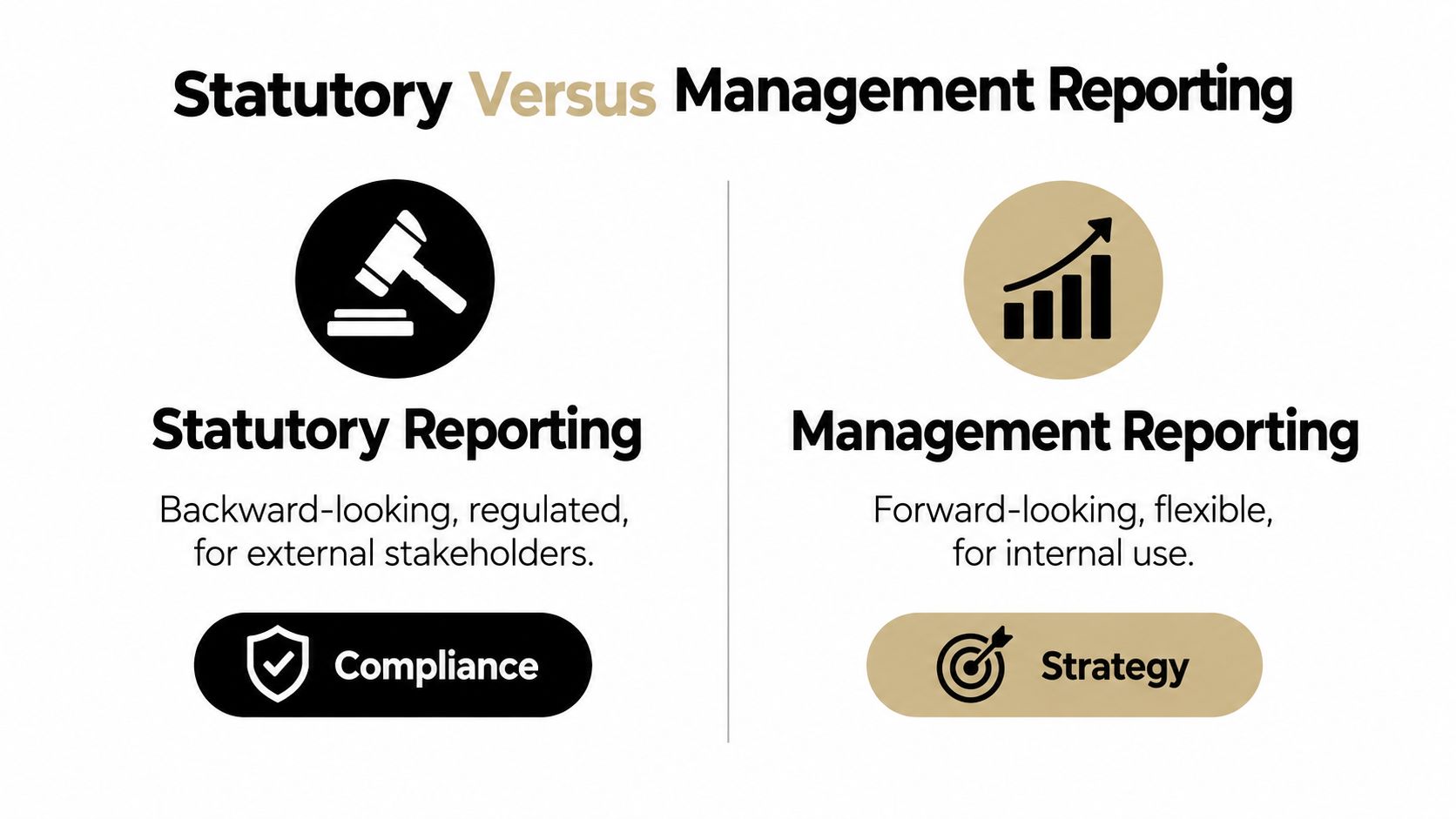
Direct advice: run both systems in parallel. Statutory reporting keeps you compliant, management reporting keeps you alive.
For Australian SMEs, the biggest reporting mistake is trying to make one report do both jobs. It won't. Build compliance with discipline, then build management visibility with speed and relevance.
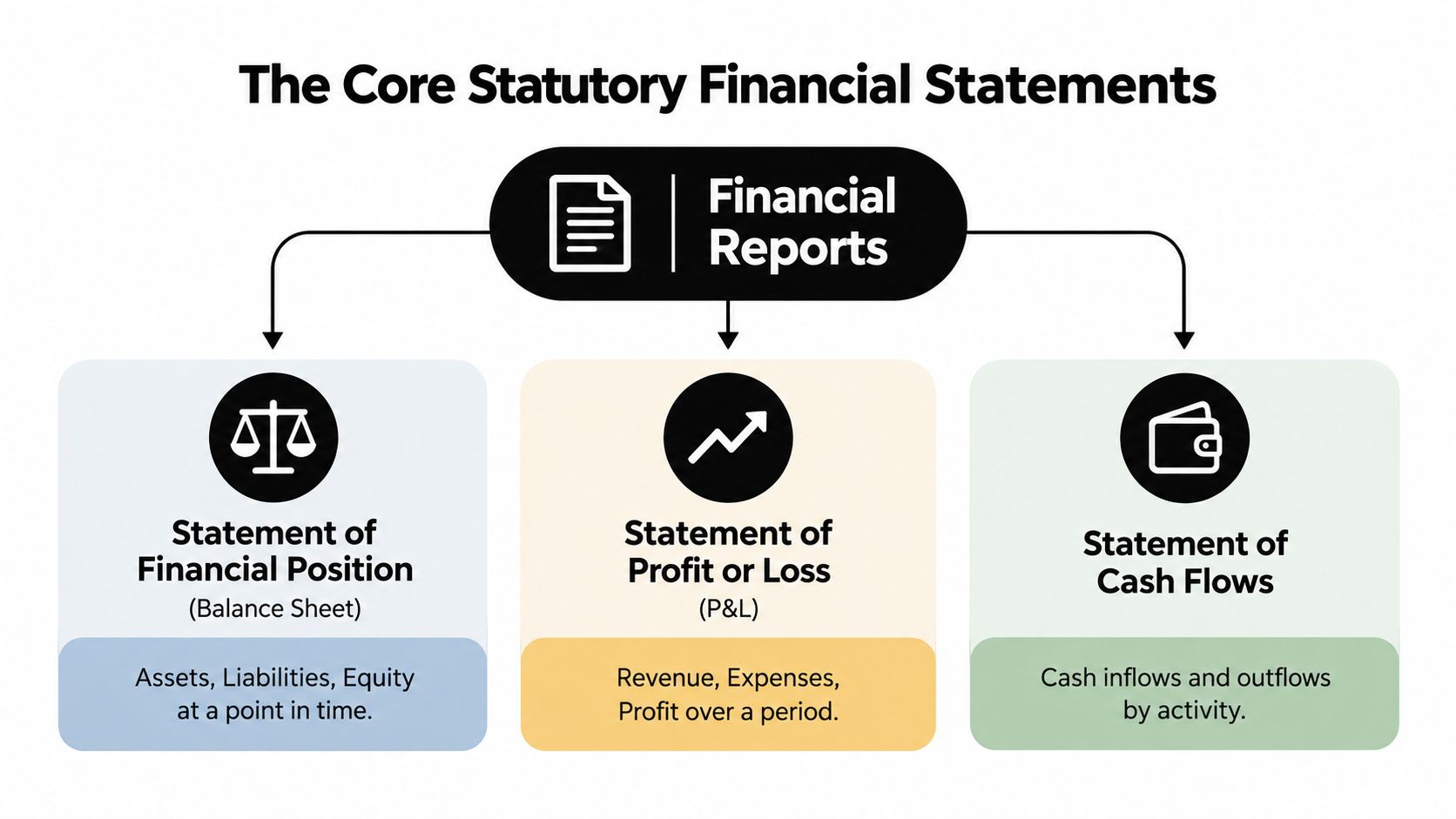
The Core Statutory Financial Statements
The core statutory set is straightforward once you stop overcomplicating it. You need to know what each statement answers, who relies on it, and where it can mislead you if you read it in isolation.
Statement of Financial Position
The statement of financial position is a snapshot. It shows what the business owns, what it owes, and what's left for the owners at a specific point in time. Think of it as the balance sheet with less jargon and more usefulness.
If you've got good sales but weak working capital, this statement will show you the strain in receivables, inventory, and liabilities. It won't tell you whether the month was strong or weak in operating terms, but it will tell you whether the business is carrying too much debt, too many slow assets, or too little buffer.
Statement of Profit or Loss
The statement of profit or loss tells you how the business performed over a period. Revenue in, expenses out, profit left over. That's the core logic, and it's the first report many founders glance at because it looks like the scorecard.
Read it carefully. Profit can be real and still not convert into cash, especially if customers are slow to pay or stock is sitting on shelves. If you want the plain-English version of this report, the explanation on what a profit and loss statement is is a useful companion.
Statement of Cash Flows
The statement of cash flows is the report that shuts down wishful thinking. It shows where cash came from and where it went through operating, investing, and financing activity. For a founder, this is the report that matters when the bank balance is tight.
ASIC's reporting expectations also bring in the supporting pieces, including the notes, directors' declaration, and directors' report. Those aren't decorative. They're part of the evidence chain that explains the numbers and supports compliance.
Use the cash flow statement as the final check, not the afterthought. If profit looks fine but cash is thin, the business has a timing problem or a working-capital problem.
A complete statutory pack is useful because it gives you the legal and accounting view of the business. But don't confuse completeness with usefulness for daily decisions.
Management Reports That Drive Daily Decisions
Management reports should make a founder faster, not busier. If a report takes days of explanation to understand, it's too slow. If it lists numbers without pointing to the operational cause, it's too weak.
The reports worth demanding
A proper management pack usually starts with a KPI dashboard, a rolling cash flow forecast, a segment report, and an aging report for receivables and payables. Those four views tell you whether sales are converting, cash is holding up, margins are intact, and collections are slipping.
KPI dashboard: Tracks the handful of numbers that move the business, not every metric under the sun.
Rolling cash flow forecast: Shows expected inflows and outflows before they hit the bank.
Segment reporting: Splits performance by product, location, customer group, or channel.
Aged receivables and payables: Highlights who owes you money and who you owe, before those balances become a crisis.
A monthly management pack should also include commentary. Not a story about the numbers, a diagnosis. What changed, why it changed, and what action follows.
The section on management reporting goes deeper on how to structure that cadence for a small business that can't afford late surprises. That's the point. Reporting only matters when it changes behaviour.
Where statutory reports hide the leak
Inventory-heavy businesses are the classic example. A business can post decent profit while stock builds up, receivables age, and supplier bills arrive faster than cash comes in. Statutory reports won't scream about that early enough because they're not designed to.
Management reporting spots the leak earlier. If one product line sells well but drags margins down, segment reporting shows it. If one customer cohort is paying slowly, the receivables ageing makes it visible. If you're spending cash faster than sales turn into collections, the forecast exposes it before the account goes red.
Founder rule: the right management pack should answer, “What do I do on Monday?” If it doesn't, strip it back.
For cash control, many founders also benefit from combining a recurring management pack with a clear cash dashboard. Nexist does this kind of recurring reporting and cash-flow dashboard work for SMEs, but the key principle is broader than any one provider, build a report that forces action, not just review.
How Cash and Accrual Accounting Change Your Numbers
Cash and accrual accounting change the story your reports tell. Cash accounting records income and expenses when money enters or leaves the bank. Accrual accounting records revenue when earned and costs when incurred. The choice affects reported profit, balance sheet movements, and how quickly working-capital pressure becomes visible.
The Australian guide on cash versus accrual accounting outlines the practical trade-off. Cash basis can be available under $10 million aggregated turnover for GST, while accrual accounting gives a clearer picture for businesses with debtors, inventory, or credit terms. If customers pay later, stock sits on shelves, or suppliers require payment first, cash accounting can make a strained business appear comfortable.
Why cash can lie to you
A healthy bank balance does not prove healthy performance. Cash accounting can hide unpaid customer invoices, upcoming supplier commitments, and stock that has absorbed capital without generating sales. A large customer payment can make the month look strong even when margins are falling, while a tax or supplier payment can make a profitable period look weak.
For the mechanics of how money moves through the business, see our guide to the cash flow statement. Review that cash view alongside receivables ageing, inventory movements, and committed payments. That combination shows whether reported cash is available or already allocated.
Why accrual gives the better business picture
Accrual accounting matches income and costs to the period they belong to. That makes the profit and loss statement more useful for margin analysis, pricing, and operational decisions. It also gives the balance sheet a clearer view of assets, liabilities, receivables, and obligations.
Use accrual statements to judge performance, then overlay a cash forecast to control spending. The first answers what the business earned. The second shows what it can safely pay for, and when.
For a founder managing payroll, supplier terms, and stock replenishment, this dual view turns compliance data into cash-flow action. Nexist can support recurring reporting and cash-flow dashboards, but the requirement is straightforward: review both views on a set cadence and assign an action to every material variance.
Choosing the Right Reporting Pack for Your Growth Stage
Not every business needs a glossy board pack. Some need a clean BAS-ready set of books and a simple cash view. Others need layered reporting that separates operational noise from the numbers that drive decisions.
The right choice depends on stage, complexity, and external pressure. A sole trader with simple services needs a very different reporting rhythm from a wholesale business with debt, stock, and multiple sales channels. Don't buy sophistication you can't use.
Business Stage | Core Reports | Frequency |
|---|---|---|
Early-stage sole trader | Bank reconciliation, profit and loss, cash summary, BAS support | Monthly |
Growth-stage SME | Profit and loss, balance sheet, cash flow forecast, receivables ageing, KPI dashboard | Monthly, with weekly cash review |
Mature or scaling business | Segment reporting, rolling forecast, KPI pack, budget variance review, working capital report | Monthly, with weekly or fortnightly cash review |
What to ask for at each stage
For early-stage businesses, ask for accuracy and speed. You need the basics done well, not a heavy pack that no one reads. Clean bookkeeping, GST tracking, and a simple cash view usually beat a fifty-page report.
For growth-stage SMEs, add discipline. You need visibility on margin, debtor days, payables, stock, and payroll pressure. You also need a forecast that rolls forward so you can see when cash gets tight before it happens.
For mature businesses, demand segmentation. If you can't tell which product, site, or channel is driving profit, you're flying blind. At that stage, reporting needs to support borrowing, staffing, supplier negotiations, and eventually exit readiness.
The test for the right pack
Ask one question: can this reporting pack change a decision this month? If the answer is no, it's too light, too slow, or too noisy.
A report should either expose risk or support action. If it does neither, cut it.
The best reporting setup grows with the business. It doesn't overwhelm the owner at the start, and it doesn't leave them under-informed once the business becomes more complex.
Building a Scalable Finance Engine
A good report is useless if it arrives too late. If month-end closes drag on, the business is already making decisions off stale numbers. That's not a reporting problem alone, it's a system problem.
The fix is to build a finance engine, not a heroic bookkeeping process. Standardised coding, clean data entry, tight approval flows, and automation do more than save time, they improve the quality of every number that follows. The faster the close, the faster the leadership team can act.
What scaling actually looks like
A scalable finance engine has a few essentials. The chart of accounts is consistent. Source data is entered once, properly. Reconciliations are routine, not seasonal. Reports are produced on a schedule that the founder can rely on.
That's also where technology helps, but only if the process is sound. Cloud accounting, dashboarding, and automated report workflows reduce manual lifting, yet they don't fix bad coding or sloppy categorisation. Get the process right first, then automate it.
What to stop doing
Stop relying on end-of-month surprises. Stop waiting for the annual accountant review to learn whether margins are slipping. Stop treating reporting as a back-office task.
The finance team should be running a rhythm that supports decisions on pricing, stock, hiring, debt, and cash. That's how you turn historical numbers into forward control.
If your current reporting setup can't tell you where the business stands this week, it's not ready for growth. Fix the engine before you push harder on the accelerator.
If you want reporting that helps you run the business, not just file it, talk to Nexist. They build cash-flow focused reporting, KPI dashboards, and virtual CFO support for Australian SMEs that need clearer decisions and tighter control. Start by reviewing your current pack, then replace the reports that don't change action.
financial reporting, SME accounting, management reports, statutory reporting, cash flow

" width="24px"/><g d="M 0 24.129 L 0 0.129 L 24 0.129 L 24 24.129 Z M 0 24.129 L 0 0.129 L 24 0.129 L 24 24.129 Z M 24 3 C 24 1.344 22.656 0 21 0 L 3 0 C 1.344 0 0 1.344 0 3 L 0 21 C 0 22.656 1.344 24 3 24 L 21 24 C 22.656 24 24 22.656 24 21 Z M 6.883 8.375 L 2.863 8.375 L 2.863 20.467 L 6.883 20.467 Z M 4.899 2.545 C 3.524 2.545 2.625 3.449 2.625 4.634 C 2.625 5.795 3.496 6.724 4.846 6.724 L 4.872 6.724 C 6.273 6.724 7.146 5.795 7.146 4.634 C 7.12 3.449 6.274 2.545 4.899 2.545 Z M 16.747 8.09 C 14.614 8.09 13.659 9.263 13.124 10.086 L 13.124 8.374 L 9.105 8.374 C 9.159 9.508 9.105 20.466 9.105 20.466 L 13.124 20.466 L 13.124 13.713 C 13.124 13.352 13.15 12.99 13.257 12.732 C 13.547 12.01 14.209 11.262 15.319 11.262 C 16.773 11.262 17.355 12.372 17.355 13.996 L 17.355 20.466 L 21.374 20.466 L 21.374 13.532 C 21.374 9.818 19.391 8.09 16.747 8.09 Z" fill="transparent" height="24.12890599668026px" id="dSFdkJotL" width="24px"><path d="M 0 24 L 0 0 L 24 0 L 24 24 Z" fill="transparent" height="24px" id="wscNJE44G" transform="translate(0 0.129)" width="24px"/><g d="M 0 24.129 L 0 0.129 L 24 0.129 L 24 24.129 Z M 24 3 C 24 1.344 22.656 0 21 0 L 3 0 C 1.344 0 0 1.344 0 3 L 0 21 C 0 22.656 1.344 24 3 24 L 21 24 C 22.656 24 24 22.656 24 21 Z M 6.883 8.375 L 2.863 8.375 L 2.863 20.467 L 6.883 20.467 Z M 4.899 2.545 C 3.524 2.545 2.625 3.449 2.625 4.634 C 2.625 5.795 3.496 6.724 4.846 6.724 L 4.872 6.724 C 6.273 6.724 7.146 5.795 7.146 4.634 C 7.12 3.449 6.274 2.545 4.899 2.545 Z M 16.747 8.09 C 14.614 8.09 13.659 9.263 13.124 10.086 L 13.124 8.374 L 9.105 8.374 C 9.159 9.508 9.105 20.466 9.105 20.466 L 13.124 20.466 L 13.124 13.713 C 13.124 13.352 13.15 12.99 13.257 12.732 C 13.547 12.01 14.209 11.262 15.319 11.262 C 16.773 11.262 17.355 12.372 17.355 13.996 L 17.355 20.466 L 21.374 20.466 L 21.374 13.532 C 21.374 9.818 19.391 8.09 16.747 8.09 Z" fill="transparent" height="24.12890599668026px" id="sTpjGo1tb" width="24px"><path d="M 0 24 L 0 0 L 24 0 L 24 24 Z" fill="transparent" height="24px" id="s7ffpmKOD" transform="translate(0 0.129)" width="24px"/><g d="M 24 3 C 24 1.344 22.656 0 21 0 L 3 0 C 1.344 0 0 1.344 0 3 L 0 21 C 0 22.656 1.344 24 3 24 L 21 24 C 22.656 24 24 22.656 24 21 Z M 6.883 8.375 L 2.863 8.375 L 2.863 20.467 L 6.883 20.467 Z M 4.899 2.545 C 3.524 2.545 2.625 3.449 2.625 4.634 C 2.625 5.795 3.496 6.724 4.846 6.724 L 4.872 6.724 C 6.273 6.724 7.146 5.795 7.146 4.634 C 7.12 3.449 6.274 2.545 4.899 2.545 Z M 16.747 8.09 C 14.614 8.09 13.659 9.263 13.124 10.086 L 13.124 8.374 L 9.105 8.374 C 9.159 9.508 9.105 20.466 9.105 20.466 L 13.124 20.466 L 13.124 13.713 C 13.124 13.352 13.15 12.99 13.257 12.732 C 13.547 12.01 14.209 11.262 15.319 11.262 C 16.773 11.262 17.355 12.372 17.355 13.996 L 17.355 20.466 L 21.374 20.466 L 21.374 13.532 C 21.374 9.818 19.391 8.09 16.747 8.09 Z" fill="transparent" height="24.000006px" id="D0ecaHEcW" transform="translate(0 0)" width="24px"><path d="M 24 3 C 24 1.344 22.656 0 21 0 L 3 0 C 1.344 0 0 1.344 0 3 L 0 21 C 0 22.656 1.344 24 3 24 L 21 24 C 22.656 24 24 22.656 24 21 Z" fill="rgb(55, 184, 218)" height="24.000006px" id="IPLFE6zXx" width="24px"/><path d="M 4.02 0 L 0 0 L 0 12.092 L 4.02 12.092 Z" fill="rgb(255, 255, 255)" height="12.09201px" id="FWhtzAyuY" transform="translate(2.863 8.375)" width="4.02px"/><path d="M 2.274 0 C 0.899 0 0 0.904 0 2.089 C 0 3.25 0.871 4.179 2.221 4.179 L 2.247 4.179 C 3.648 4.179 4.521 3.25 4.521 2.089 C 4.495 0.904 3.649 0 2.274 0 Z" fill="rgb(255, 255, 255)" height="4.17876px" id="VmOsKv4kO" transform="translate(2.625 2.545)" width="4.52095px"/><path d="M 7.641 0 C 5.509 0 4.554 1.173 4.019 1.996 L 4.019 0.284 L 0 0.284 C 0.053 1.419 0 12.376 0 12.376 L 4.019 12.376 L 4.019 5.623 C 4.019 5.262 4.045 4.9 4.151 4.642 C 4.442 3.92 5.103 3.172 6.214 3.172 C 7.667 3.172 8.25 4.282 8.25 5.907 L 8.25 12.376 L 12.269 12.376 L 12.269 5.442 C 12.269 1.728 10.286 0 7.641 0 Z" fill="rgb(255, 255, 255)" height="12.37626px" id="n1XUbhaq0" transform="translate(9.105 8.09)" width="12.268830000000001px"/></g></g></g></g></svg>)